

Why are college students dropping out? EdSights targets higher ed retention rates
June 21, 2019 | Rashi Shrivastava
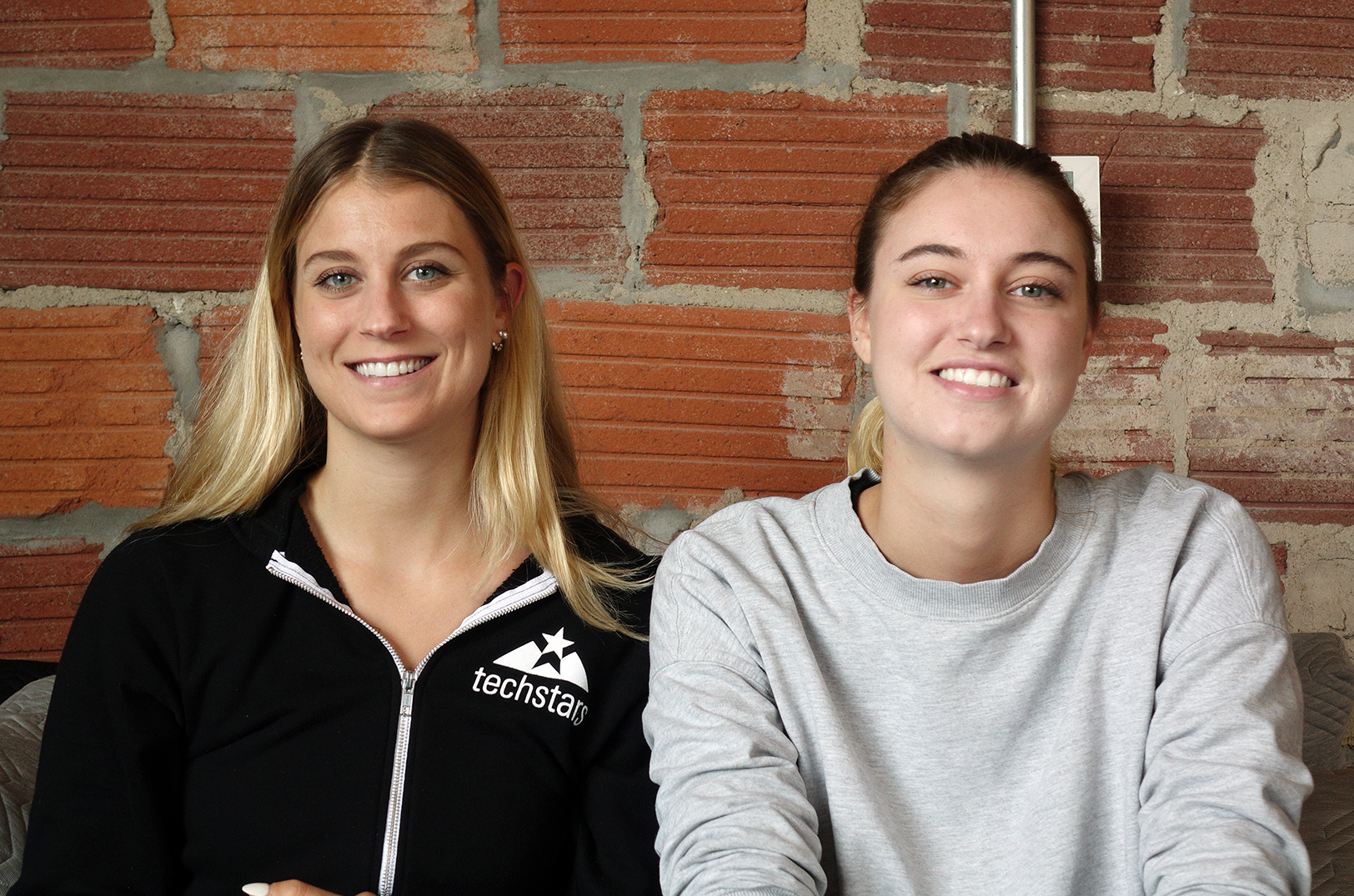
Only 56 percent of students who began college in 2012 actually graduated within the next six years, said startup founders Claudia Recchi and Carolina Recchi.
The sisters’ own struggles as first-generation U.S. college students reinforced the challenge posed by such statistics, they said, prompting them to found EdSights, a startup using artificial intelligence to collect data from students and help universities increase retention rates.
The young entrepreneurs grew up in Rome, Italy, moving to New York to pursue their bachelors degrees.
“We faced a lot of issues in college — like we didn’t know what a GPA was or that we had advisors in place,” said 23-year-old Claudia Recchi.
Claudia Recchi found herself wired into edtech in her senior year of college when she developed a free mobile app that engaged with students to collect data about their classroom experience. The app became popular quickly and scaled to more than 200 universities across the U.S. But she wasn’t making any money, she said.
“We asked university administrators, ‘What extra features would you pay for as a university?’ because we were trying to figure out how to monetize this free mobile app,” she said.
Their response: Help us save tuition revenue by improving retention rates. The average university loses about $10 million because of students dropping out, said Carolina Recchi.
A young team
Carolina Recchi, 25, was the first to make the move. She came to the U.S. in 2010 to study international business at Babson College in Massachusetts. Her younger sister followed suit two years later, arriving at Georgetown University for a degree in statistics.
“We both always really valued our education. Earning a degree can have a life-changing impact on someone’s future and we want to make sure that every student has access to that opportunity,” said Carolina Recchi.
Entrepreneurism was in the books from the beginning, the sisters said.
“We always knew that we wanted to start a company together at some point,” said Carolina Recchi. “We worked very well together. But we never knew it was going to be this early.”
Being a young team gives EdSights an edge over “old school companies” hoping to solve retention issues, Claudia Recchi said. Most students drop out because of non-academic reasons like student debt, or having problems adjusting to college culture. However, firms that have been in the industry for a long time only tackle academic factors, she said.
Young engineers on the team are organically equipped with student lingo, which helps the firm model its product to serve students better.
“We understand the problem from the student’s side. And most importantly, we speak the same language that students speak,” said Claudia Recchi. “And so that allows us to build products are a lot more engaging.”
A chatbot bringing conversation
EdSights uses a conversational AI through a chatbot to ping students via direct text message. Questions like, “Have you seen your academic advisor yet?” or “Do you feel like you belong to the university?” pop up on their screens when they choose to use the platform.
“Part of using text messages was so that even students without smartphones can access the technology,” explained Carolina Recchi.
The chat robot identifies struggling students and directs them to on-campus resources like the financial aid office or the career center. The non-cognitive data is simultaneously fed into a predictive model and alerts the university’s administrators to refocus their efforts in specific ways.
“Part of our job is to be that intermediary between the two, taking information from students and then translating it into something that is useful and actionable for the university,” said Carolina Recchi.
Privacy has been a concern when it comes to using artificial intelligence, but EdSights informs students beforehand that they are speaking to them on behalf of the university officials, said Claudia Recchi. The actual chat is never shown to administrators, though the aggregated data is shared, she said.
In 2018, Missouri Western State University hired EdSights to improve the six-year graduation rate, which had dwindled to 29 percent, according to a case study released by the startup. Within a semester, EdSights was able to help the university save an estimated $459,000 in tuition revenue, the sisters said.

Carolina Recchi, EdSights, Techstars Kansas City
One of the most pivotal resources for the company: the Techstars accelerator program in Kansas City, said Carolina Recchi.
“It’s a big network. And it helped us not only with fundraising, but also with mentorship,” said the founders, members of the 2018 Techstars Kansas City class.
Though the founders see immense potential in the K-12 market as well, they plan to expand further into higher education in the next four years by reaching out to community colleges to improve retention rates.
More than 31 million students have enrolled in college and left without receiving a degree or certificate in the past 20 years, according to a report by the National Student Clearinghouse Research Center.
“The traditional student is not traditional anymore,” Carolina Recchi said.
College students come from diverse backgrounds: parents with full time jobs and three or four children, low-income students, and first-generation students, she added.
This story was produced through a collaboration between Missouri Business Alert and Startland News.

Featured Business

2019 Startups to Watch
stats here
Related Posts on Startland News

‘Starting to bloom’: Kritiq spring show debuts Sunday highlighting KC fashion scene by design
Jo Hartley might be different from the typical designer featured this weekend at The Kritiq Fashion Show. She’s also the type of creator who organizers of the Kansas City runway experience want to brag about — the type they credit with helping grow the fashion show that’s been organized each fall the past four years.…
How could high-speed, cross-state travel boost Missouri? Hyperloop CEO has three words for KC
Hyperloop One could be gliding down its interchangeable tracks within the next decade, CEO Jay Walder estimated. But is the mystical mass transit system any closer to finding its home, questioned an audience gathered Wednesday for the KC Tech Council CEO speaker series sponsored by RSM and hosted by WeWork. “What if I told you…

CBD modern family: Today’s mom-and-pop shop is selling hemp from a downtown OP storefront
With it’s storefront nestled in a mature, but re-emergent Overland Park neighborhood, walking through the door of 8124 Floyd St. shatters the misconceptions of curious customers, said Heather Steppe. “Its not [shady] … it doesn’t feel like a head shop,” Steppe, co-owner of KC Hemp Co., said of the almost bohemian vibe that radiates from…

Will CBD get me high? Plus three more burning FAQs about the cannabis cousins
Selling CBD is about more than the bottom line, said Heather Steppe, co-owner of KC Hemp Co. “Ninety-percent of what we do is educate. We have people come in here and ask questions and they go home and think about it,” she said from her business’ Downtown Overland Park storefront, noting that the general public…