

Into the weeds: Your corner CBD store might’ve just lost its bank thanks to a slow-to-innovate industry
June 11, 2019 | John Jared Hawks
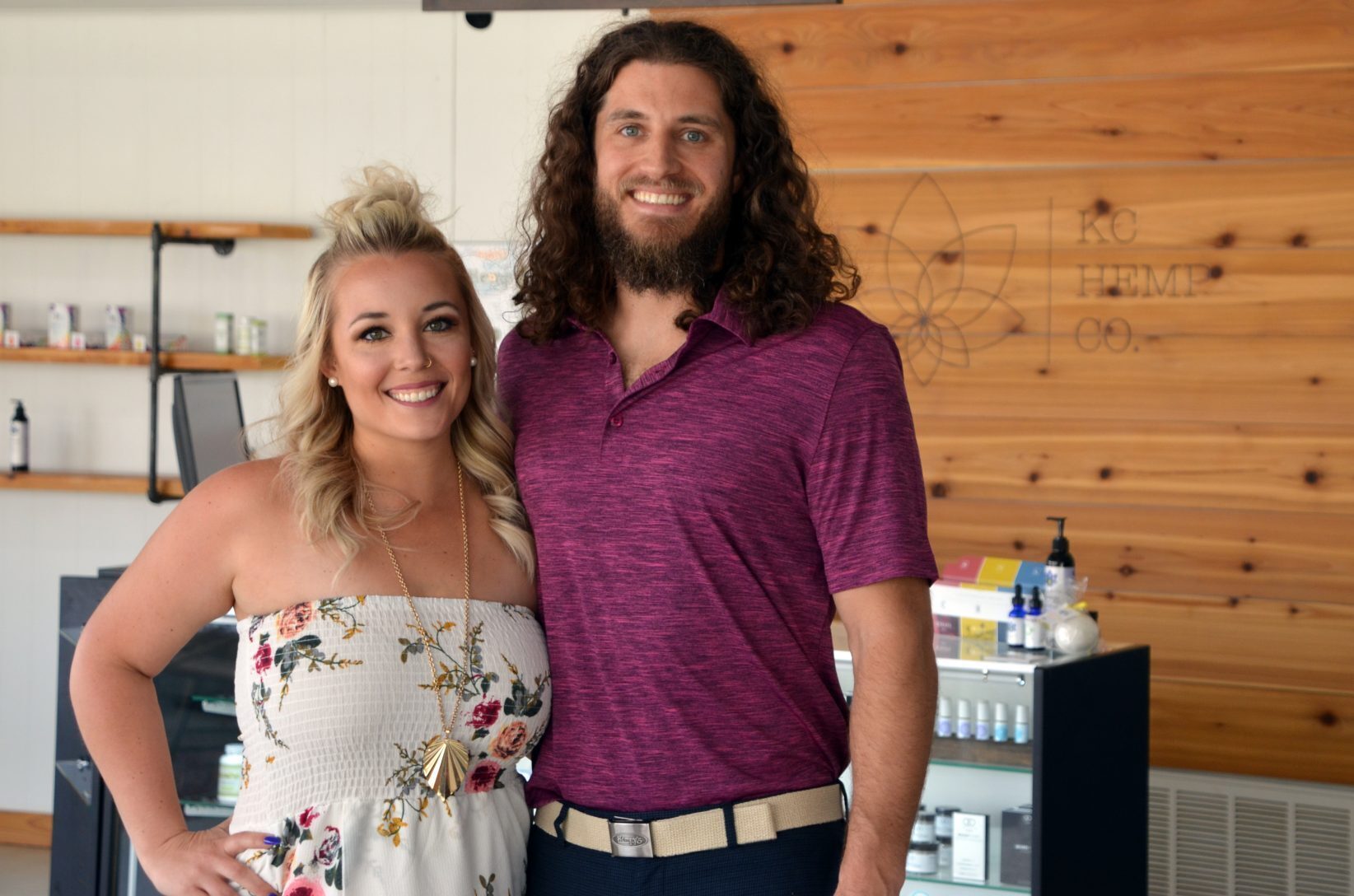
Banking as a mom-and-pop CBD shop can be treacherous, said Kyle Steppe.
“Our first week in business, our bank shut us down and liquidated all of our assets,” said Steppe, who operates KC Hemp Co. with his wife, Heather.
Their downtown Overland Park storefront is one of many independent, regional CBD sites suffering from the latest industry blow to business after an explosive year of growth: In mid-May, widely-used payment processor Elavon suddenly backed out of handling all CBD transactions.
“Elavon was the first solution that came to the table and said, ‘Hey, we are going to work with CBD companies and not charge astronomical rates and fees for them to do business,’” Steppe said. “Then, about three months after they got everybody set up, they pulled the rug out from underneath everyone.”
While Elavon’s official explanation for its industry-extraction move remains vague, the effects for KC Hemp Co. and similar ventures were concrete and stressful, he said.
“Everyone had to scramble,” Steppe said. “Most people were trying to either [conduct financials] overseas or go back underground like they were before, and hope they don’t get shut down. We definitely had to get creative, and we took a lot of CBD ourselves in the process just to keep us level.”
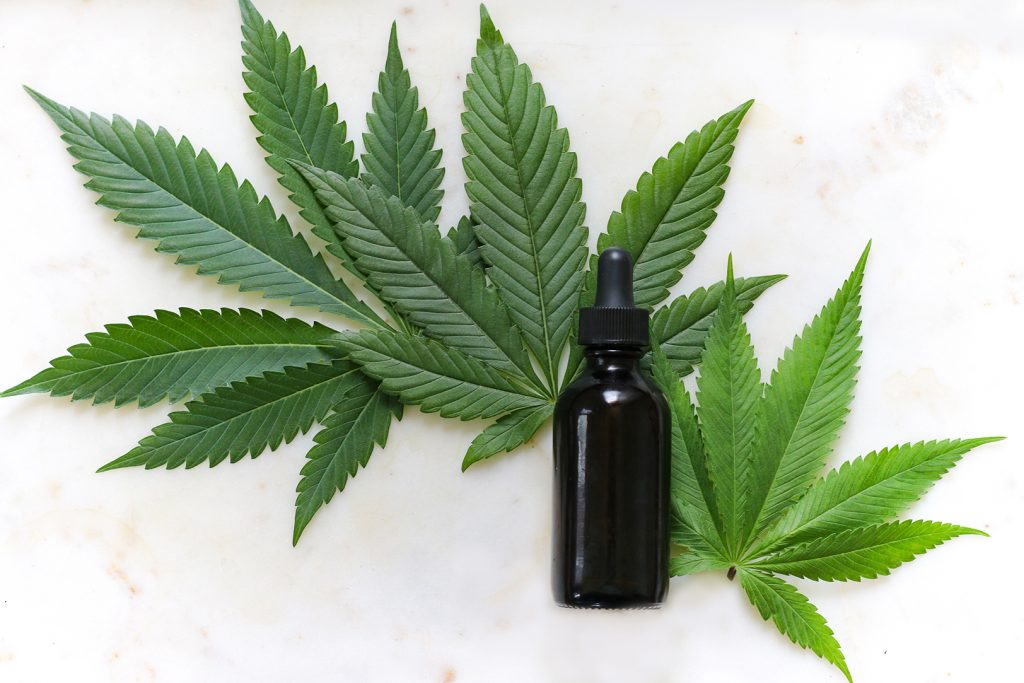
Hemp or cannabis tincture, photo by Kimzy Nanney
Banks deposit seeds of doubt
Understanding the banking industry’s reluctance to work with CBD companies starts with a look at the seemingly-ambiguous legality of CBD products, keyed-up with a bit of front-end botany, said Mat Petersen, attorney for Spencer Fane LLP’s KC office.
“CBD, or cannabidiol, is a cannabinoid, which is a chemical compound that comes from a particular species of plant,” Petersen explained. “That plant is Cannabis Sativa L., and within that species are both marijuana and what we’d call ‘industrial hemp.’ At the federal level cannabidiol, that chemical, it remains illegal.”
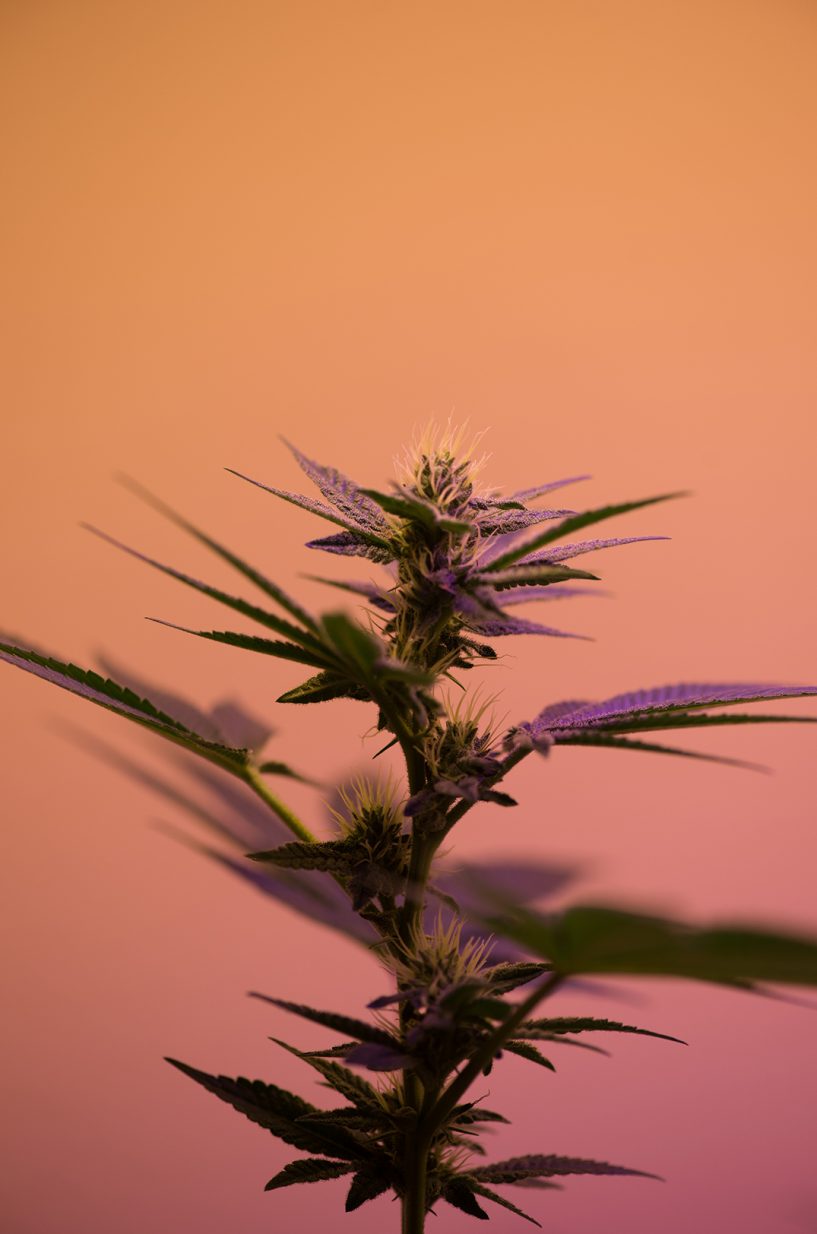
Cannabis sativa plant, photo by Robert Nelson
The Agricultural Improvement Act of 2018, known as the “2018 Farm Bill,” created a legal distinction between marijuana and industrial hemp. According to the law, hemp is defined as a plant within Cannabis Sativa L. containing less than 0.3 percent THC, the psychoactive component associated with marijuana.
Click here for a more complete breakdown of the 2018 Farm Bill’s hemp provisions.
However, since cannabidiol can be derived from both marijuana and industrial hemp, the legality of a given CBD product is dubious until its source is verified, Petersen said.
“Likely if you are working with a reputable CBD merchant, it’s legal, but you can’t tell that without very closely monitoring that business,” said Petersen, speaking from a bank’s point of view.
Though the 2018 Farm Bill opened the way to fully legal, regulated cultivation of hemp, the marketing and sale of CBD products remains heavily scrutinized by the U.S. Food and Drug Administration (FDA).
On the same day the 2018 Farm Bill passed, the FDA issued a statement expressing its concern over, “ … the number of drug claims being made about products not approved by the FDA that claim to contain CBD or other cannabis-derived compounds.” According to federal law, any product making therapeutic or disease-related claims must be FDA-approved before introduction to interstate commerce.
“The FDA has sent warning letters in the past to companies illegally selling CBD products that claimed to prevent, diagnose, treat, or cure serious diseases, such as cancer,” the statement said. “Some of these products were in further violation of the FD&C Act because they were marketed as dietary supplements or because they involved the addition of CBD to food.”
These factors, along with the added complexity of state-level regulation, make it difficult to assign a blanket “legal” or “illegal” label to CBD products.
“So, what you have are payment processors and banks — typically risk-averse entities — that are particularly worried about compliance with federal law, and so don’t think it would be worth the risk associated with [CBD],” Petersen said.
Waiting on an industry innovator
The potent haze of an emerging regulatory environment, risk-averse financial institutions and general misunderstanding make doing business difficult for small CBD already following the rules, the Steppes said. For now, the shop is operating on a cash, Paypal and Venmo-only basis to stay afloat.
“We are going to weather it, there’s no question there,” Heather Steppe said. “If it comes down to it, and we have to put an ATM in our store, we’ll do that. We will not stop doing what we are doing; we are helping so many people, and it is such a necessary thing for a lot of folks. If the banking industry and the credit card processors continue to not provide us with the tools we need to run our small business most effectively, we will still continue to do it on our own.”
The upshot lies in the situation’s ripeness for capitalization by an enterprising, specialized financial institution, Peterson said.
“The trend is that a lot of banks have chosen and will probably continue to choose not to bank with CBD and marijuana until it becomes fully legal and there are more producers in the state,” he said. “But we have seen — from other states that have legalized marijuana — there will be some bank, credit union or other financial institution that is willing to do business with these entities, and they will become the primary financial institution that does so.
“At some point there will be someone who wants to take the risk and develop the expertise,” Peterson added.

Featured Business

2019 Startups to Watch
stats here
Related Posts on Startland News

Healthy hip-hop duo remixes rap for exercise, education tech
Raised in the urban core of Kansas City, Roy Scott grew up idolizing gangster rap. Inspired by 90s hip-hop artists such as N.W.A. and Bell Biv DeVoe, he always hoped to become a famous rapper. But years later when raising his own son, a light bulb went off for Scott when he heard his 4-year-old…

CNBC: Kansas City is a top place to affordably ‘live large’
Kansas City was once again nationally recognized as a locale in which residents can live well on a base salary that’s comparatively low to coastal cities. CNBC named Kansas City No. 9 on its list of 12 cities “where you can live large on $60,000.” “The best places are likely the ones where you can…

Listen: Madison Flitch founder carves a furniture firm with KC stories ingrained
Editor’s note: In partnership with the KC Greats podcast, hosted by Scott Parman, Startland News hopes to offer its audience more avenues to learn about entrepreneurs in Kansas City. Opinions expressed in this commentary are the author’s alone. In this episode, Parman chats with Madison Flitch founder John Pryor, who shares the story of bootstrapping his…
Meet the Kauffman Foundation’s newest board member
The Ewing Marion Kauffman Foundation has added a new member to its high-caliber board of trustees. The foundation announced Thursday that Esther L. George — the current president and CEO of the Federal Reserve Bank of Kansas City — will serve on its board. As a member of the board, George will support the foundation’s…