

Take a seat: How do Bird’s new Cruisers fit into KCMO’s approach to disruptive innovation?
June 25, 2019 | John Jared Hawks
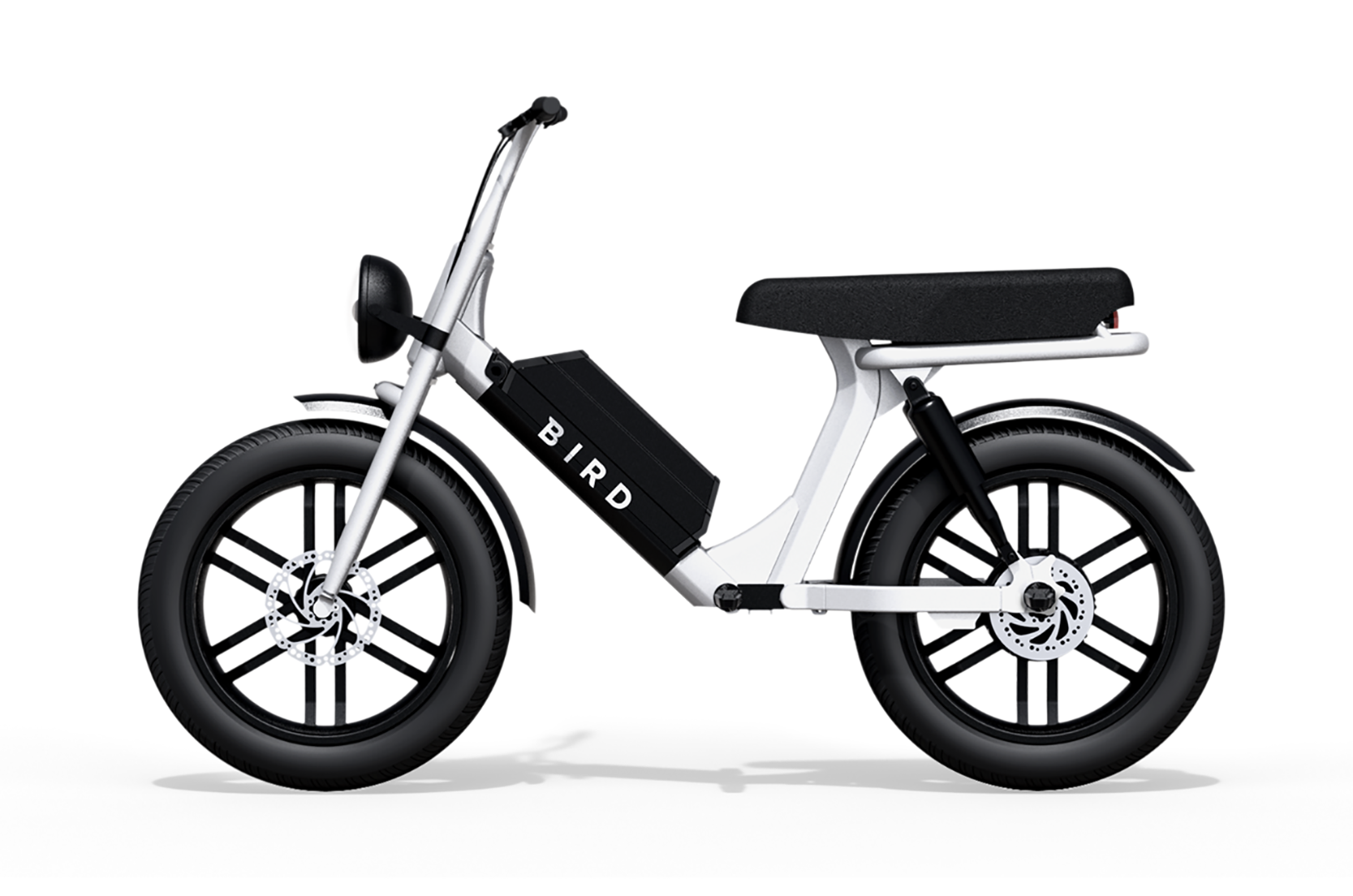
With a cushioned seat for two, the new Bird Cruiser’s potential arrival in Kansas City this summer would ride within KCMO’s approach to emerging technologies and disruptive business models.
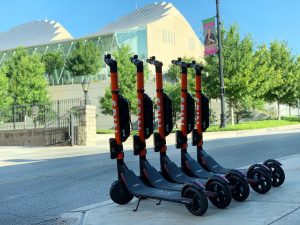
San Francisco-based Spin scooters
Featuring 20-inch wheels, the electric Cruisers travel uphill in areas like Kansas City’s downtown with ease, according to Bird, and are a new take on the shared fleet concept that debuted in summer 2018 in the metro. Such offerings throw a wrinkle into traditional transportation plans, but can help advance overall innovation strategies, Mayor-Elect Quinton Lucas told Startland.
“We need to be concerned with public transportation in the basic sense — a way for people to get from home to work, no matter what part of the metropolitan area they are heading to,” Lucas said. “Public infrastructure changes and private companies both help us achieve this goal.”
Bird has not announced when — nor confirmed if — the Cruisers will arrive in Kansas City, though teasers indicate test markets for the summer already have been selected.
“Bird’s introduction of shared e-scooters spurred a global phenomenon and mode shift away from cars,” said Travis VanderZanden, founder and CEO of Bird. “To further accelerate progress on our mission to make cities more livable, we are providing additional environmentally friendly micro-mobility alternatives — including Bird Cruiser. Starting this summer, people can move about their city and explore new neighborhoods together, without a car.
Click here for more details on the Cruiser.
Designed and engineered in California, Bird Cruiser is “an inclusive electric-powered option that is approachable, easy-to-ride and comfortable on rough roads,” VanderZanden added.

Bird Cruiser
Keeping up with trends, technology
Kansas City officials are in the midst of understanding how to deal with such rentable electric scooters and e-bikes, a transportation phenomenon. KCMO recently partnered with Bird, Spin, and RideKC Bike and RideKC Scooter for a year-long program “to gauge how these motorized units best fit into our transportation system,” according to city officials.
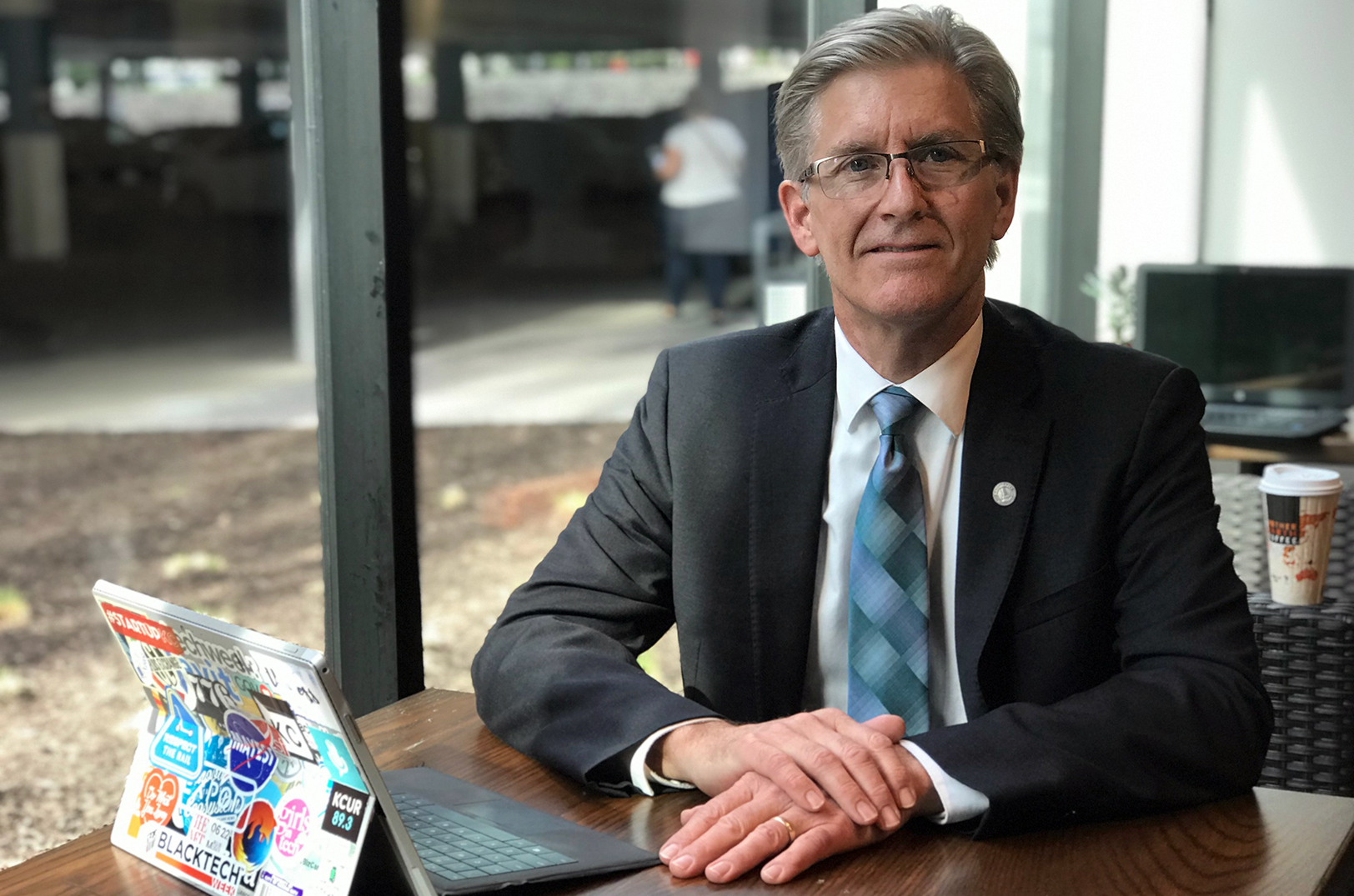
Rick Usher, KCMO
The program is a step toward determining how to regulate category-breaking business models, said Rick Usher, KCMO assistant city manager for entrepreneurship and small business
“We’re now just over a month into that program,” Usher said. “The pilot is designed to help us figure out what kind of product we need to put in place. What a permitting process would look like, what licensing process would look like. So then in a year, we will take something to City Council for the creation of a permitting or licensing program.”
For Usher, a major facet of that process is understanding what a given business offers the community.
“In the case of scooters, it centers around access to transportation and shared mobility,” he said. “Of course, there is the environmental side of things, with the potential of reducing greenhouse gas emissions. We also have our community health improvement containing an economic mobility component that scooter would support in helping residents get to work, school, or shopping.”
Click here to read about an early safety report about scooters on Kansas City streets.
The ultimate goal for the KCMO pilot program is to create a flourishing environment for both entrepreneurial startups and the city’s transportation culture, Usher said.
“Technologies are changing, so we’re trying to make sure terminology and regulatory models keep up with the terminology,” he said. “We want to build toward certainty of government regulations.”
Adding to the mix
The movement is also seeing cautious support from the highest levels of city government.

Quinton Lucas, Kansas City councilman 3rd District
“It is exciting to see transportation tech coming to KC,” Lucas said. “I have had the chance to ride the scooters and enjoyed it — I actually rode one from downtown to the stadium last year.”
In Lucas’ vision, however, private transportation tech should augment, not replace, public infrastructure.
“We must invest in the public infrastructure changes necessary to ensure that everyone in Kansas City has access to safe and reliable transportation,” he said. “Private companies like Bird and Spin are an exciting and fun way to increase transportation options, but should not take the place of public infrastructure.”
And I join the Bird scooter world. I need to work on driving strategy though. #KCMO pic.twitter.com/E7tnZSy0gl
— Quinton Lucas (@QuintonLucasKC) July 18, 2018

Featured Business

2019 Startups to Watch
stats here
Related Posts on Startland News

Three fathers bring Whizz Bang potty-training game to market through Make48, Handy Camel
The Whizz Bang gamifies potty training and saves the bathroom floors of all parents, said Amy Gray. The device, which hooks on the underside of a toilet seat lid, emits a LED light target at the bottom the bowl. Once hit, the device plays musical praise, said Gray, the head of sales for Handy Camel,…

Reconciliation Services hopes to heal trauma in the heart of stigmatized Troost corridor
Commanded by Scripture, David Altschul journeyed into parts unknown, said his successor, Father Justin Mathews. In the mid-1980s, a philanthropic pull tugged at the heart of Altschul — a white, insurance salesman from Johnson County — and eventually led him into the distressed, history-rich neighborhoods that lined Troost Avenue on the east side of…
Thelma’s Kitchen cooks up pay-what-you-can cafe concept to preserve community
Twenty people once filled the kitchen of Thelma Gardner’s apartment in search of their next meal. Their hunger for food fueled her hunger for humanity, recounted Father Justin Mathews as he sat sipping coffee in the newly opened Thelma’s Kitchen. The pay-what-you-can restaurant — located inside of the Reconciliation Services building at 3101 Troost Ave.…
Operation Breakthrough bridge over Troost symbolizes ‘real community’ at an intersection
With reflection in his voice, Alvin Brooks paused. “The city has to be a partner,” the Civil Rights activist and veteran Kansas City Police Commissioner said as he spoke of the redevelopment of Troost Avenue — the well known racial dividing line, that has long isolated the east side of the Kansas City metro from the…