

Atlanta-based Opportunity Hub announces plans for KC minority accelerator
May 23, 2019 | Tommy Felts
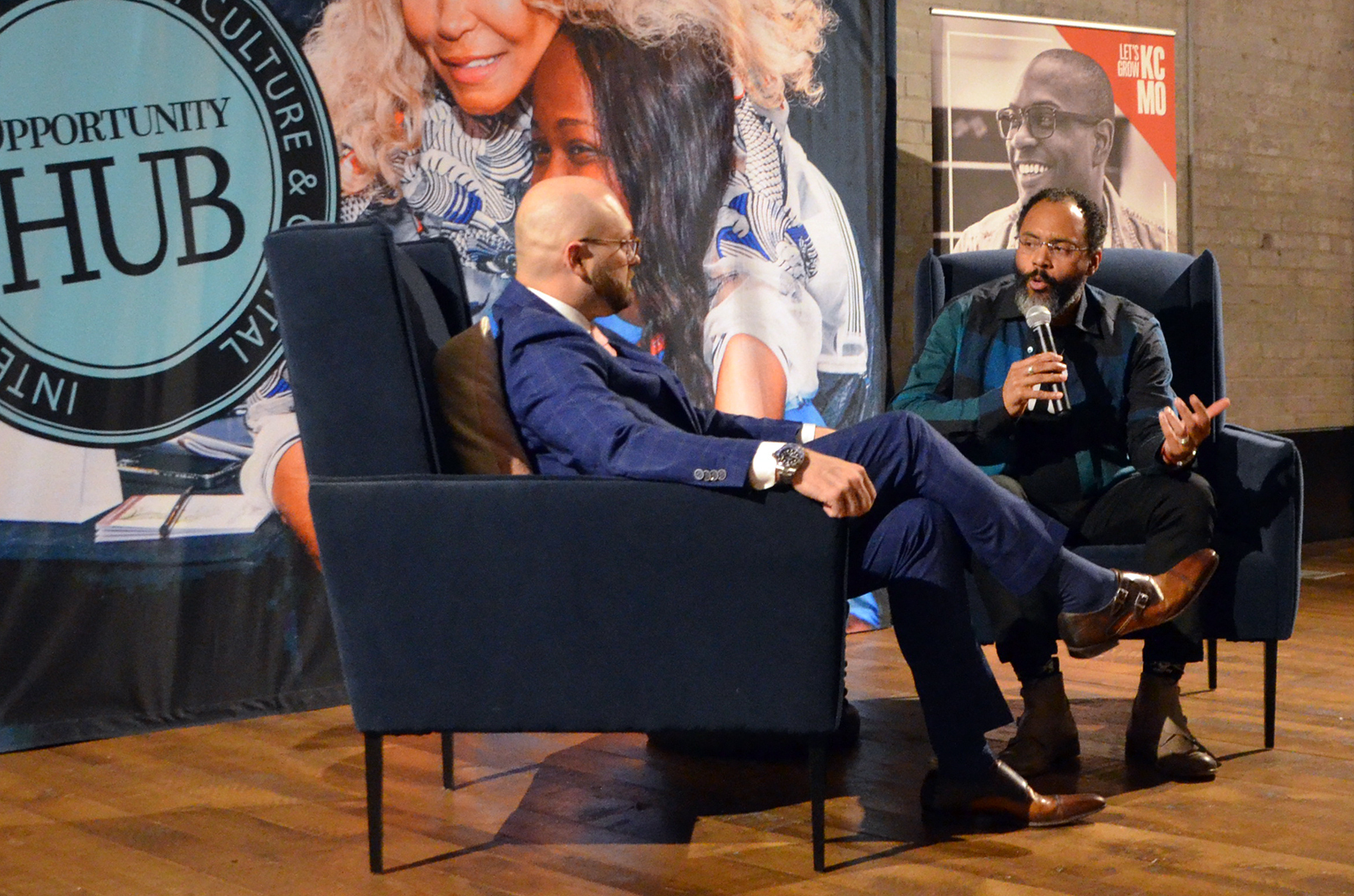
Opportunity Hub is about building strength in numbers, said Rodney Sampson, a feat that can only be accomplished in Kansas City through inclusive and intentional ecosystem building.
Rodney Sampson, Opportunity Hub
“The bottom line is that it takes everybody to be a stakeholder at some level,” said Sampson executive chairman and CEO of Atlanta-based OHUB. “The thesis of a sustainable ecosystem is that you can’t withdraw from the ecosystem until you invest in the ecosystem. You have to put something into it. And you may not benefit immediately, but your neighbor might.”
OHUB announced Wednesday its plans to launch a Kansas City campus in a public-private partnership with the Economic Development Corporation of Kansas City, Missouri. The KCUP initiative would culminate with an inclusion-focused business accelerator driving urban prosperity.
“This is a celebration of unity, creating a healthier ecosystem within Kansas City, Missouri,” said Jamilah Jones, a business development officer at EDCKC and a lead organizer of KCUP. “OHUB is going to hopefully help create generational wealth and wellness of the community members that historically haven’t had the same resources in the world of entrepreneurship.”
The KCUP + OHUB campus would be a physical location within Kansas City, Missouri, Jones confirmed, though details of the partnership and space are still in the works. Sampson teased during an announcement event Wednesday at the Crossroads Hotel that OHUB could find a home in one of Kansas City’s historically black neighborhoods like 18th and Vine, though he too said no decision had been made.
More than a year in the making, the KCUP + OHUB initiative seeks to recreate the success of Opportunity Hub in Atlanta, where Sampson has focused on leading the future of work, startup entrepreneurship, early stage investment and wealth creation. OHUB targets inclusive access to the tech, startup and venture ecosystem; in-demand technology education, training and talent placement; and early stage capital.
Click here to learn more about Opportunity Hub.
“When some people enter the high-growth entrepreneurial ecosystem, they’re entering with what I call ‘entrepreneurial privilege,’ which means they knew where to go,” Sampson said. “They know what an accelerator is. They already have skills. You know, they have a buddy who works over there or another friend who has some capital. But the majority of the people on this planet don’t know where to go. They don’t know how to get started.”
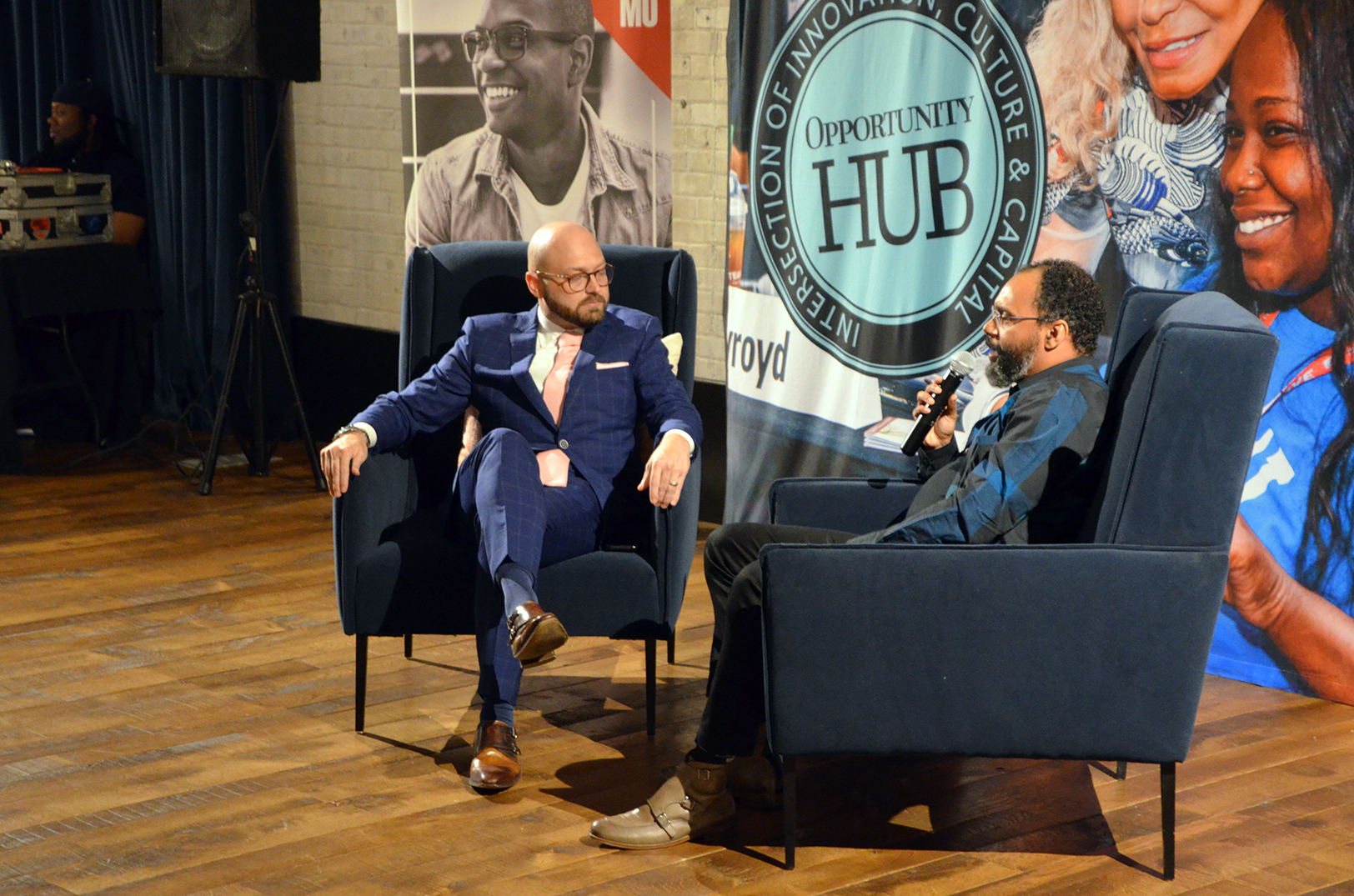
Drew Solomon, Economic Development Corporation of Kansas City; and Rodney Sampson, Opportunity Hub
Resources — and support organizations — already exist in Kansas City, he acknowledged, but Opportunity Hub has the potential to approach ecosystem building with an intentional and inclusive mindset that rallies the existing players while helping those who historically have been unaware of tools and opportunities for entrepreneurs.
“We’re not coming here thinking we’re the only game in town — that there’s not already work being done on the ground, that we’re the best thing ever,” Sampson said. “We’re coming to just help bring everybody together, to pool resources, but also raise some outside resources and connectivity here as well.”
It isn’t difficult to see why OHUB wanted to expand to KC, he said, specifically making note of event attendees in town this week for the Ewing Marion Kauffman Foundation’s ESHIP Summit.
“Kansas City is at a perfect time in history to give this a go,” he said. “Look at the work of your existing startup ecosystem — some of the successful entrepreneurs, some of the folks building companies here, your academic institutions and how they’re reshaping their programs. Look at people who are moving back here or are moving here for the first time. Look at the work Kauffman is doing, covening the world’s leading ecosystem builders. This is not happening in Silicon Valley, New York or Boston this week. It’s right here in Kansas City.”
“So when you look at the density of people who are working on this problem, at a certain point you start to see your breakthrough,” Sampson continued. “You get small breakthroughs first. It isn’t going to happen overnight. You’re looking for those little wins. And you’ve got to amplify that, keep tweaking and building.”
Click here to read OHUB’s Guide to Building Entrepreneurship Ecosystems in Communities of Color, produced in partnership with the Federal Reserve Bank of Kansas City.
As the OHUB partnership with EDCKC develops, organizers of the KCUP initiative want feedback from Kansas City, Missouri, residents and entrepreneurs about how it should take shape, said Jones.
“Get excited and stay engaged,” she said. “We can’t move forward without community support and input.”

Featured Business

2019 Startups to Watch
stats here
Related Posts on Startland News
Clock is ticking on World Cup 2026: Small businesses urged to prepare before this buzzer-beater
A massive influx of visitors are expected next year when more than 600,000 fans descend on Kansas City for its piece of the FIFA World Cup 2026 prize, but potential roadblocks lie ahead for small business owners who are waiting for the action instead of preparing now to capitalize on it, said local leaders. “This…
Why KCMO pushed to lock down ‘Kansas City’ brand ahead of its biggest sports event yet
With World Cup visitors already eyeing plane tickets to Kansas City for matches opening in June 2026, clarity around what constitutes “Kansas City” will be key, said Quinton Lucas, who in late 2024 made moves to restrict labeling the city’s name on certain projects. The effort aims to authentically represent KCMO on the world’s stage,…
$20M project expected to remove key barrier to unlocking 18th & Vine vibrancy: parking
It’s more than just a parking garage, said Pat Jordan, revealing a plan to develop a state-of-the-art, transit-oriented parking facility in the heart of the historic 18th & Vine District is about opening a gateway to the entertainment and cultural hub. “Limited parking has historically been a barrier for visitors, especially during peak hours and…

Downtown KCMO ballpark remains in play as Kansas aggressively pursues Royals
Editor’s note: The perspectives expressed in this commentary are the author’s alone. Gib Kerr is the chair of the Downtown Council of Kansas City, Missouri, managing director at Cushman & Wakefield, and an author. This piece was first published by the Downtown Council. Where should the Royals play baseball? Last year, the debate was whether…