

‘This is the end of The Sundry’ — Sustainable food problem remains after startup’s closing, founder says
April 17, 2019 | Tommy Felts and Austin Barnes
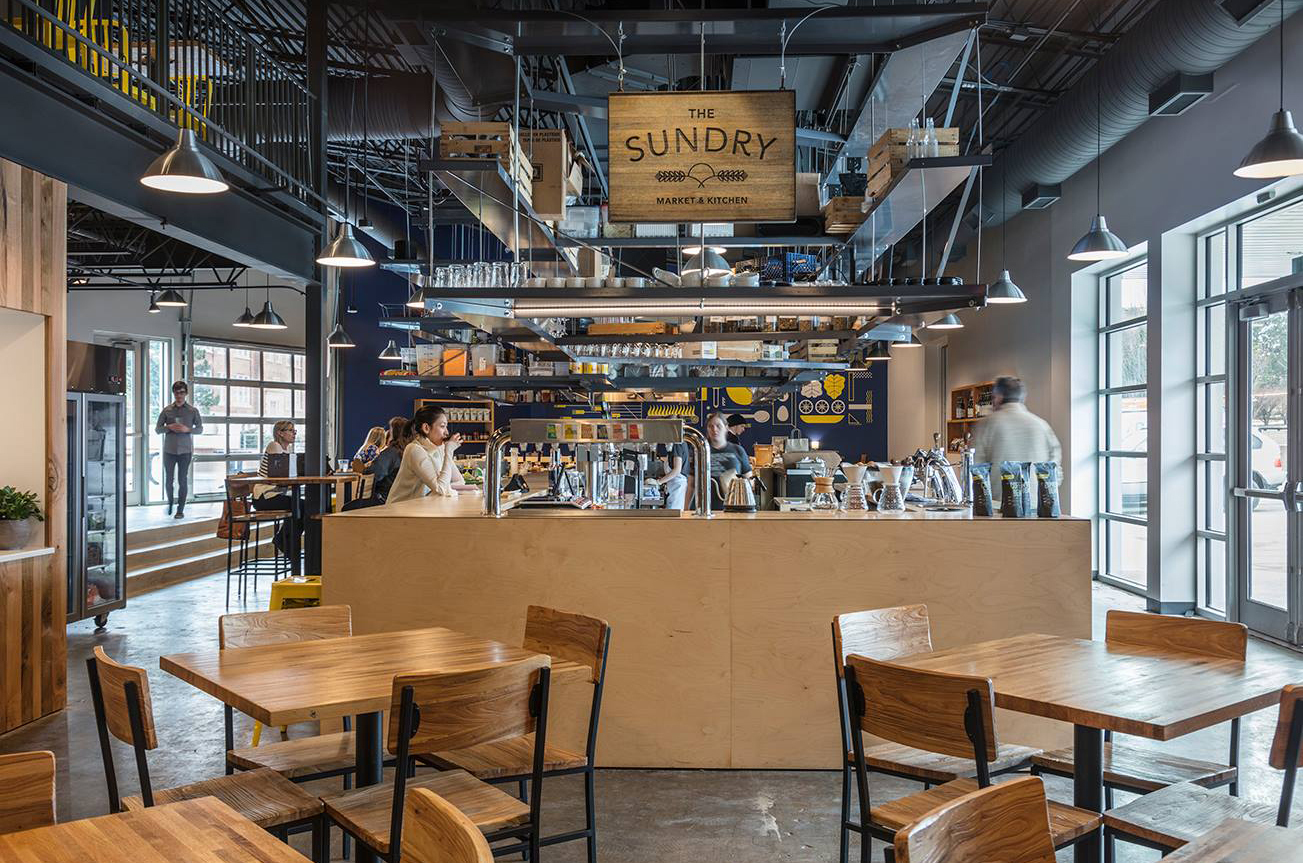
The Sundry market-and-restaurant concept at Plexpod Westport Commons simply wasn’t solving the problems of scope and scale within sustainable and local agriculture as intended, said Ryan Wing.
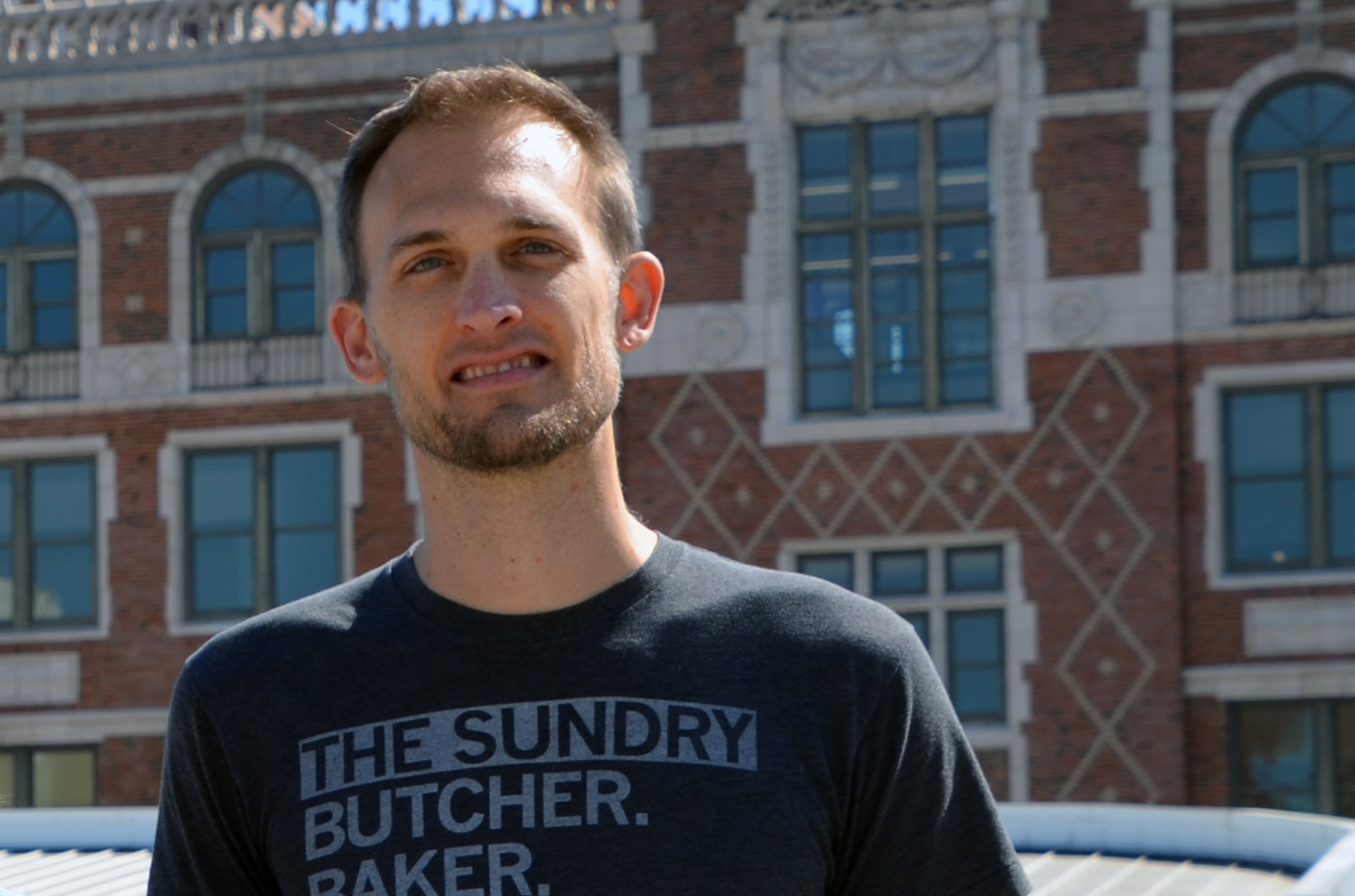
Ryan Wing, The Sundry
Ultimately, that meant the venture itself couldn’t continue as originally envisioned, added Wing, founder of the sustainable food startup, which abruptly closed to the public last week.
“Expectations just weren’t met across the board,” he said. “We had investors in The Sundry and I was fairly insistent toward the end that we go all in or try a different route entirely.”
Wing spoke gently about the mission-based business — his passion project of more than 7 years — his words punctuated by somber, reflective pauses.
“This is the end of The Sundry,” he said of the operation he created with a goal to help create a more sustainable food system in America — one that addresses underlying, critical issues of accessibility and affordability.
“But these remain problems that ultimately have to be solved,” Wing continued. “It sounds redundant, but ‘unsustainable’ means unsustainable. It doesn’t matter if we want to change these things, they literally must be changed.”
‘Too much to wrap your brain around’
The Sundry now is a dream never fully realized, Wing said, noting the market-and-restaurant blend format proved a difficult method of communicating the business’s message.
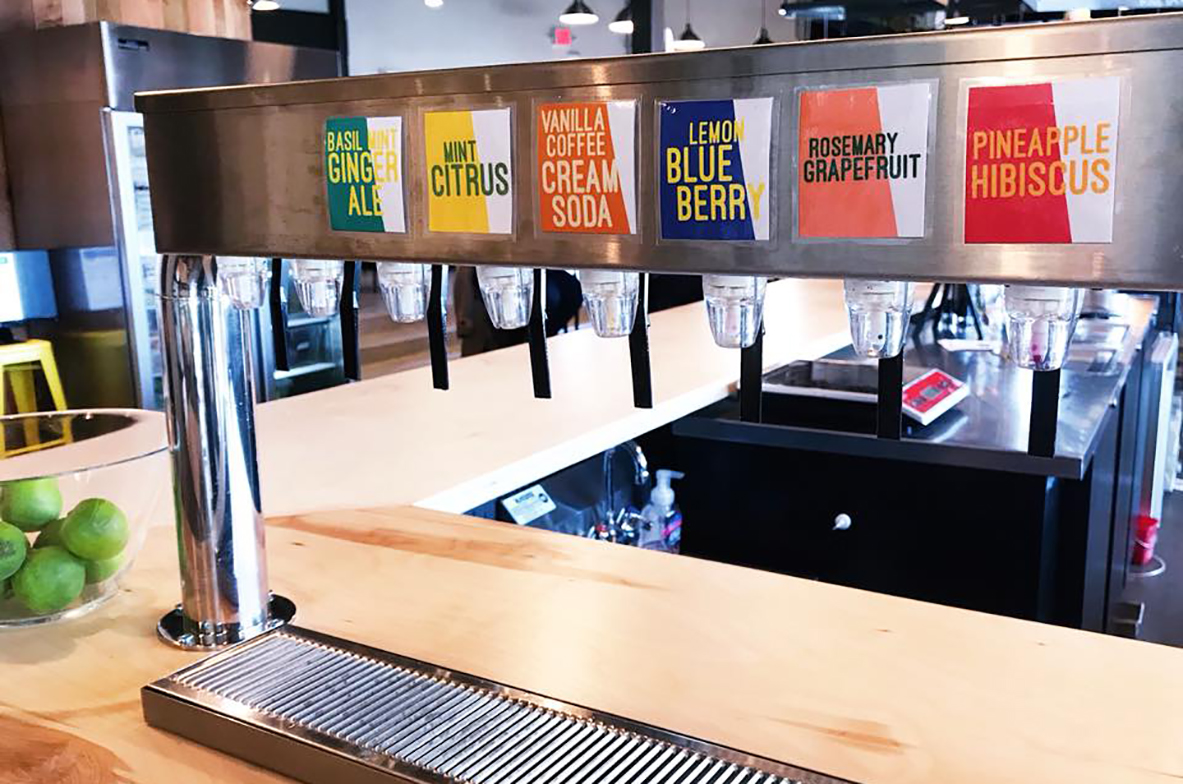
Photo courtesy of The Sundry
“The physical space of The Sundry was intended to be like the visitor’s center for a brewery — a place for people to experience the brand, a place where some R&D and creation of products happens, a place to help educate people and tell them the overall story,” he said. “It was supposed to be a place to humanize the brand. Then the products that we produce were supposed to be the primary financial driver of the company.”
But Wing struggled to build a consistent inventory of Sundry-branded products that were made using ingredients from local farmers, produced at scale, and available to then sell outside of The Sundry.
“I have a million feelings about the whole thing overall, but the frustration I feel about it is mostly about not having tested the founding business model, which included those products,” he said. “I’m left with this feeling of I don’t know if this big idea that we had works or not.”
“It’s almost too much to wrap your brain around in too short of a time,” Wing added.
‘A shoestring and a dream’
The move to Plexpod Westport Commons from a location in the Crossroads Arts District in fall 2017 came with added visibility, but unintended consequences that might have contributed to slowing The Sundry’s early traction, Wing said.
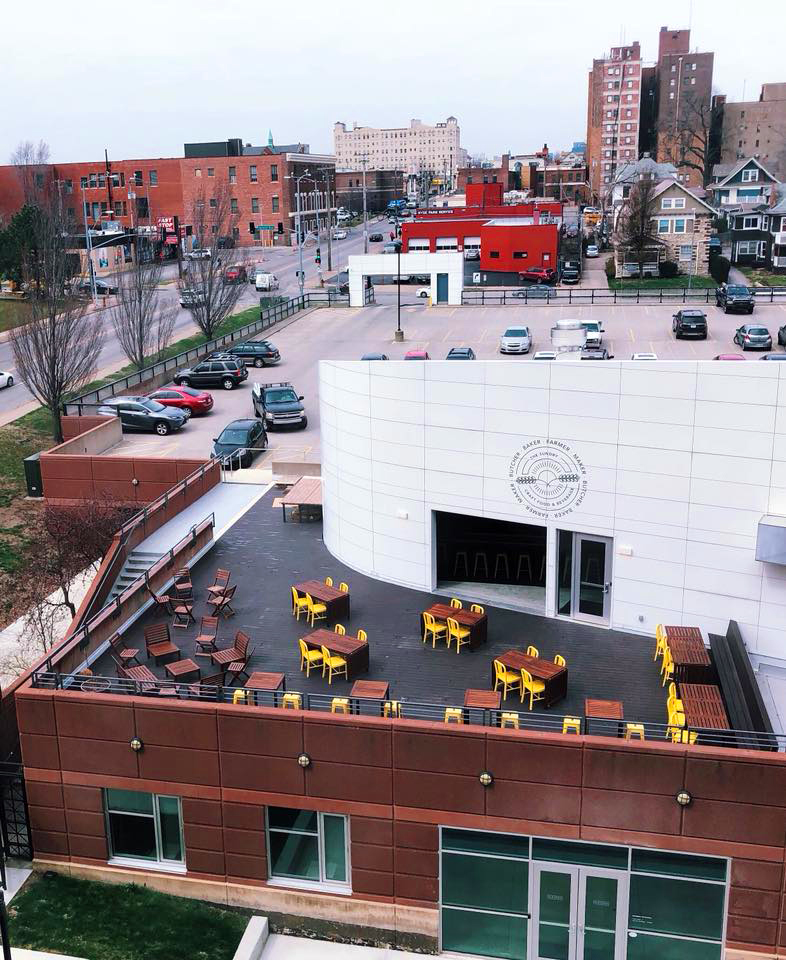
Photo courtesy of The Sundry
“I didn’t anticipate a whole bunch of our Crossroads clientele necessarily following us and continuing to be the daily drivers in the new space, but moving ended up feeling much more like starting over entirely than I expected,” he said. “I felt like the way we had designed the space [at Plexpod] incorporated a lot of what worked and didn’t work for us in the Crossroads. We felt like it was a chance to learn from and apply those lessons.”
Instead, the move proved more of a challenging re-introduction between The Sundry and the surrounding community, which Wing at the time hoped would make the business a neighborhood destination.
“The Sundry was started on a shoestring and a dream of ‘If we just get the doors open and show people what we have in mind, then opportunity will come our way if people like it,” Wing told Startland in a 2017 story about the new space.
Plexpod, a Kansas City-based coworking community with four locations across the metro, saw Wing’s operation as an exciting experiment and opportunity to collaborate, founder Gerald Smith said in 2017.
“Everyone enjoyed and loved The Sundry concept and we wish Ryan nothing but the best on his future endeavors,” Stephanie Medina, Plexpod director of operations, told Startland Tuesday.
An email from Plexpod April 9 announced The Sundry’s closing, as well as teased a new concept in the space.
“Considering the size of our Plexpod Westport Commons location, on site food services is very important as a matter of convenience to busy entrepreneurs working here,” Medina elaborated. “We have been working on a new concept that we are very excited to announce. We look forward to this new concept providing service to our member companies, the neighborhood and community alike.”
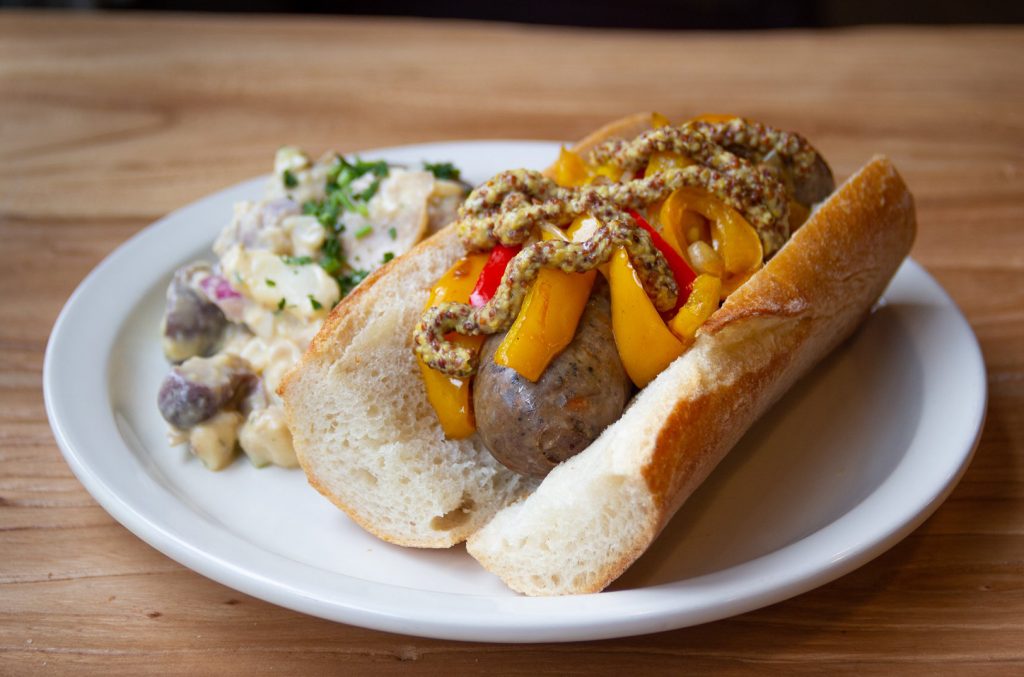
Photo courtesy of The Sundry
‘Fighting the same fight’
Tough soil remains to be turned in the world of sustainable agriculture, Wing said.
“Think about all the farmers and producers who are fighting the good fight, and deserve a lot more reward than most of them are getting for the incredibly difficult work they’re doing,” he said.
Relationships built with such members of the community will be forever valued, Wing added, noting the “amazing human beings” at Cultivate KC, which operates the farmland outside Plexpod Westport Commons and from which some of The Sundry’s produce was sourced.
A key force behind restoration of Westport Commons and transformation into a Plexpod site — Bob Berkebile, a founding principal of BNIM Architects and partner of Sustainable Development Partners — also earned high praise from Wing.
“I had done a little bit of work with Bob Berkebile prior to the whole Plexpod Westport Commons project, and I grew to work with him lot more through The Sundry,” Wing said. “He is honestly one of the greatest humans walking this earth that I’ve met, and we’re very lucky to have him in Kansas City. Getting to know him better was certainly something that I’ll never forget.”
“It was great to know that there were amazing people fighting the same fight,” he added.

Featured Business

2019 Startups to Watch
stats here
Related Posts on Startland News
Block by block: Prototype builds startup’s housing vision where everyone can afford their own castle
A mock home facade project on the grounds of Kansas City’s historic Workhouse Castle serves as a proof point for Godfrey Riddle’s rebooted Civic Saint — a social venture built on compressed earth blocks as its key to affordable, sustainable housing. “CEBs (compressed earth blocks) are great for Kansas City, because non-expansive sandy clay soil…

Resource revival: Digital Inclusion Fund relaunches with initial grants focused on devices
Kansas Citians can’t upgrade skills or devices they don’t already have, said organizers of a newly relaunched Digital Inclusion Fund — emphasizing a need to attack the metro’s digital divide at the infrastructure level. The fund is set to award up to $250,000 to 501(c)(3) public charities (including schools and churches) or governmental entities across…
New deal with lightwell keeps WeWork in Kansas City after closing Corrigan Station space
A freshly negotiated lease agreement with the developer behind the lightwell building in downtown Kansas City means WeWork will continue its two-floor coworking and flexible office space operation in the heart of the city’s central business district. WeWork has officially completed its lease rationalization with the assumption of its lightwell location contract, the company said…

Meet the founder distilling greatness (and fusion flavors) into Kansas’ first Black-owned vodka brand
Startland News’ Startup Road Trip series explores innovative and uncommon ideas finding success in rural America and Midwestern startup hubs outside the Kansas City metro. WICHITA — Greatness isn’t given; it’s earned, said Troy Brooks. But it comes one step at a time, and not without its challenges, he said. The entrepreneur behind Kansas’ first Black-owned…