

Doob 3D aims to capitalize on ‘mecca for foot traffic’ with Country Club Plaza pop-up shop
April 9, 2019 | Austin Barnes
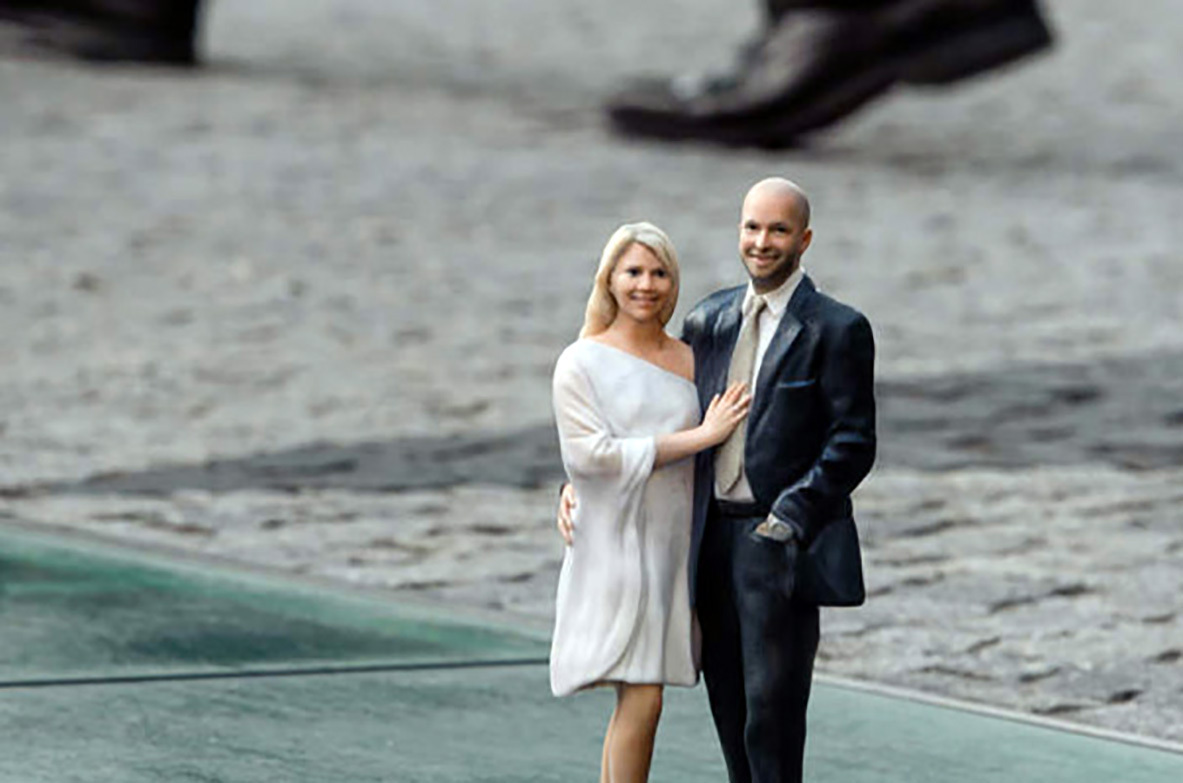
If you build it, they will come.

Doob 3D
More than a quote from the 1989 blockbuster, “Field of Dreams” — the seven word mantra is what’s pushing Doob 3D to embrace the curve balls of exposing Kansas City to new technology and pinch hit with a new pop-up location on the Country Club Plaza, said Nick Nikkhah.
“The key thing for us is to be at a place where people can simply walk by our store, look in the window and see something,” Nikkhah, co-owner of Doob’s Kansas City store, explained of disadvantages presented by the 3D figure printing shop’s current homefield — a low visibility, storefront in an Overland Park strip mall.
“I take full responsibility for this,” Nikkhah said in explanation of challenges he and his team have faced as they work to grow the Kansas City franchise of a business that first flourished in New York City and Los Angeles.
“I didn’t anticipate the [lack of] foot traffic. I didn’t separate that from the car traffic that’s in the parking lot. You know, you’ve got Starbucks, you’ve got Smashburger, you’ve got Cheesecake Factory, you have Whole Foods down [the street.] These places are generating mass amounts of consumers — but it doesn’t do any good when they’re just kind of driving through.”
A business model originally designed for walkable metros, Nikkhah didn’t realize foot traffic would be a key element of success when he first sized up Doob as a homerun entrepreneurial endeavor, he said.
“Tell me a place in New York where you can open up a store that doesn’t have foot traffic, that’s something that they don’t even consider,” he said.
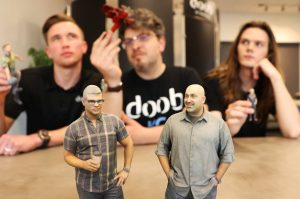
Doob 3D
Hustling to expose Kansas City to 3D printing — a tech sector Nikkhah said many remain unaware of — the benefit of passerby consumers revealed itself to the entrepreneur after he and his team opened a kiosk at Oak Park Mall, he explained.
“[The kiosk has been] unbelievably successful. So therefore, for us, it was like — imagine if that was our store. Somebody was walking by our store and they stop. We don’t have anybody even manning the mall and it’s producing income for us,” Nikkhah said.
High visibility and welcoming arms were among several selling points that brought the Doob team to the Plaza as they scouted new prospects for advancing the business, he explained.
“It’s the mecca for foot traffic,” he said excited.
Pursuing the pop-up shop — set to open in early May — could ultimately lead to a long term move for Doob, Nikkhah added.
“I have a great anticipation. I went there at 2:45 on a regular, rainy day, put my phone on my dash and recorded [the store],” he said. “Four people walked by our store every minute — on a rainy day! [Imagine] it being a sunny day or a summer day or you know a peak day or event going on.”
Doob has no plans in place to vacate its current location in Overland Park, Nikkhah further explained, noting that the store’s landlords understand the growing pains he’s experienced, launching a business void of a suburban game plan.
“This is the part where I feel like it was my biggest failure,” he said. “I was looking for demographics [not location.]”
Doob’s pop-up takes the mound at a time when many in the entrepreneurial community have questioned the startup’s viability, Nikkhah said candidly.
“Somebody had mentioned that we didn’t do research on the product … that’s not true. We did and absolutely loved it,” he said. “Not one person asks questions about cost [or has shown concern.]”
Click here to read more about challenges Doob has faced.
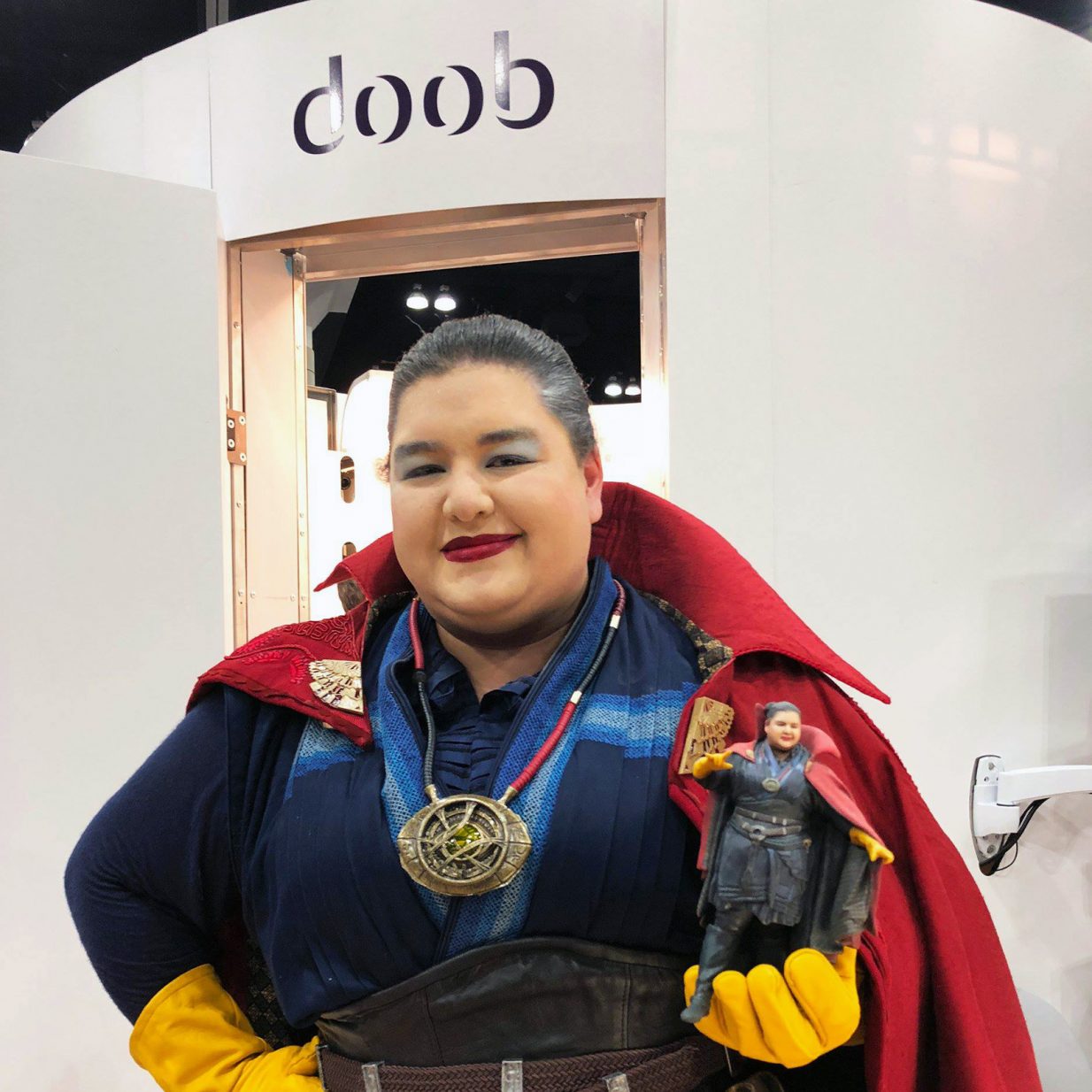
Doob 3D at Planet Comic-Con
Despite Nikkhah’s being vocal about the challenges he and his team have faced as early adopters of 3D printing in a retail setting, the business is doing remarkably well, he said.
A lack of marketing has also led to public assumptions that Doob could be a financial foul, Nikkhah revealed.
In reality, sinking money into traditional marketing efforts isn’t yet a feasible option for the store’s budget, when resources are better being allocated to support a key component of the store’s business model — education, he said.
“A, [we have to show people] this is possible now. And then B, give them ideas on how to use it. Those are things that are the challenges for a brand new product that’s never even existed before,” Nikkhah said. “People take for granted that half of marketing is for the consumer to understand what your product does in the first place.”
Overcoming the hurdle of product exposure is a priority for Nikkhah and his team, likely to be accomplished through the B2C experience of the pop-up shop — a concept which has already proved successful for the company, fresh off a popular pop-up experience at Kansas City Comic Con, he said.
“We had somebody walk in thinking we were a marijuana place. Like, ‘I just saw your name. I want to see what this is.’ And then of course they were amazed,” he said.
Similar run-ins with curious consumers are expected on the Plaza, Nikkhah said.


2019 Startups to Watch
stats here
Related Posts on Startland News
Here’s how ULAH’s new boutique model aims to rack success for local brands, not inventory debt
The new KC Collective consignment-based program for local brands at ULAH is a win for both the Westwood boutique and Kansas City creatives, said Joey Mendez and Buck Wimberly, announcing a fresh model to help the struggling store stay open and financially stable. “We’ve always had local brands,” said Mendez, co-founder of ULAH, explaining the…
Tiki Taco ticks up giving alongside expansion; CEO owns up to taco shop’s neighborhood impact model
A month-long campaign in the popular Kansas City-based chain offers easy add-on: joining KC GIFT’s network of donors Restaurant executive Eric Knott wants Tiki Taco’s operators to own the neighborhoods into which the popular taco shop expands, he said, but that doesn’t just mean dominating the fast-casual market in each pocket of Kansas City. “Our…
Kauffman Foundation announces first-ever semifinalists for Uncommon Leader Impact Award
A new leadership prize aimed at celebrating changemakers at organizations aligned with the priorities of the Ewing Marion Kauffman Foundation is closer to naming its first winner, the influential nonprofit announced Wednesday, revealing 12 semifinalists culled from more than 300 nominations. “The response from community members across the Kansas City metro area was tremendous,” said…
Main Street is already harnessing AI to build wealth; adoption now key to region’s growth, heartland leaders say
WICHITA, Kan. — Artificial intelligence is likely to be one of the most transformative technologies of the digital era, said Taylor Eubanks, noting that AI’s thoughtful deployment can be a tool for growth, not displacement. “By engaging directly with entrepreneurs, small businesses, nonprofit leaders and local innovators, we can better support responsible AI adoption that…