

Skip restaurant lines (and downloading another app) with text-based ordering
March 13, 2019 | Elyssa Bezner
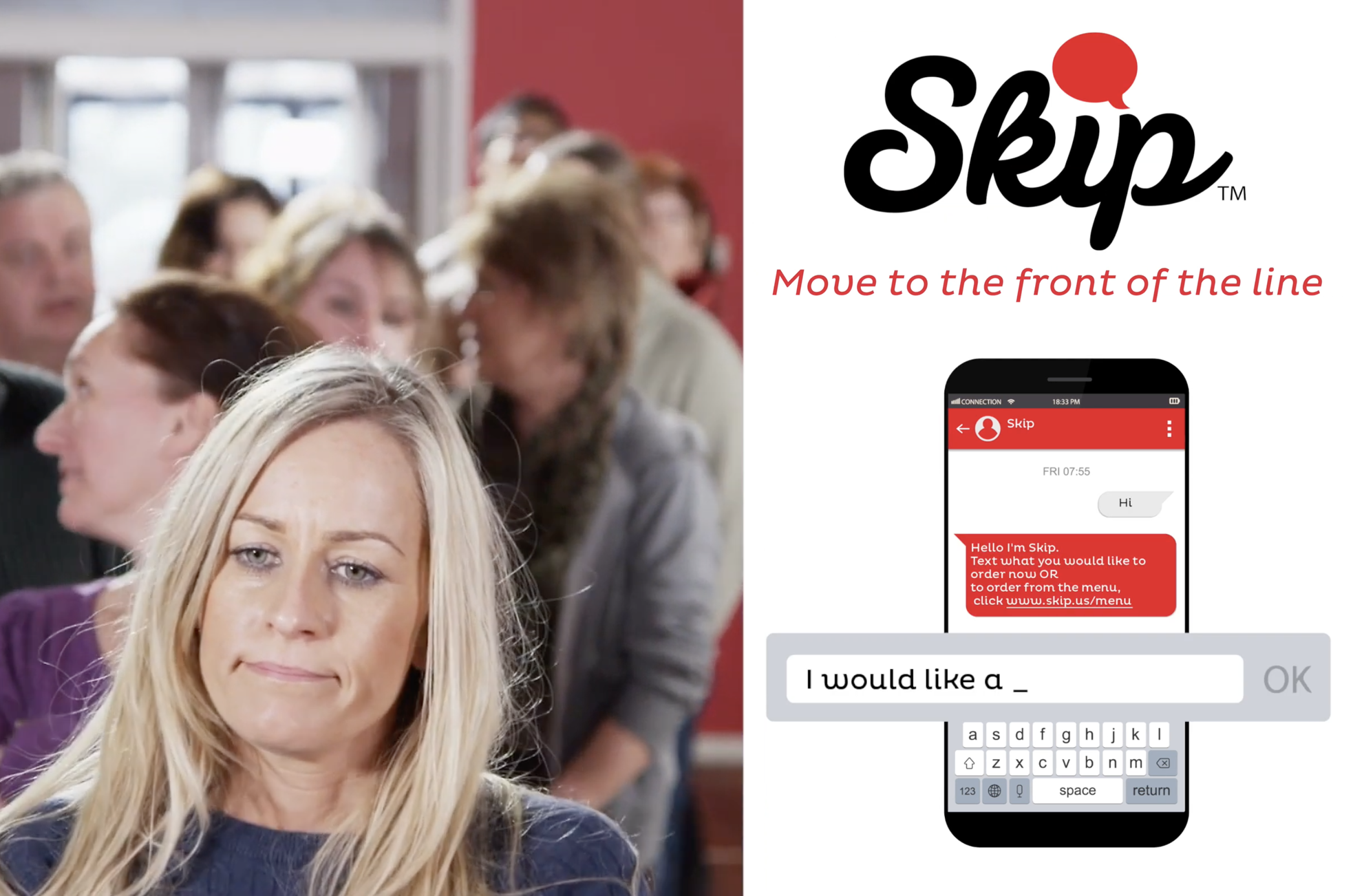
In an increasingly automated world, American consumers are experiencing app exhaustion while continuing to need innovative solutions to address daily pain points like waiting in lines at their favorite restaurants, said Eric Tucker.
Founders: Eric Tucker and Chuck Vanasse Founding year: 2015 Amount raised to date: $1.7M Noteworthy Investors: Target Hill Capital Current employee count: Six
“People are tired of downloading apps,” said Tucker, founder of KC-based Digital Baron, which delivers Skip, an app-less mobile and pay platform. “There are 50,000 different brands in the U.S. — do you think that someone’s going to have even a small portion of those apps on their phones? There’s just not enough space.”
Click here to learn more about Skip.
Skip allows customers to order via a text shortcode or kiosk in restaurants without eating up space on their phones, he added, noting the platform increases the speed and accuracy of service.
“Those fast food businesses feel like their staff has enough on their plate dealing with the rush hours, so having to also take a text message and enter it in and deal with questions [wouldn’t work],” said Tucker. “We needed to have it sent right to the point of sale, which then goes to the kitchen. Nobody touches the order.”
A recent pilot test through three locations of a large, national brand proved the platform could also increase the average amount spent by customers, he said, noting Digital Baron hopes to continue partnering with brands and other food-focused service platforms.
The platform originally took shape as a solution catered to the hearing impaired, he added, noting the idea came to him after a bad experience with a drive-thru on a rainy day.
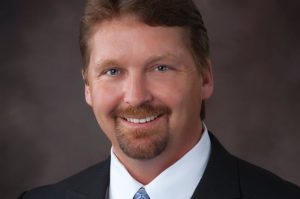
Eric Tucker, Digital Baron
“I can’t hear out of one ear, so it was a frustrating [experience],” said Tucker.
Co-founder Chuck Vanasse pointed out that many customers are dissatisfied with the current methods of service, said Tucker, noting the duo built Skip throughout 2016 as the only natural language processor focused on the restaurant space and discussed utilizing artificial intelligence and natural language processing tools before the concepts took flight in recent years.
“Now, placing an order is as easy as sending a text — because it is sending a text,” he added.
Getting connected with local venture fund Target Hill Capital in December 2017 provided the avenues for the pilot test for the major brand, he added.
Click here to learn more about Target Hill Capital and its mission to defuse risk on startups between friends and family funding to seed stages.
“We really liked what they were doing and their vision of where they would go,” said Marshall Dougherty, partner at Target Hill. “They are really now poised to grow to the next level.”
“They’re an agile team who executes well, learns quickly, and applies the knowledge gained to improve the product,” he added. “I have no doubt Skip will soon be improving the ordering experience for consumers everywhere.”
Click here to read more about Marshall Dougherty and his four basic values that drive entrepreneurial success.

Featured Business

2019 Startups to Watch
stats here
Related Posts on Startland News
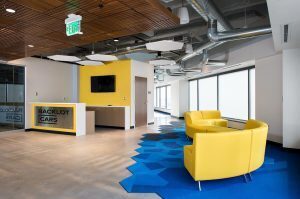
BacklotCars taking over full floor of new Lightwell building following $25M funding round
A 20,000-square-foot space in one of Kansas City’s most recently remodeled downtown office buildings will allow BacklotCars room to continue expanding its team, while also impressing high-level targets, said Josh Parsons. “The location, design and amenities of the project are exactly what is needed to attract the top tech talent to Kansas City,” said Parsons,…

RFP360 doubles in size since December; team back under one roof with move to new space
RFP360 is coming full circle, said Stuart Ludlow, as the software company he co-founded with David Hulsen in the Kansas City Startup Village once again levels up to accommodate a swelling team and increasing market demand. “We’re moving into a place — scale and scope — that Dave and I envisioned,” said Ludlow, who also…
Super Dispatch expands reach into auto transport, launches car shipping platform
The “Amazon experience” is coming to the world of car shipping as Super Dispatch launches a new platform to bring the auto transportation industry up to the speed companies are demanding: now, said Bek Abdullayev. “We are creating a better way to transport cars with new technology that solves major problems for shippers and carriers,”…
‘Queer Eye’ hero paints an ‘inner circle’ for young Latino artists craving a creative outlet
Deanna Munoz’s childhood dream to become an artist — once faded and long forgotten — was revived years later by her 6-year-old daughter, said Munoz, founder of the Latino Arts Foundation. “I wanted to be a graphic designer, but I kind of got caught up in a lot of different things when I was young…