

KC Rising update: Kansas City falling short in economic race with peer markets
March 3, 2019 | Tommy Felts
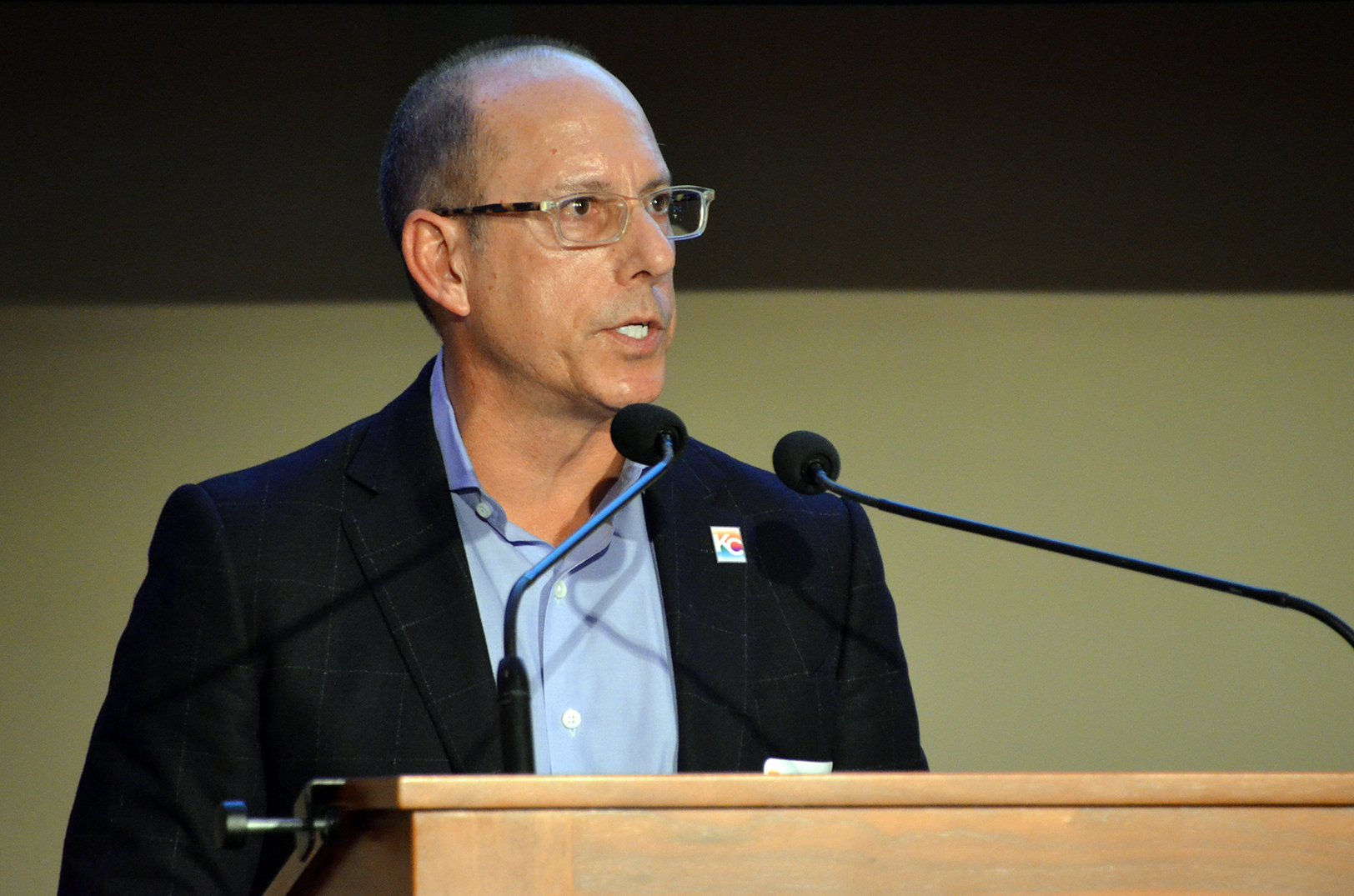
Bill Gautreaux sounded the alarm with a mixed refrain meant as a KC Rising call to action: “We’re good, but we’re not good enough.”
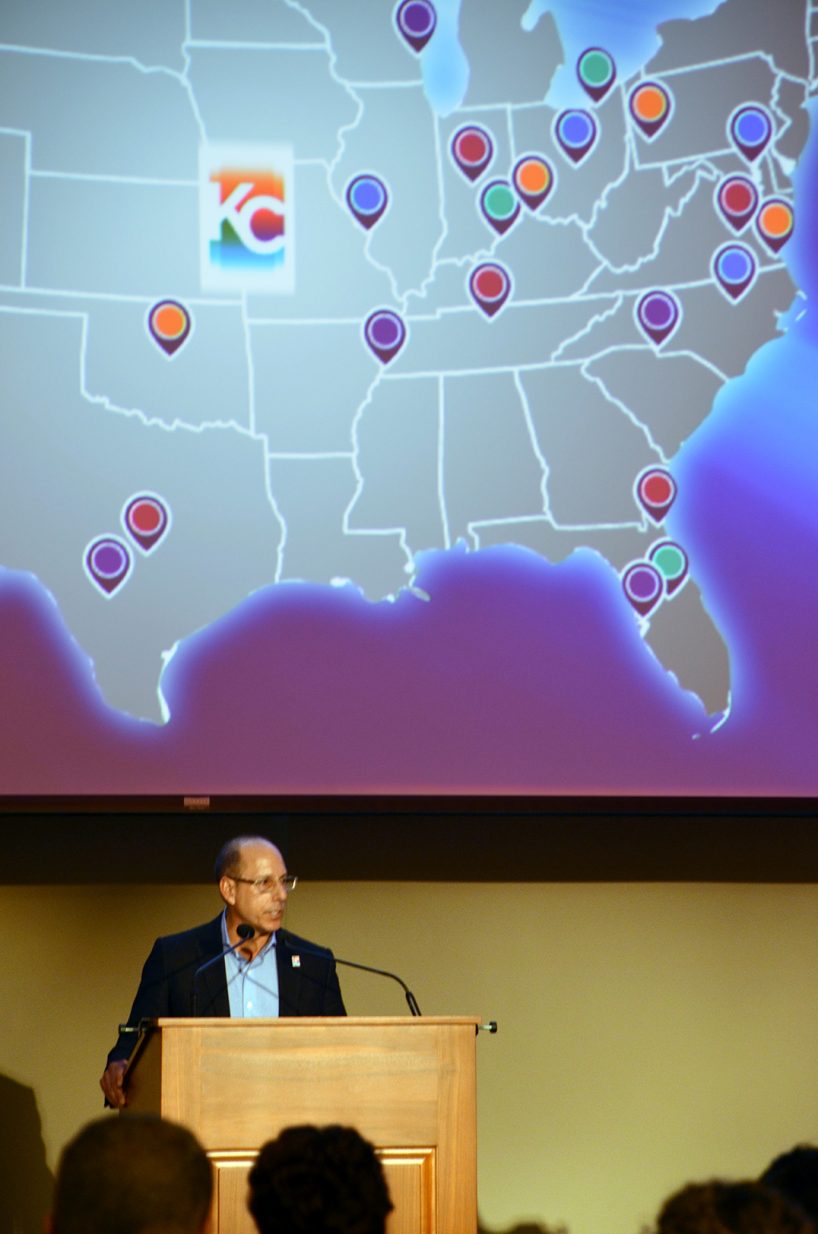
Bill Gautreaux, KC Rising
Throughout a recent KC Rising update on the region’s economic growth, Gautreaux and other KC Rising leaders championed Kansas City’s efforts to move the needle, while also lamenting the slow speed at which the region is positioning itself among competitors.
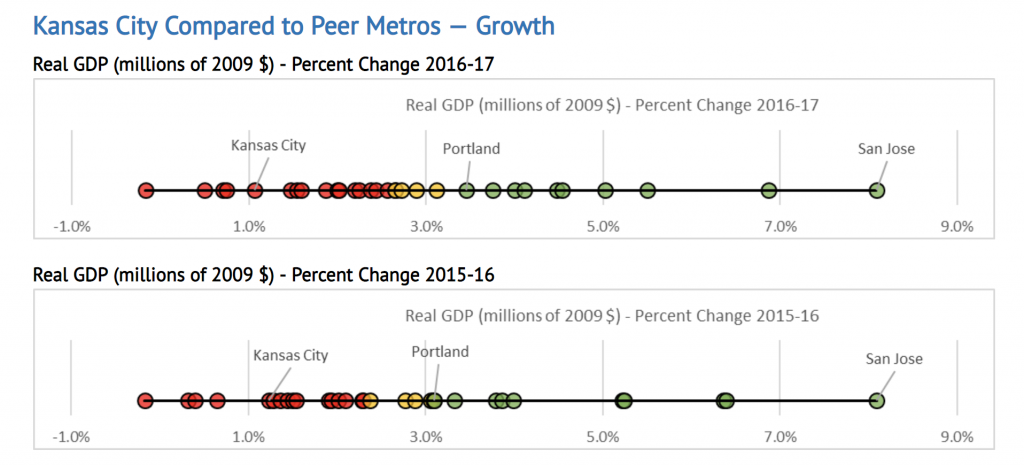
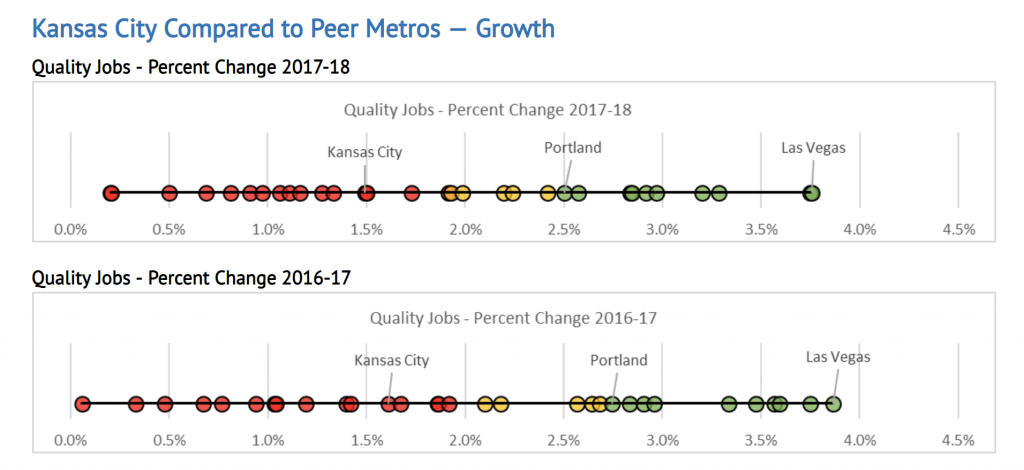
“We are progressing — and we’ve seen growth in every measure we track — but we’re simply not moving fast enough relative to our peers and our own horizon for KC,” said Gautreaux, KC Rising co-chair and managing partner at MLP Holdings.
Click here for a full report on the KC Rising findings.
Local economists present a positive forecast for the region, said Sandy Price, KC Rising co-chair and a retired Sprint executive, but Kansas City’s growth isn’t yet meeting the expectations set by the organization.
Click here for more about KC Rising and its mission.
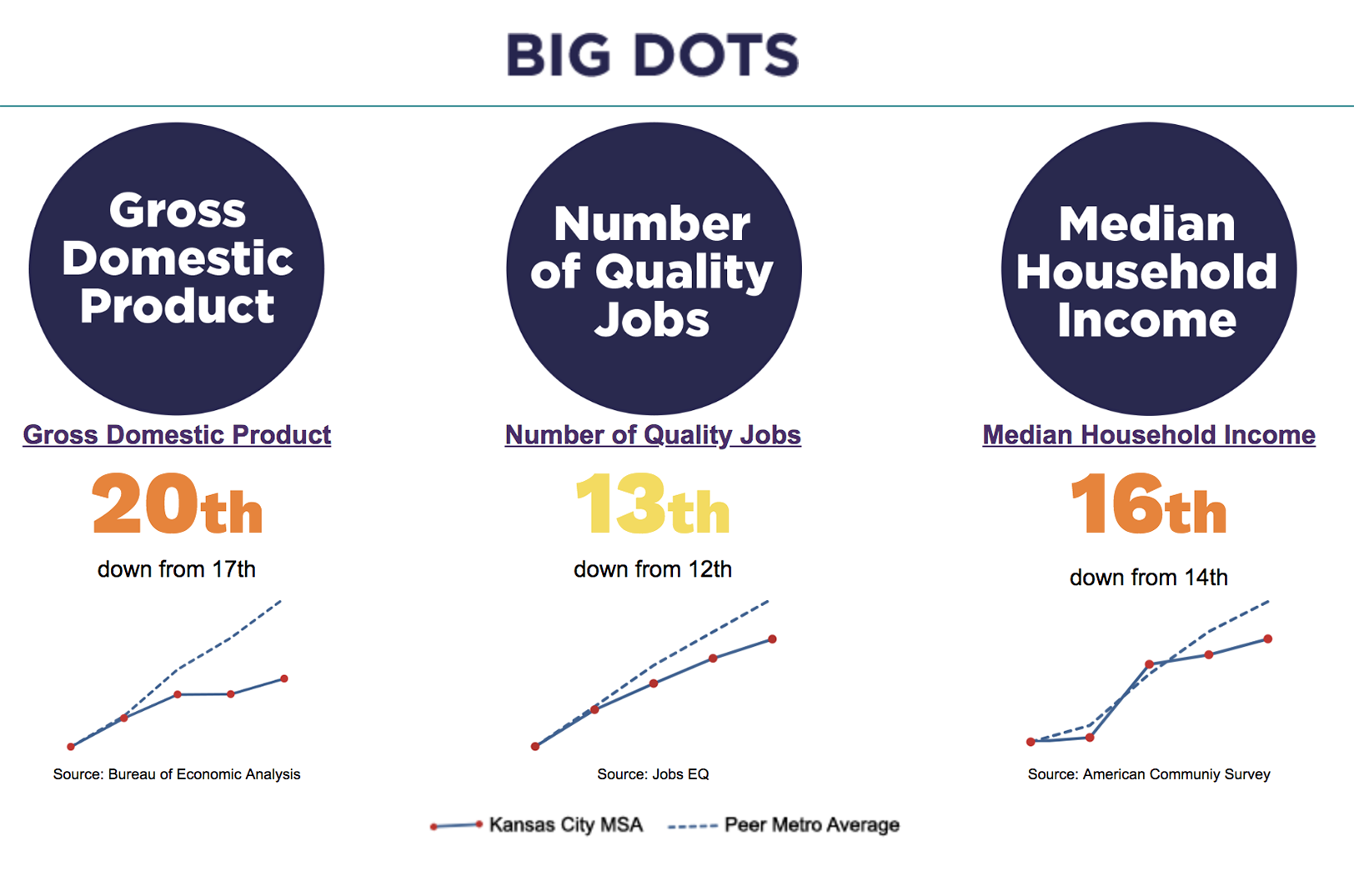
“The vision for KC Rising is that our region will be among the top 10 of our peer cities in three important measures: gross regional product, median household income, and the number of quality jobs,” Price said. “This is how we measure our success, as well as our inclusivity.”
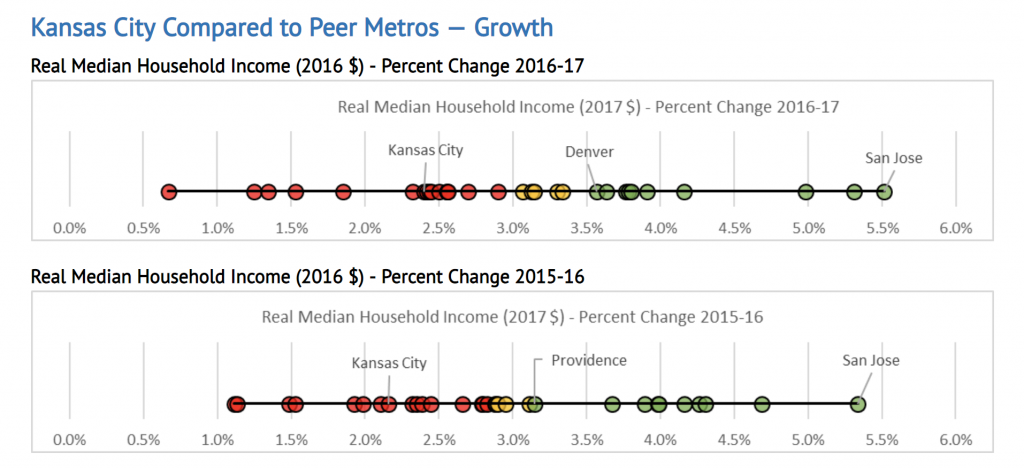
Yet Kansas City has fallen short in all three metrics, she and Gautreaux agreed. KC Rising’s findings found the region 20th on GDP; 16th on income; and 13th on jobs.
Keep reading below the KC Rising data.
Bill Gautreaux, KC Rising
“Often in business today, we work in quarterly or annual time spans,” said Gautreaux. “That focus on shorter-term results does not translate well when were solving for regional GDP, jobs, income and inclusion.”
Price, however, noted several encouraging trends:
- Kansas City’s economy grew in 2017 and 2018;
- Retail in in the KC Fed District was up strongly, year over year in Q4 2018; and
- Manufacturing, wholesale trade, professional and high tech sectors are in strong expansion phases.
Neal Sharma, KC Rising
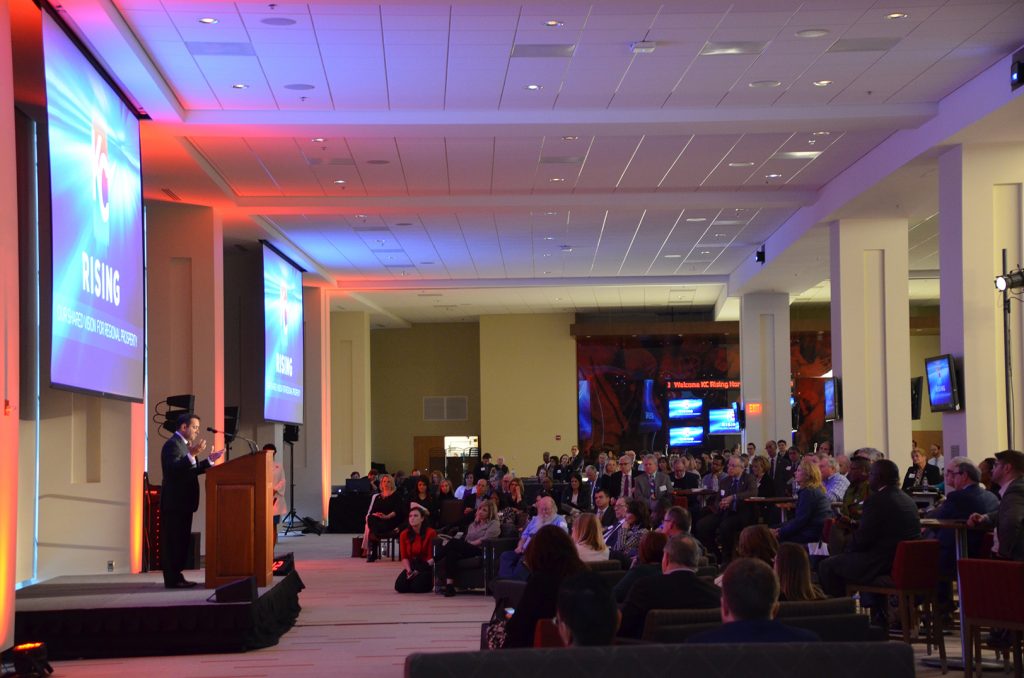
“There is much work left do for our city, and it will take all of us together to get it done,” added Neal Sharma, incoming co-chair of KC Rising and CEO and co-founder of DEG. “I’ve been a Kansas City resident for most of my life. I built my business here. I’m raising my family here. And there have been times in our past, in my lifetime, where we didn’t lack the skills or the talent or the work ethic required to build a brighter future — we had that in spades. What it felt like we lacked was the confidence — even though we knew in our hearts we had what it takes.”
Kansas City still has time to make an impact toward achieving KC Rising’s ambitious goals, but the community must act quickly, he emphasized.
“Right now is the fastest rate of change any of us have ever experienced in our lives,” Sharma said. “And at the same time, it is the slowest it will ever be for the rest of our lives.”
Click here for KC Rising’s full report.


2019 Startups to Watch
stats here
Related Posts on Startland News

Kauffman survey: Women more critical of their own early-stage entrepreneurial efforts
Women entrepreneurs are more likely than their male counterparts to grade their performances harshly during the first year of business, though that tendency typically fades over time, according to a new survey by the Ewing Marion Kauffman Foundation. It often is about approaching the venture a realistic viewpoint, said Jeff Shackelford, executive director of Digital…
Video: ShotTracker fan app courts NAIA tourney crowds with AR experience
A new ShotTracker fan app — expected to launch today — will combine real-time analytics with augmented reality for a first-of-its-kind fan engagement opportunity at next week’s Division 1 NAIA basketball tournament, said co-founder Davyeon Ross. “We want to make the experience as great as possible for the end user,” Ross said, noting his company’s…

TechAccel, UC Davis lab developing wheat seed to combat climate change
A Kansas City-based tech and venture development firm hopes to engineer wheat seeds that produce higher yield by withstanding warmer temperatures. “We’re taking a concept that is pretty important for wheat worldwide,” said Brad Fabbri, Chief Science Officer of TechAccel. Increasing temperatures make growing wheat more difficult across the globe, studies show. Reports indicate climate…

Startup stakeholders: Opportunity zones could prompt culture shift on redevelopment
Startup community stakeholders think opportunity zones in some of Kansas City’s poorest areas could work, but only with collaboration between the government and private sector. A number of low-income communities in Kansas City are eligible for designation as opportunity zones — areas in which investors may defer paying capital gains taxes over a certain period…