

KC Rising update: Kansas City falling short in economic race with peer markets
March 3, 2019 | Tommy Felts
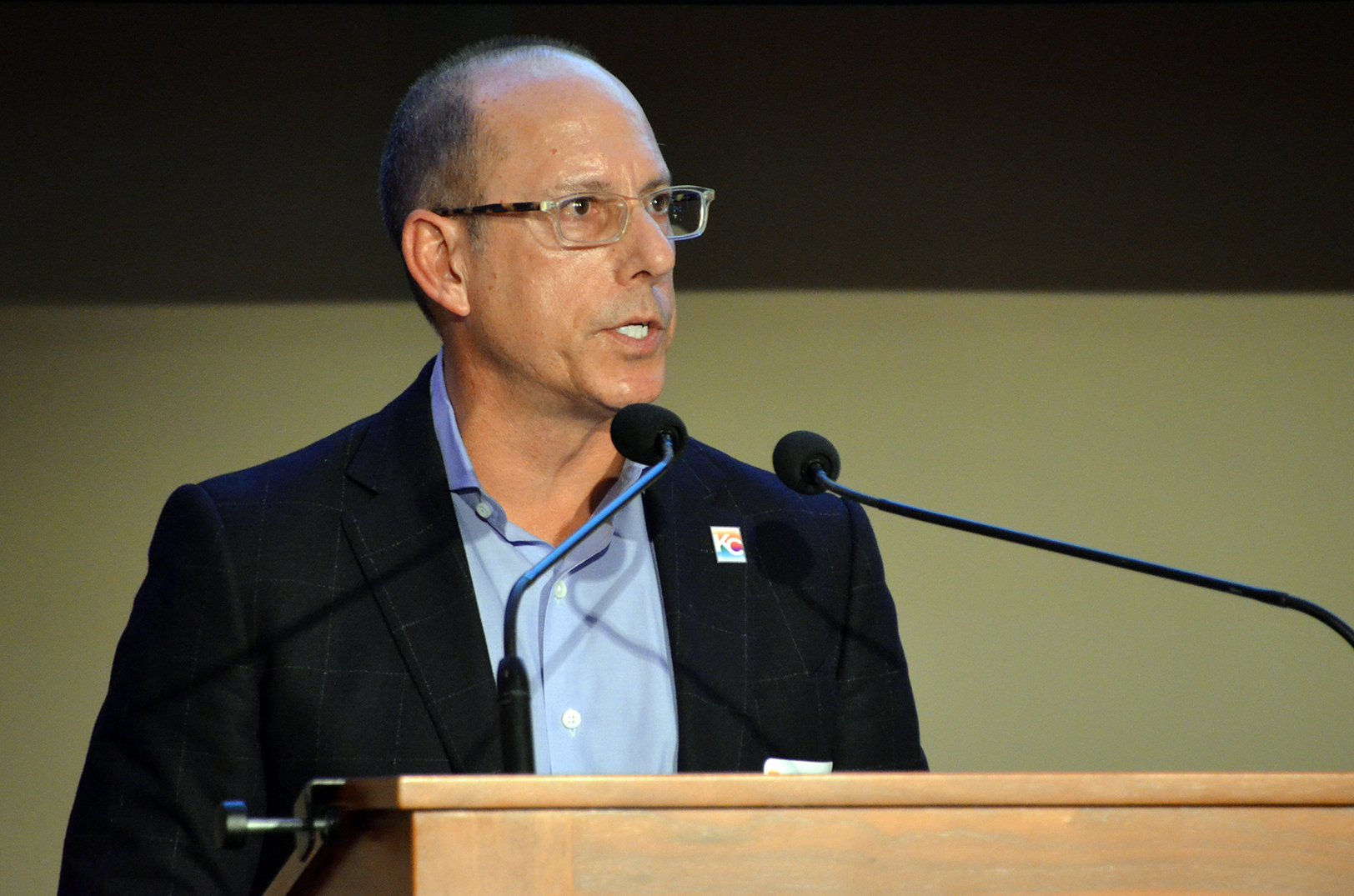
Bill Gautreaux sounded the alarm with a mixed refrain meant as a KC Rising call to action: “We’re good, but we’re not good enough.”

Bill Gautreaux, KC Rising
Throughout a recent KC Rising update on the region’s economic growth, Gautreaux and other KC Rising leaders championed Kansas City’s efforts to move the needle, while also lamenting the slow speed at which the region is positioning itself among competitors.
“We are progressing — and we’ve seen growth in every measure we track — but we’re simply not moving fast enough relative to our peers and our own horizon for KC,” said Gautreaux, KC Rising co-chair and managing partner at MLP Holdings.
Click here for a full report on the KC Rising findings.
Local economists present a positive forecast for the region, said Sandy Price, KC Rising co-chair and a retired Sprint executive, but Kansas City’s growth isn’t yet meeting the expectations set by the organization.
Click here for more about KC Rising and its mission.
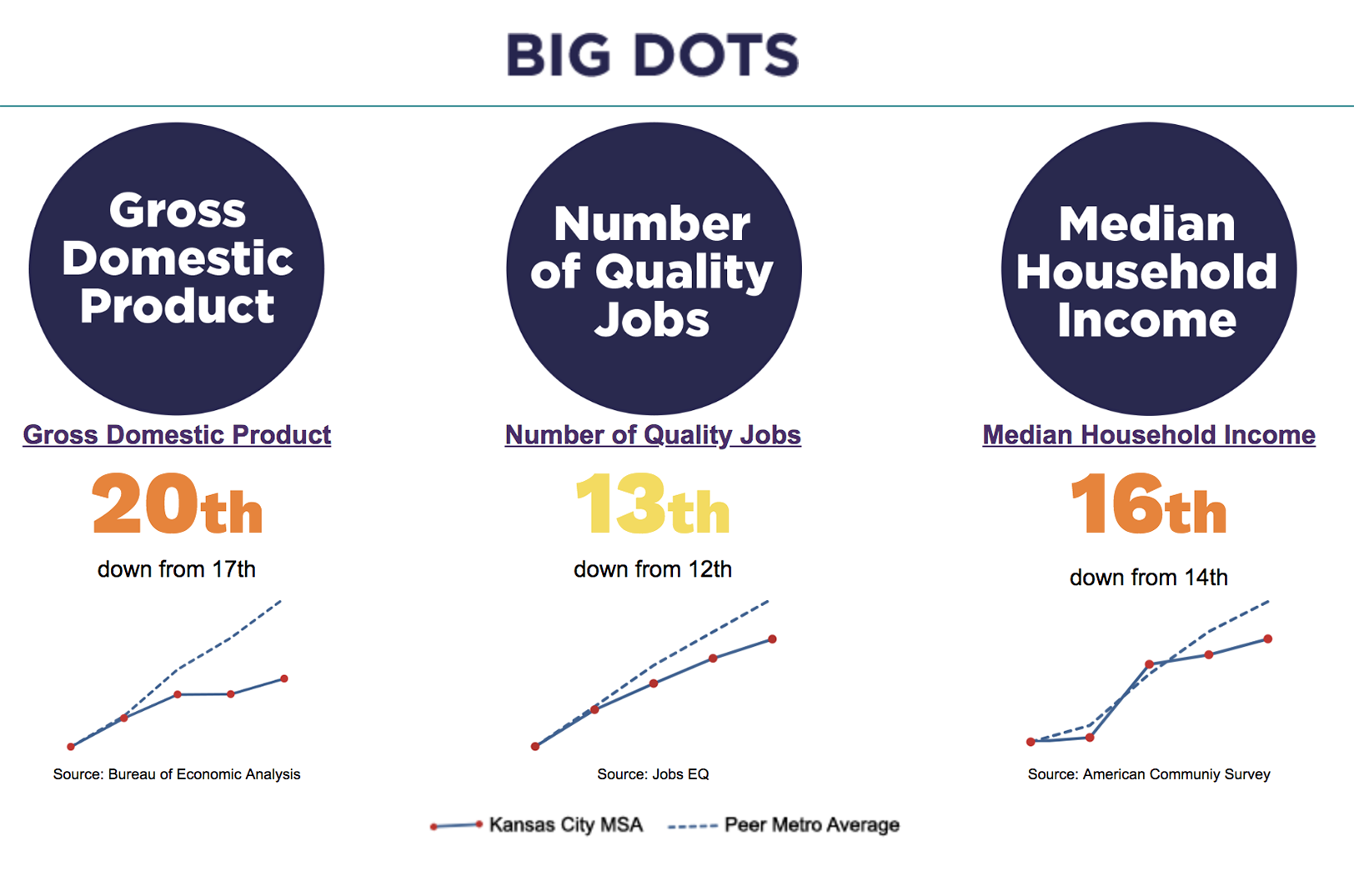
“The vision for KC Rising is that our region will be among the top 10 of our peer cities in three important measures: gross regional product, median household income, and the number of quality jobs,” Price said. “This is how we measure our success, as well as our inclusivity.”
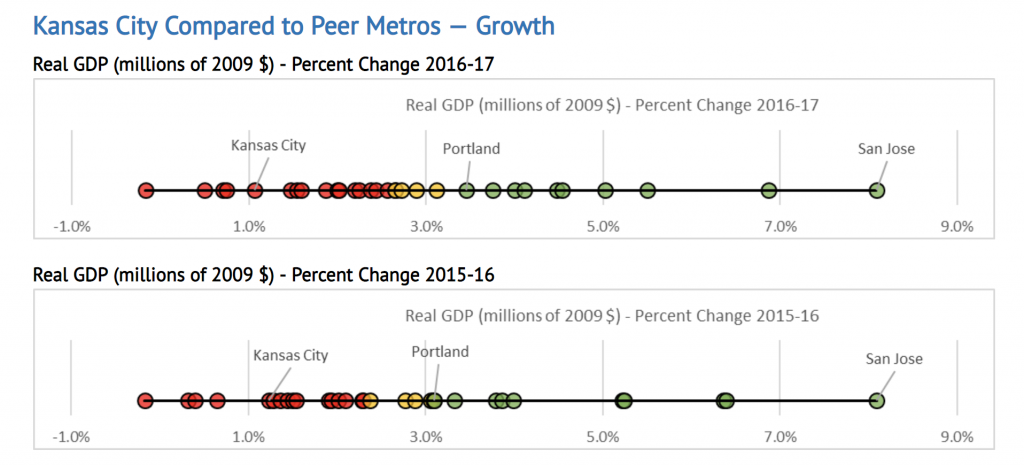
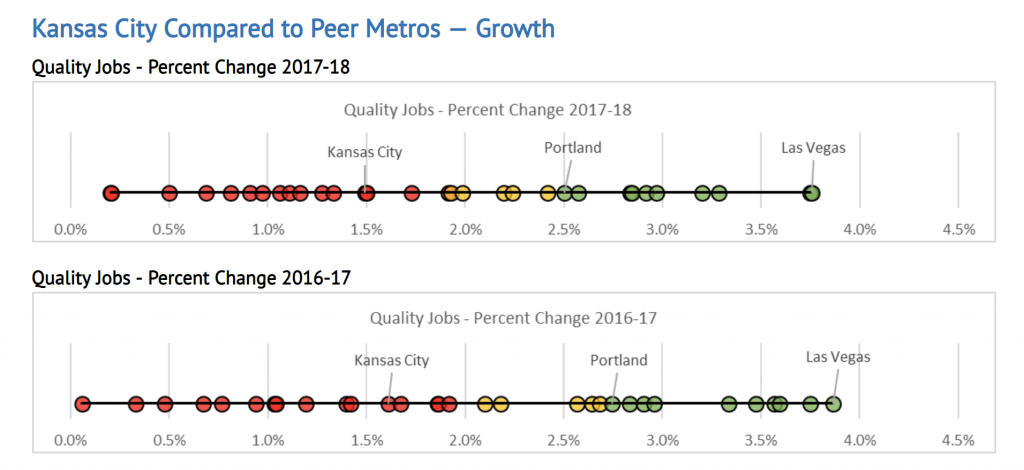
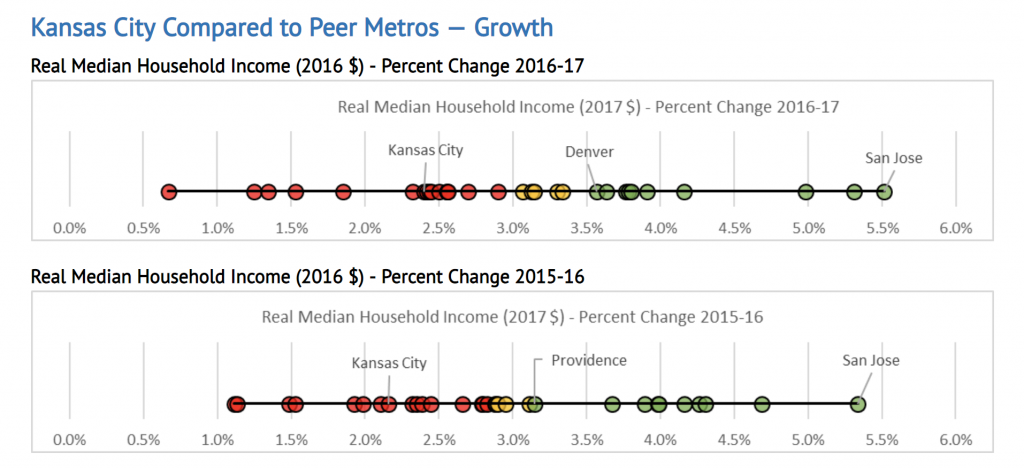
Yet Kansas City has fallen short in all three metrics, she and Gautreaux agreed. KC Rising’s findings found the region 20th on GDP; 16th on income; and 13th on jobs.
Keep reading below the KC Rising data.
Bill Gautreaux, KC Rising
“Often in business today, we work in quarterly or annual time spans,” said Gautreaux. “That focus on shorter-term results does not translate well when were solving for regional GDP, jobs, income and inclusion.”
Price, however, noted several encouraging trends:
- Kansas City’s economy grew in 2017 and 2018;
- Retail in in the KC Fed District was up strongly, year over year in Q4 2018; and
- Manufacturing, wholesale trade, professional and high tech sectors are in strong expansion phases.

Neal Sharma, KC Rising
“There is much work left do for our city, and it will take all of us together to get it done,” added Neal Sharma, incoming co-chair of KC Rising and CEO and co-founder of DEG. “I’ve been a Kansas City resident for most of my life. I built my business here. I’m raising my family here. And there have been times in our past, in my lifetime, where we didn’t lack the skills or the talent or the work ethic required to build a brighter future — we had that in spades. What it felt like we lacked was the confidence — even though we knew in our hearts we had what it takes.”
Kansas City still has time to make an impact toward achieving KC Rising’s ambitious goals, but the community must act quickly, he emphasized.
“Right now is the fastest rate of change any of us have ever experienced in our lives,” Sharma said. “And at the same time, it is the slowest it will ever be for the rest of our lives.”
Click here for KC Rising’s full report.


2019 Startups to Watch
stats here
Related Posts on Startland News
Neighborhood smart cans help Kansas Citians save the planet from their kitchens
Newly introduced composting technology is already turning new ground in Kansas City, Kristan Chamberlain said, with more solar-powered compost cans arriving later this spring across the metro’s urban landscape. Her social venture, KC Can Compost, installed three of the devices in October — free to use for KCMO residents wanting to deposit their soil-making food…

Voodoo Volleyball bounces back in OP: Father-daughter duo doubles as new venture’s setters
Quinn Austin put several sports to the test as a preteen — racing from basketball practice to softball to volleyball. But she latched on to just one. “Volleyball. It was my sport. Everyone was having a good time,” she said. “We just loved the cheers — a cheer when we got a hit, a cheer…

Black farmers are losing ground in the fight to feed their communities, advocates say
More than a century of systemic land dispossession and discriminatory practices has left Black farmers with less than 0.6 percent of U.S. farmland — less than a third of the 16 million acres they operated in 1910, according to local urban farming advocates. They gathered Tuesday at Independence Boulevard Christian Church to confront this history…

Cracking egg-flation: How farmers, substitute ingredients help restaurants mitigate price spike
Editor’s note: This story was originally published by Kansas City PBS/Flatland, a member of the Kansas City Media Collective, which also includes Startland News, KCUR 89.3, American Public Square, The Kansas City Beacon, and Missouri Business Alert. Click here to read the original story. Whether ordering an omelet, French toast, chicken n’ biscuits, chilaquiles, corned beef hash…