

KC Rising update: Kansas City falling short in economic race with peer markets
March 3, 2019 | Tommy Felts
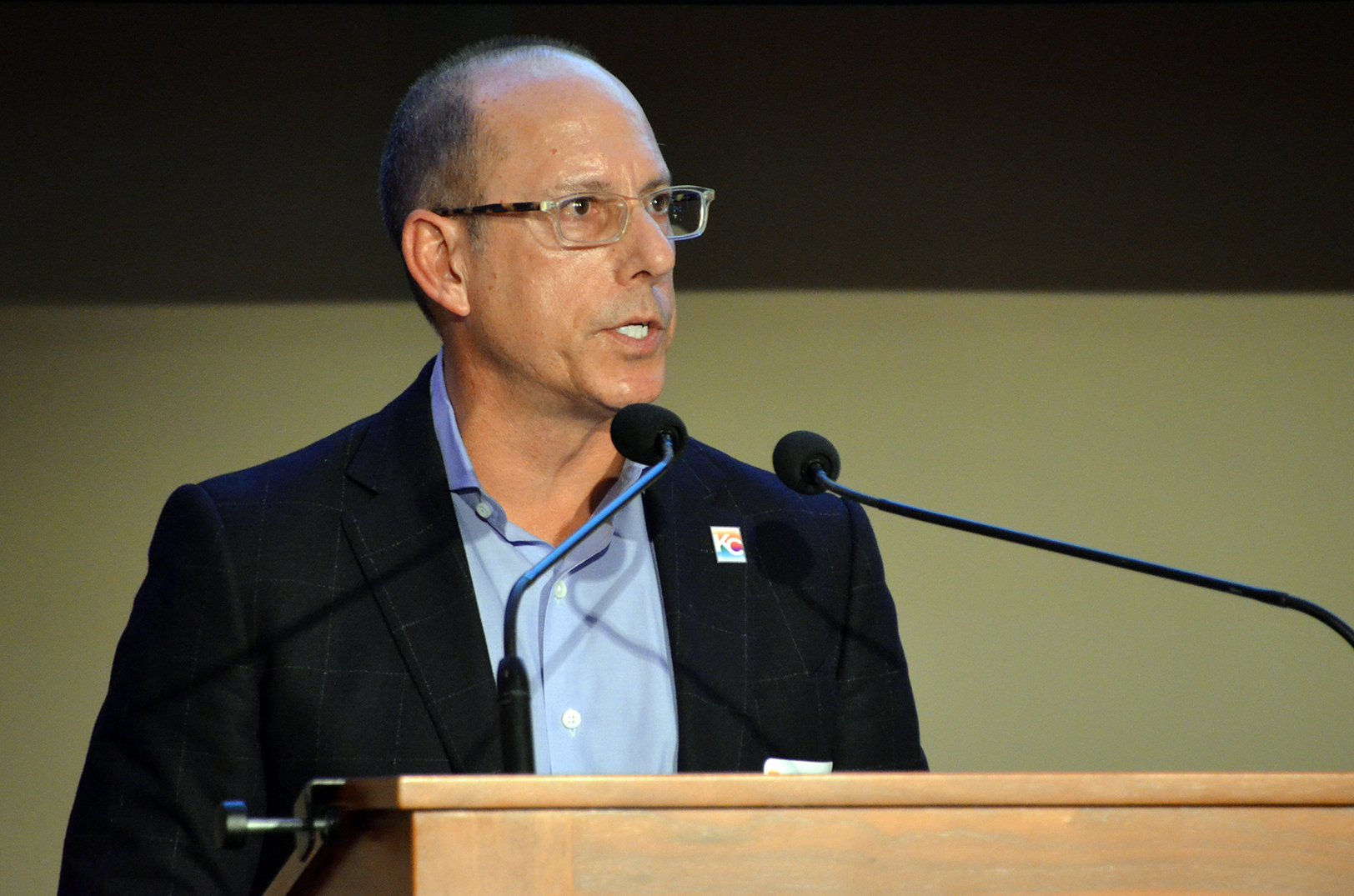
Bill Gautreaux sounded the alarm with a mixed refrain meant as a KC Rising call to action: “We’re good, but we’re not good enough.”
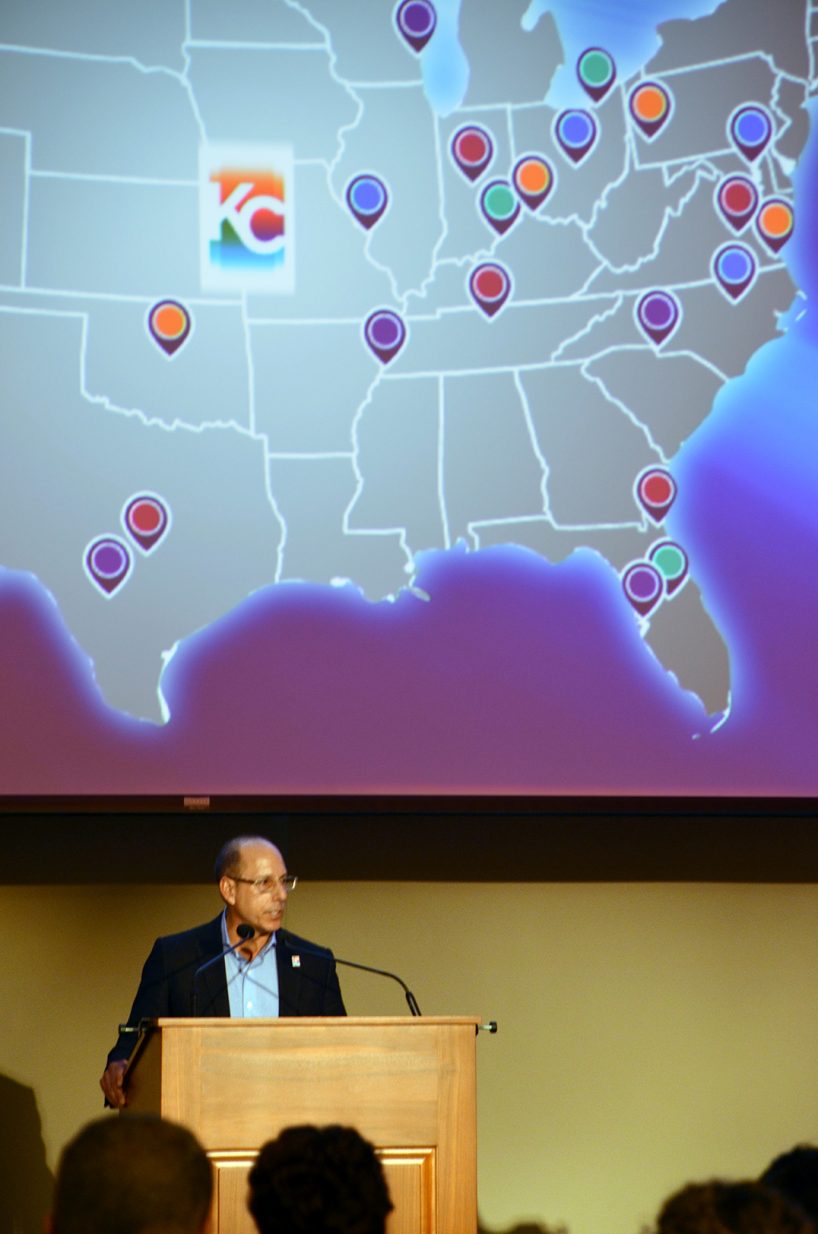
Bill Gautreaux, KC Rising
Throughout a recent KC Rising update on the region’s economic growth, Gautreaux and other KC Rising leaders championed Kansas City’s efforts to move the needle, while also lamenting the slow speed at which the region is positioning itself among competitors.
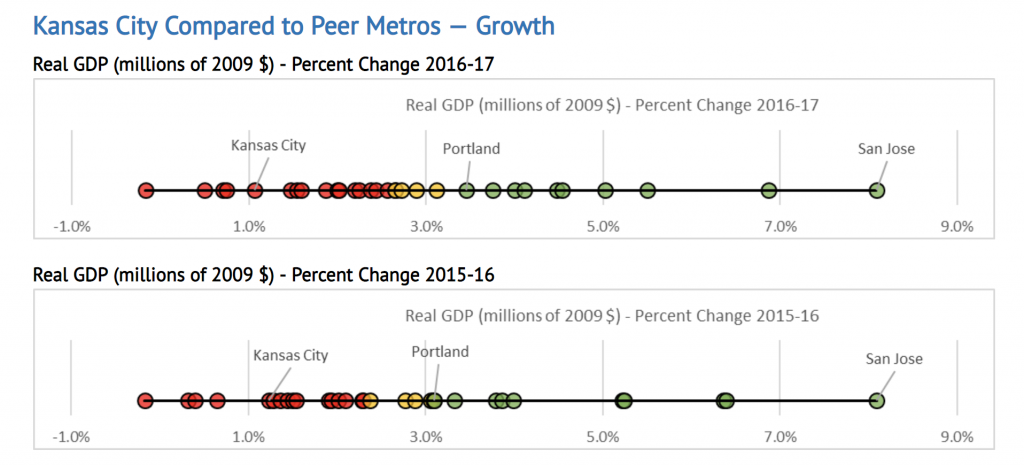
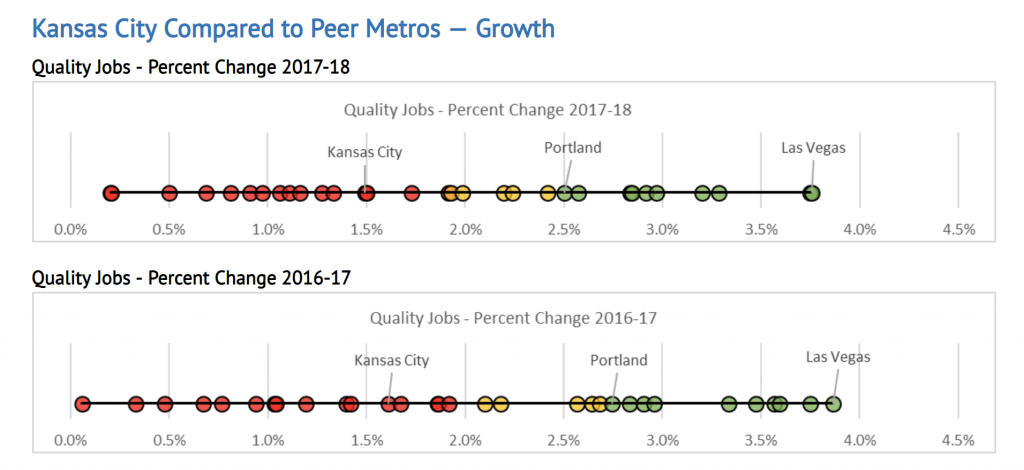
“We are progressing — and we’ve seen growth in every measure we track — but we’re simply not moving fast enough relative to our peers and our own horizon for KC,” said Gautreaux, KC Rising co-chair and managing partner at MLP Holdings.
Click here for a full report on the KC Rising findings.
Local economists present a positive forecast for the region, said Sandy Price, KC Rising co-chair and a retired Sprint executive, but Kansas City’s growth isn’t yet meeting the expectations set by the organization.
Click here for more about KC Rising and its mission.
“The vision for KC Rising is that our region will be among the top 10 of our peer cities in three important measures: gross regional product, median household income, and the number of quality jobs,” Price said. “This is how we measure our success, as well as our inclusivity.”
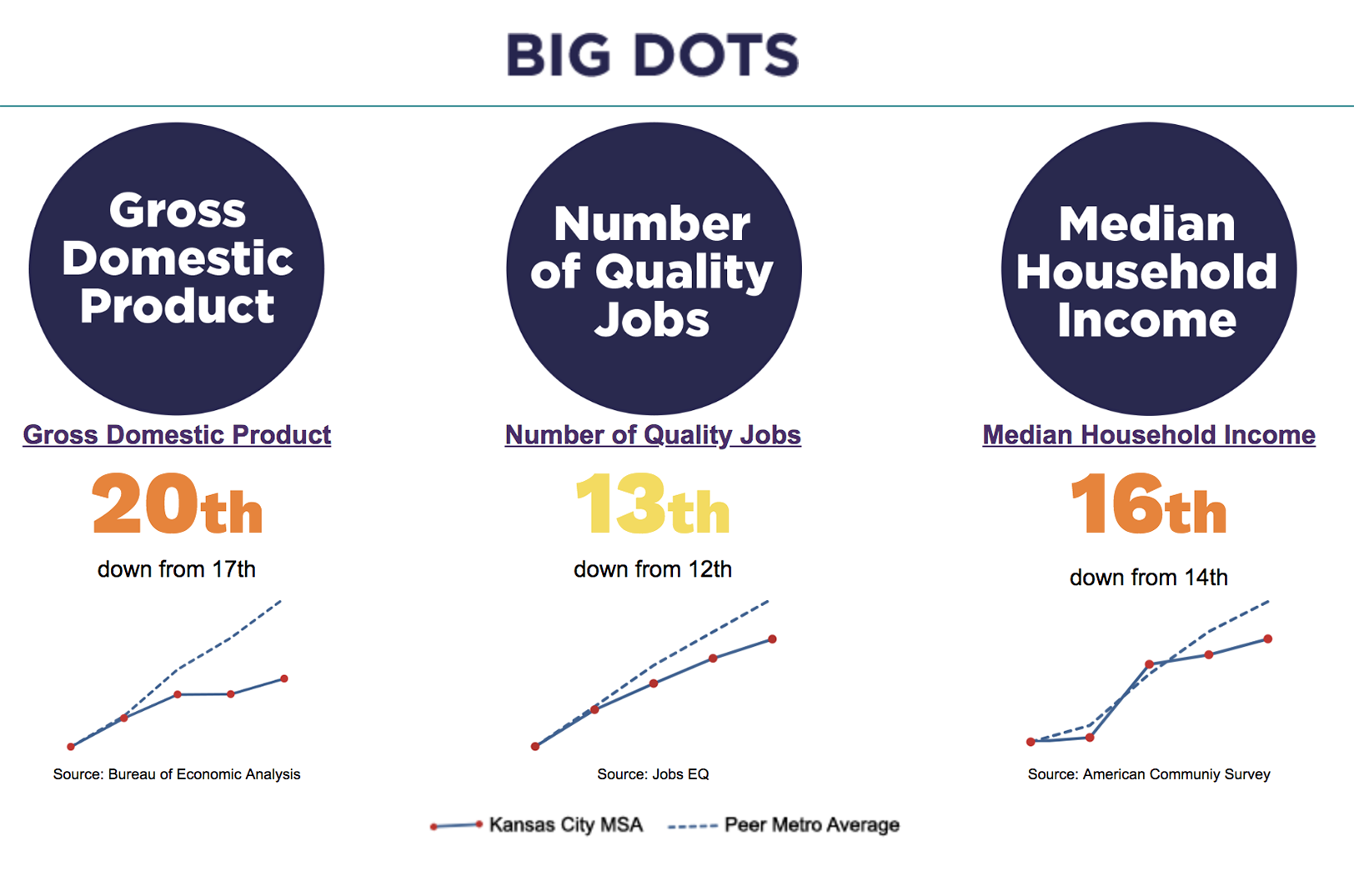
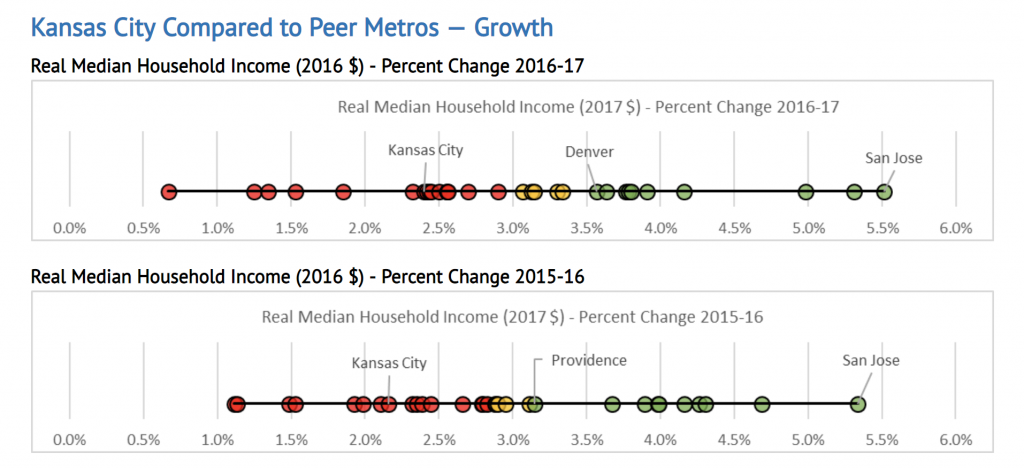
Yet Kansas City has fallen short in all three metrics, she and Gautreaux agreed. KC Rising’s findings found the region 20th on GDP; 16th on income; and 13th on jobs.
Keep reading below the KC Rising data.
Bill Gautreaux, KC Rising
“Often in business today, we work in quarterly or annual time spans,” said Gautreaux. “That focus on shorter-term results does not translate well when were solving for regional GDP, jobs, income and inclusion.”
Price, however, noted several encouraging trends:
- Kansas City’s economy grew in 2017 and 2018;
- Retail in in the KC Fed District was up strongly, year over year in Q4 2018; and
- Manufacturing, wholesale trade, professional and high tech sectors are in strong expansion phases.
Neal Sharma, KC Rising
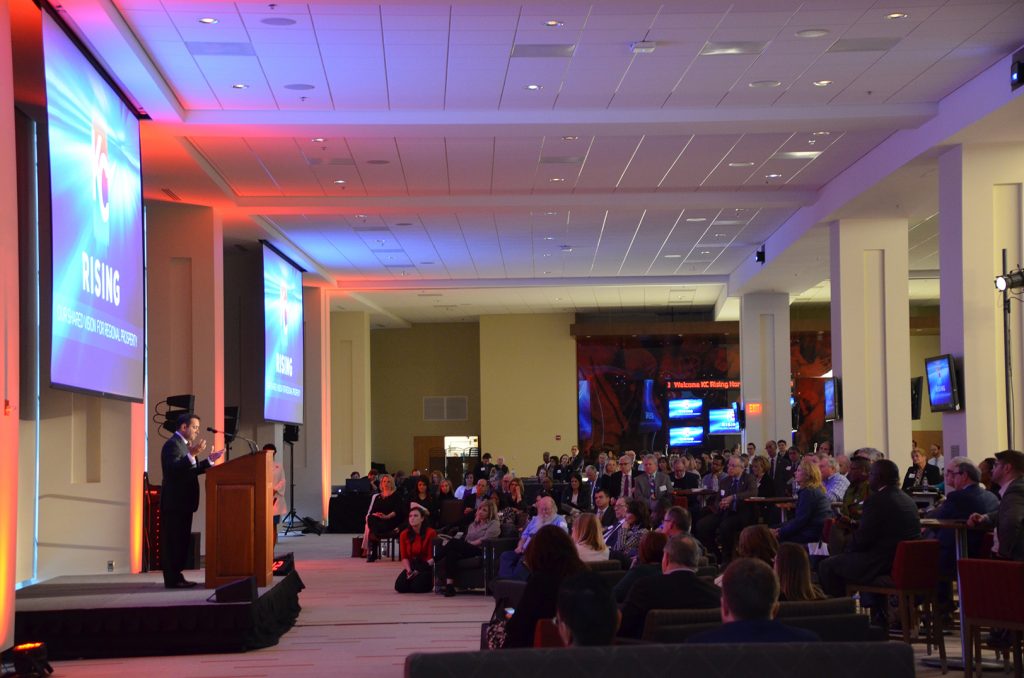
“There is much work left do for our city, and it will take all of us together to get it done,” added Neal Sharma, incoming co-chair of KC Rising and CEO and co-founder of DEG. “I’ve been a Kansas City resident for most of my life. I built my business here. I’m raising my family here. And there have been times in our past, in my lifetime, where we didn’t lack the skills or the talent or the work ethic required to build a brighter future — we had that in spades. What it felt like we lacked was the confidence — even though we knew in our hearts we had what it takes.”
Kansas City still has time to make an impact toward achieving KC Rising’s ambitious goals, but the community must act quickly, he emphasized.
“Right now is the fastest rate of change any of us have ever experienced in our lives,” Sharma said. “And at the same time, it is the slowest it will ever be for the rest of our lives.”
Click here for KC Rising’s full report.


2019 Startups to Watch
stats here
Related Posts on Startland News

Quartet of startups hop into the Digital Sandbox KC
Four early-stage businesses recently entered the Digital Sandbox KC program. The new startups demonstrate the ingenuity Digital Sandbox aims to attract for its grant-funding efforts, said Jeff Shackelford, director of Digital Sandbox KC. “From helping students prepare for college to analyzing voting records to predict legislative outcomes, the startups in the Sandbox are a great…

Newest Techstars KC class tackling payday loans, food safety, bots for business
Techstars Kansas City has revealed its 2018 cohort of startups. The 10 companies will make a big impact not only on Kansas City but the global economy, said Lesa Mitchell, managing director of Techstars KC. “Although our companies come from many industries, they share in common that they are all solving problems to make the…

YEP KC teen serves hope through enterprising volleyball benefit for men’s shelter
When 17-year-old Catherine Franano learned the mattresses at Kansas City Rescue Mission were old and too worn for comfortable use, the Pembroke High School senior leapt into action, she said. “Some of these people … like they’ve just had so many awful things happen to them, but not having anywhere to sleep?” Catherine said. “How…

(Video) ESHIP Summit attendees ask: Can entrepreneurial support efforts actually be sustainable?
When more than 600 attendees gathered this week in Kansas City for the second ESHIP Summit, they each came with their own ecosystems, businesses, local governments and support networks in mind. They also brought questions. “What are they doing in their cities? What’s worked and what hasn’t worked? What can we adopt back at home…