

Federal data privacy laws are coming; Here’s what you should consider
March 29, 2019 | Ryan Weber
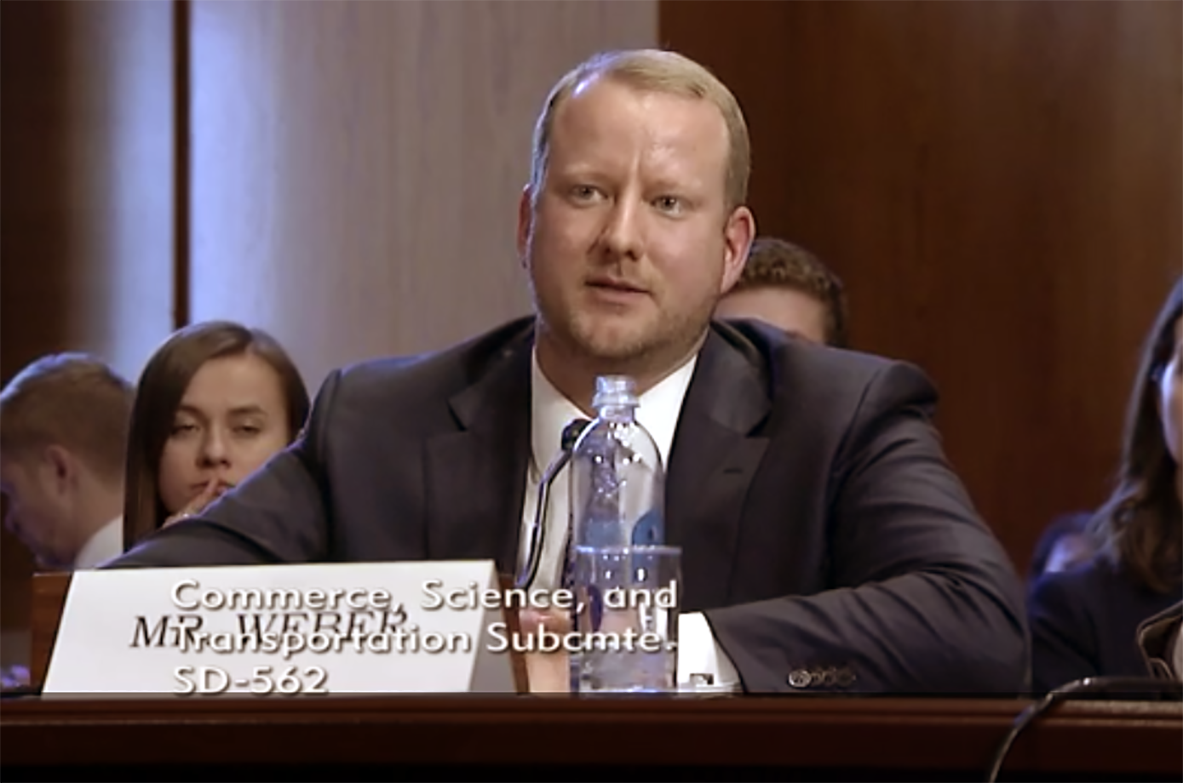
Editor’s note: The opinions expressed in this commentary are the author’s alone. Ryan Weber, KC Tech Council president, on Tuesday testified before a U.S. Senate subcommittee on “Small Business Perspectives on a Federal Data Privacy Framework.”
I recently had the privilege of testifying before a U.S. Senate Subcommittee, chaired by U.S. Sen. Jerry Moran, R-Kansas, about the potential impacts federal data privacy laws could have on small and startup tech businesses. You can read our full testimony here.
Before I ask you to contact your elected officials — and you should — it’s important everyone understand what’s coming because this law won’t only impact businesses. Anyone who stores or shares data over the web will be affected. And unless someone printed this piece for you to read, this means you.
The European Union (EU) was among the first to pass data privacy laws called the General Data Protection Rights (GDPR). These laws don’t just impact EU-based companies or those doing business there. The same rights protect the users, individuals, from the EU who visit websites, regardless of where the company with the website is located.
Last year, California passed the Consumer Protection Act (CCPA) rather swiftly and shocked many in the tech industry. Though different in many ways, the spirit of this law has some of the core principles written in GDPR. Many other states have soon followed suit and proposed their own set of statutes. The resulting effect could be a patchwork of varying state-by-state laws, confusing users and making compliance nearly impossible for companies.
In my conversations with tech companies, big and small, there is strong support for the U.S. to pursue overarching data privacy laws at a federal level. There is little to no support for states to continue and pass their patchwork of individual laws. The cost to comply with could be overwhelming for small and startup companies. Enforcement would also be inconsistent. In other words, it’d be a mess. Therefore, it’s crucial Congress act to preempt these state laws with a sensible federal law.
As this legislation is developed by Congress, here are key questions for tech companies to consider:
- How should Congress US control the “bad actors,” without overregulating everyone else?
- What entity should be enforcing these laws? Should states have a role with enforcement?
- Regarding enforcement, how should fines be determined? What about on the first offense?
- How should Congress define sensitive data?
- If exemptions for small business were created, how should Congress define a small business?
Data privacy is a complicated issue, and these questions are only a small part of the overall debate. A draft bill is forthcoming, and this conversation will continue to heat up once we have something tangible to debate. In the meantime, I encourage KC’s tech community to continue to discuss this issue. And yes, I want you to contact your elected officials, and I think they’d appreciate your thoughts on the questions above. Your voice matters and they do listen.
Ryan Weber is president of the KC Tech Council, a nonpartisan, regional advocate for the Kansas City tech industry.


2019 Startups to Watch
stats here
Related Posts on Startland News

Councilman introduces east side investment proposal with $15/hour wage provision
As economic development surges in pockets across Kansas City, residents and businesses on the east side shouldn’t be left behind, Scott Taylor said. “Our clock is ticking as a city on this, and we need to do more,” said Taylor, councilman for the sixth district, at-large. At a press conference Thursday, Taylor introduced a draft…

Tax bill guts historic tax credits used to rehab Westport Commons, Kemper, lofts
Plexpod Westport Commons wouldn’t exist without the historic tax credits used to make the massive renovation and preservation project financially feasible, said developer Butch Rigby. A GOP-led tax reform bill introduced this month to simplify the tax code, however, would eliminate the Reagan-era tax credit program, which provides a 20 percent federal tax credit for…

Etsy exec: Tax reform leaves out entrepreneurs of the gig economy
Editor’s note: Althea Erickson, head of advocacy and impact at Etsy, wrote this opinion piece in response to tax reform bills being considered in the U.S. House and Senate. The opinions expressed in this commentary are the author’s alone. For all the talk of tax reform that’s swirling around Washington, D.C., there’s one group that’s…

Pioneering KCI airport vote should help land top talent, startup leaders say
Capping a six-year journey fraught with turbulence, delays and political drama, voters overwhelmingly ratified plans to build a new $1.3 billion airport terminal, which would replace the existing Kansas City International Airport (KCI). “Kansas City has never been about being just mediocre,” said Michael Wilson, founder of luxury watch brand Niall and a frequent traveler…