

New Kauffman indicators point to more fertile ground for startups on Missouri side of state line
February 22, 2019 | Startland News Staff
A new analysis of early-stage entrepreneurship over the past 20 years indicates a more welcoming environment for fostering startups has developed in the Show Me State.
In a state-by-state breakdown released Thursday by the Ewing Marion Kauffman Foundation, Missouri outperformed Kansas across the board. Overall, Missouri’s scores showed climbing measures of entrepreneurship, while Kansas saw activity on the decline.
Click here for an interactive data table detailing the findings across all 50 states.
The report takes into account four key indicators that track changes in entrepreneurial activity over time (1996-2017), across geographies, and among various demographics. The indicators include:
- Rate of new entrepreneurs — The broadest measure possible for business creation by population.
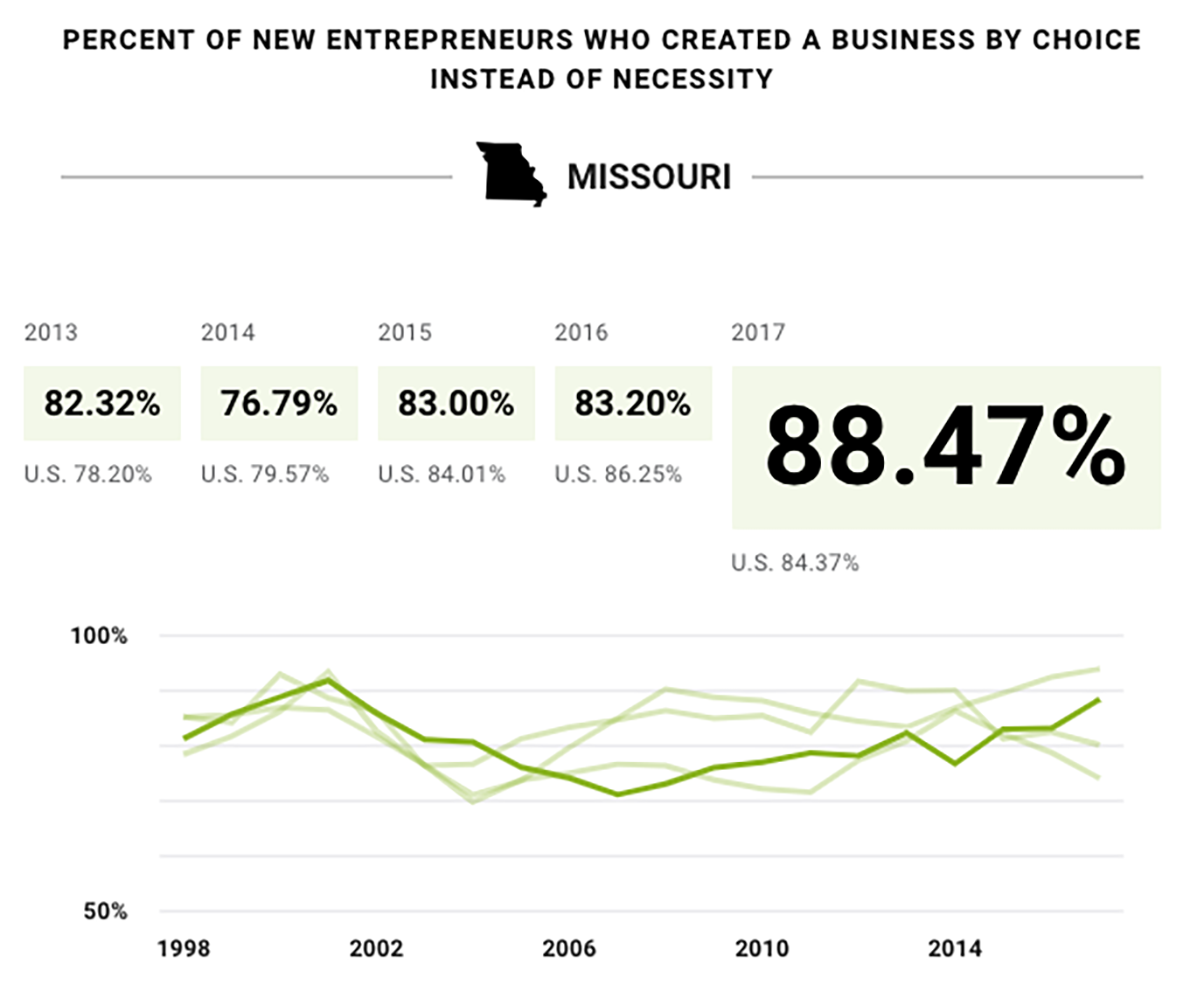
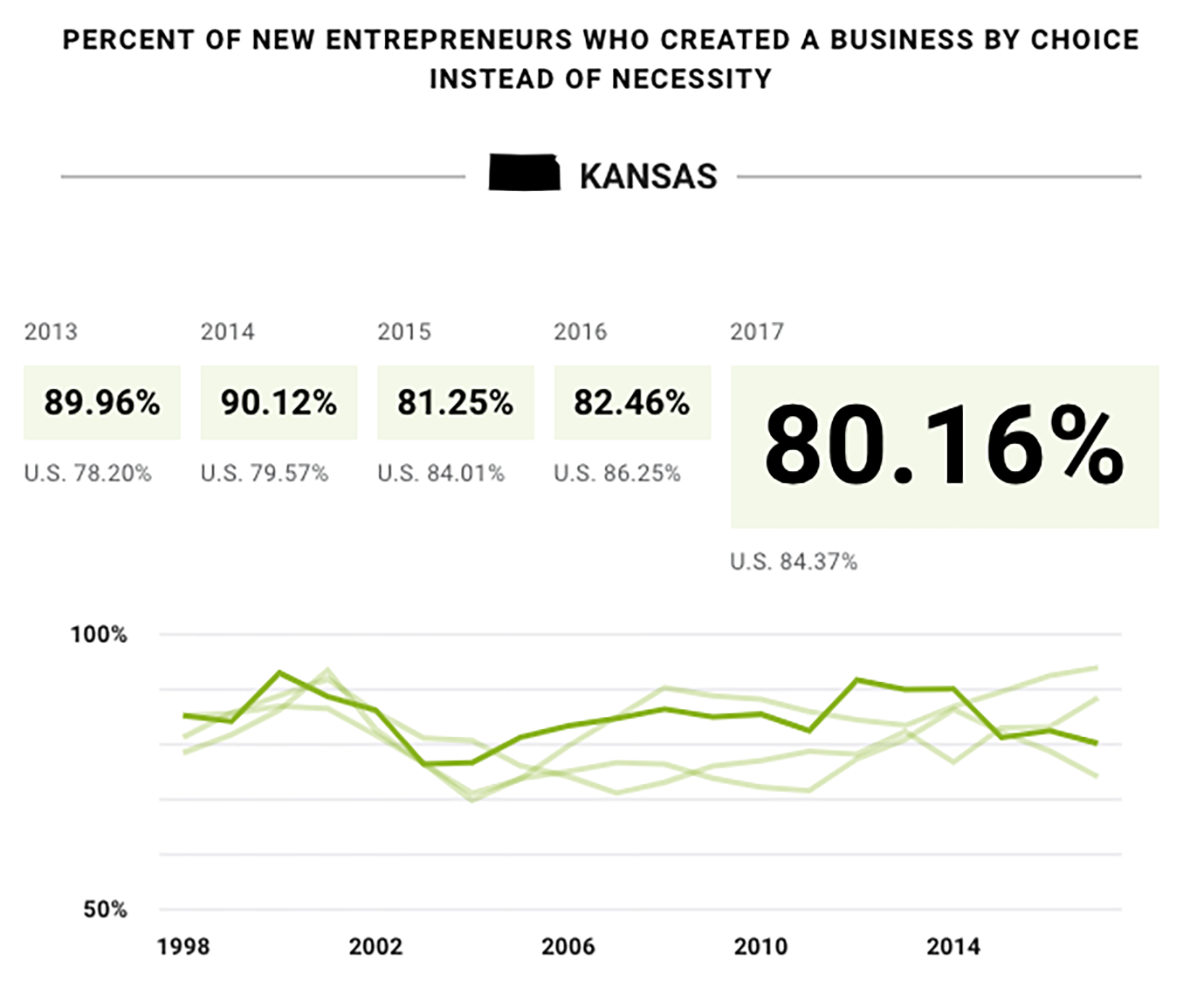
- Opportunity share of new entrepreneurs — The percentage of new entrepreneurs who created a business out of choice instead of necessity.
- Startup early job creation — The number of jobs created in the first year of business.
- Startup early survival rate — The rate of survival in the first year of business.
Click here for an interactive profile detailing Missouri’s rates.
Click here for an interactive profile detailing Kansas’ rates.
Missouri topped Kansas on all four indicators, though the neighboring states were the least dissimilar on the rate of new entrepreneurs — 0.32 percent compared to 0.30 percent.
On opportunity share of new entrepreneurs, nearby states Nebraska and Iowa had the highest rates in the nation with 94.03 percent and 93.98 percent respectively (compared to 88.47 for Missouri and 80.16 percent for Kansas.)
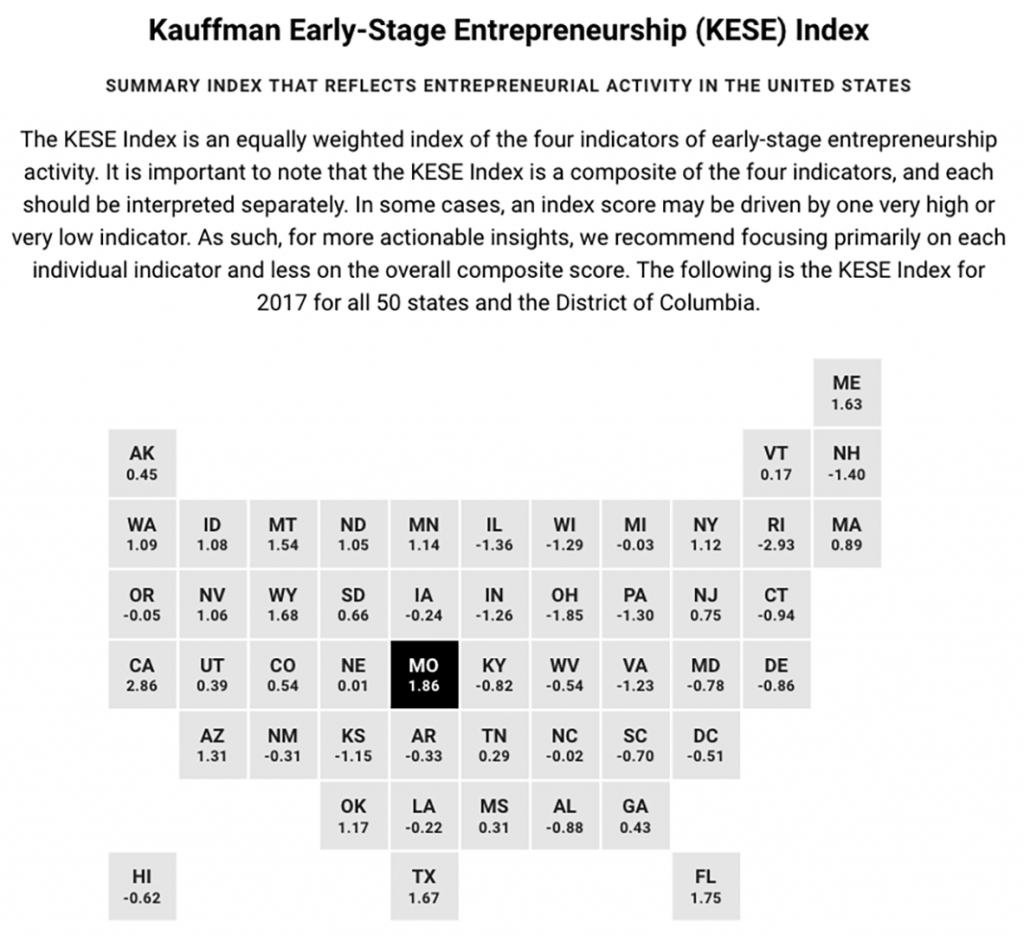
Thursday’s release also noted a slight increase in entrepreneurship nationally — a 0.68 average score using the Kauffman Early-Stage Entrepreneurship Index (the highest level recorded nationally over the past two decades). Missouri achieved a score of 1.86, compared to -1.15 for Kansas.
The debut of the four Kauffman indicators marks the retirement of the Kauffman index, which emphasizes rankings over data policymakers and others could use, according to a blog by Julie Scheidegger, senior content strategist for the Kauffman Foundation.
“It gives a lot of nuance large, traditional indicators can’t always provide,” explained Sameeksha Desai, director of knowledge creation and research in entrepreneurship at the Kauffman Foundation, in Scheidegger’s blog. “It doesn’t tell you what to do, but it can help you think about what next steps to investigate.”
For example, Scheidegger said, if the indicators reveal that a state has an exceptionally high rate of new startups, but low one-year survival, the question can be raised: What can be done to better support entrepreneurs in their first year?
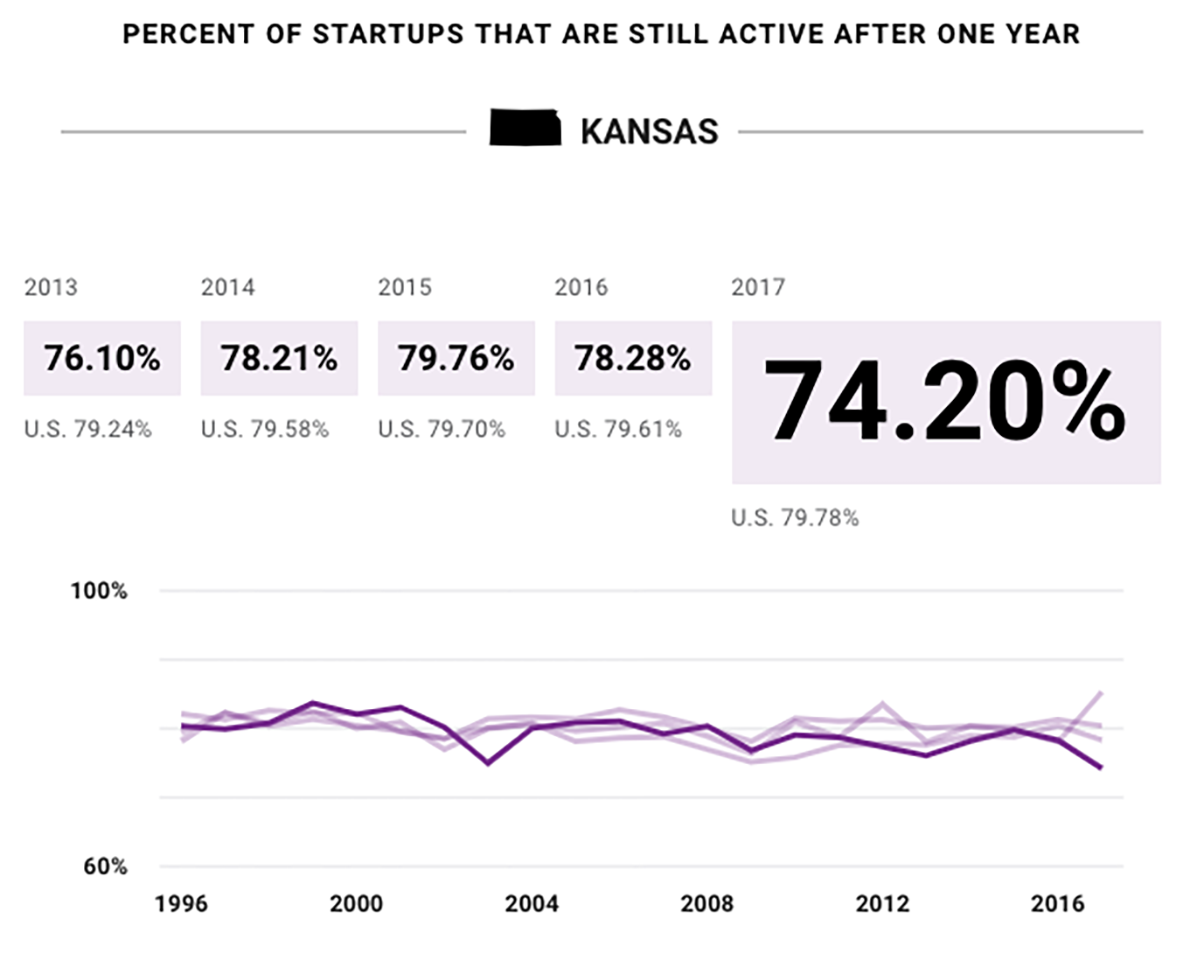
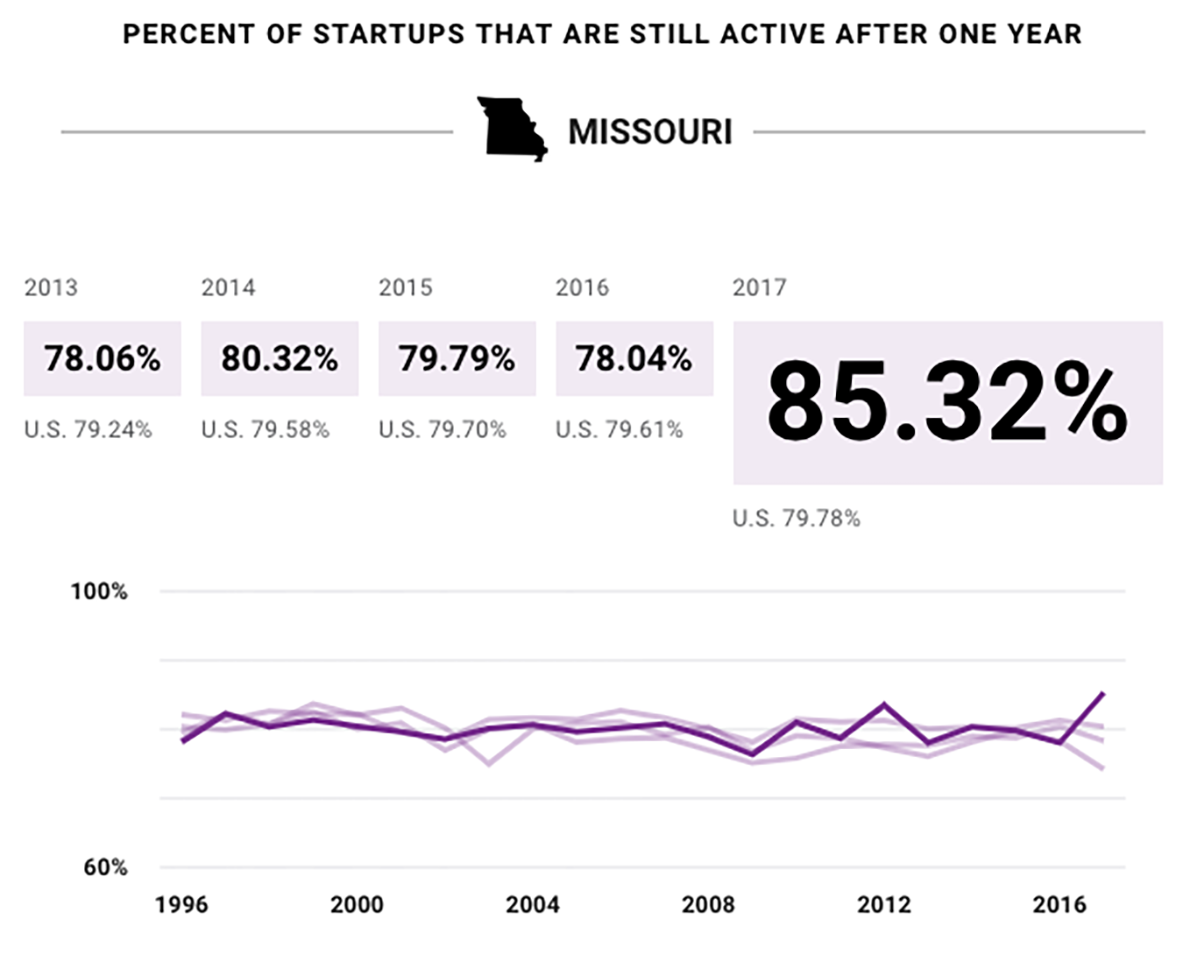
Click here for the full breakdown of the indicators, as well as the new report.
Notable findings from Thursday’s analysis include:
- A slight uptick in new entrepreneur rates from 2016 (0.31 percent) to 2017 (0.33 percent);
- A relatively constant startup early survival rate between 79 and 80 percent since 2012;
- A rising share of new entrepreneurs in the group aged 55-64. This group represented 15 percent of new entrepreneurs in 1996, and it represented 26 percent of new entrepreneurs in 2017;
- An increase in the number of jobs created by startups, from 5.23 per 1,000 people in 2016 to 5.27 per 1,000 people in 2017; and
- An increasing immigrant share of new entrepreneurs, led by the rising rate of new entrepreneurs and the growing immigrant population.
“While the data from the Kauffman Indicators show positive momentum in entrepreneurship, we still have a long process ahead to completely reverse a four-decade slump and repair the disruption caused by the Great Recession,” said Victor Hwang, vice president of entrepreneurship at the Kauffman Foundation. “We hope this new approach to measuring early-stage entrepreneurship will provide policy makers with the information to make practical decisions that support new business creation and early growth.”

Featured Business

2019 Startups to Watch
stats here
Related Posts on Startland News

What comes after the World Cup? Leaders ponder KC’s next phase (and how to get there)
Editor’s note: The following is the first in a four-part series exploring the verticals and impact of initiatives within the Economic Development Corporation of Kansas City through a paid partnership with EDCKC. EDCKC leader: Tapping Kansas City’s full potential requires coordinated eco devo strategy across region Tracey Lewis has lived and worked in some of…
Clock is ticking on World Cup 2026: Small businesses urged to prepare before this buzzer-beater
A massive influx of visitors are expected next year when more than 600,000 fans descend on Kansas City for its piece of the FIFA World Cup 2026 prize, but potential roadblocks lie ahead for small business owners who are waiting for the action instead of preparing now to capitalize on it, said local leaders. “This…
Why KCMO pushed to lock down ‘Kansas City’ brand ahead of its biggest sports event yet
With World Cup visitors already eyeing plane tickets to Kansas City for matches opening in June 2026, clarity around what constitutes “Kansas City” will be key, said Quinton Lucas, who in late 2024 made moves to restrict labeling the city’s name on certain projects. The effort aims to authentically represent KCMO on the world’s stage,…

Downtown KCMO ballpark remains in play as Kansas aggressively pursues Royals
Editor’s note: The perspectives expressed in this commentary are the author’s alone. Gib Kerr is the chair of the Downtown Council of Kansas City, Missouri, managing director at Cushman & Wakefield, and an author. This piece was first published by the Downtown Council. Where should the Royals play baseball? Last year, the debate was whether…