

IoT panel to startups: Demystify emerging tech and take risks, but prepare to fail fast
February 15, 2019 | Elyssa Bezner
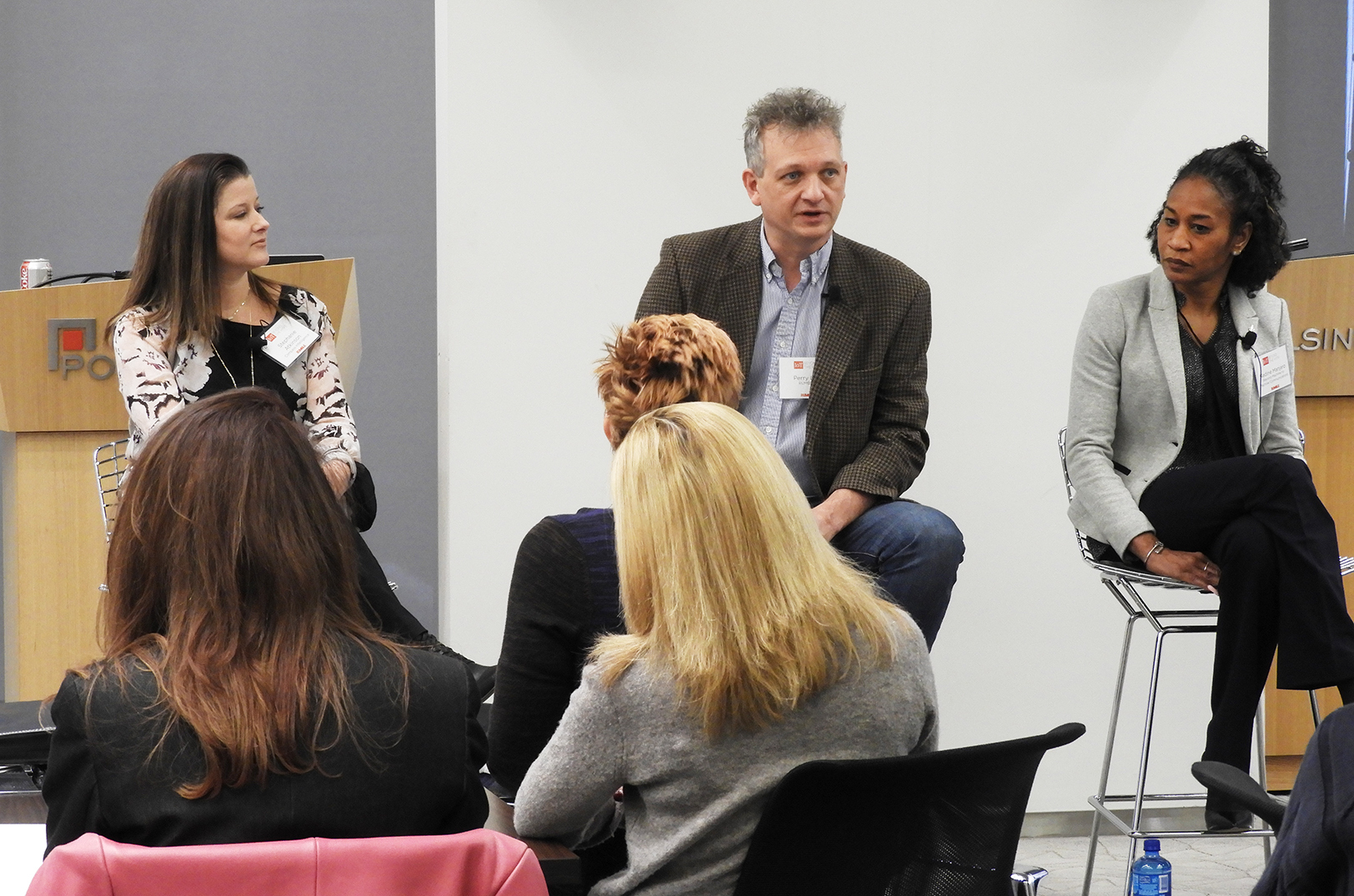
Entrepreneurs often get lost in the hype of emerging technologies like the Internet of Things, failing to effectively integrate new tech into their startups, said Don Sharp.
“Whether it’s the latest, greatest thing or not — it’s no different than any other tool,” said Sharp, CEO of St. Louis-based Coolfire Solutions and panelist at RUMBLE’s Friday IoT: Beyond the Hype event. “People seem mystified by new technology. Some of it is our own darn fault — we speak in so many acronyms, the only place worse would be the United States military.
“When it comes to any kind of technology, especially in IoT, it starts with anything else you do in business: ‘What am I trying to achieve?’ and ‘What is ultimately the business value I’m trying to drive?’”
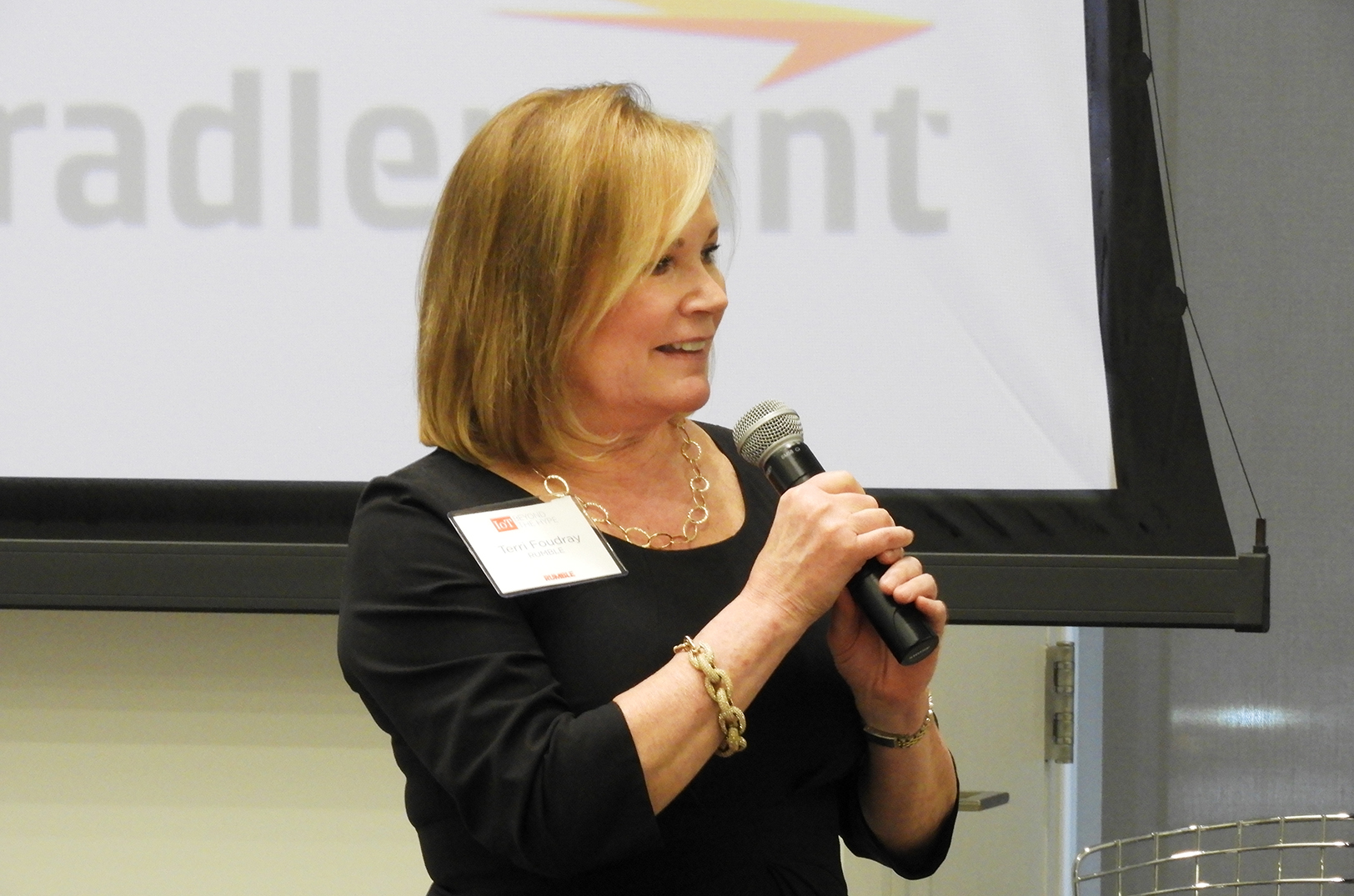
Terri Foudray, RUMBLE
Hosted at Polsinelli, end-to-end IoT designer and integrator firm RUMBLE brought together four IoT experts — Sharp, Nadine Manjaro, Stephanie Atkinson and RUMBLE co-founder Perry Lea — to deliver insight to KC business leaders on the importance of effectively implementing the innovative tech, said Terri Foudray.
“Very few people know how to design and implement end-to-end IoT solutions,” said Foudray, RUMBLE co-founder and CEO. “IoT creates advantages for adopters and we want to ensure regional organizations have the information that will help them move forward successfully.”
Click here to learn more about Overland Park-based RUMBLE.
Implementing IoT solutions or any new technology is difficult if the task is outside the scope of the organization, said Manjaro, IoT consultant and CEO of Beyond Machine to Machine Communications in New Jersey.
“Definitely bring in people who have expertise,” she advised. “Don’t try to do everything yourself because I’ve seen this with so many large companies who say, ‘Yeah, we can do this ourselves,’ but $20 or $30 million dollars later — it failed. The technology didn’t fail, they just didn’t understand the pitfalls.
“Get help early and start small,” she added.
The biggest hurdles for startup: being risk averse and failing to force needed change, said Sharp.

Perry Lea, RUMBLE, Microsoft
“It’s the number one thing I consistently see,” he said. “When you’re innovating, it’s about failing fast and learning quickly. By definition, you have to fail. That flies in the face of every mature organization’s compensation structures, performance reviews, all those kinds of things.”
“If you don’t have that culture of innovation, your competitor does,” added Lea, co-founder of RUMBLE and a Microsoft principal. “You have to embrace these new technologies. We talked about a lot of hype today, but you have to go beyond that, and say, ‘How do these technologies work for me and my customers?’”
Lea recently published “The Internet of Things for Architects.” Click here to learn more about the book.

Featured Business

2019 Startups to Watch
stats here
Related Posts on Startland News
UMKC receives $12.97M grant from Kauffman Foundation to boost barrier breaking across KC region, beyond
Editor’s note: The Ewing Marion Kauffman Foundation is a financial supporter of Startland News’ nonprofit newsroom. New grant provides support to continue and expand entrepreneurship programs on the UMKC campus and across the Kansas City region The University of Missouri-Kansas City has received a historic, five-year, $12.97 million grant from the Ewing Marion Kauffman Foundation…
This 11-year-old’s lemonade sells out in hours at Hy-Vee; Here’s how he hopes to extend the shelf life of his young family business
The all-natural, fresh-squeezed lemonade made by 11-year-old Tre Glasper and his family in a Manhattan commercial kitchen is making its way to Kansas City thanks to a tart partnership with one of the Midwest’s leading grocery chains. Tre typically sells about 100 bottles of Tre’s Squeeze — an amount that takes two to three hours…
LaunchKC eyes startups building ‘a more prosperous and equitable future’; Social Venture Studio opens apps
A program created in late 2021 to help boost promising social ventures as they create sustainable business models to tackle social, racial, or environmental issues is returning this spring for its second cohort. LaunchKC’s Social Venture Studio is now accepting applications for its program, which aims to drive social impact and return on investment via…

Grief happens on (and off) company time: Why a startup founded from loss is building holistic bereavement plans for corporate America
When grieving employees return to work, managers and colleagues often aren’t equipped to properly support them, said Lisa Cooper. “While I was working in corporate America for quite some time, I had witnessed a lot of dysfunction surrounding grief,” said Cooper, co-founder of Workplace Healing alongside Mindy Corporon. For example, I can remember specifically when someone…