

IoT panel to startups: Demystify emerging tech and take risks, but prepare to fail fast
February 15, 2019 | Elyssa Bezner
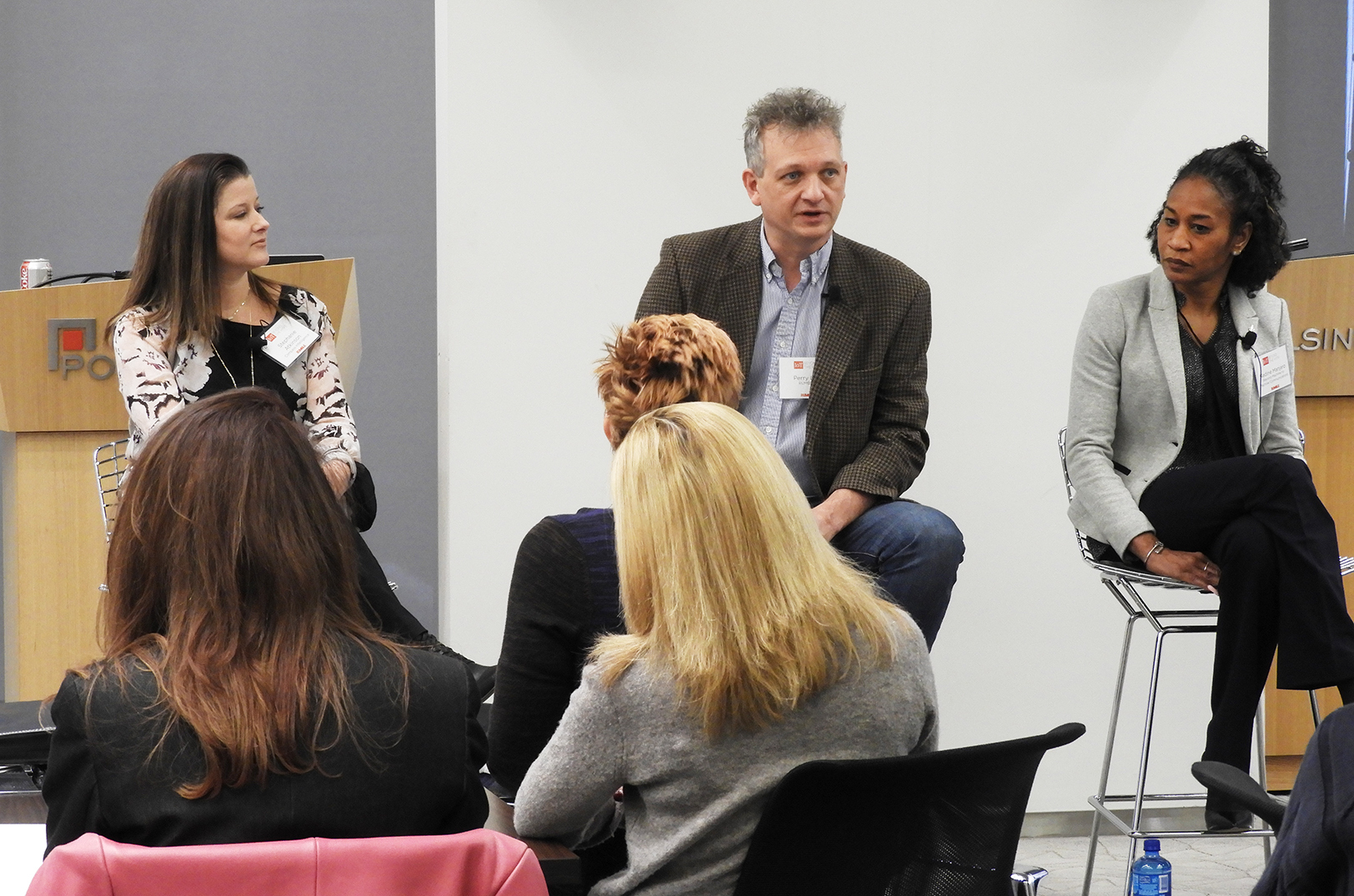
Entrepreneurs often get lost in the hype of emerging technologies like the Internet of Things, failing to effectively integrate new tech into their startups, said Don Sharp.
“Whether it’s the latest, greatest thing or not — it’s no different than any other tool,” said Sharp, CEO of St. Louis-based Coolfire Solutions and panelist at RUMBLE’s Friday IoT: Beyond the Hype event. “People seem mystified by new technology. Some of it is our own darn fault — we speak in so many acronyms, the only place worse would be the United States military.
“When it comes to any kind of technology, especially in IoT, it starts with anything else you do in business: ‘What am I trying to achieve?’ and ‘What is ultimately the business value I’m trying to drive?’”
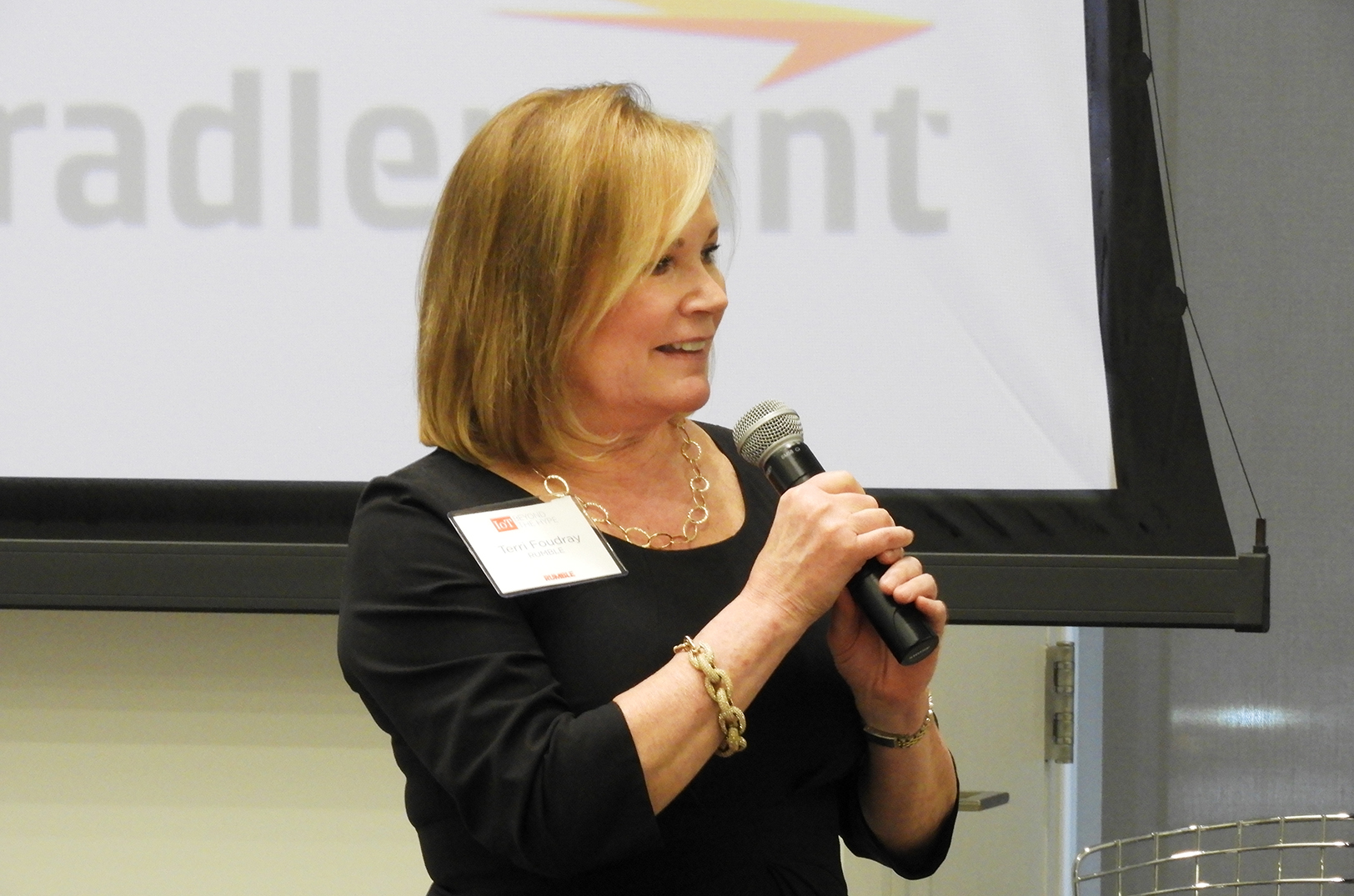
Terri Foudray, RUMBLE
Hosted at Polsinelli, end-to-end IoT designer and integrator firm RUMBLE brought together four IoT experts — Sharp, Nadine Manjaro, Stephanie Atkinson and RUMBLE co-founder Perry Lea — to deliver insight to KC business leaders on the importance of effectively implementing the innovative tech, said Terri Foudray.
“Very few people know how to design and implement end-to-end IoT solutions,” said Foudray, RUMBLE co-founder and CEO. “IoT creates advantages for adopters and we want to ensure regional organizations have the information that will help them move forward successfully.”
Click here to learn more about Overland Park-based RUMBLE.
Implementing IoT solutions or any new technology is difficult if the task is outside the scope of the organization, said Manjaro, IoT consultant and CEO of Beyond Machine to Machine Communications in New Jersey.
“Definitely bring in people who have expertise,” she advised. “Don’t try to do everything yourself because I’ve seen this with so many large companies who say, ‘Yeah, we can do this ourselves,’ but $20 or $30 million dollars later — it failed. The technology didn’t fail, they just didn’t understand the pitfalls.
“Get help early and start small,” she added.
The biggest hurdles for startup: being risk averse and failing to force needed change, said Sharp.

Perry Lea, RUMBLE, Microsoft
“It’s the number one thing I consistently see,” he said. “When you’re innovating, it’s about failing fast and learning quickly. By definition, you have to fail. That flies in the face of every mature organization’s compensation structures, performance reviews, all those kinds of things.”
“If you don’t have that culture of innovation, your competitor does,” added Lea, co-founder of RUMBLE and a Microsoft principal. “You have to embrace these new technologies. We talked about a lot of hype today, but you have to go beyond that, and say, ‘How do these technologies work for me and my customers?’”
Lea recently published “The Internet of Things for Architects.” Click here to learn more about the book.

Featured Business

2019 Startups to Watch
stats here
Related Posts on Startland News

‘You’re not just a fan; it’s your livelihood!’ KC makers’ work featured in Chiefs’ playoffs trailer
The NFL playoffs tease a new season of creativity for Kansas City makers like Johnny and Michele Dawbarn — especially when the Chiefs’ success starts the clock on new opportunities. The couple behind Collective EX, sewKC, and HITIDES Coffee (all within their symbiotic studio space in the East Crossroads) recently helped design several items featured…

Tech workforce program championed by former Chiefs star graduates its first KC class
An education initiative recently launched in Kansas City not only focuses on lifting up young people from low-income backgrounds and helping them succeed in the high-tech sector, said pro football hall of famer Will Shields: it upends a cycle of decline and replaces it with building blocks. i.c.stars, headquartered in Chicago, launched in Kansas City…

Build-A-Bear founder joins VFA’s board, lauding group as an ‘onramp’ to entrepreneurship for overlooked young professionals
ST. LOUIS — A hometown founder and entrepreneurial icon is joining the board of one of the region’s premiere work placement opportunities for early-career professionals. Maxine Clark, founder of Build-A-Bear Workshop — the teddy-bear-themed retailer she launched in 1997 in St. Lous — is the latest appointment to the national board of directors for Venture…
Leveraging KC’s resources: How the right people at the right time can unlock a startup’s potential
The level of collaboration seen in Kansas City’s entrepreneurial ecosystem is unmatched by peer communities, said Jill Meyer, noting it’s not a phenomenon that developed by accident. And it takes transparency and trust, she added. “There is a lot of work that resource partners do to make sure that our companies and our founders have…