

Chronic Cow uses big data to attack pain: ‘I can still live a good life,’ founder with MS says
February 5, 2019 | Elyssa Bezner

Half of all Americans have a chronic illness, said former TeraCrunch co-founder Dr. Kevin Payne. That somber reality, paired with uninvolved physicians, makes quality of life difficult for patients and the focus of Payne’s new venture, Chronic Cow, he said.
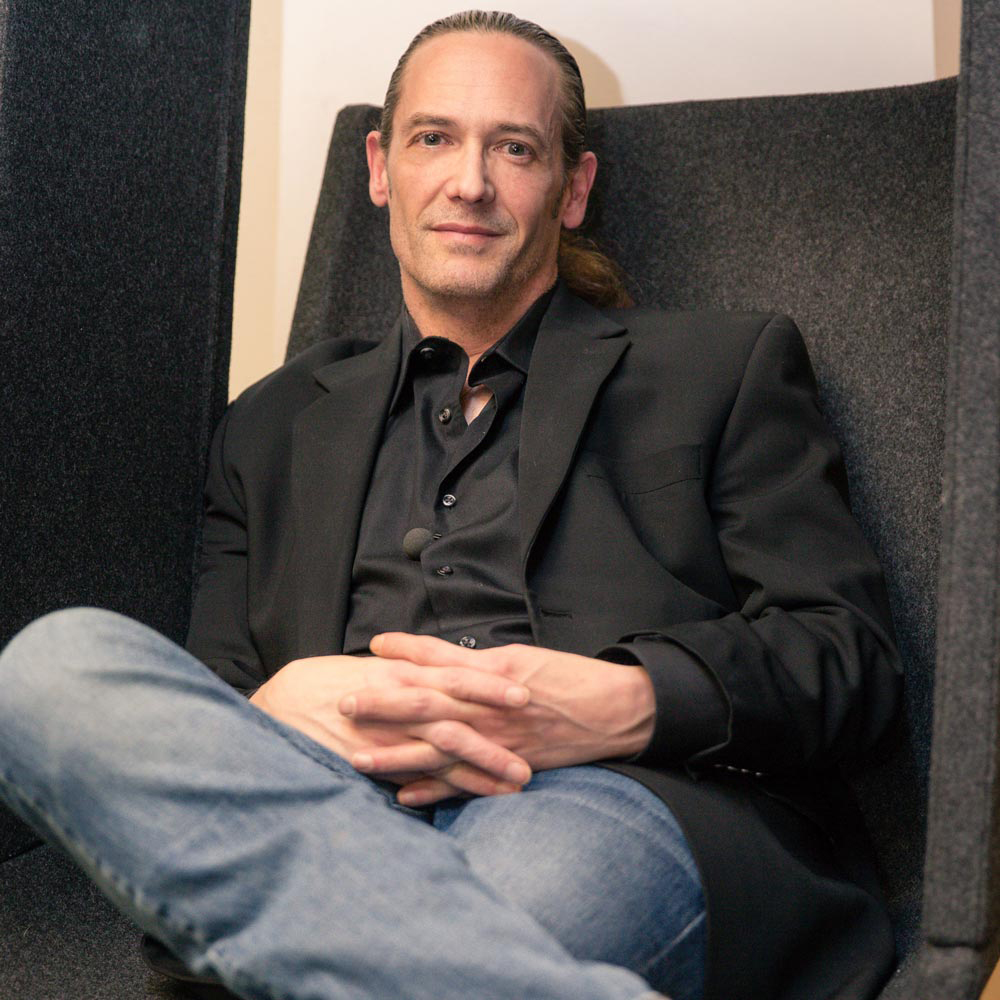
Dr. Kevin Payne, Chronic Cow
“From a medical perspective, all I can do as a patient is what my physicians tell me to do,” said Payne, a multiple sclerosis patient and founder of the startup, which delivers analytics-based programming. “I have no agency in that which is discouraging and limiting, but what I can do is improve my behavior, my mindset, and alter my environment to be more supportive and amenable to my needs.”
“Chronic illness is tough, and you need to change your expectations,” he added.
Click here to learn more about Chronic Cow.
After three years developing the big data analytics platform TeraCrunch with co-founder Tapan Bhatt, the firm moved forward with a pivot that drew the relationship to a close and opened the door for an idea that had been forming quietly for years, said Payne. TeraCrunch was selected as one of Startland’s Startups to Watch in 2016.
“[TeraCrunch] pivoted in a direction that was a great direction for the business, but it wasn’t necessarily what we had set out to do and what was most interesting to me,” he said. “I knew that there was [Chronic Cow] in the back of my head, and I really needed to get it out there.”
Changing expectations
Founded in 2016, Chronic Cow offers direction to patients while looking at the full picture, Payne said, providing targeted programs, individual sessions with “guides,” or group sessions, all backed by an algorithm that searches thousands of studies and research done on a variety of illnesses to highlight best practices.

Guides can alert patients to the most important changes that need to be made and track the progress of each person towards those goals, he said, while providing helpful information based on the behavioral data compiled on each person.
“The problems that we live with day in and day out aren’t the biomedical problems,” he said. “They have to do with how we see the world, our identity, behaviors within relationships and our environment — all of these things contribute to lowering people’s quality of life and health.”
“I lived with MS for at least 16 years and spent a decade supporting a wife dying of cancer,” he added. “Nobody ever gets us.”
The first guinea pig
Chronically ill people all must face the realization that pain is most likely going to be a constant, said Payne, noting that once the idea hit for a technology that could optimize quality of life, he became the first guinea pig.
“I started collecting about 80 variables a day on myself and running mathematical models and predictions because that’s just what I do to make sense of the world,” he said. “I built in analytics that not only would optimize health indicators but also quality of life indicators because that’s what it’s about.”
Steps like refusing to let go of physically taxing activities can be difficult, but ultimately increase happiness, he added, drawing on the memory of making a conscious effort to begin skydiving regularly again.
“I got to a point where I didn’t trust my body and without even consciously deciding, [skydiving] just dropped out of my life,” said Payne. “I had to learn how to land [by] feeling the pressure at my knees because I usually have little to no feeling below my knees. So I did.”
Detailing more personal stories in an upcoming book, “Your Life, Lived Well,” Payne is currently conducting a crowdfunding raise to get the book in stores, he said.
It’s easy for the illness and the experience to swallow a person’s identity, he added, noting the Chronic Cow programming is expected to take an overwhelming aspect to life and make it digestible and easy to carry.
“I’m not going to cure you,” he added. “If there was a cure, it wouldn’t be chronic. I’m always going to have this, but I can still live a good life.”
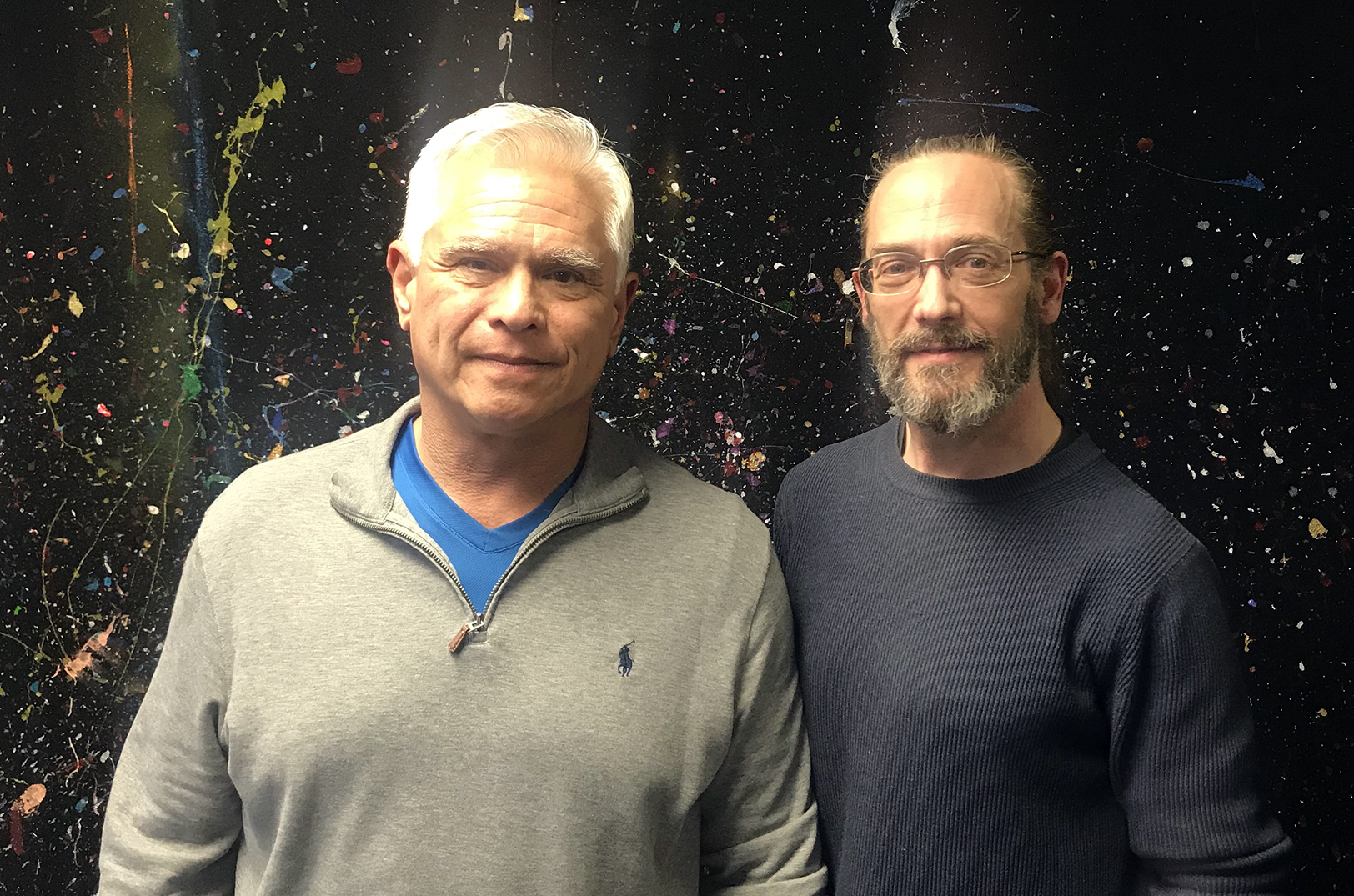
Don Peterson and Dr. Kevin Payne
The next steps
Chronic Cow makes an effort to employ chronically ill people or caregivers that understand the experience, said Payne, noting the startup’s six part-time employees are designed to grow into full-time positions in the near future.
“I personally think that because our labor market is shunting so many of these [chronically ill] people off to the side, we are losing so much human capital,” he said. “One of the best things you can do to improve somebody’s quality of life is to give them something productive to do.”
The next iteration of product is expected to be an online class-format experience, he added, noting the less labor intensive program is expected to scale more effectively, with the final model appearing as an app by the end of 2019.
Payne is also expected to begin a podcast, “The Chronic Life,” together with retired CEO of Infusion Express Don Peterson, he said, noting the episodes are planned to dive into the multiple facets of life with a chronic illness.
“[Don and I] like each other, we respect each other, and though we have differing perspectives, we’ve always been able to have good conversations about it,” he added.
The podcast is expected to bring in medical professionals, data professionals, and healthcare entrepreneurs, said Payne, with some episodes specific a specific illness and others covering theory as a whole.
“The idea behind the podcast is to go beyond the diagnosis,” he said.
Click here to check out the podcast.

Featured Business

2019 Startups to Watch
stats here
Related Posts on Startland News

Block by block: Prototype builds startup’s housing vision where everyone can afford their own castle
A mock home facade project on the grounds of Kansas City’s historic Workhouse Castle serves as a proof point for Godfrey Riddle’s rebooted Civic Saint — a social venture built on compressed earth blocks as its key to affordable, sustainable housing. “CEBs (compressed earth blocks) are great for Kansas City, because non-expansive sandy clay soil…

Resource revival: Digital Inclusion Fund relaunches with initial grants focused on devices
Kansas Citians can’t upgrade skills or devices they don’t already have, said organizers of a newly relaunched Digital Inclusion Fund — emphasizing a need to attack the metro’s digital divide at the infrastructure level. The fund is set to award up to $250,000 to 501(c)(3) public charities (including schools and churches) or governmental entities across…

New deal with lightwell keeps WeWork in Kansas City after closing Corrigan Station space
A freshly negotiated lease agreement with the developer behind the lightwell building in downtown Kansas City means WeWork will continue its two-floor coworking and flexible office space operation in the heart of the city’s central business district. WeWork has officially completed its lease rationalization with the assumption of its lightwell location contract, the company said…

Meet the founder distilling greatness (and fusion flavors) into Kansas’ first Black-owned vodka brand
Startland News’ Startup Road Trip series explores innovative and uncommon ideas finding success in rural America and Midwestern startup hubs outside the Kansas City metro. WICHITA — Greatness isn’t given; it’s earned, said Troy Brooks. But it comes one step at a time, and not without its challenges, he said. The entrepreneur behind Kansas’ first Black-owned…