

Beach-loving couple hopes to dissolve fear of sharks with Shark OFF repellent bracelets
January 10, 2019 | Austin Barnes
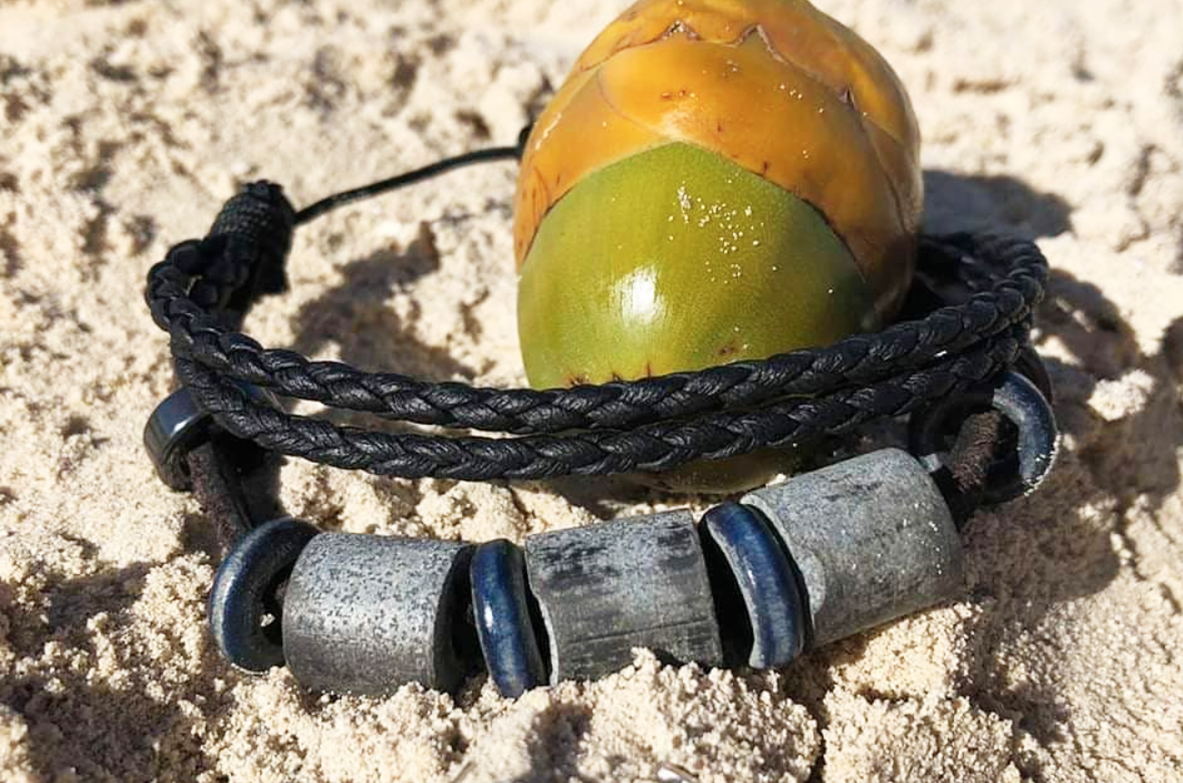
Saving limbs, lives, and long-villainized, cartilaginous creatures of the sea — it’s the mission behind a first-of-its-kind Overland Park startup, Shark OFF, said Shea and Geoff Geist.
“You’re more likely to get killed by a cow. You’re more likely to die falling out of bed,” said Geoff Geist, half of the husband-wife duo who founded Shark OFF, explaining how shark attacks aren’t nearly as frequent or dramatic as Hollywood paints them.
“Our mission is primarily around [helping beach-bound travelers] lose the fear and love the ocean — and get back to enjoying the beach,” he added.
Such a mission is making waves in the metro as the Geist duo launches their shark repellent jewelry — an often confounding concept for consumers and investors far from oceans in the Midwest, the Geists said.
Shark OFF
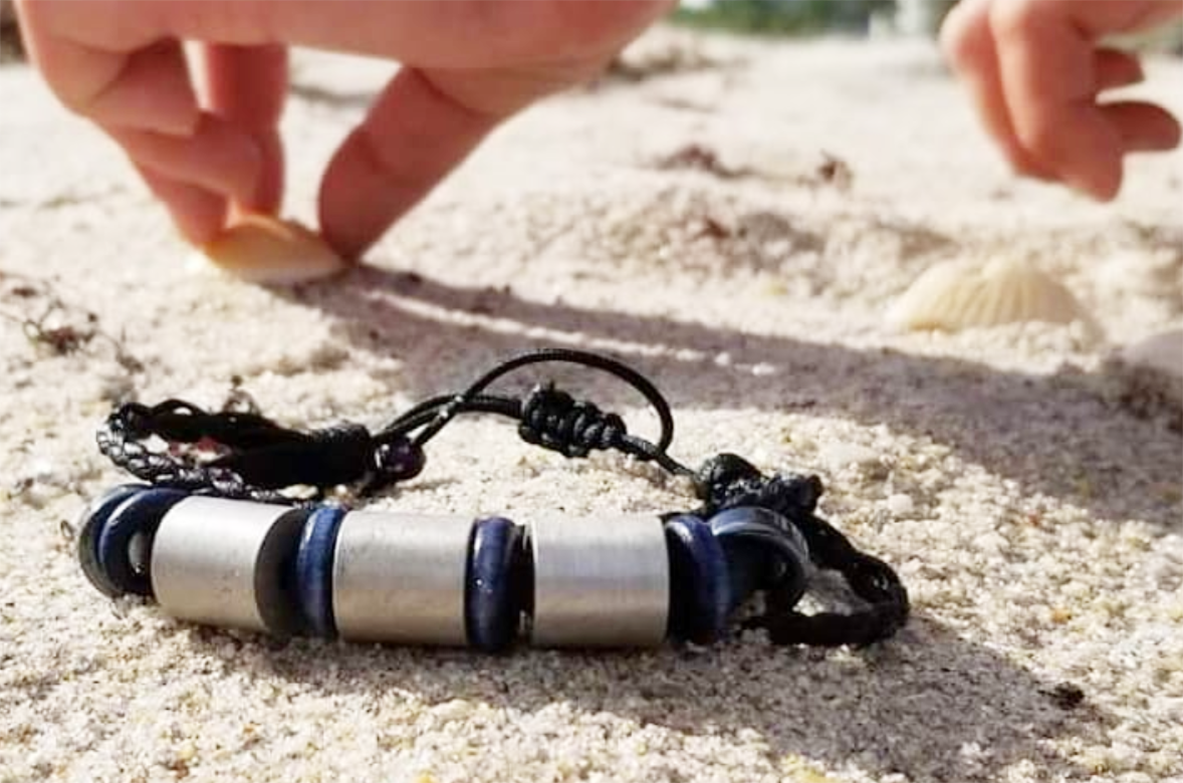
“You can watch people kind of processing. The gears grind to a halt,” Geoff Geist recalled of interactions with those he tells about Shark OFF — a $30 bracelet that emits 1.4 volts of electricity, repelling sharks and protecting divers, surfers, and swimmers. It’s a product the couple envisioned while lying in bed, watching a TV documentary about sharks, he said.
“Mike Rowe from ‘Dirty Jobs’ was interviewing [Dr. Patrick Rice] who pioneered [technology involving the shark repellent properties of magnets and rare earth elements] — and of course, they’re trying to save the sharks, right? Shea and I looked at each other and we’re like, ‘How is this not in every surf shop, every beach store, in every place in the world — you know? This would be a great thing for people to use to get over their fear of sharks.’”
Click here to learn how you can buy Shark OFF.
Deep diving, the duo swiftly began research on sharks, ocean life, and the technology Rice had developed, recalled Shea Geist.
Research quickly revealed the technology had only been used to reduce shark bycatch in commercial fishing and not to block interaction with humans. It was a milestone discovery for the duo as they explored ways to bring Shark OFF to market, she added.
But there are limitations, they said.
“What we don’t want people to think is that they can jump into a feeding frenzy of sharks and nothing’s gonna happen. Sharks are a wild animal,” Shea Geist said, reiterating that sharks aren’t motivated to kill humans — they only bite people to see if they’re food, she explained — but the risk will always exist.
The tide shifted for Shark OFF when the couple was accepted into the Kauffman Foundation’s FastTrac program — aimed at aspiring entrepreneurs with the business skills and insights, tools, resources, and peer networks necessary to build their companies — during which time the product was largely developed, they said.
Landlocked doesn’t mean limitations for the Kansas City entrepreneurs. Developing a product with largely coastal benefits in the middle of the country, has its benefits in the form of support and resources — like the FastTrac program, they said.
The couple is also of the belief Shark OFF can serve as an education tool for those not used to tropical climates, they explained.
“Our market is here in Kansas City,” said Shea Geist. “[We’re marketing to someone] with enough disposable income to travel to the beach for vacation [but who maybe doesn’t understand the risks associated with sharks]. … I know it does sound kind of counter intuitive, but people like surfers and divers and people who live on the coast understand how unlikely it is to get bit by a shark.”
The couple believes Shark OFF can serve also as a social enterprise. Ten percent of all profits are donated to The Ocean Clean Up — a non-profit organization geared toward ridding the world’s oceans of plastic, Shea Geist said.
“One of the things we’d like to do is eventually partner with them to take that plastic and find a way to recycle it so that we can actually use that in our bracelet,” she said of her hopes for the future.
A wave of change yet to crest, Shark OFF newly launched a Kickstarter campaign with the goal of becoming more widely available through Amazon and other retailers as the year comes to a close, Shea Geist said.
“We think that [Shark OFF] will reduce the demonization of sharks. So, if you’re not afraid of something, you’re less likely to hate it and you’re less likely to stand by and let it get slaughtered,” she said.
Shark OFF

Featured Business

2019 Startups to Watch
stats here
Related Posts on Startland News

You can’t plan for this: ‘Mr K’ finalists wary of another ‘wrench into the face’ from Washington
An upended national political and economic climate has rippled down to Main Street, acknowledged leaders of this year’s Top 10 Small Businesses, bringing concerns about racism, DEI backlash, tariffs, and supply chain disruptions to Kansas City’s front door. “We’ve had people come into the shop and harass our employees, our customers,” explained Dulcinea Herrera —…

Hyde Park coffee space reopens with family vibe fitting historic neighborhood’s roots, owners say
A newly opened neighborhood coffee shop in Hyde Park hopes to bring a fresh, family-friendly vibe to Kansas City’s bustling coffee scene, its owners said. “We created 1888 Coffee to be something different — not just another café, but a welcoming hub for our community,” said Christine Kehoe, co-owner and operator of 1888 Coffee with…

Topeka recruited dozens of Filipino teachers for local classrooms; at year’s end, the district hopes they’ll stay
Startland News’ Startup Road Trip series explores innovative and uncommon ideas finding success in rural America and Midwestern startup hubs outside the Kansas City metro. TOPEKA — Although international educators are not new to the state’s capital city, Topeka welcomed about 50 teachers from the Philippines this past school year to address shortages within the…

Startup ideas are here, but does Kansas have the risk capital to get them to the next level?
Eight early-stage Kansas entrepreneurs sat across from Midwest-based investors this week at Aspiria NOW in Overland Park, engaging in rapid-fire, “speed dating” style meetings aimed at moving their ventures closer to real investment. “We’re seeing just a great inflow of companies, especially at the early stage, come in just high levels of sophistication and awareness…