

Beach-loving couple hopes to dissolve fear of sharks with Shark OFF repellent bracelets
January 10, 2019 | Austin Barnes
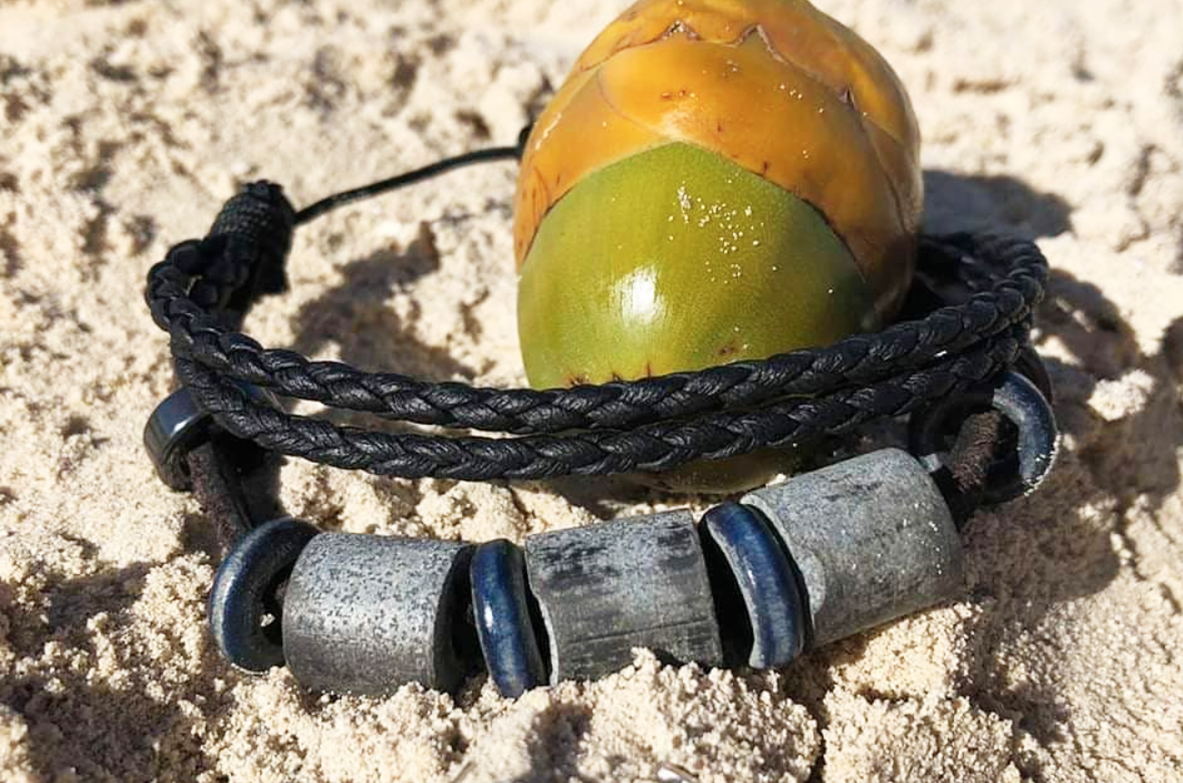
Saving limbs, lives, and long-villainized, cartilaginous creatures of the sea — it’s the mission behind a first-of-its-kind Overland Park startup, Shark OFF, said Shea and Geoff Geist.
“You’re more likely to get killed by a cow. You’re more likely to die falling out of bed,” said Geoff Geist, half of the husband-wife duo who founded Shark OFF, explaining how shark attacks aren’t nearly as frequent or dramatic as Hollywood paints them.
“Our mission is primarily around [helping beach-bound travelers] lose the fear and love the ocean — and get back to enjoying the beach,” he added.
Such a mission is making waves in the metro as the Geist duo launches their shark repellent jewelry — an often confounding concept for consumers and investors far from oceans in the Midwest, the Geists said.
Shark OFF
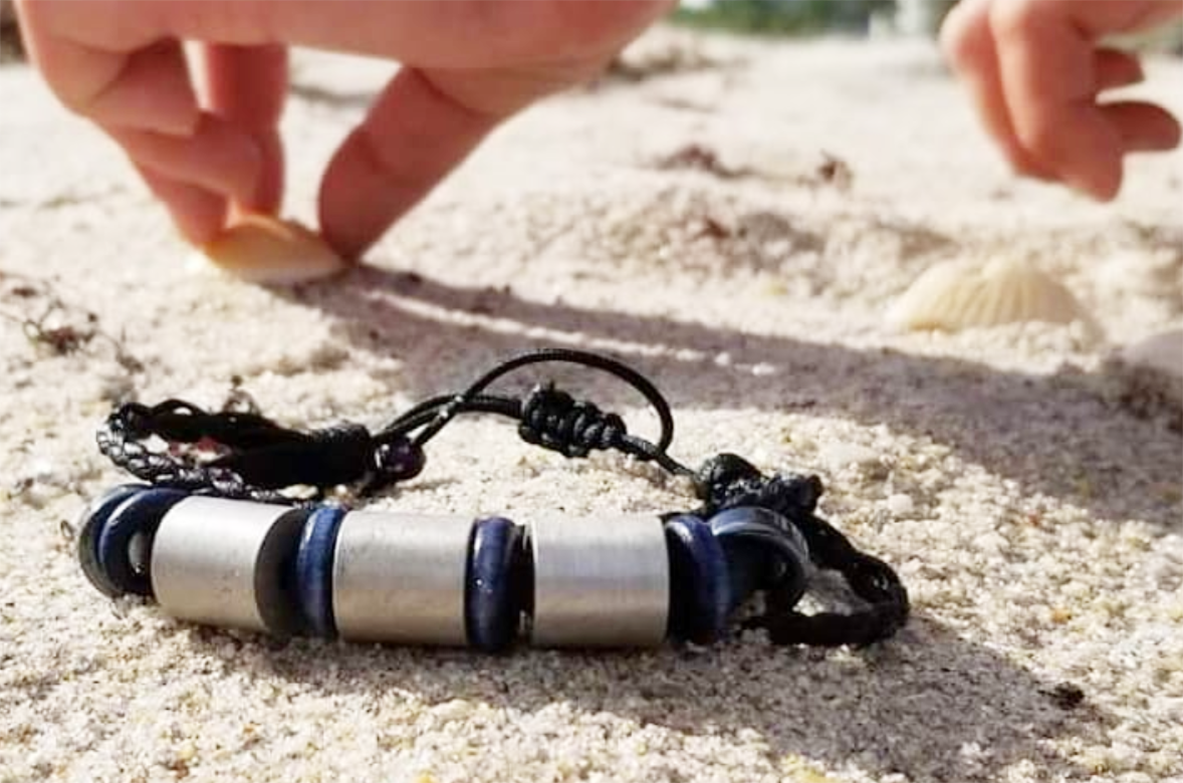
“You can watch people kind of processing. The gears grind to a halt,” Geoff Geist recalled of interactions with those he tells about Shark OFF — a $30 bracelet that emits 1.4 volts of electricity, repelling sharks and protecting divers, surfers, and swimmers. It’s a product the couple envisioned while lying in bed, watching a TV documentary about sharks, he said.
“Mike Rowe from ‘Dirty Jobs’ was interviewing [Dr. Patrick Rice] who pioneered [technology involving the shark repellent properties of magnets and rare earth elements] — and of course, they’re trying to save the sharks, right? Shea and I looked at each other and we’re like, ‘How is this not in every surf shop, every beach store, in every place in the world — you know? This would be a great thing for people to use to get over their fear of sharks.’”
Click here to learn how you can buy Shark OFF.
Deep diving, the duo swiftly began research on sharks, ocean life, and the technology Rice had developed, recalled Shea Geist.
Research quickly revealed the technology had only been used to reduce shark bycatch in commercial fishing and not to block interaction with humans. It was a milestone discovery for the duo as they explored ways to bring Shark OFF to market, she added.
But there are limitations, they said.
“What we don’t want people to think is that they can jump into a feeding frenzy of sharks and nothing’s gonna happen. Sharks are a wild animal,” Shea Geist said, reiterating that sharks aren’t motivated to kill humans — they only bite people to see if they’re food, she explained — but the risk will always exist.
The tide shifted for Shark OFF when the couple was accepted into the Kauffman Foundation’s FastTrac program — aimed at aspiring entrepreneurs with the business skills and insights, tools, resources, and peer networks necessary to build their companies — during which time the product was largely developed, they said.
Landlocked doesn’t mean limitations for the Kansas City entrepreneurs. Developing a product with largely coastal benefits in the middle of the country, has its benefits in the form of support and resources — like the FastTrac program, they said.
The couple is also of the belief Shark OFF can serve as an education tool for those not used to tropical climates, they explained.
“Our market is here in Kansas City,” said Shea Geist. “[We’re marketing to someone] with enough disposable income to travel to the beach for vacation [but who maybe doesn’t understand the risks associated with sharks]. … I know it does sound kind of counter intuitive, but people like surfers and divers and people who live on the coast understand how unlikely it is to get bit by a shark.”
The couple believes Shark OFF can serve also as a social enterprise. Ten percent of all profits are donated to The Ocean Clean Up — a non-profit organization geared toward ridding the world’s oceans of plastic, Shea Geist said.
“One of the things we’d like to do is eventually partner with them to take that plastic and find a way to recycle it so that we can actually use that in our bracelet,” she said of her hopes for the future.
A wave of change yet to crest, Shark OFF newly launched a Kickstarter campaign with the goal of becoming more widely available through Amazon and other retailers as the year comes to a close, Shea Geist said.
“We think that [Shark OFF] will reduce the demonization of sharks. So, if you’re not afraid of something, you’re less likely to hate it and you’re less likely to stand by and let it get slaughtered,” she said.
Shark OFF

Featured Business

2019 Startups to Watch
stats here
Related Posts on Startland News

This founder’s own pain point became too painful; Why he’s back to embracing the loss that sparked his startup
When healthtech founder Chris Jones pivoted away from the painful memory of losing his son — a catalyst for launching his medical records startup — he shelved a vital piece of the “why” behind both his company and his passion, Jones said. “I never understood what my power was — not just the technology —…

Fashion Arts Fund names new leader as shift toward new vision comes into focus
A Kansas City nonprofit dedicated to making impact on the city’s fashion scene announced its new executive director Wednesday — stitching a dyed-in-the-wool KC fashion designer into the organization’s new look. Elon Kebede — founder, designer, and creative director for Kansas City, Kansas-based ELU by Elon — is expected to lead the Fashion Arts Fund,…

Pitch event matches queer singles with dates, but there’s a catch: It’s a bestie behind the mic
Singles within Kansas City’s queer community are about to experience a fresh take on matchmaking, said Tiffany Watts, detailing plans for a pitch event this week where lonely hearts could find connections with help from people who already see them best: their friends. The interactive Where to Find Us event is set for Thursday, Nov.…

KC-built Raven Space Systems awarded $1.8M contract via Air Force’s innovation arm
A LaunchKC alum’s latest stratospheric news: a hefty U.S. defense contract to produce 3D-printed reentry aeroshells for hypersonic flight testing — a breakthrough technology that’s expected to address some of the of most pressing challenges faced by today’s Air Force. Raven Space Systems on Monday announced the $1,800,000 STTR (Small Business Technology Transfer) Phase II contract.…