

Cowboy couture: WH Ranch lassos dream of making the ‘best blue jeans in the world’
December 13, 2018 | Elyssa Bezner
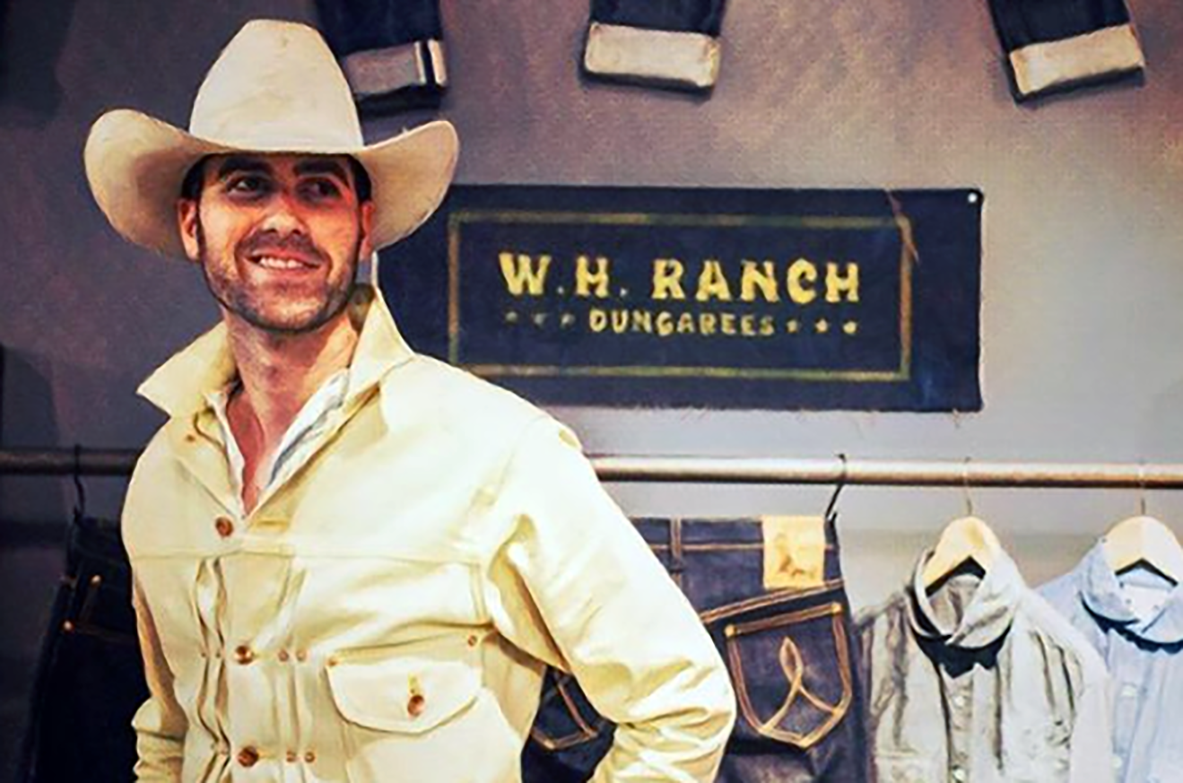
Ryan Martin sold his best cowboy boots to buy high-quality denim for his western couture brand, said the founder of Kansas-based W.H. Ranch Dungarees. 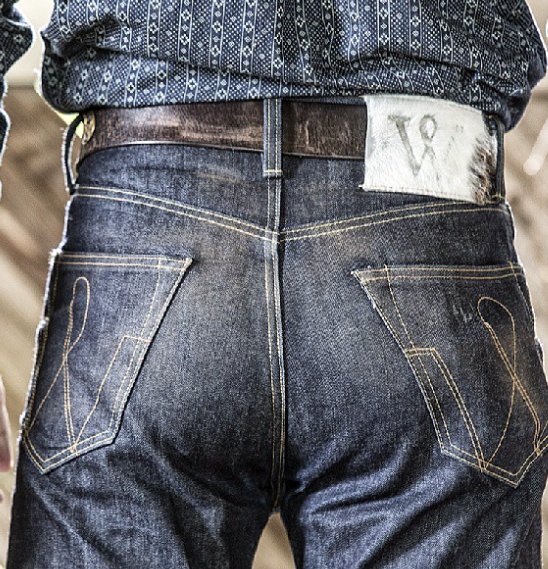
“I was always describing [my product as] ‘custom made’ but ‘couture’ really describes it best,” said Martin, detailing the laborious process that limits production to an average of four pairs of jeans a week. “[‘Couture is] sort of a term you’re not used to hearing in the world of blue jeans. It sort of requires some explanation for people to fully understand what they’re getting into.”
Click here to check out W.H. Ranch Dungarees’ cowboy couture.
Initially launching on Etsy as White Horse Trading Company, Martin’s venture began with denim neckties, priced at about $200, he said.
“I would’ve been thrilled if one person bought a pair [in the beginning],” said Martin. “Within a week, 10 were sold and you just kind of go, ‘Holy cow!’
The designer kept pushing, he said, buying more machines and trying to improve his craft each day.
“Ralph Lauren started with neckties. If it was good enough for him, then that’s good enough for me,” Martin said. He ultimately rebranded to W.H. Ranch Dungarees and shifted focus to his primary goal: designing custom blue jeans.
Social media exposure contributed to explosive demand — demand that necessitated a pricing structure that reflected the often weeks- or months-long span between ordering and delivery of the product, he added.
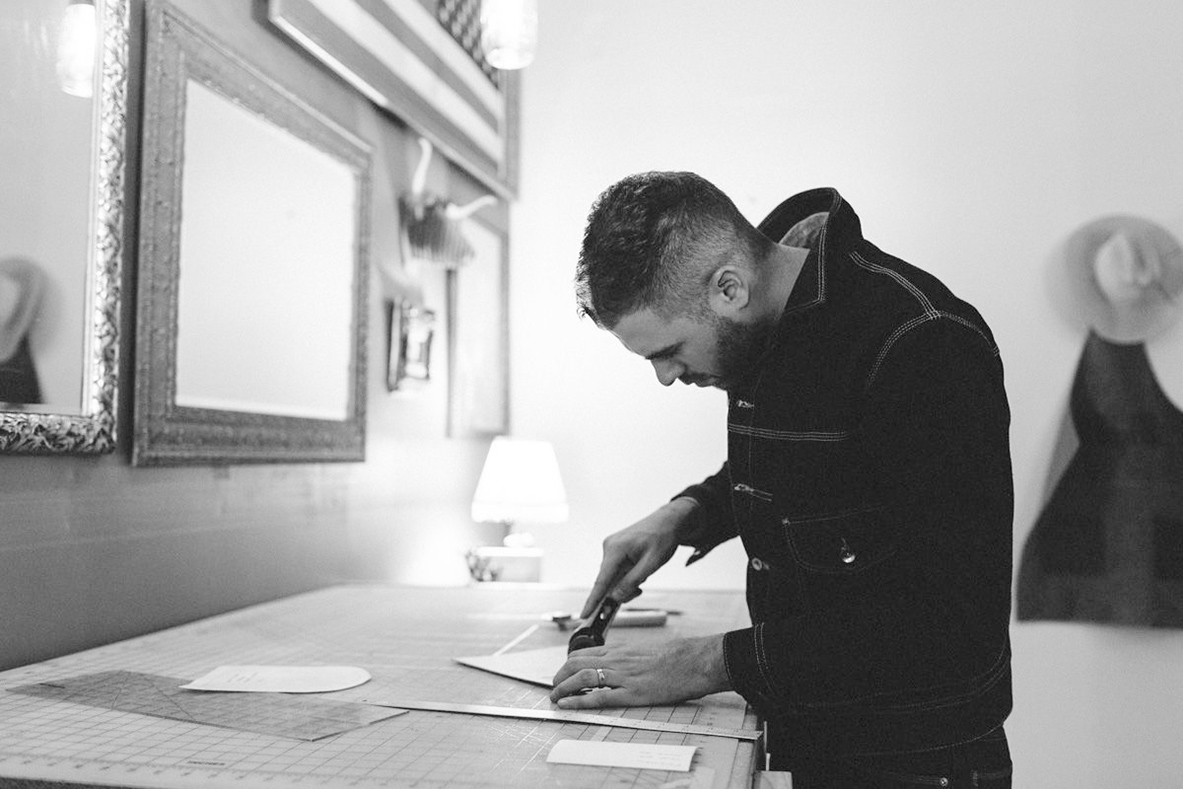
And it soon became obvious that the traditional “order” button on a website wasn’t well-suited for Martin’s process, he said, noting he now takes online requests that are followed by one-on-one phone consultations to get the best outcome for the customer.
“It’s great because in a consultation, I can answer any question they have, and I can walk them through the process,” Martin said. “For me on my end, I know they are crystal clear on exactly how long it’s going to take — which is, ‘I don’t know, and don’t ask me.’”
Items are priced at $375, he added, with those willing to pay $600 receiving a four-week turnaround guarantee on construction.
“It’s something I’ve wrestled with because I don’t want to appear as this elitist sort of brand,” Martin said. “I’m a very basic guy, but the problem was, again, I couldn’t find a price that would curb the demand, and so I had to do something else.”
Clothing design and construction was in Martin’s blood from the start, he said, citing creative parents and a sewing career that began at 7 years old.
“Seeing Mom do it, when you’re growing up … it’s like, ‘Look at that machine! What does that do?’ and, God bless her, she let me get behind the wheel,” he added. “It was just very interesting to me and I just sort of had a knack for it.”
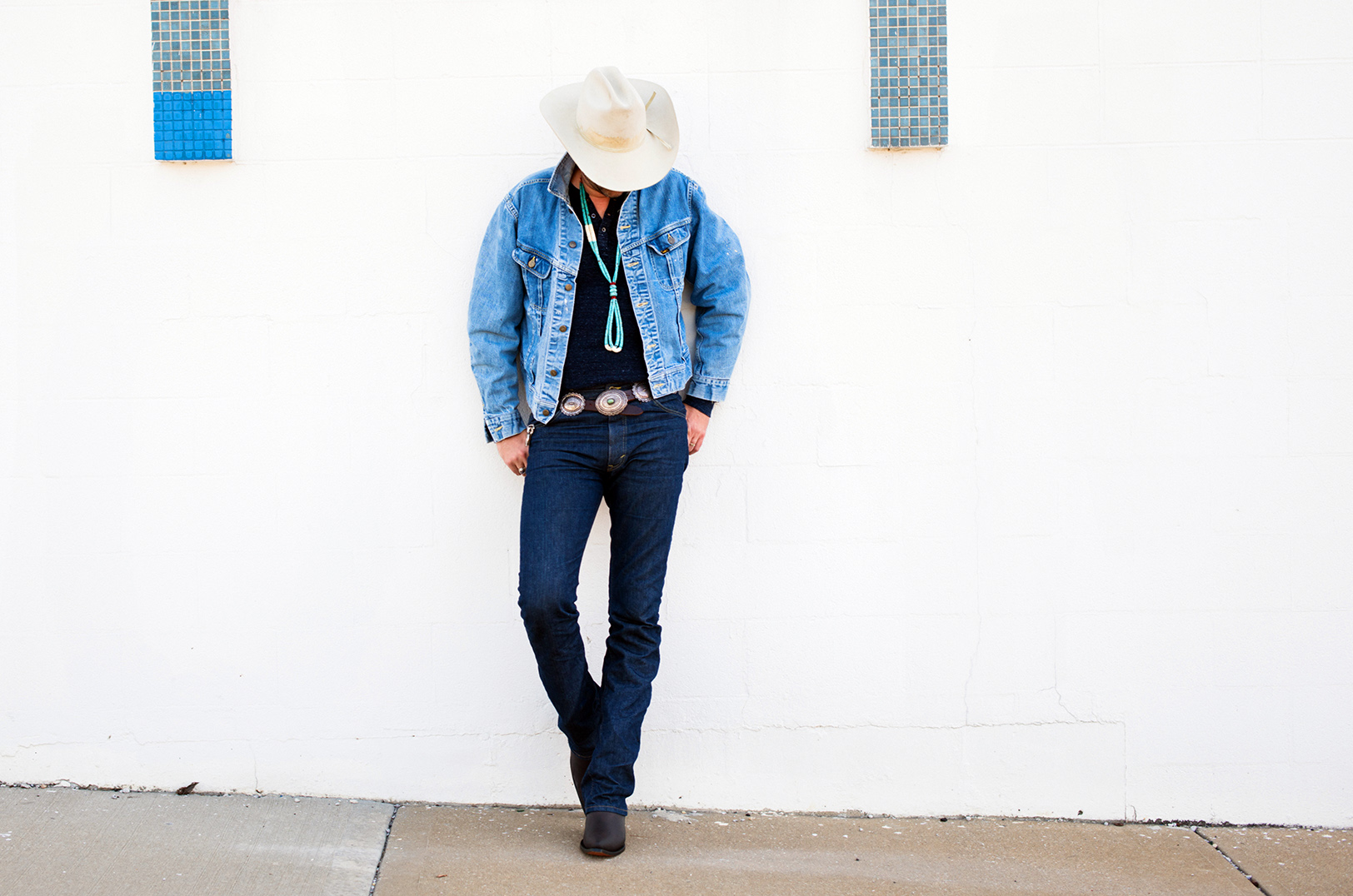
Though the Kansas City maker is inspired by local brand Lee jeans, he said, most W.H. Ranch customers are overseas and interested in Americana and heritage clothing. Many also are state-side ranch owners looking for quality, as well as practical items.
“More than half of my orders go down to postage stamp towns in Texas I’ve never heard of, which tells me it’s sort of that authentic, cowboy rancher who wants super high quality, super tough jeans that were made like they were when they were a kid,” he said.
Now having a family of his own, Martin also works for KC Jacks Work Wear as the director of design and production development. It’s a job that provides the opposite experience in fashion — with more manufactured products being mass produced — as well as a much-appreciated second income, he added.
“What I tell people is, ‘You should be glad that I have something else because that means I don’t have to cut corners with jeans,’” said Martin. “Not that I would, but I don’t have to live off of couture jeans, because if I did I might make very different decisions.”
Having side hustles is common in the U.S. textile maker community, he added, noting the security that comes with having multiple incomes.
Creating W.H. Ranch was never about starting a business, Martin said.
“It was always a passion project,” he said. “I just wanted to make blue jeans. I wanted to make the best blue jeans in the world. That was my only focus [along with] getting better every single day.”

Featured Business

2018 Startups to Watch
stats here
Related Posts on Startland News
Techweek’s future of transportation: ‘Don’t let anything stop you from starting’
Transportation and mobility technology are good examples of the hidden talents of the Kansas City tech community, Darcy Howe said “We have many more mobility companies in Kansas City than you might think, which is a pleasure,” said Howe, KCRise Fund managing director, moderating Wednesday’s Techweek panel. Discussing cars, trucks, roadways and the future of…

1 Million Cups embarks on huge national expansion effort
The entrepreneurial events series 1 Million Cups — a national program born in Kansas City and grown by the Ewing Marion Kauffman Foundation — has set the ambitious goal to expand to 500 communities by the end of 2018. “We’re looking forward to keeping the magic that we’ve already created with 1 Million Cups on…

4 Techweek takeaways: KC can’t escape ‘cowtown’ (and shouldn’t try)
Kansas City shouldn’t run from its “cowtown” label, Techweek KC presenters said Wednesday. “We can celebrate agriculture, and we can also be hip and metropolitan,” said Kimberly Young, president of the KC Animal Health Corridor. Sitting aloft the rooftop deck at Travois in the Crossroads, a panel of experts gathered an audience interested in learning…

Tips for overcoming experience gap, building a diverse workforce
When Ariel Banks graduated from the University of Missouri at Rolla in 2014 with a chemical engineering degree, she felt qualified and eager to jump into her career. Unfortunately, Banks spent nearly two years without any luck in finding a job. She found herself being asked time and time again, the dreaded question: “What is…