

Culture Lab to Fountain City Fintech startups: Before you hire, define your culture
December 11, 2018 | Elyssa Bezner
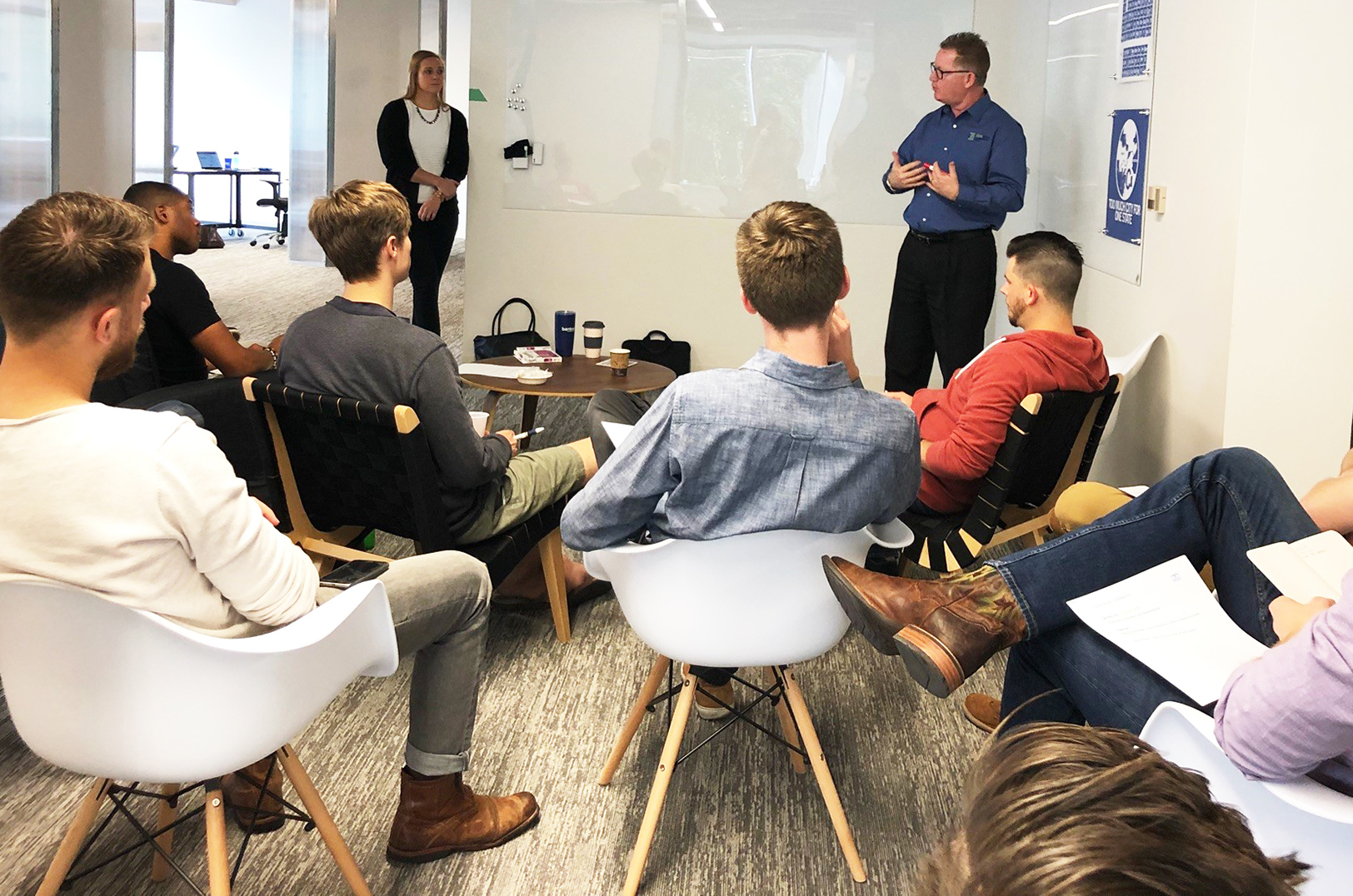
Bringing Culture Lab programming to the Fountain City Fintech accelerator’s inaugural cohort is part of a deeper effort to call attention to workplace culture in Kansas City, said Frank Keck.
“We’ve been able to help each of these six cohort companies really define who they are, why are they doing what they’re doing, and help them to develop their story so that they’re more than just a couple of guys or a couple of gals just starting some high-tech business,” said Keck, co-founder of the CoreBuild workplace culture bootcamp program.

Frank Keck, CoreBuild
“These are people who have a real story to tell and they’re very passionate about the product that they’re creating. They really want to change the world.”
Fountain City Fintech inaugural cohort is expected to present at the accelerator’s Demo Day at nbkc bank on Thursday.
Click here to read about Fountain City Fintech cohort member Onward’s recent $1M grant.
Sitting down with the fintech companies to identify each startup’s core values and driving forces before they began the hiring process was key, he said.
“[The CoreBuild Culture Lab] was hugely beneficial,” Parker Graham, CEO of cohort member Destiny Wealth, told the “Investivus for the Rest of Us” crowd at Startland’s Dec. 6 Innovation Exchange. The event featured a panel that included Graham and two other Fountain City Fintech startup leaders — Onward’s Ronnie Washington, and SavR’s Tim O’Shea.
“For Jerry, Joe and I, [hiring] was something we had no experience with, and they really came in and set up the framework of, “What is your culture and how do you define it?” and how to bring people in around you that fit that culture to be able to do the best that you possibly can,” Graham said.
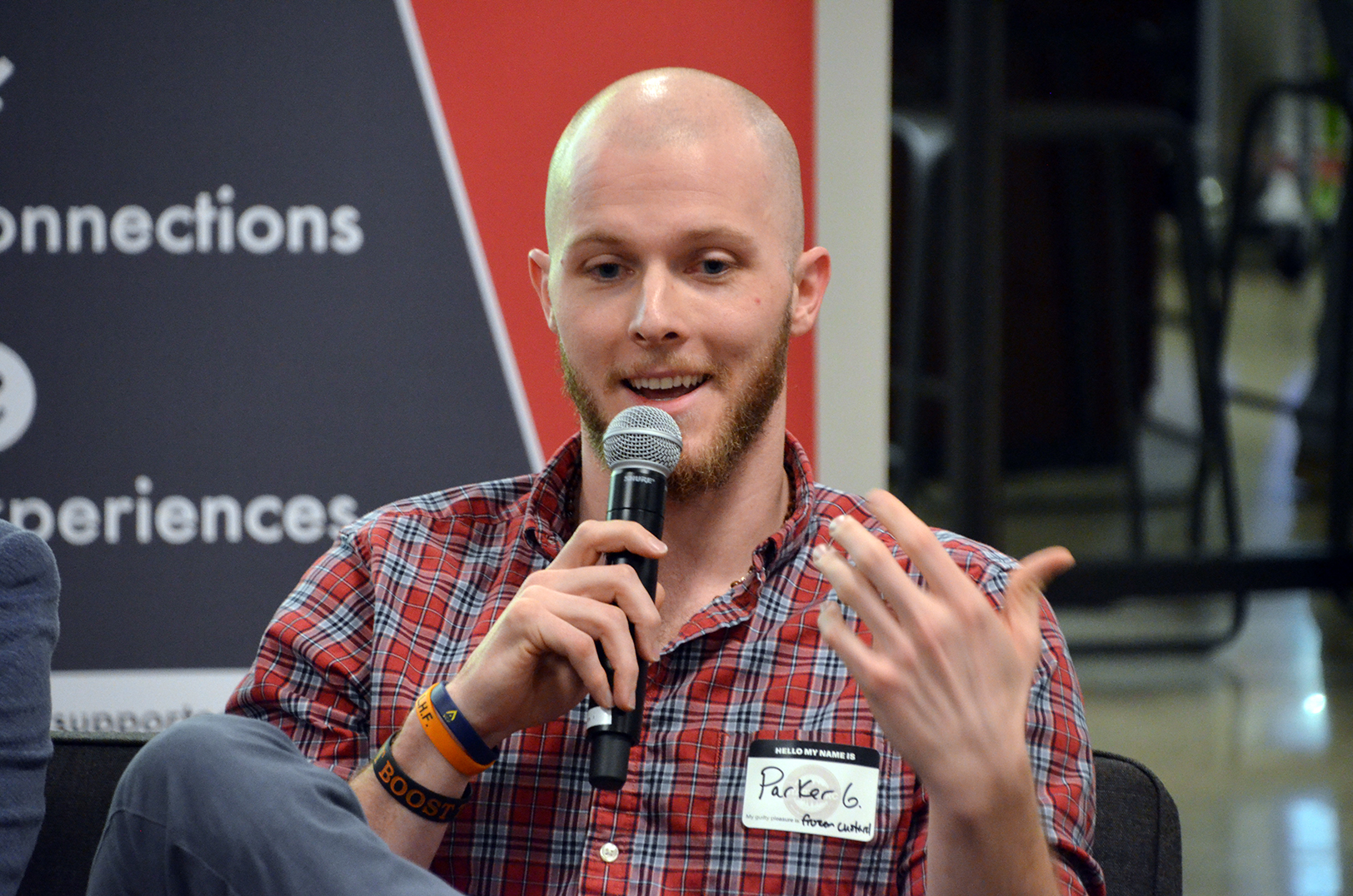
Parker Graham, Destiny Wealth
Each cohort member had a mission in mind, but had not necessarily written it out concretely, said Keck, noting most companies don’t take the time to fully flesh out such key ideas, which typically leads to problems down the road.
“If you’re not putting effort into your culture, you’re not going to get the best and the brightest because they’re going to go someplace [else and say], “Hey, this place is aligned with what I believe,” and I think businesses are starting to figure that out,” he said.
Along with leading monthly group sessions, Keck opened office hours to work one-on-one with the cohort, and co-founder Jessie Jacob performed weekly concierge calls to gauge the application of the discussed ideas, he added.
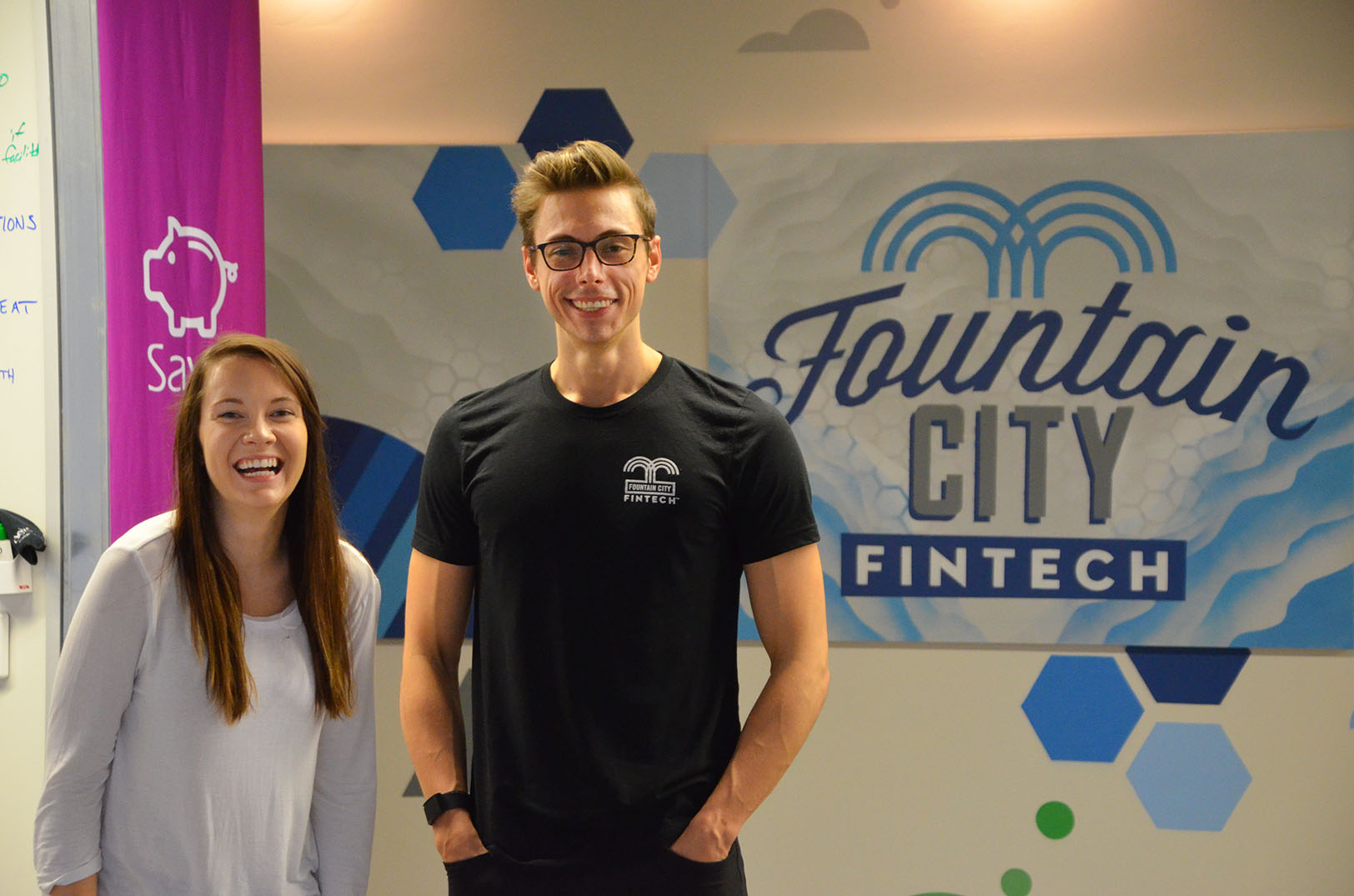
Zach Pettet and Megan Darnell, Fountain City Fintech
“It keeps all the things that we talk about with them in front of them every week because people are so busy — we’re competing for space in the mind, so this way we keep it in front of them a little bit at the time and then they also get coaching from [Fountain City Fintech coordinators] Zach [Pettet] and Megan [Darnell],” said Keck. “We tried to cover the gamut, as far as in a group, one-on-one, and in small groups.”
CoreBuild has a vision for eight 90-day bootcamps in 2019, he said, noting a partnership with the Helzberg Entrepreneurial Mentoring Program will dedicate four of those to a series open to the public.
“[HEMP went] to the last [accelerator] and really saw the power of helping people get in sync with who they are and have that internal message put together,” he added.
CoreBuild hopes to assign the remaining four to accelerator programs across Kansas City, said Keck. Talks of working with Fountain City Fintech’s second cohort are in the air, along with bringing workshops to Plexpod locations and companies, he said.
“We want to raise the image of Kansas city worldwide so that people realize if you moved to Kansas City, it doesn’t matter where you work because every place has great workplace culture,” he said.
Click here to read Keck’s guest columns on intentional workplace culture.

Featured Business

2018 Startups to Watch
stats here
Related Posts on Startland News

Kansas company behind 1-800-GOT-JUNK? integrates home services into one portal (with just one payment)
Lenexa-headquartered Southwind hopes to ease the hassles of home ownership by launching a customizable, comprehensive service program, said Jeffery Anderson. The sprawling home services company — with brands like 1-800-GOT-JUNK? and MVP Heating, Cooling, and Electrical — recently introduced OneOS Home, which is an innovative platform designed to revolutionize how homeowners access and manage essential…

Mom’s ‘modern throwback’ dress collection celebrates girlhood, innocence of times past
Inspired by her five daughters, Joelle Smith created a dress line and online boutique she hopes captures the innocence, beauty, and whimsical spirit of young girls — even though hers are now grown. “When they were little girls, I loved watching them put on a dress and just light up and then twirl and play…

Midwest-made crossover artist charts solo success that eluded him when he was young
Sebastian James assumed until recently that his music career had already peaked, the hometown hit-maker shared. In 2011, the 18-year-old Riverside native and Park Hill South graduate started touring the country as the drummer for the Nigel Dupree Band, opening for bands like Korn and Stone Temple Pilots. But this year, at 30, he launched…

Early childhood isn’t a money maker, but can be a money breaker: ECJC initiative links lack of child care to business’ bottom lines
Access to safe and affordable child care is an issue that should concern everyone, Judy Bumpus acknowledged. Research indicates the current capacity to provide child care within the Kansas City metro is only 45 percent, according to the director of client services for the Kansas City Women’s Business Center, with 80,000 children still needing childcare…