

Toby Rush on emerging blockchain: Layers of trust slowly building behind the scenes
November 1, 2018 | Elyssa Bezner
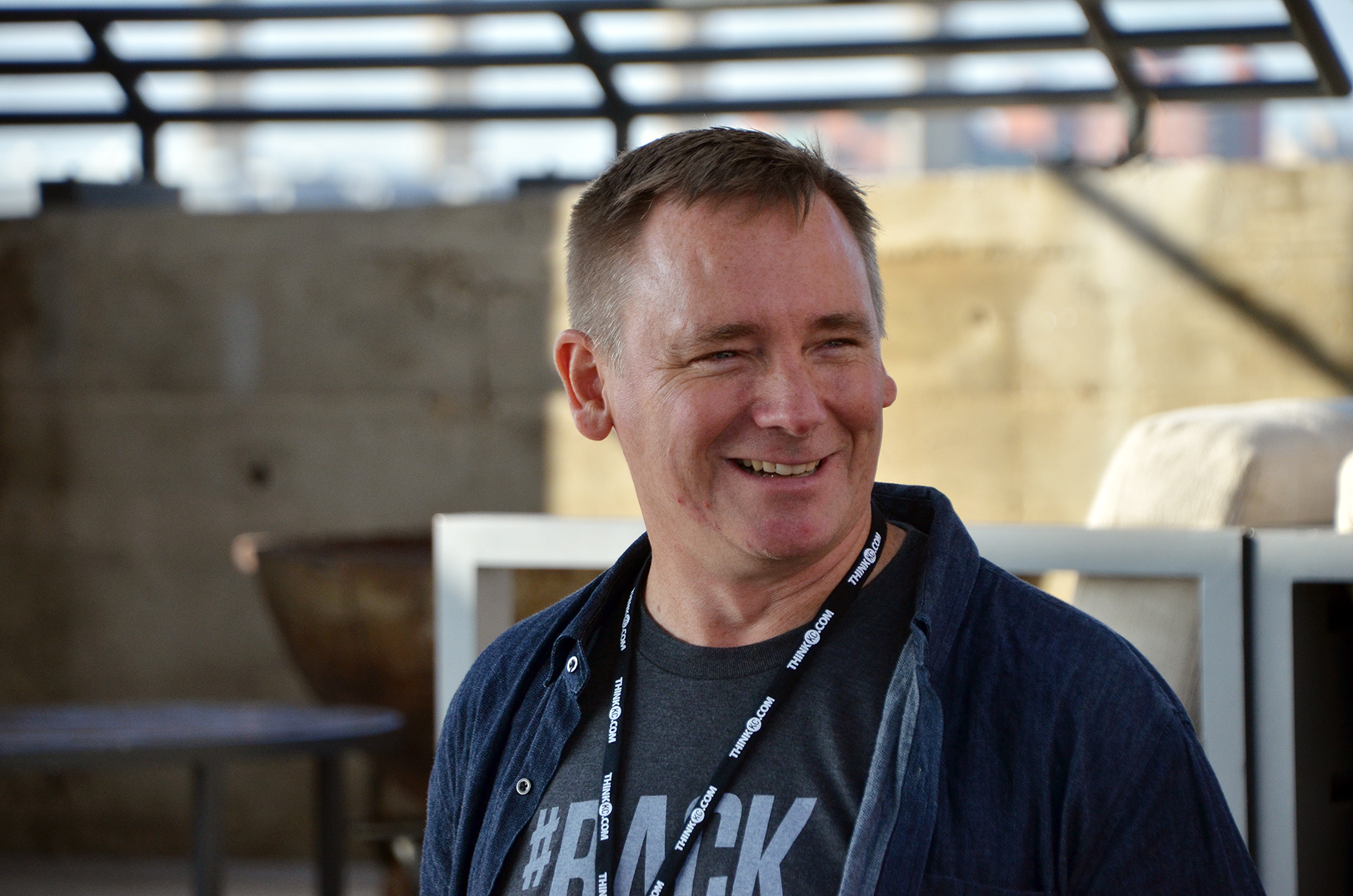
Much like companies’ web pages in the mid-1990s, blockchain isn’t yet consumer-ready, said Toby Rush.
Entrepreneur of the Year Awards
Toby Rush is set to be honored Nov. 14 as Regional Entrepreneur of the Year by the Regnier Institute at the University of Missouri-Kansas City’s Henry W. Bloch School of Management.
Click here to learn more about the event and other honorees.
“But [development is] going to move at an accelerated pace,” said Rush, CEO of Zoloz and senior director of international technology investments at Ant Financial. “We’re over 20 years later from ’96, and I think you’ll see [blockchain] move and develop much quicker, but you’ll see a fairly similar arc or path that you saw websites and web technologies develop.”
After selling EyeVerify (now Zoloz) to Ant Financial — the payments affiliate of Alibaba Group Holding — in 2016 for more than $100 million, Rush joined the Chinese financial services firm with a new mission in his sights: identify the innovation and business potential of blockchain applications.
Few consumer-facing applications are available right now, he said, noting that it’s difficult for the average customer to find even five options that leverage blockchain without extra technical work or understanding.
“And even buying cryptocurrency is not easy. This is far from consumer ready,” Rush said. “As much buzz and hype as there is around blockchain it’s still pretty early days.”
Ant Financial is attempting to use the secure nature of the technology to track restricted goods, Rush said, noting, for example, efforts to prevent double-filling prescriptions in China, which often involves people receiving drugs at multiple locations, then selling them on the black market.
“And we’re working on like, ‘How do you track money that was meant for a charity to know that actually got to the charity?’” he added. “That’s where we’re seeing a lot of those applications, and so one of my responsibilities is finding who else is doing things really innovative, interesting in the blockchain world that could help China, India and Indonesia and Thailand and the Philippines operate more efficiently with more trust.”
Blockchain — which Rush described as an infrastructure layer allowing for distributed file systems and tracking of stored information that allows for significant trust in it’s immutability and no central point of control — will be heavily utilized in the future, although the public will be mostly unaware of the change.
“There’s tons of low-level protocols that enable the entire Internet to work and you don’t care about content delivery networks or you don’t care about where the files are stored. There’s a lot of technologies that you have no idea about,” said Rush. “So, eventually you’re just going to see more applications that actually don’t just advertise.”

Lesa Mitchell, Techstars Kansas City, and Toby Rush, Zoloz and Ant Financial
Current models involve incentives and advertising, he said, meaning in some cases, companies will enlist and pay those with unused storage on their devices then advertise and sell the bandwidth.
Using distributed storage across a couple hundred million phones can make operations that take days — like rendering video for graphics and animation firms — take a couple of hours, he added.
“I think you’ll see a trend of incentive models that aren’t advertising and actually incent you to contribute some sort of value add to the network. And then they’ll give you tokens for that particular network,” said Rush.
The tokens will operate like loyalty points for airlines but be liquid across different places, he added.
“So it’s more of a way of democratizing the value that we as users add to the network,” said Rush. “So there’s this distributed layer. There’s an element of adding trust to the Internet. There’s an element of adding these incentive models that are really new and interesting, and that’s even before you get to the cryptocurrencies and Bitcoin and the efficiency which you can move money around.”
“There’s so many layers, but it’s super, super early,” he added.

Featured Business

2018 Startups to Watch
stats here
Related Posts on Startland News

NXTUS expands enterprise-focused program beyond Kansas; four KC-area startups selected
WICHITA, Kan. — An ongoing initiative to demystify the relationship-building process between emerging entrepreneurs and potential enterprise partners just expanded deeper into the Midwest, welcoming 20 growth-minded innovators from Wichita to St. Louis. “For entrepreneurs whose success depends on forging relationships with ‘the big guys,’ this unique program is so valuable,” said Mary Beth Jarvis, president…

Here’s how Bungii delivered spot No. 981 in its Inc. 5000 fastest-growing companies debut
Nailing Bungii’s geographic expansion model has unlocked significant growth, said Ben Jackson, detailing a years-long evolution that earned his Kansas City-built final-mile delivery carrier a coveted spot on the latest Inc. 5000 fastest-growing companies list. “Bungii’s network is becoming one of the largest sharing economy footprints across the U.S.,” explained Jackson, who co-founded the company…

Caterpillar subsidiary expands into KC, turning dirt to create 85 jobs in revitalized industrial corridor near riverfront
A multi-million dollar expansion project is expected to put an aging manufacturing site back on track in Kansas City, officials at Progress Rail announced Monday, noting the converted operation will focus on re-manufacturing railcar wheelsets and bearings. Progress Rail — a wholly owned subsidiary of Caterpillar Inc. — expects to bring 85 new full-time jobs…
Emerging KC space tech startup relocating to Colorado to build autonomous factory
A space tech startup that shot into orbit from its West Bottoms headquarters in Kansas City has announced plans to build its first smart factory in Colorado — relocating operations to Broomfield to join the Centennial State’s “robust aerospace and defense ecosystem.” “Colorado is home to some of the best aerospace, defense, and manufacturing talent…