

Farmobile’s Jason Tatge: Why venture capitalists can’t afford to fly over Midwest startups
November 12, 2018 | Jason Tatge
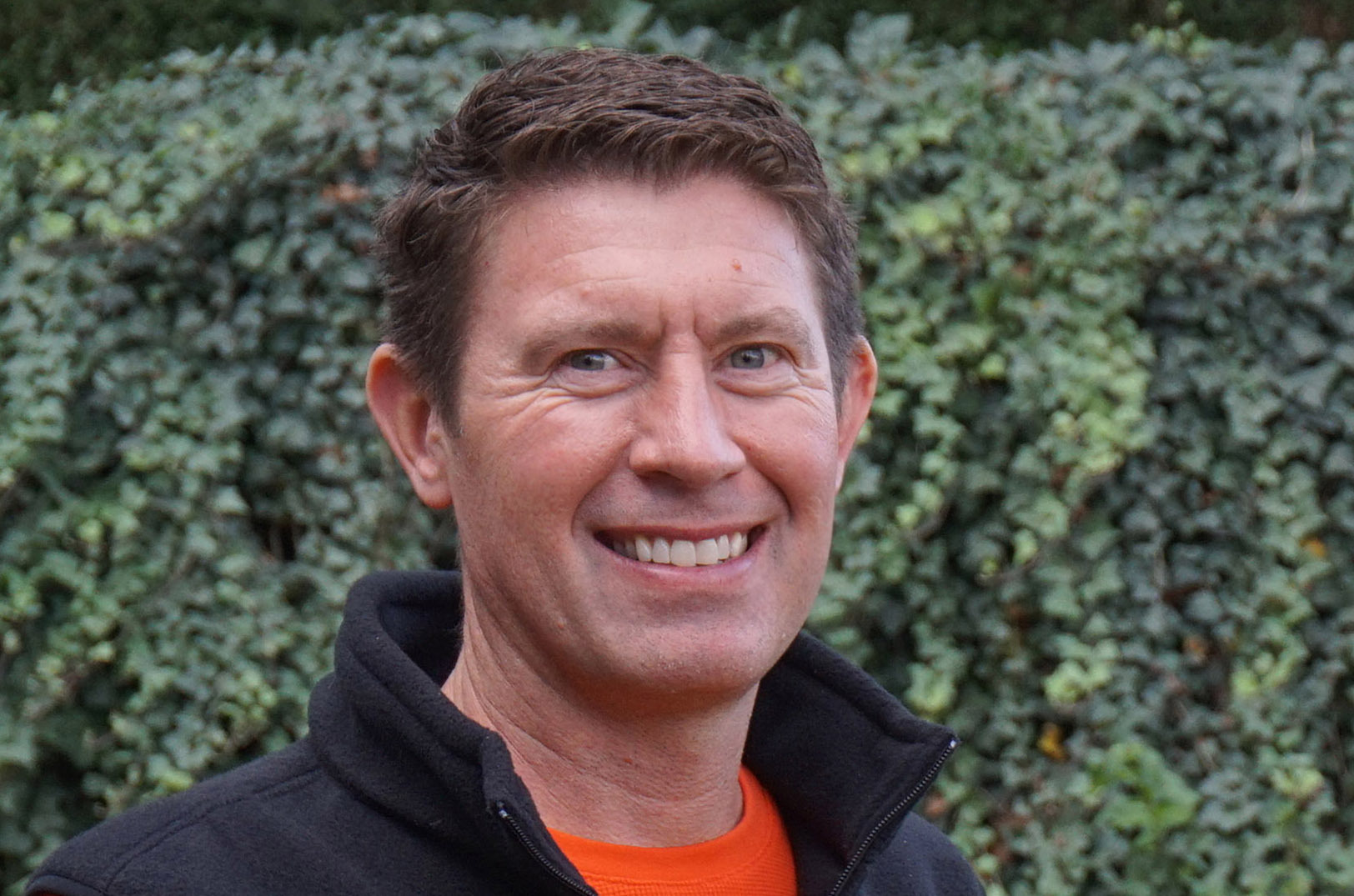
Savvy investors are turning their attention to the Midwest. Leading VC firms and investors are fleeing from the high prices, the groupthink and the cutthroat competition of the coasts and turning to the heart of the United States for their next moonshots.
And yet, the Midwest attracts just 7 percent of VC capital, a tiny piece of the total available pie, especially given how expansive the Midwest is. While there are challenges, I believe the greatest untapped investment opportunity is right here in the breadbasket.
A sales pitch on the Midwest
We have extraordinary institutions here in the Midwest that catalyze high-quality startups and technology breakthroughs. The resources that have sprung up just in the last 10 years have been astounding. The industries here are all ripe for disruption.

Some of those include: Steve Case’s Rise of the Rest Fund, Pipeline, a fantastic fellowship of Midwest entrepreneurs, and Flyover Capital, a VC firm that takes bets on companies in the Midwest. And let’s not forget the Ewing Marion Kauffman Foundation, which has been empowering entrepreneurs in the Midwest and beyond since 1966. Ewing Kauffman, the founder of the Kauffman Foundation, took a strong role in mentoring the next generation of of entrepreneurs like Neal Patterson, who went on to be on my own person mentors. In the Midwest, we pass it on.
We also have great examples of successful homegrown technology companies with extraordinary staying power – from BATS Global Markets, the stock exchange that in 2012 accounted for 10 to 12 percent of all U.S. equity trading to Cerner, the largest independent health IT company in the world. We’re the U.S. home of Garmin, and the the birthplace of Stine Seed, the largest private seed company in the US that creates the seeds we use to drive food production in America.
These companies are creating billions of dollars of value and attracting some of the world’s best talent to places like Kansas City, St. Louis, Omaha, Lincoln and the Twin Cities.
Speaking of attracting talent, the Midwest has one of the densest clusters of top-tier universities in the country.
Harvesting the opportunity
As the proud founder of a Kansas City-based startup, I can’t help but think this is only the beginning. The Midwest is the proving to be an investor’s dream; the prime opportunity for investment.
The Midwest is the proving to be an investor’s dream; the prime opportunity for investment.
Outside of the basic economics, there are business model benefits unique to our region that may not be immediately obvious, but play a huge role in why Midwest startups are able to do more with less.
First and foremost is our proximity to customers. Sixty percent of American consumers live in the “New Heartland.”
In the case of my company, Farmobile, we’re able to be on our customers’ farms every single day. We’re within a day’s drive of 80 percent of our potential customers. This gives us a constant, rapid feedback loop that would be very hard to achieve elsewhere. Instead of getting stuck in our own echo chambers, we can engage with our customers on farms and in fields. We’re in the early days of digitizing agriculture, so being close to the customer is even more important than it is for other more established industries.
Secondly, Midwest startups are digitizing traditional industries like healthcare and agriculture and digital sports. It feels like we’re in the early days of the internet, where entire new industries sprouted up in the course of a few short years. It’s the early days of a gold rush.
For example, at Farmobile we’re creating a new data economy. We’ve developed a marketplace that recognizes the value of data that farmers collect on their fields and rewards them for it by making it an asset they can license to buyers over and over again.
It’s a compelling model for investors because the downstream opportunities for a data set this huge are limitless.This data is going to help us figure out how to feed a growing planet, and we’re finding ways to do it while helping farmers improve their operations and generate a new revenue stream.
This has never been done before in our industry, but we have models to inspire us. In our case, it’s akin to what happened when music went digital and artists began receiving royalties for their music each time it was streamed.
We are able to derisk huge leaps like that because we can build on the learnings from other industries, which came before us.
Stop in and stay awhile
There is plenty of room for investors who want in. Frankly, we’re fairly saturated at funding levels between seed and Series A. Where there is the biggest gap – and the greatest opportunity – is in the Series B and C stage, when companies are growing quickly, generating revenue and scaling in a big way.
I think Midwest startups will impress you with how much we can get done with relatively little funding. Companies in the Midwest have the lowest equity funding with the highest median exit. The bang for your buck is unmatched.
If you’re an investor scouting out your next deal, stop by and stay a while. We’re pretty friendly, and I think you’ll be surprised at that hidden talent and enormous value you’ll find here.
Jason Tatge is president, CEO, and co-founder of Farmobile, a Leawood-based ag tech company that empowers farmers with data-driven technologies and a collect-share-monetize strategy that farmers trust, prefer and love. Click here to learn more.

Featured Business

2018 Startups to Watch
stats here
Related Posts on Startland News

The thought process behind how Niall founder Michael Wilson relinquished reins as CEO
Editor’s note: Niall founder Michael Wilson recently hired a CEO to run the growing luxury watch company he founded five years ago. Here’s more on his thought process. I started Niall as a far-fetched idea five years ago while at 1810 Cherry St. in the Crossroads Arts District. Since then, I’ve faced a lot of adversity…
Jeff Shackelford: Why would KC want to build the next Silicon Valley?
Editor’s note: The opinions expressed in this commentary are the author’s alone. I recently read an article that shows you can slant a story anyway you want and that many authors write to match their preconceived notions — whether it’s true or not. The article that got me thinking about this was from Bloomberg’s Sarah…

Gooding: Your customers don’t care about you
Editor’s note: The opinions expressed in this commentary are the author’s alone. Check out more from Grant Gooding here. It’s true. The moment you start talking about yourself is the moment you start losing. There is no doubt that as human beings we have a natural affinity to talk about ourselves; self-promotion is hard-wired…

Williams to critical Bloomberg piece: KC shouldn’t try to be Silicon Valley
Editor’s note: The following piece is in response to a Bloomberg article critical of the Kansas City Startup Village and Kansas City’s ability to use Google Fiber to become the “next Silicon Valley.” Opinions expressed in this commentary are the author’s alone. In 2012, Kansas City experienced what at the time must have felt like winning…