

Sickweather forecasts flu trouble ahead, urges handwashing and vaccinations
October 15, 2018 | Elyssa Bezner
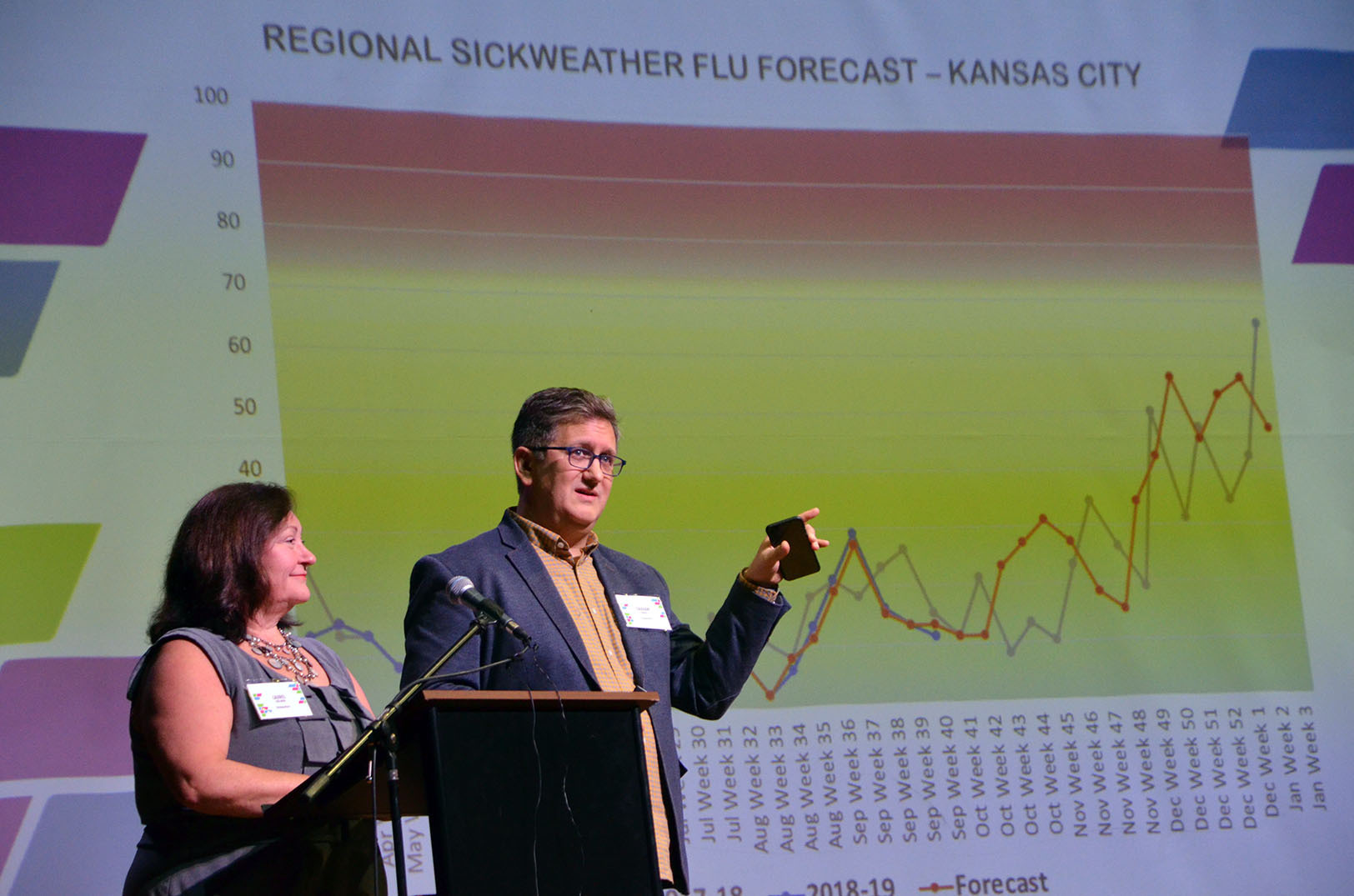
Sickweather’s illness forecasting technology points to a seasonal uptick in influenza rates for Kansas City, said Laurel Edelman, noting a particularly rough patch expected at the end of year.
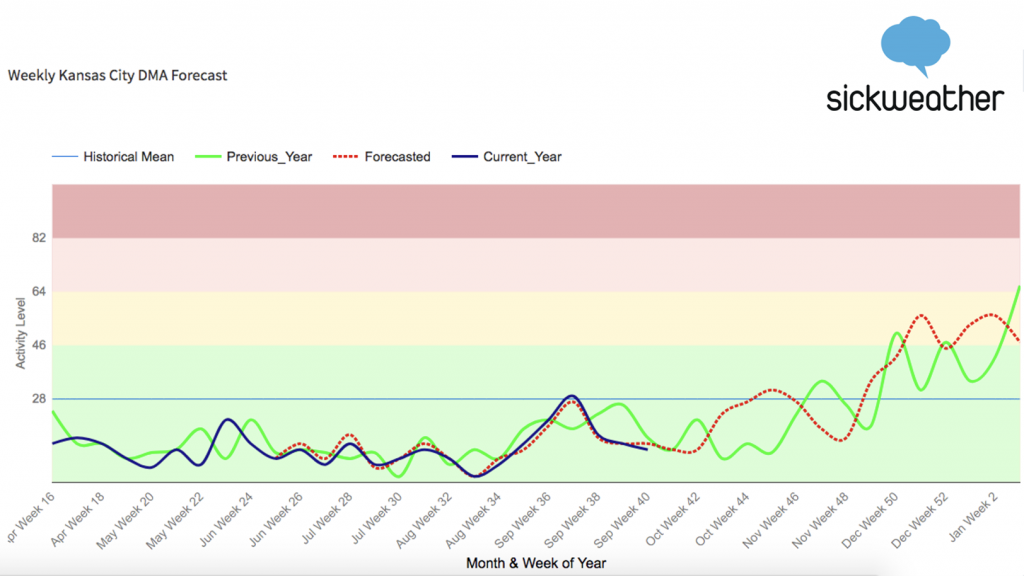
“We actually see more of a dome here in Kansas City,” said Edelman, the chief revenue officer for Sickweather, referring to a chart that plots expected flu rates through early 2019. “So you’re going to see a longer period of time of higher illness for the last two weeks of December, and the first two weeks of January.”

Laurel Edelman, Sickweather
The app-based illness forecaster — founded in Baltimore in 2010, but now headquartered in Kansas City — played host Monday to its first Sickweather Cold Cough Flu conference in the Medallion Theater at Plexpod Westport Commons. The event, which also marked Global Handwashing Day, opened with a press conference detailing the firm’s local, regional and national predictions for the coming flu season.
Sickweather’s projections in 2017-2018 strongly correlated to the U.S. Centers for Disease Control’s reports on the previous season, Edelman said, noting a 90-percent accuracy rate for the app’s technology. It’s success has reversed her former attitude that influenza could not be predicted, she said.
“The challenge is to engage you to help you to understand what we’re trying to do,” Edelman said. “And how we’re trying to move forward with this whole concept of forecasting a disease that for many, many years I told everyone could not be forecast.”
“This is a virus. It’s live. It changes,” she said.
Approaches to and attitudes about the flu virus, as well as other diseases, have changed in a way that concerns her, Edelman added.
“Some of them are fantastic in terms of people being aware and knowledgeable, and others, in my personal opinion, are at times troubling,” she said. “An example of that is that the number of parents who don’t vaccinate their children for any disease has quadrupled since 2011.”
Sickweather’s forecast is intended to help build actionable information that could help change that trend, she said.
“This means that there’s still a heck of a long opportunity to vaccinate. If we assume and understand that vaccination becomes effective between seven to 14 days from when you’re vaccinated, now’s the time to be vaccinated,” said Edelman. “You’re vaccinating not just yourself, but you’re also helping to keep your germs away from people who can’t get vaccinated.”

Graham Dodge, Sickweather

Featured Business

2018 Startups to Watch
stats here
Related Posts on Startland News

Kauffman survey: Women more critical of their own early-stage entrepreneurial efforts
Women entrepreneurs are more likely than their male counterparts to grade their performances harshly during the first year of business, though that tendency typically fades over time, according to a new survey by the Ewing Marion Kauffman Foundation. It often is about approaching the venture a realistic viewpoint, said Jeff Shackelford, executive director of Digital…

Video: ShotTracker fan app courts NAIA tourney crowds with AR experience
A new ShotTracker fan app — expected to launch today — will combine real-time analytics with augmented reality for a first-of-its-kind fan engagement opportunity at next week’s Division 1 NAIA basketball tournament, said co-founder Davyeon Ross. “We want to make the experience as great as possible for the end user,” Ross said, noting his company’s…

TechAccel, UC Davis lab developing wheat seed to combat climate change
A Kansas City-based tech and venture development firm hopes to engineer wheat seeds that produce higher yield by withstanding warmer temperatures. “We’re taking a concept that is pretty important for wheat worldwide,” said Brad Fabbri, Chief Science Officer of TechAccel. Increasing temperatures make growing wheat more difficult across the globe, studies show. Reports indicate climate…
Startup stakeholders: Opportunity zones could prompt culture shift on redevelopment
Startup community stakeholders think opportunity zones in some of Kansas City’s poorest areas could work, but only with collaboration between the government and private sector. A number of low-income communities in Kansas City are eligible for designation as opportunity zones — areas in which investors may defer paying capital gains taxes over a certain period…