

Sickweather forecasts flu trouble ahead, urges handwashing and vaccinations
October 15, 2018 | Elyssa Bezner
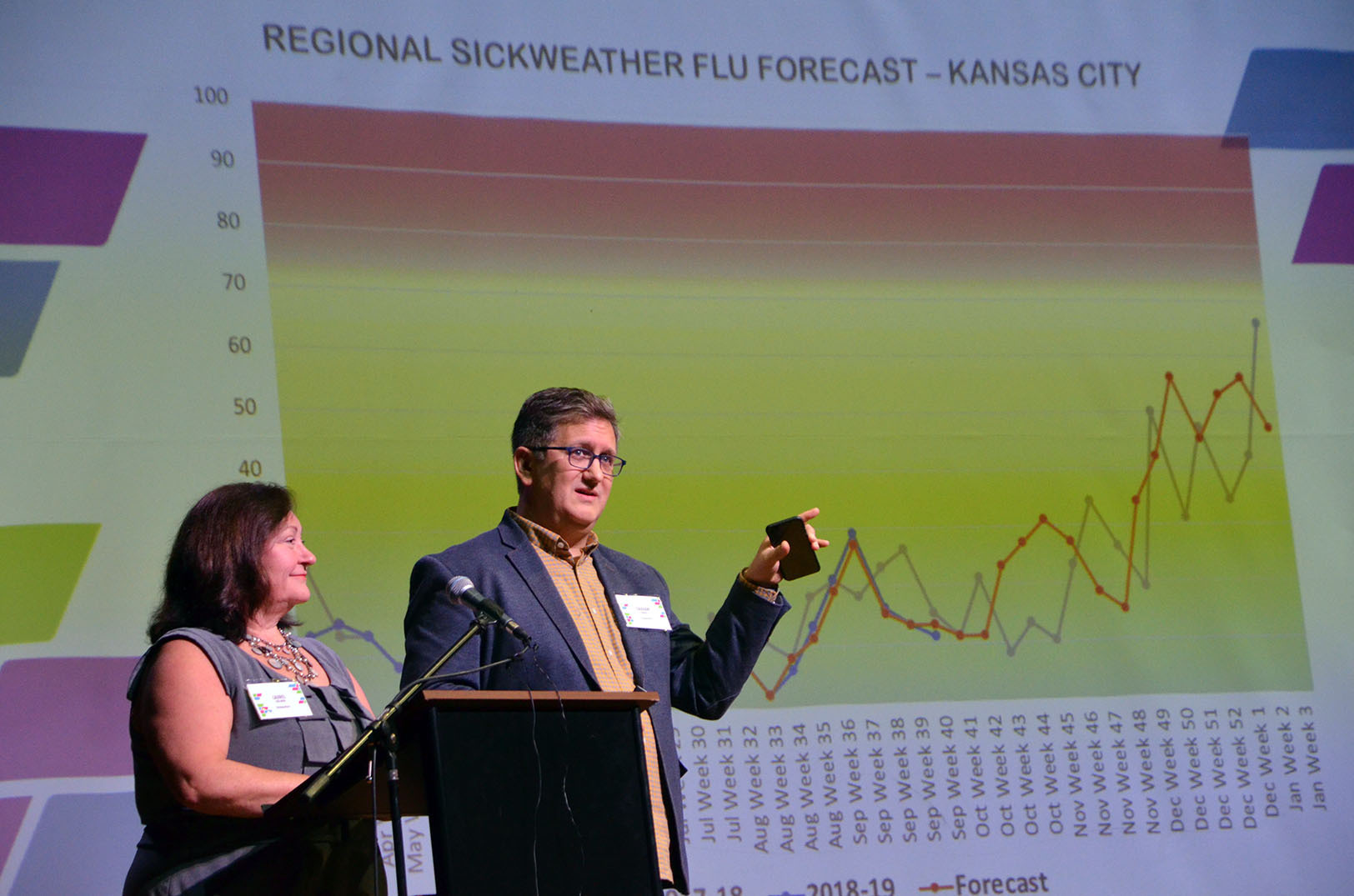
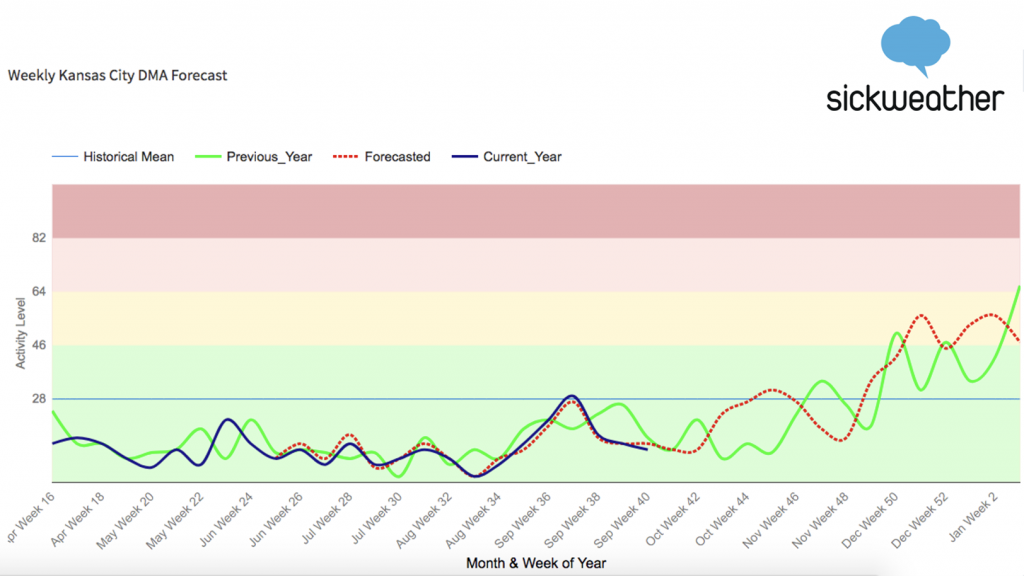
Sickweather’s illness forecasting technology points to a seasonal uptick in influenza rates for Kansas City, said Laurel Edelman, noting a particularly rough patch expected at the end of year.
“We actually see more of a dome here in Kansas City,” said Edelman, the chief revenue officer for Sickweather, referring to a chart that plots expected flu rates through early 2019. “So you’re going to see a longer period of time of higher illness for the last two weeks of December, and the first two weeks of January.”

Laurel Edelman, Sickweather
The app-based illness forecaster — founded in Baltimore in 2010, but now headquartered in Kansas City — played host Monday to its first Sickweather Cold Cough Flu conference in the Medallion Theater at Plexpod Westport Commons. The event, which also marked Global Handwashing Day, opened with a press conference detailing the firm’s local, regional and national predictions for the coming flu season.
Sickweather’s projections in 2017-2018 strongly correlated to the U.S. Centers for Disease Control’s reports on the previous season, Edelman said, noting a 90-percent accuracy rate for the app’s technology. It’s success has reversed her former attitude that influenza could not be predicted, she said.
“The challenge is to engage you to help you to understand what we’re trying to do,” Edelman said. “And how we’re trying to move forward with this whole concept of forecasting a disease that for many, many years I told everyone could not be forecast.”
“This is a virus. It’s live. It changes,” she said.
Approaches to and attitudes about the flu virus, as well as other diseases, have changed in a way that concerns her, Edelman added.
“Some of them are fantastic in terms of people being aware and knowledgeable, and others, in my personal opinion, are at times troubling,” she said. “An example of that is that the number of parents who don’t vaccinate their children for any disease has quadrupled since 2011.”
Sickweather’s forecast is intended to help build actionable information that could help change that trend, she said.
“This means that there’s still a heck of a long opportunity to vaccinate. If we assume and understand that vaccination becomes effective between seven to 14 days from when you’re vaccinated, now’s the time to be vaccinated,” said Edelman. “You’re vaccinating not just yourself, but you’re also helping to keep your germs away from people who can’t get vaccinated.”

Graham Dodge, Sickweather

Featured Business

2018 Startups to Watch
stats here
Related Posts on Startland News

KCultivator Q&A: Edgar Palacios talks Latinx representation, his ballsy inspiration
Editor’s note: KCultivators is a lighthearted profile series to highlight people who are meaningfully enriching Kansas City’s entrepreneurial ecosystem. The KCultivator Series is sponsored by WeWork Corrigan Station, a modern twist on Kansas City office space. Proportionate cultural and ethnic representation can be life-altering for young people — especially in the classroom, said Edgar Palacios.…

More than a Fountain City vacation: SavR bringing US headquarters to Kansas City
Kansas City’s startup culture and support network helped the City of Fountains land the new U.S. headquarters of Australia-based SavR, said founder Tim O’Shea. “If you’re a company that’s trying to strive for genuine outcome, then you’ll be very well received [in Kansas City],” he said. “I think Midwestern people tend to ferret out the…

App to help flex Disabled But Not Really reach beyond KC gyms, says Wesley Hamilton
A new fitness and wellness app is expected to help Disabled But Not Really go global with its impact, said Wesley Hamilton. “This app is going to benefit those that cannot go through our program but are still determined to learn and change their physical well being,” said Hamilton, founder and executive director of the…

Pepper teams with Switzerland cyber security expert to combat ‘terrifying’ IoT threats
A new, long-term collaboration between KC-based Pepper IoT and an international leader in digital security has an opportunity to aggressively boost consumer confidence in the rapidly expanding — and potentially hostile — Internet of Things, said Scott Ford. “It is terrifying to see millions of vulnerable connected devices being distributed to U.S. consumers who have…