

Sickweather forecasts flu trouble ahead, urges handwashing and vaccinations
October 15, 2018 | Elyssa Bezner
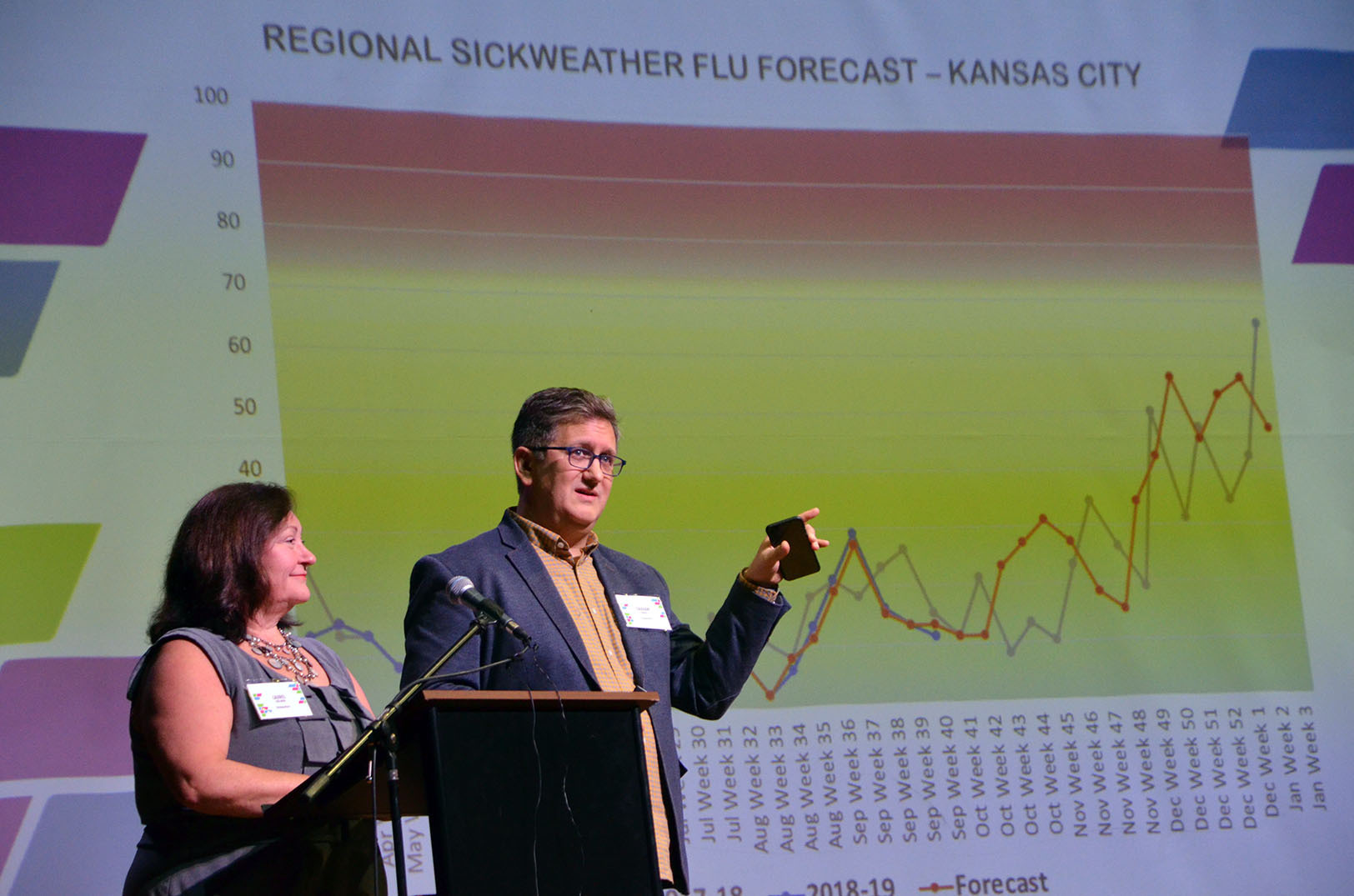
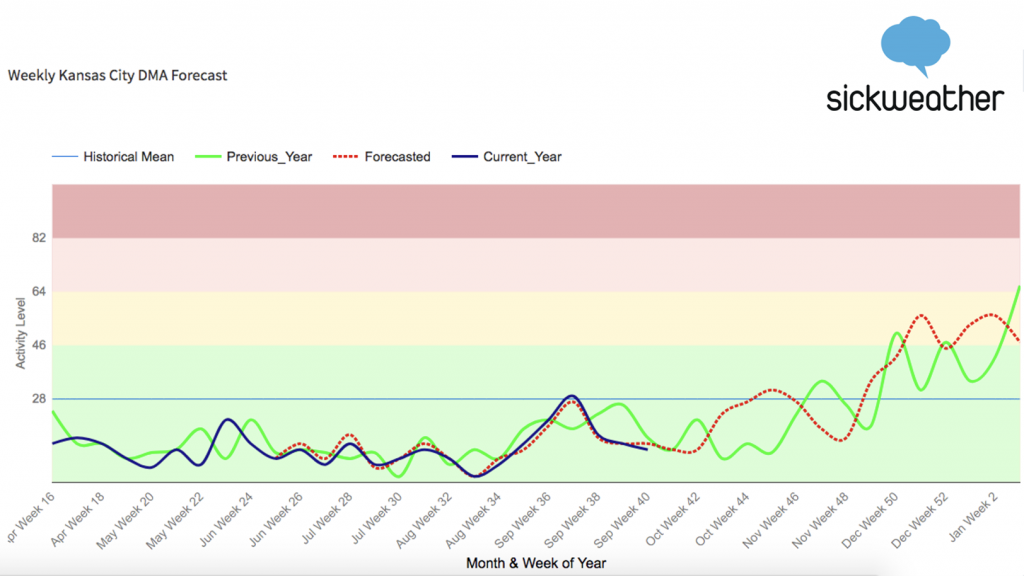
Sickweather’s illness forecasting technology points to a seasonal uptick in influenza rates for Kansas City, said Laurel Edelman, noting a particularly rough patch expected at the end of year.
“We actually see more of a dome here in Kansas City,” said Edelman, the chief revenue officer for Sickweather, referring to a chart that plots expected flu rates through early 2019. “So you’re going to see a longer period of time of higher illness for the last two weeks of December, and the first two weeks of January.”
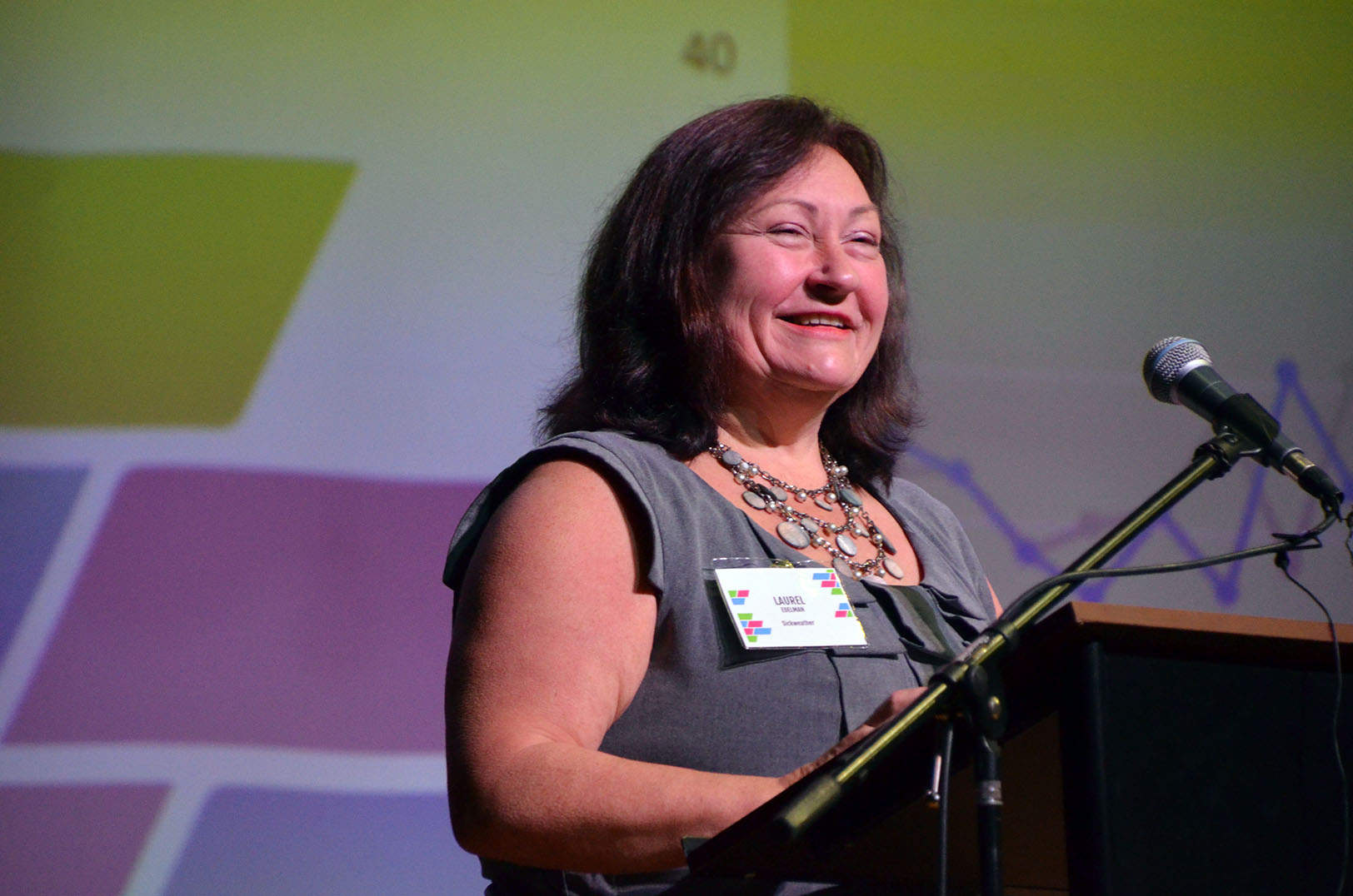
Laurel Edelman, Sickweather
The app-based illness forecaster — founded in Baltimore in 2010, but now headquartered in Kansas City — played host Monday to its first Sickweather Cold Cough Flu conference in the Medallion Theater at Plexpod Westport Commons. The event, which also marked Global Handwashing Day, opened with a press conference detailing the firm’s local, regional and national predictions for the coming flu season.
Sickweather’s projections in 2017-2018 strongly correlated to the U.S. Centers for Disease Control’s reports on the previous season, Edelman said, noting a 90-percent accuracy rate for the app’s technology. It’s success has reversed her former attitude that influenza could not be predicted, she said.
“The challenge is to engage you to help you to understand what we’re trying to do,” Edelman said. “And how we’re trying to move forward with this whole concept of forecasting a disease that for many, many years I told everyone could not be forecast.”
“This is a virus. It’s live. It changes,” she said.
Approaches to and attitudes about the flu virus, as well as other diseases, have changed in a way that concerns her, Edelman added.
“Some of them are fantastic in terms of people being aware and knowledgeable, and others, in my personal opinion, are at times troubling,” she said. “An example of that is that the number of parents who don’t vaccinate their children for any disease has quadrupled since 2011.”
Sickweather’s forecast is intended to help build actionable information that could help change that trend, she said.
“This means that there’s still a heck of a long opportunity to vaccinate. If we assume and understand that vaccination becomes effective between seven to 14 days from when you’re vaccinated, now’s the time to be vaccinated,” said Edelman. “You’re vaccinating not just yourself, but you’re also helping to keep your germs away from people who can’t get vaccinated.”

Graham Dodge, Sickweather

Featured Business

2018 Startups to Watch
stats here
Related Posts on Startland News

San Francisco FinTech firm bringing 150 new jobs to KC; TrueAccord invests $1.34M
A Silicon Valley startup founded by tech veterans announced today a new 12,000-square-foot shared services operation in Lenexa, pledging 150 new jobs as part of the $1.34 million TrueAccord investment. Selecting the Kansas City metro for the project followed a thorough nationwide search, said Sheila Monroe, chief operating officer of TrueAccord, an automated debt recovery platform…

Young brains rewired by non-stop screen time in classrooms, neurotherapist tells district
[Editor’s note: The following is part of a limited Startland series, exploring parent advocates’ objections to 1:1 technology initiatives, which typically put a tablet device in the hands of each student and are popularly used as classroom innovation models across Kansas City and the nation.] A rise in ADHD diagnosis and increased risk of suicide…
Mother stresses lack of parental consent for school devices amid privacy, development worries
[Editor’s note: The following is part of a limited Startland series, exploring parent advocates’ objections to 1:1 technology initiatives, which typically put a tablet device in the hands of each student and are popularly used as classroom innovation models across Kansas City and the nation.] Digital dangers are lurking in Shawnee Mission classrooms, as schools…

Questioning 1:1 initiatives: Tech devices don’t equal innovation, disillusioned parents argue
[Editor’s note: The following is part of a limited Startland series, exploring parent advocates’ objections to 1:1 technology initiatives, which typically put a tablet device in the hands of each student and are popularly used as classroom innovation models across Kansas City and the nation.] A $20 million investment in tech-forward learning environments for the…