

Sickweather forecasts flu trouble ahead, urges handwashing and vaccinations
October 15, 2018 | Elyssa Bezner
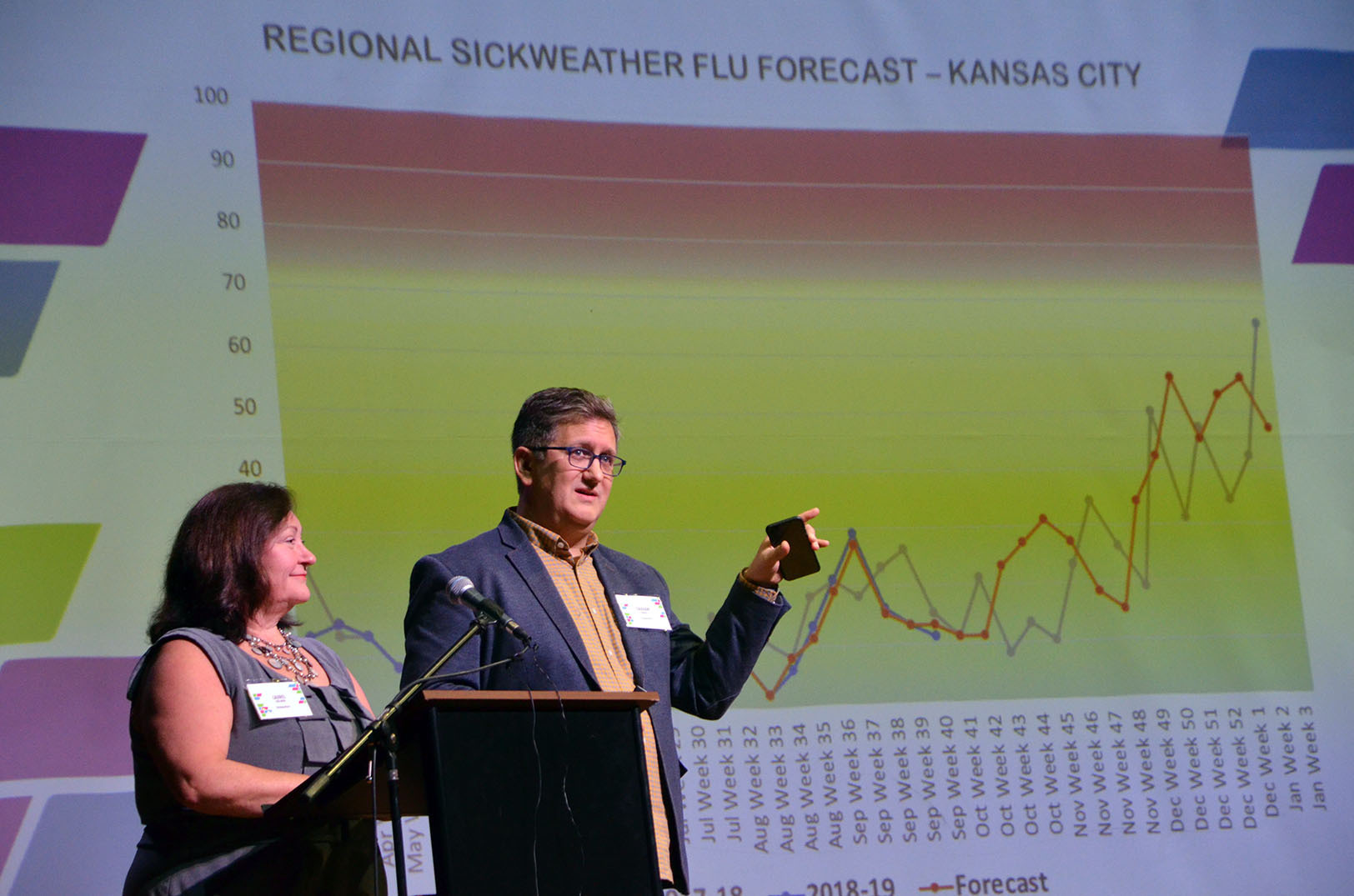
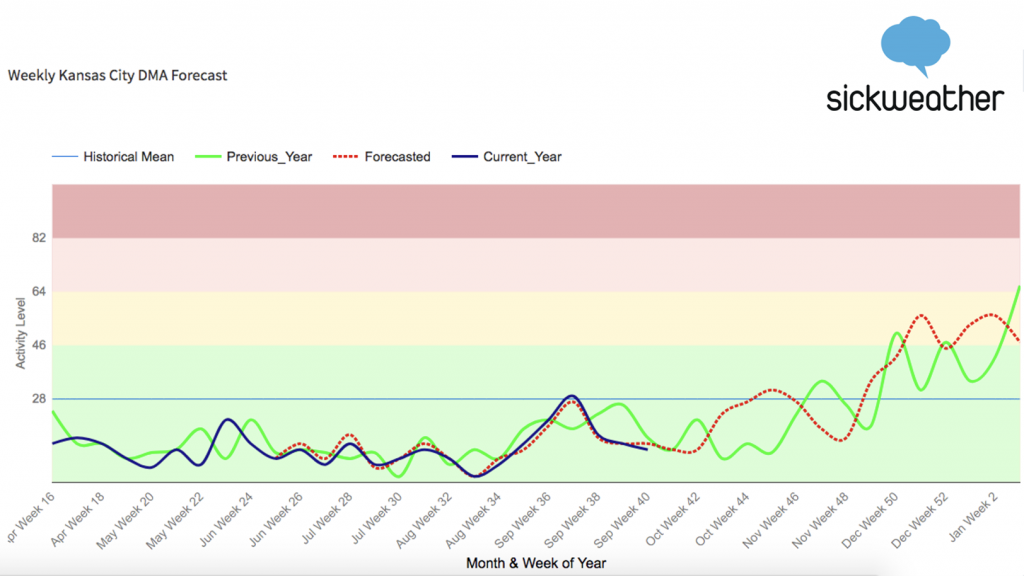
Sickweather’s illness forecasting technology points to a seasonal uptick in influenza rates for Kansas City, said Laurel Edelman, noting a particularly rough patch expected at the end of year.
“We actually see more of a dome here in Kansas City,” said Edelman, the chief revenue officer for Sickweather, referring to a chart that plots expected flu rates through early 2019. “So you’re going to see a longer period of time of higher illness for the last two weeks of December, and the first two weeks of January.”
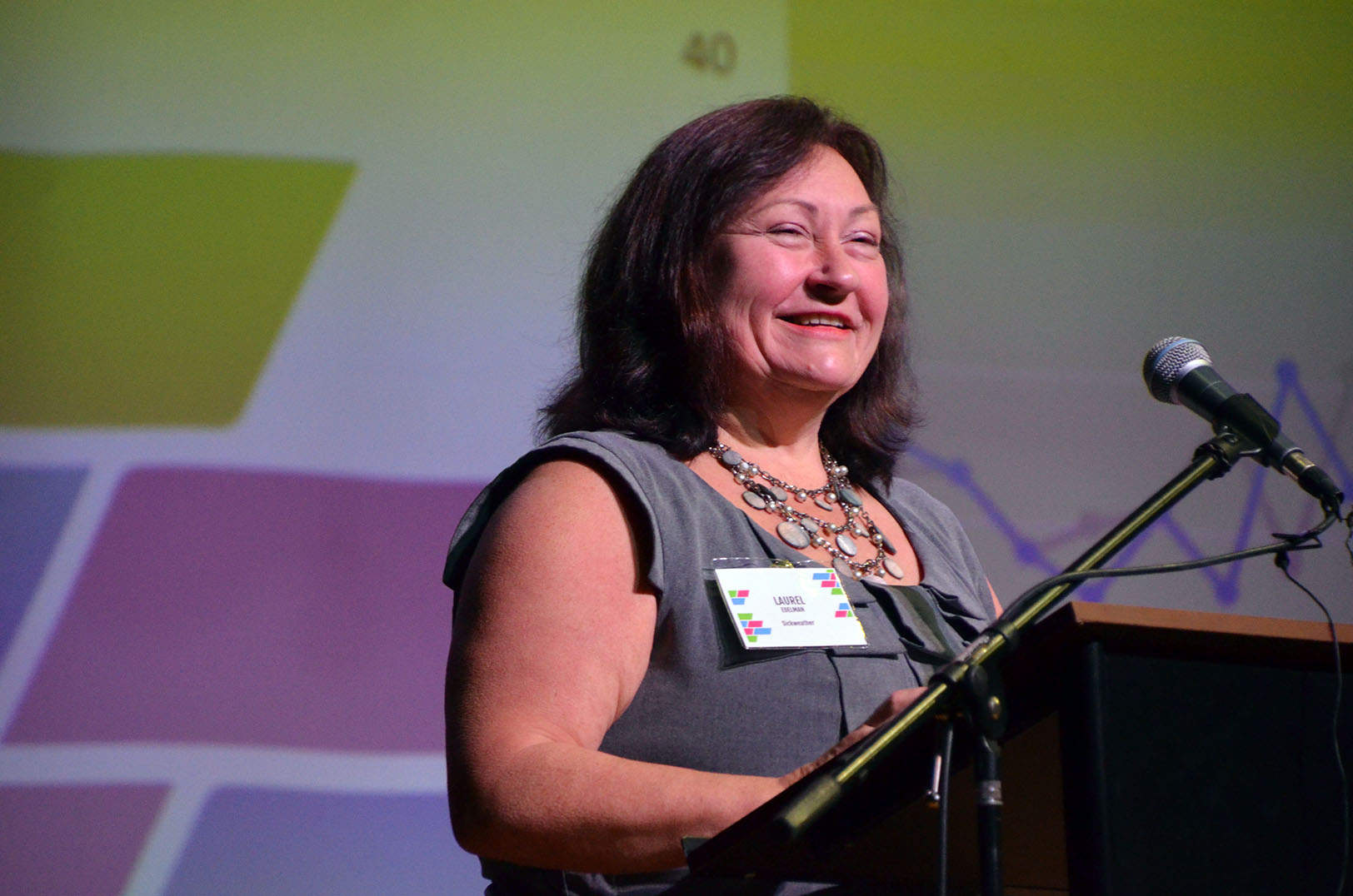
Laurel Edelman, Sickweather
The app-based illness forecaster — founded in Baltimore in 2010, but now headquartered in Kansas City — played host Monday to its first Sickweather Cold Cough Flu conference in the Medallion Theater at Plexpod Westport Commons. The event, which also marked Global Handwashing Day, opened with a press conference detailing the firm’s local, regional and national predictions for the coming flu season.
Sickweather’s projections in 2017-2018 strongly correlated to the U.S. Centers for Disease Control’s reports on the previous season, Edelman said, noting a 90-percent accuracy rate for the app’s technology. It’s success has reversed her former attitude that influenza could not be predicted, she said.
“The challenge is to engage you to help you to understand what we’re trying to do,” Edelman said. “And how we’re trying to move forward with this whole concept of forecasting a disease that for many, many years I told everyone could not be forecast.”
“This is a virus. It’s live. It changes,” she said.
Approaches to and attitudes about the flu virus, as well as other diseases, have changed in a way that concerns her, Edelman added.
“Some of them are fantastic in terms of people being aware and knowledgeable, and others, in my personal opinion, are at times troubling,” she said. “An example of that is that the number of parents who don’t vaccinate their children for any disease has quadrupled since 2011.”
Sickweather’s forecast is intended to help build actionable information that could help change that trend, she said.
“This means that there’s still a heck of a long opportunity to vaccinate. If we assume and understand that vaccination becomes effective between seven to 14 days from when you’re vaccinated, now’s the time to be vaccinated,” said Edelman. “You’re vaccinating not just yourself, but you’re also helping to keep your germs away from people who can’t get vaccinated.”

Graham Dodge, Sickweather

Featured Business

2018 Startups to Watch
stats here
Related Posts on Startland News

2017 Under the Radar: ZOHR changing tires, traditional mindset on roadside aid
Editor’s note: Startland News picked 10 early-stage firms to spotlight for its annual Under the Radar startups list. The following is one of 2017’s companies. To view the full list, click here. Nearly anyone with a car can relate to the chore of replacing bald tires or the frustration of a flat. Not only will…
2017 Under the Radar: OYO Fitness stretches its influence
Editor’s note: Startland News picked 10 early-stage firms to spotlight for its annual Under the Radar startups list. The following is one of 2017’s companies. To view the full list, click here. A Kansas City startup originally established with NASA astronauts in mind continues to expand its orbit. OYO Fitness — which stands for On Your Own…
2017 Under the Radar: OneHQ ensures better decision making
Editor’s note: Startland News picked 10 early-stage firms to spotlight for its annual Under the Radar startups list. The following is one of 2017’s companies. To view the full list, click here. Retain, recruit and grow your clientele. That’s the mission OneHQ’s tech aims to accomplish for a client base that’s growing around the nation.…
2017 Under the Radar: Sprout Solutions yields tools, tech for animal feed
Editor’s note: Startland News picked 10 early-stage firms to spotlight for its annual Under the Radar startups list. The following is one of 2017’s companies. To view the full list, click here. For the agricultural industry, employees aren’t tied to a computer or in an office — they’re out in a field, said Gretchen Henry,…