

Rick Usher: How can KCMO balance policy and micromobility technology?
October 11, 2018 | Rick Usher
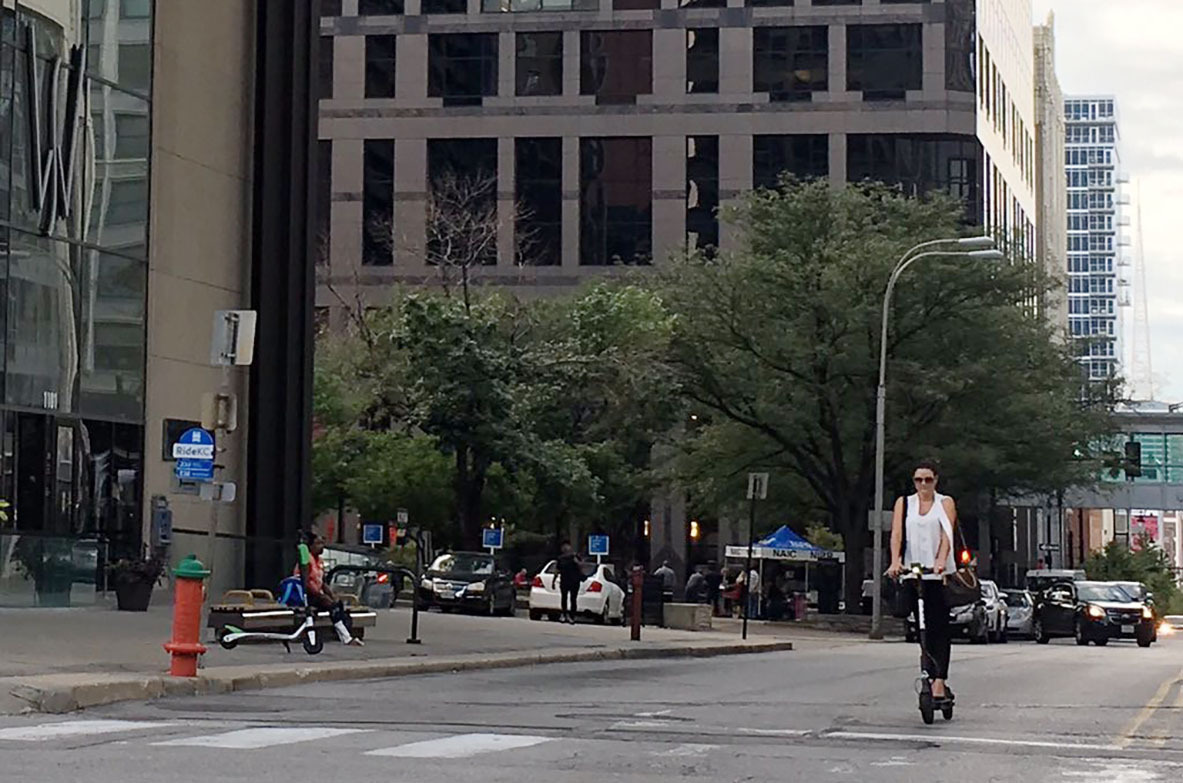
Update: On Thursday, KCMO City Manager Troy Schulte authorized Bird to deploy up to 500 scooters, as authorized in the city’s interim operating agreement.
Editor’s note: Opinions expressed in this commentary are the author’s alone. This piece by Rick Usher was originally published by the National League of Cities, and comes days after Kansas City mayoral candidates talked about the sharing economy at Techweek KC.

Rick Usher, City of KCMO
There is nothing new in the world. In ancient times, when the invading hoard is approaching the city, the wise leader sends an emissary through the front gate to parley. In today’s economy, these same tactics can be employed by cities seeking to quickly gain an understanding of what a startup is proposing, how that proposal is regulated under current law, how the startup believes their proposal meets those laws and where there may be conflicts and how to resolve them.
This scenario played out recently in Kansas City, Missouri. The city was tipped off about local Bird e-scooter deployment late in the evening on the Monday prior to their proposed Wednesday launch of 100 dockless scooters.
The city was quickly able to contact Bird representatives and request a parley, but when we made it clear that staff from the city manager’s office, city planning, public works and city communications would also be on the call, the call almost didn’t happen. Objections ranged from “you’re just going to say no,” to “the wheels are in motion and the deployment can’t be stopped.”
In the end, we had a productive call with Bird that led to their forwarding a draft interim operating agreement, indemnification certificate, local Bird staff contact information, contact information for public use and a verbal agreement to continue to work cooperatively on a future shared mobility pilot program.
Based on Bird’s cooperation during and after the call for parley, the city chose to continue negotiations rather than pursue a temporary restraining order to halt the deployment. The benefits of negotiating included assistance in implementation of the city’s Bike Plan through revenue sharing, equitable distribution of scooters, gig economy work opportunities for our residents and data sharing assistance so Kansas City could design better bike infrastructure.
Emerging technologies are quickly changing the opportunities our residents have for economic mobility and the future of work. The challenges cities face when dealing with disruptive business models — often employed by quickly-growing startups trying to break into the global market — have made headlines since Uber first became popular years ago and attempted to run roughshod over government regulations. Local government reactions have unfortunately often been led by snap judgements and bad decisions based on emotion.
In Kansas City, we have a shared regional goal of becoming the “most entrepreneurial city in America.” From the local government perspective, promoting an “open for business” attitude and embracing innovation and creativity are critical to furthering this initiative. Kansas City values the sharing economy.
We are also vetting a program called Emerging Technologies Disruptive Business Models, which will evaluate regulatory impacts on emerging business, in the Smart City Advisory Board and with students in the UMKC Law School’s Law, Technology & Public Policy course.
Our use of these negotiating tactics has been well received by the local tech entrepreneur community and we now have interim operating agreements in place with both Bird and Lime for a total of 850 dockless electric scooters, with the potential for up to 1,000.
To learn more about micromobility in Kansas City, you can explore these resources:
Rick Usher is the assistant city manager for small business and entrepreneurship in the Office of the City Manager in Kansas City, Missouri.


2018 Startups to Watch
stats here
Related Posts on Startland News
LaunchCode leader: Your city never stood a chance of landing Amazon’s HQ2
[Editor’s note: This guest column first appeared on the Silicon Prairie News tech and entrepreneurship blog. It is republished here with permission from the author, St. Louis-based Daniel Fogarty, vice president of growth at LaunchCode, which operates its workforce development program in Kansas City.] After months of waiting, it’s finally confirmed Amazon will split its…
Opening KC to black entrepreneurs begins with teaching startup lingo, tearing down walls
Most entrepreneurs operate within silos, said Adrienne Haynes, noting that black-run startups face particular — though not insurmountable — challenges becoming embedded in the Kansas City startup scene. Seemingly approachable community events and coworking spaces aren’t always as open as organizers think, added Quest Moffat, founder of Project United Knowledge, joining Haynes and Donald Hawkins,…
Innovation district will look to black community for insight, McGinnis tells GEW crowd
Developing an innovation district takes a village, Kevin McGinnis told a packed room of Global Entrepreneurship Week attendees — a cross-section of Kansas Citians eager to learn more about how his proposed Keystone innovation district could re-shape diversity and inclusion efforts in the startup space. “I’m not going to suggest that I’m bringing a bunch…

Farmobile’s Jason Tatge: Why venture capitalists can’t afford to fly over Midwest startups
Savvy investors are turning their attention to the Midwest. Leading VC firms and investors are fleeing from the high prices, the groupthink and the cutthroat competition of the coasts and turning to the heart of the United States for their next moonshots. And yet, the Midwest attracts just 7 percent of VC capital, a tiny…