

Sprint Accelerator founder teases plans for ‘innovation district’ to fill Jazz-to-Crossroads gap
October 9, 2018 | Austin Barnes
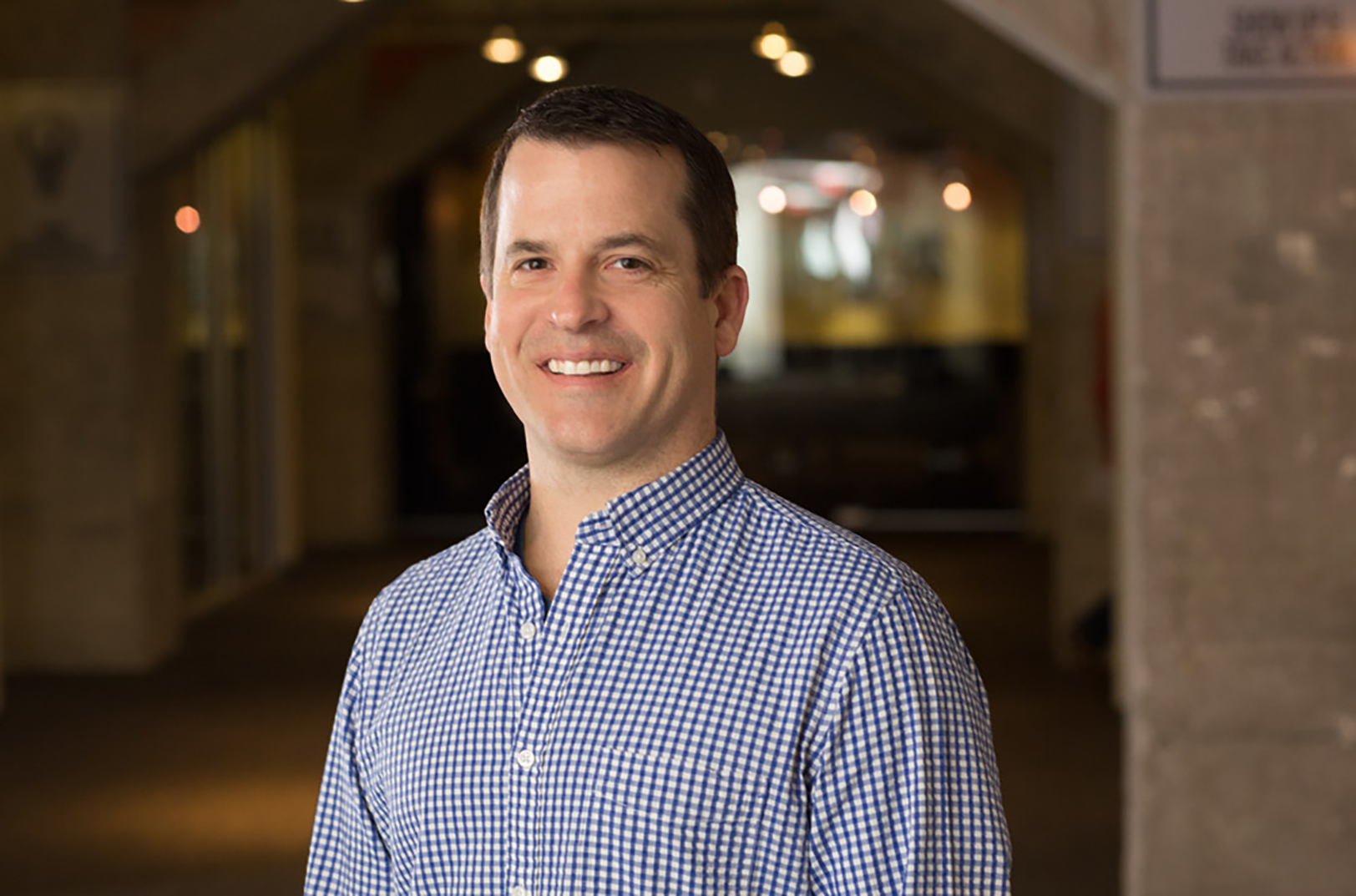
Kevin McGinnis sees potential in the creativity gap along the 18th Street corridor that connects the Jazz and Crossroads Arts districts, he said.
The former Sprint executive and founder of the Sprint Accelerator teased plans Tuesday for a collaborative innovation district that could bridge societal gaps and further develop community in the startup ecosystem.

“I’m really encouraged by how fast everybody is willing to move,” said McGinnis, now CEO of the Keystone Community Corporation, the organization that has tasked itself with carving out a new hub for education, research, and partnerships in the metro –– dubbed the “Keystone District.”
“[Building the district] is going to require folks working together and building around clusters instead of just one company doing one thing,” McGinnis explained.
Creating a centralized hub of activity is crucial to the citywide growth of the local entrepreneurial space, he noted.
The development could be likened to the idea behind the early days of the Kansas City Startup Village, said Adam Arredondo, CEO of the Kansas City Startup Foundation. A founder in first days of Google Fiber’s expansion into Kansas City — and a member of McGinnis’ innovation district focus groups — Arredondo saw the impact of access and strength in numbers in the Startup Village, he said.
“Startups go to wherever the resources are,” Arredondo added.
Official word on the Keystone District’s exact physical location is still under wraps, but expected soon.
Spurred by slow economic growth in the region –– as evidenced by recent research from KC Rising — the Keystone District will create opportunities for entrepreneurial acceleration, McGinnis said. Within the district, coworking, event and collaborative spaces, along with housing, dining, and entertainment could take shape, McGinnis envisioned aloud.
“We don’t need to wait for a new building, we don’t need to wait for Class A office space,” he said of Keystone’s desire to revitalize long-forgotten area resources.
McGinnis noted that he’d consulted with Gerald Smith, co-founder of Plexpod, on the project. Smith is no stranger to renovating historic and older buildings into premier workspaces. Plexpod operates such locations in Lenexa, at Westport Commons and in the Crossroads. The company also recently announced plans for a fourth Plexpod site in River Market.
Smith briefly mentioned a fifth location for Plexpod on the horizon during public remarks at Monday evening’s Techweek Kansas City kickoff party, but did not offer specifics.
“When I first heard about this idea my response was ‘count us in’,” Smith said. “All that we’ve envisioned for Plexpod across the metro is about bringing people together where we are stronger together.”
Innovation districts aren’t a new concept, nor are they novel, McGinnis made clear as he spoke of planning efforts for the Keystone District. In addition to focus groups, research included visits to at least 10 out-of-state districts. Such trips have contributed to the creation of a series of best practices for developing the Keystone District, he said.
Kansas City’s Keystone District will be modeled after similar hubs of innovation in peer cities like Detroit, Atlanta, Indianapolis, and St. Louis, McGinnis noted.
“The No. 1 thing I heard from everyone was ‘Programming is your North Star. Programming is key,’” he said of the activities and services that will set the Keystone District apart from similar hubs of entrepreneurial activity.
Partnerships with local universities –– The University of Kansas, The University of Missouri, The University of Missouri-Kansas City and William Jewell College –– will serve as invaluable resources for the innovation district, McGinnis added. Such schools would serve as anchors for the district and could provide opportunities for research, student experience programming, and workforce development.

Featured Business

2018 Startups to Watch
stats here
Related Posts on Startland News

Black farmers are losing ground in the fight to feed their communities, advocates say
More than a century of systemic land dispossession and discriminatory practices has left Black farmers with less than 0.6 percent of U.S. farmland — less than a third of the 16 million acres they operated in 1910, according to local urban farming advocates. They gathered Tuesday at Independence Boulevard Christian Church to confront this history…

Cracking egg-flation: How farmers, substitute ingredients help restaurants mitigate price spike
Editor’s note: This story was originally published by Kansas City PBS/Flatland, a member of the Kansas City Media Collective, which also includes Startland News, KCUR 89.3, American Public Square, The Kansas City Beacon, and Missouri Business Alert. Click here to read the original story. Whether ordering an omelet, French toast, chicken n’ biscuits, chilaquiles, corned beef hash…

Soccer tennis comes to KC ahead of World Cup; here’s how a weekend street festival is kicking it across the map
Ryogoku Soccer Academy — with the help of local businesses like MADE MOBB, Café Ollama, and Café Cà Phê — is taking soccer from the pitch to the streets of Kansas City’s historic Northeast, Brad Leonard shared. As the metro gears up for hosting World Cup games in 2026, the neighborhood-based international school and soccer…
KC celebs, sports icons and tech stars stick around; a hall of famer’s interviews reveal why
Sportscaster Frank Boal could’ve just retired; his wife (and Kansas City’s pull) made other plans Former sports broadcaster and Pittsburgh native Frank Boal knows a thing or two about the pull of Kansas City, he shared. The longtime media personality moved here in 1981 for work and never left. Now, Boal and his wife, Sarah…