

Hunting access to capital? Do your homework first, Techweek panel says
October 11, 2018 | Elyssa Bezner

Imagining overnight startup success is as unrealistic as wanting to become a winning athlete or megastar musician overnight — it all takes time and practice, said Juan Campos.

“If you actually have the ambition to create a multimillion dollar company, then the people that are the most successful at that didn’t just wake up one day and say, ‘Hey, I have a multimillion dollar idea, what do I do next?’” said Campos, partner and vice president of Manos Accelerator, a Silicon Valley program for Latinx entrepreneurs, during a Techweek panel Wednesday that discussed access to angel and venture capital.
The mid-week diversity and inclusion track at Techweek explored topics from securing funding, to bridging the inclusivity gap in Kansas City, and even locating and building the right company culture.
Campos was joined by Stefanie Thomas, senior associate of investments at Washington D.C- based Impact America Fund, and Craig Fowler, managing director of Boston-based HarbourVest Horizons, on the panel that covered more than just accessing funds.

Juan Campos, Manos Accelerator
“[Being an entrepreneur] is pretty hard — you’re going to have to sacrifice a lot,” Thomas began. “I ask people, ‘What is your spiritual practice?’ sometimes because you have to have a certain centeredness about you that will keep you grounded through the ups and downs of an entrepreneurial journey.”
Aspiring entrepreneurs should focus on understanding the specific market and its needs, before attempting to receive funding, she said.
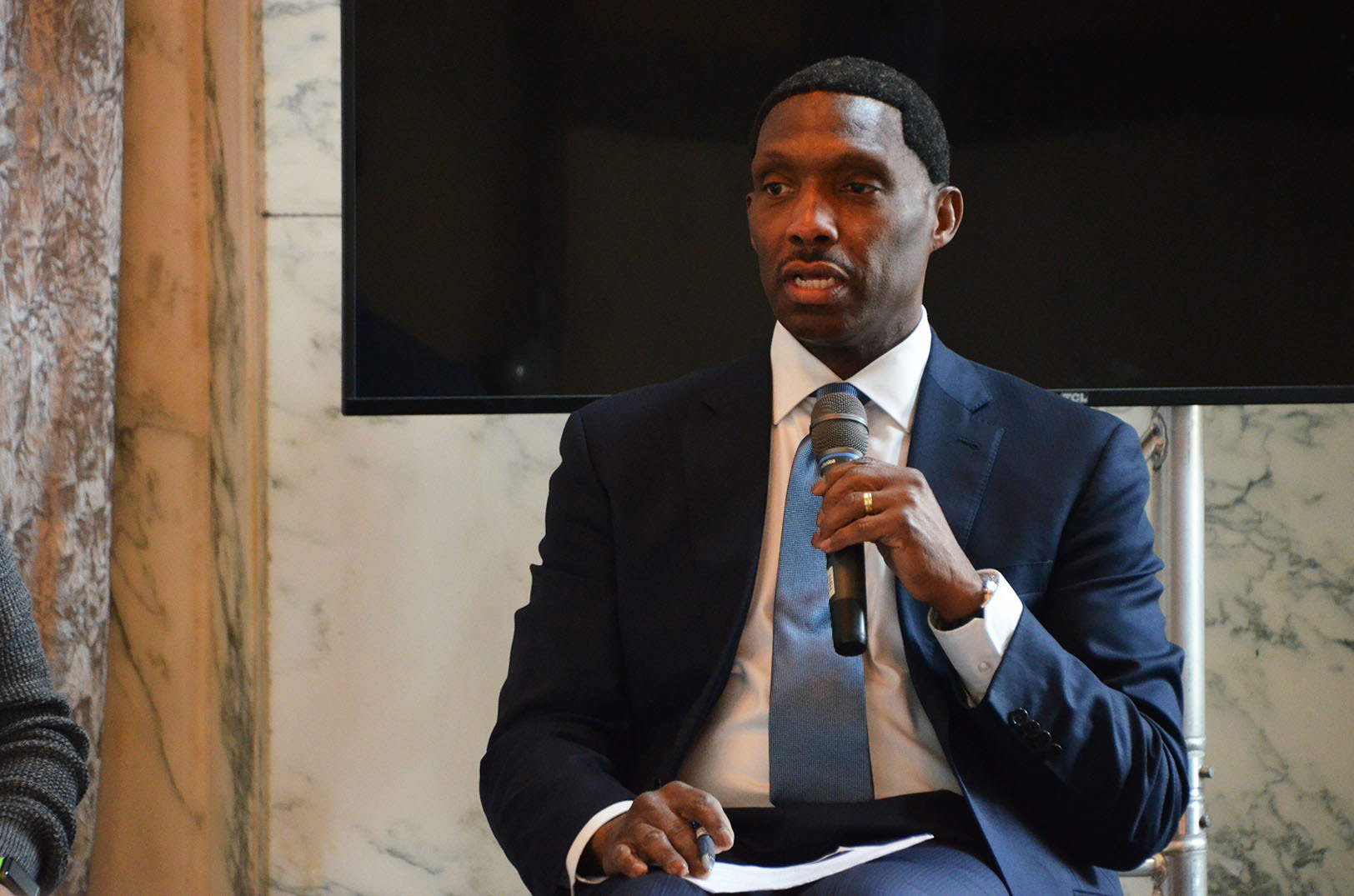
Craig Fowler, HarbourVest Horizons
“You have to do that initial legwork. So, before you think about venture money, before you think about asking someone else to put up $50,000 or $100,000 to realize your vision, really go out and find the people who would actually understand the value of the product or the service you’re providing,” said Thomas.
Companies next need to complete due diligence on the funding sources with whom they’re meeting, added Fowler.
“You should do your homework, just like we do our homework on you when we’re evaluating you. You want to make sure you’re getting the right kind of capital,” he said. “They can add value and grow your business to a certain level, and they’re going to have an exit strategy. Before they’re investing in businesses, they have already decided, ‘OK, in three to five years, we are going to be exiting this business and here’s how we’re going to do it.’ You as the manager, needs to be aware of that. That should be all laid out in front.”

Featured Business

2018 Startups to Watch
stats here
Related Posts on Startland News

More than a Fountain City vacation: SavR bringing US headquarters to Kansas City
Kansas City’s startup culture and support network helped the City of Fountains land the new U.S. headquarters of Australia-based SavR, said founder Tim O’Shea. “If you’re a company that’s trying to strive for genuine outcome, then you’ll be very well received [in Kansas City],” he said. “I think Midwestern people tend to ferret out the…

App to help flex Disabled But Not Really reach beyond KC gyms, says Wesley Hamilton
A new fitness and wellness app is expected to help Disabled But Not Really go global with its impact, said Wesley Hamilton. “This app is going to benefit those that cannot go through our program but are still determined to learn and change their physical well being,” said Hamilton, founder and executive director of the…

Pepper teams with Switzerland cyber security expert to combat ‘terrifying’ IoT threats
A new, long-term collaboration between KC-based Pepper IoT and an international leader in digital security has an opportunity to aggressively boost consumer confidence in the rapidly expanding — and potentially hostile — Internet of Things, said Scott Ford. “It is terrifying to see millions of vulnerable connected devices being distributed to U.S. consumers who have…

Artist incubator paints scene of blissful collaboration in far-from-lonely West Bottoms space
Vanessa Lacy’s artist incubator eliminates “the lonely artist,” she said, noting her gallery model replaces solitude with creative relationships and a collaborative community. “Artists tend to get very isolated in their studio spaces working on their own; then they have a relationship with a gallery that’s really more of a business relationship,” said Lacy, owner…