

Hunting access to capital? Do your homework first, Techweek panel says
October 11, 2018 | Elyssa Bezner

Imagining overnight startup success is as unrealistic as wanting to become a winning athlete or megastar musician overnight — it all takes time and practice, said Juan Campos.

“If you actually have the ambition to create a multimillion dollar company, then the people that are the most successful at that didn’t just wake up one day and say, ‘Hey, I have a multimillion dollar idea, what do I do next?’” said Campos, partner and vice president of Manos Accelerator, a Silicon Valley program for Latinx entrepreneurs, during a Techweek panel Wednesday that discussed access to angel and venture capital.
The mid-week diversity and inclusion track at Techweek explored topics from securing funding, to bridging the inclusivity gap in Kansas City, and even locating and building the right company culture.
Campos was joined by Stefanie Thomas, senior associate of investments at Washington D.C- based Impact America Fund, and Craig Fowler, managing director of Boston-based HarbourVest Horizons, on the panel that covered more than just accessing funds.

Juan Campos, Manos Accelerator
“[Being an entrepreneur] is pretty hard — you’re going to have to sacrifice a lot,” Thomas began. “I ask people, ‘What is your spiritual practice?’ sometimes because you have to have a certain centeredness about you that will keep you grounded through the ups and downs of an entrepreneurial journey.”
Aspiring entrepreneurs should focus on understanding the specific market and its needs, before attempting to receive funding, she said.
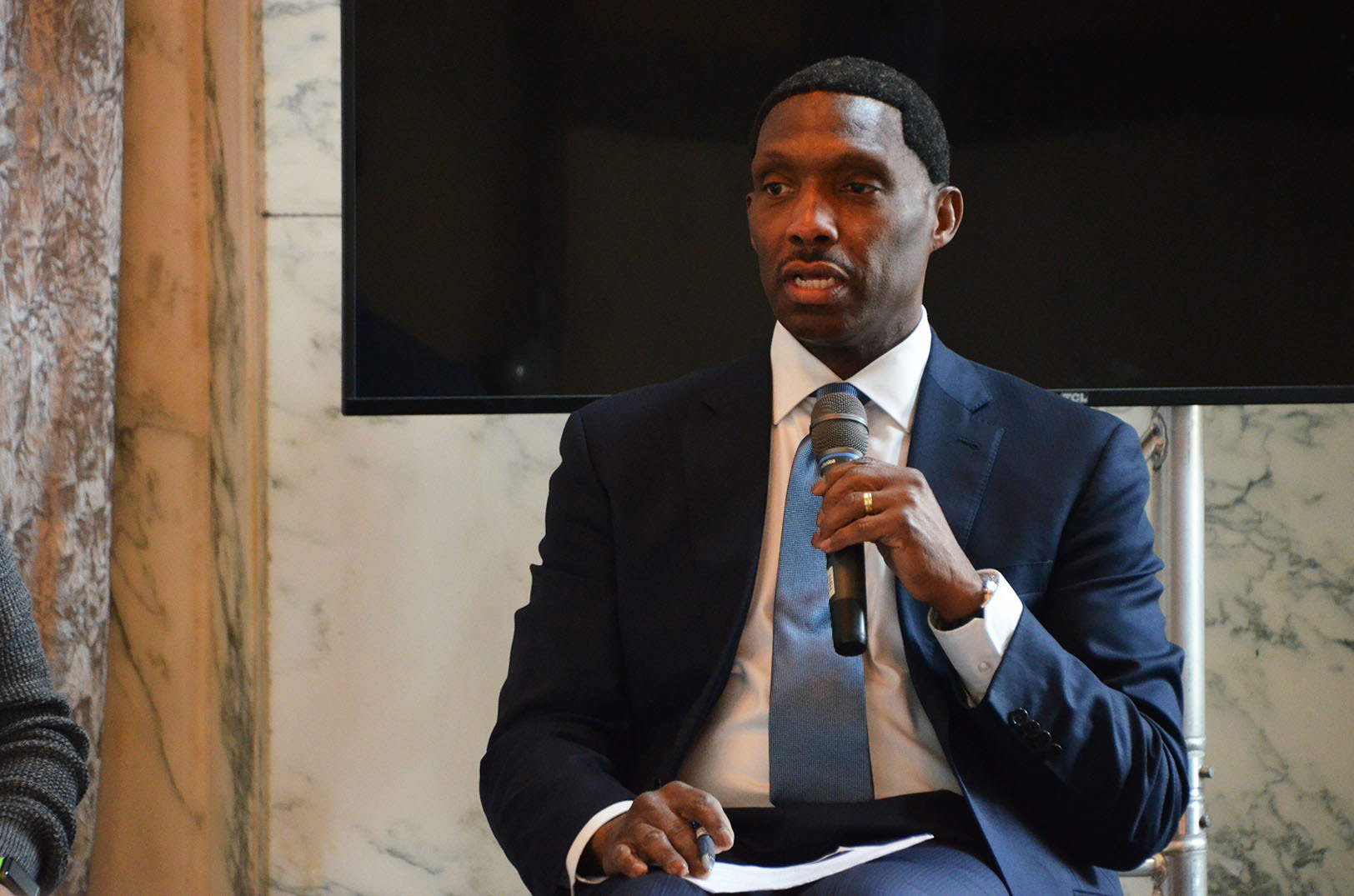
Craig Fowler, HarbourVest Horizons
“You have to do that initial legwork. So, before you think about venture money, before you think about asking someone else to put up $50,000 or $100,000 to realize your vision, really go out and find the people who would actually understand the value of the product or the service you’re providing,” said Thomas.
Companies next need to complete due diligence on the funding sources with whom they’re meeting, added Fowler.
“You should do your homework, just like we do our homework on you when we’re evaluating you. You want to make sure you’re getting the right kind of capital,” he said. “They can add value and grow your business to a certain level, and they’re going to have an exit strategy. Before they’re investing in businesses, they have already decided, ‘OK, in three to five years, we are going to be exiting this business and here’s how we’re going to do it.’ You as the manager, needs to be aware of that. That should be all laid out in front.”

Featured Business

2018 Startups to Watch
stats here
Related Posts on Startland News

Ag tech startup Farmobile raises $18M round for global expansion
Ag tech company Farmobile has reaped a substantial Series B funding round that positions the firm to rapidly accelerate across the world. The Overland Park-based company announced Friday that it raised $18.1 million to expand its data platform to help farmers mitigate risks and generate a revenue from the data they own. The round includes…

10-year-old Leawood inventor in the running for $250K
Kansas City entrepreneurs are known for their Midwestern hospitality, collaborative nature and humility. And each of those traits are expressed by 10-year-old inventor Julia Luetje of Leawood, whose entrepreneurial spirit is now on the national stage as part of a Frito-Lay’s Dreamvention competition. “I invented the Storm Sleeper because I used to be afraid of…

Face it: Zoloz tech lets you to pay with a smile
With a recently revealed new brand and broader strategic focus, Kansas City-based Zoloz is expanding its biometrics security offerings to include another unique human attribute: a user’s face. Formerly known as EyeVerify, Zoloz unveiled three new products — Zoloz Connect, Real ID and Smile — that CEO Toby Rush said will ensure trust and security…

Minddrive fuels youth development through hands-on STEM
Carlos Alonzo, a 15-year-old engineer at Minddrive, was always good at math. In the seventh grade, Alonzo’s teachers gave him the opportunity to skip ahead and take algebra. Although he enjoyed it and did well in the class, he ran into a problem: His school didn’t offer him an advanced class for eighth grade. That one-year…