

Human capital: KC Mythbusters challenges Kansas City to rethink how it supports startups
October 18, 2018 | Austin Barnes and Tommy Felts
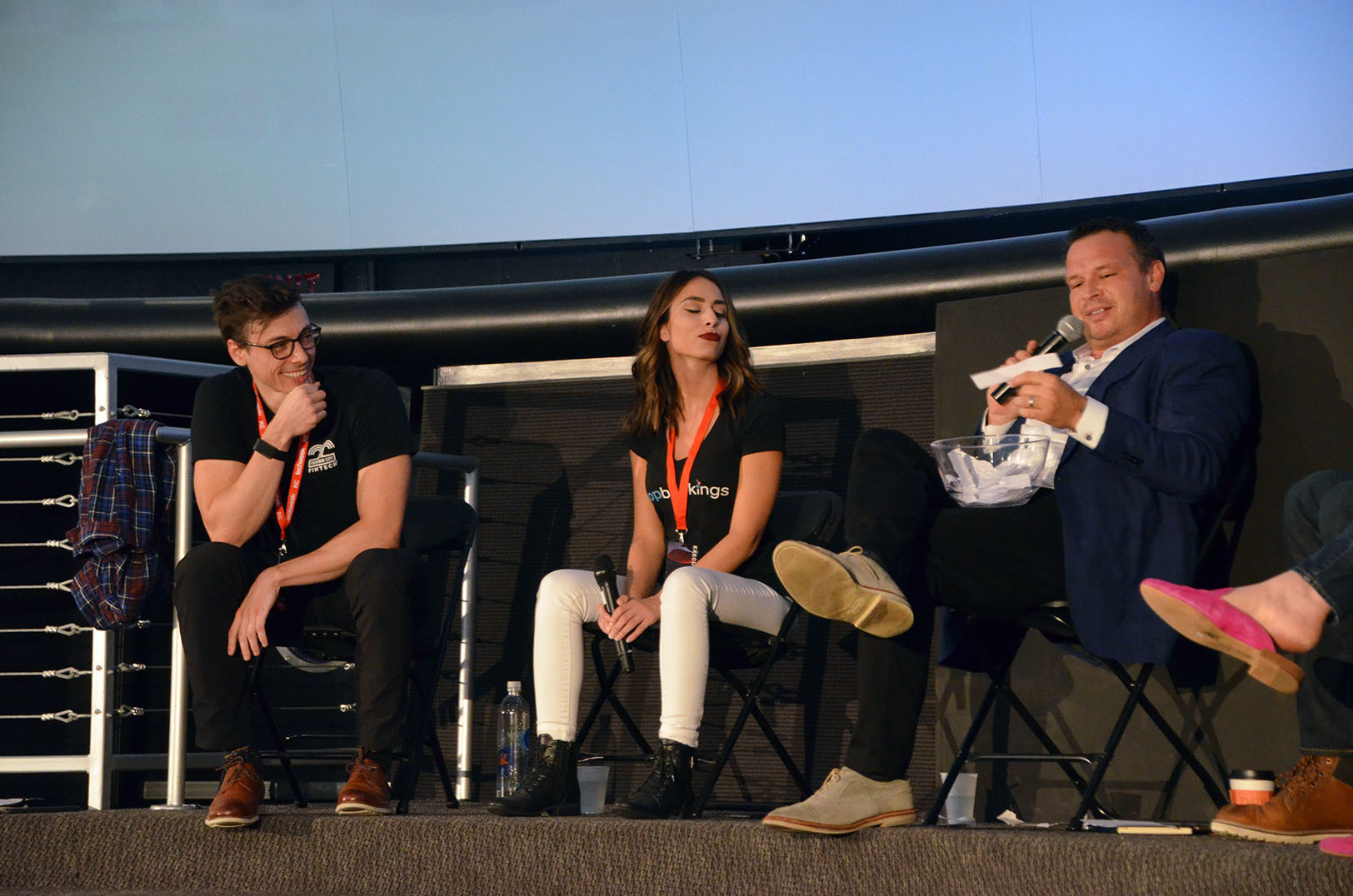
A thriving startup ecosystem requires more stakeholders with skin in the game, said Eric Jorgenson.

Eric Jorgenson, Zaarly; and Shelley Armato, MySmartPlans, KC Mythbusters
That means increasing direct participation — those actively and directly building or investing in startups that can potentially exit and see a talent and capital explosion that results in even newer startups — and de-emphasizing the need for and dependence on support networks, he added.
“[Startup ecosystems increase in size] not because of the supporters, but because of the participants that create that feedback loop,” said Jorgenson, director of growth for Kansas City-based Zaarly, an innovative home services marketplace.
Six years into a professional life he’d previously built in Silicon Valley, Jorgenson said, he realized institutional support for startups that had chosen to develop on the West Coast was nothing short of non-existent — and yet the ecosystem continued to flourish.
It’s a system that relies on less talk and more action — a model from which Kansas City can learn, he bluntly told the crowd at “KC Mythbusters — Entrepreneurial Ecosystem: Fact or Fiction,” a light-hearted NBKC-hosted program during Techweek Kansas City.
The Silicon Valley approach he described requires “putting your human or financial capital into the creation of a company with exponential growth possibility,” Jorgenson said.

Rounded out by a panel of Kansas City entrepreneurs and startup champions — including Zach Pettet, managing director of Fountain City Fintech; Erika Klotz, CEO of PopBookings; and Shelley Armato, CEO of MySmartPlans, in addition to Jorgenson — KC Mythbusters challenged the foursome to argue whether common misconceptions about Kansas City’s startup ecosystem were myths.
Friend-turned-temporary rival Pettet disputed Jorgenson’s downplaying of the role support networks and resources play in Kansas City’s entrepreneur community.
“There are daily things that we need to do to jumpstart our engine as an entrepreneurial ecosystem in Kansas City,” Pettet said. Chief among them, growing more startups to the point of exit.
Such Kansas City resources as accelerators, incubators, and non-profit organizations also help correct structural imbalances in the startup ecosystem, Pettet said, in turn, allowing the metro to thrive in ways Silicon Valley doesn’t: communally.
“Having things like Digital Sandbox, these kinds of public-private tracks to get you at least a little bit of traction to prove out your concept and actually have that conversation with the person investing in the company — I think that’s really, really important,” Pettet said.
Members of the panel agreed on at least one point during the mini-debate: Creating a feedback cycle wherein successful startups beget new businesses and opportunities is critical to establishing a stable, long-term ecosystem in the metro.

Featured Business

2018 Startups to Watch
stats here
Related Posts on Startland News
After shootings, ‘It’s most important to keep the public safe,’ Smart City leaders say
Citizens expect public safety from their city government to encompass such basics as sidewalks and water, Bob Bennett said. And for that reason, improving public safety must be a top concern for smart city projects around the nation, the chief innovation officer at the City of Kansas City, Missouri, added. “We have to provide the…

$1.6M grant will create incubator for low-income, minority entrepreneurs
A large federal grant will help reanimate an older industrial building in Kansas City to serve as a small business incubator. The U.S. Economic Development Administration recently awarded a $1.6 million grant to the Hispanic Economic Development Corporation of Kansas City, Missouri. The Kansas City organization said that the grant should create about 90 new…

Kauffman report: KC ranks 28 out of 40 in entrepreneurial growth
Fewer Kansas City companies are growing to become medium- or large-sized firms, according to a report released Thursday by the Ewing Marion Kauffman Foundation. It’s a common story across the U.S., as the nation rebounds from the slump of the Great Recession, the report says. The 2017 Kauffman Index of Growth Entrepreneurship report suggests the…

Housing trends show young professionals don’t care about Troost’s stigma, UC-B says
Lance Carlton initially was skeptical of developing east of Troost Avenue, he said. “But the mentality of the market has changed,” said Carlton, co-managing partner of UC-B Properties, which brought its offices to the 4300 block of Troost in August 2016. The company helped prove an appetite for residential development on the corridor with 19…