

Collaboration in the air: Cough detection sensors combine Sickweather, Mycroft tech
October 18, 2018 | Elyssa Bezner
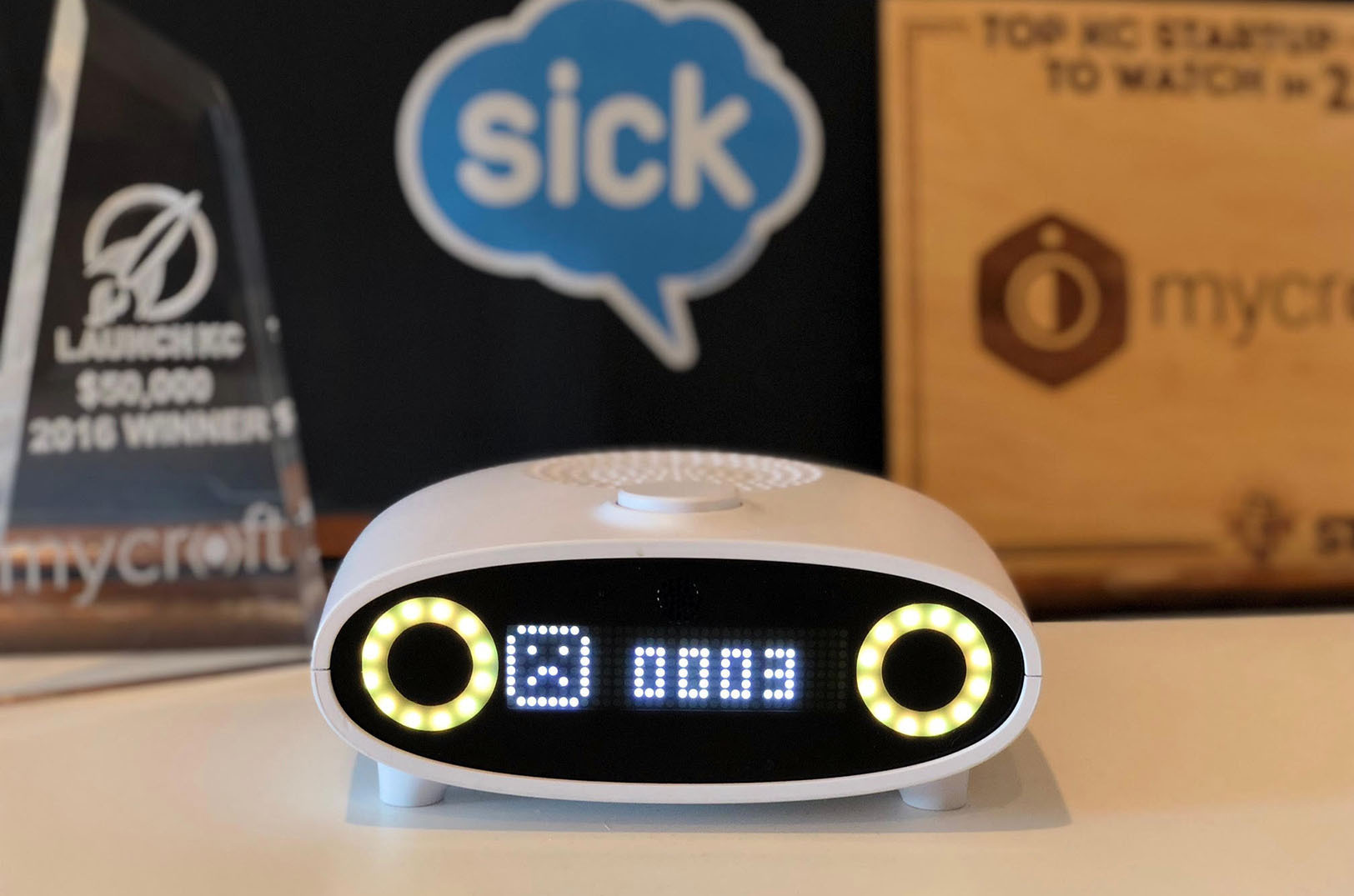
You can’t manage what you can’t measure, said Sickweather CEO Graham Dodge, describing the need for cough detection sensors that are slated to be rolled out in public places across Kansas City in 2019.

Graham Dodge, Sickweather
Illness forecaster Sickweather is teaming up with fellow Kansas City startup Mycroft, a leader in artificial intelligence-infused tech, to develop the devices in conjunction with the Kansas City Health Department’s smart city initiatives, Dodge said.
The cough sensors are expected to record the number of coughs picked up on city streetcars and buses, collecting data on illnesses relating to respiratory issues in the city, he said.
“This will be our first step in trying to measure that activity in real time so that the health department can deploy resources as needed to communities,” Dodge added.
The collaborators are also exploring the possibility of installing air quality sensors in schools, said Dodge, noting the prime directive of the projects is to study childhood asthma.
Like all Mycroft products, the cough detection sensor keeps privacy in mind, said Joshua Montgomery, CEO of Mycroft, noting the only data collected is the number of coughs heard in each location. The data cannot be attributed to a specific individual.
“The idea is very similar to a traffic counter that sits in an intersection,” he said. “It can’t tell you which cars go through that intersection; all it can do is give you a count and a location and a time. Cities use that information to make decisions about traffic lights and other things.”

Joshua Montgomery, Mycroft
“We can do the same with the sounds of human illness in order to make decisions about, and get better information about things like vaccinations, public health efforts and other items of that nature,” he added.
Privacy and security considerations are a key differentiator between what Mycroft and Sickweather are building in Kansas City and what big tech firms on the West Coast have built in Silicon Valley, Montgomery said.
“I think what we’re seeing in the media and what we’re seeing from regulators in Europe for example, is people becoming sensitive to exactly how invasive some of the Silicon Valley models are, and being willing to explore new technologies that do provide privacy, and that’s a great opportunity for us and a great opportunity for Kansas City,” he said.
Technologies like Mycroft products, the cough sensors, and the Sickweather app are steps in the right direction in terms of how active listening technology and public information from social media can be used, said Dodge.
“In our case, with [Sickweather’s] technology, we’re only listening to your public reports, so we aren’t invading anyone’s privacy when it comes to our social listening technology,” he added. “Anyone who’s using our app and volunteering this information, knows that this is going toward the maps and the forecast, and is contributing to the entire Sickweather community.”

Featured Business

2018 Startups to Watch
stats here
Related Posts on Startland News

Kauffman Foundation dishes $840K to 8 area accelerators
The Ewing Marion Kauffman Foundation is hitting the gas on its support of area accelerator programs. As part of the 2016 KC Accelerator Challenge, the Kauffman Foundation announced Tuesday that it’s awarded a total of $840,000 in grants to eight local venture accelerator programs. “Our goal is to increase entrepreneurial success in Kansas City through…

Efficiency, innovative home construction are cornerstones for Prairie Design Build
David Schleicher was just looking for something to get back on track. In 2012, the president of Prairie Design Build, a house building company located in Kansas City, had watched his then six-year-old business begin to suffer because of the recent recession. Schleicher was desperately seeking a way to keep his head above water, not…

Listen: When the grind gets gloomy, experts discuss mental health challenges and entrepreneurship
About 72 percent of entrepreneurs have self-reported mental health concerns, according to a study done by the University of California San Francisco. More specifically, about 30 percent of entrepreneurs experience depression and about 30 percent experience ADHD, the same study found. In recognition of Mental Health Awareness Month, Startland News and Think Big’s May Innovation…
6 tips and tricks to stay sane while scaling fast
Frequently taking on more demands and shirking personal care, entrepreneurs’ work-life balance often skews toward work. Deadlines, finding clients, making payroll and dozens of other stressors can put entrepreneurs at risk of mental illness or compound existing challenges. Furthermore, entrepreneurs are disproportionately affected by such issues as ADHD, bipolar disorder and depression, according to studies…