

Thelma’s Kitchen cooks up pay-what-you-can cafe concept to preserve community
September 6, 2018 | Austin Barnes
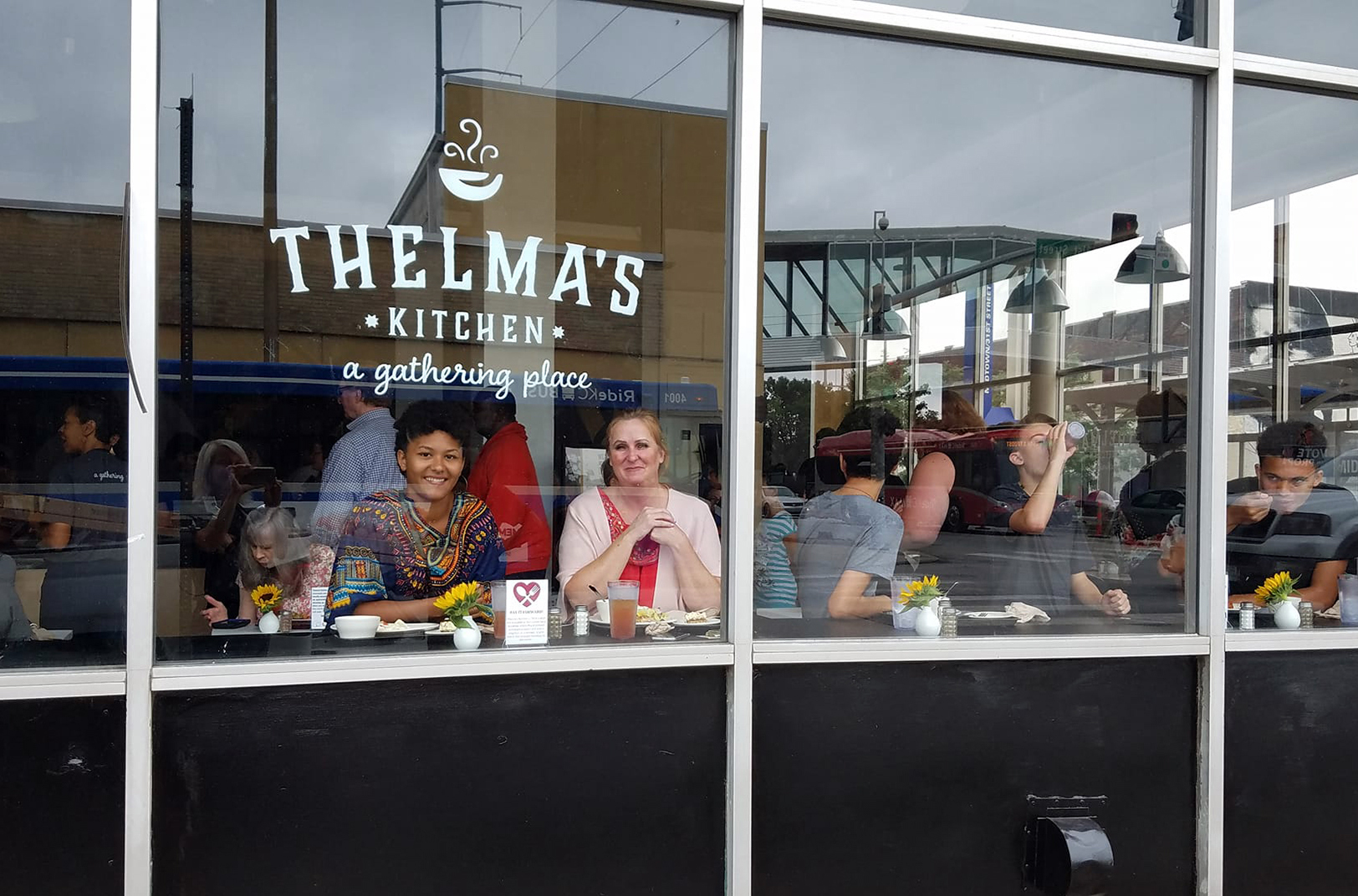
Twenty people once filled the kitchen of Thelma Gardner’s apartment in search of their next meal. Their hunger for food fueled her hunger for humanity, recounted Father Justin Mathews as he sat sipping coffee in the newly opened Thelma’s Kitchen.
Stay or go? Social entrepreneurism at an intersection
• Defiant anti-gentrification voice: Clock is ticking on east side neighborhoods, Movement KC
• Troostapalooza aims to shed the old skin of city’s racial dividing line, says Kemet Coleman
• Operation Breakthrough bridge over Troost symbolizes ‘real community’ at an intersection
• Reconciliation Services hopes to heal trauma in the heart of stigmatized Troost corridor
The pay-what-you-can restaurant — located inside of the Reconciliation Services building at 3101 Troost Ave. — reflects her mission-oriented life, said Mathews, executive director of Reconciliation Services.
Before she catered to the community that surrounds Troost, Gardner experienced the pangs of hunger first hand, he said. The cupboards that lined the walls of her small home at the Lasalle Apartments — just one block from Troost — once sat bare, Mathews said, surveying what Gardner’s legacy has produced in the present day.
“Thelma’s Kitchen is a gathering place,” he said with a satisfied smile.
Gardner’s philanthropic endeavors were developed alongside her husband — David Altschul, a white man 12 years her junior — who would later become an eastern orthodox priest, known as Father Paisius. The couple founded the non-profit Reconciliation Ministries in the early 1990s.
They met during a time when Gardner and her family were at their lowest, Mathews said.
“They had nothing more than a loaf of white bread and a small can of pork and beans,” he said, noting Father Paisius initially worked as a volunteer who delivered food and lent emotional support to Gardner and her family.
Once wed, paying it forward became a way of life for the couple, who faced heavy backlash over their interracial marriage — which fueled their commitment to healing the racial divide in east Kansas City, Mathews said.
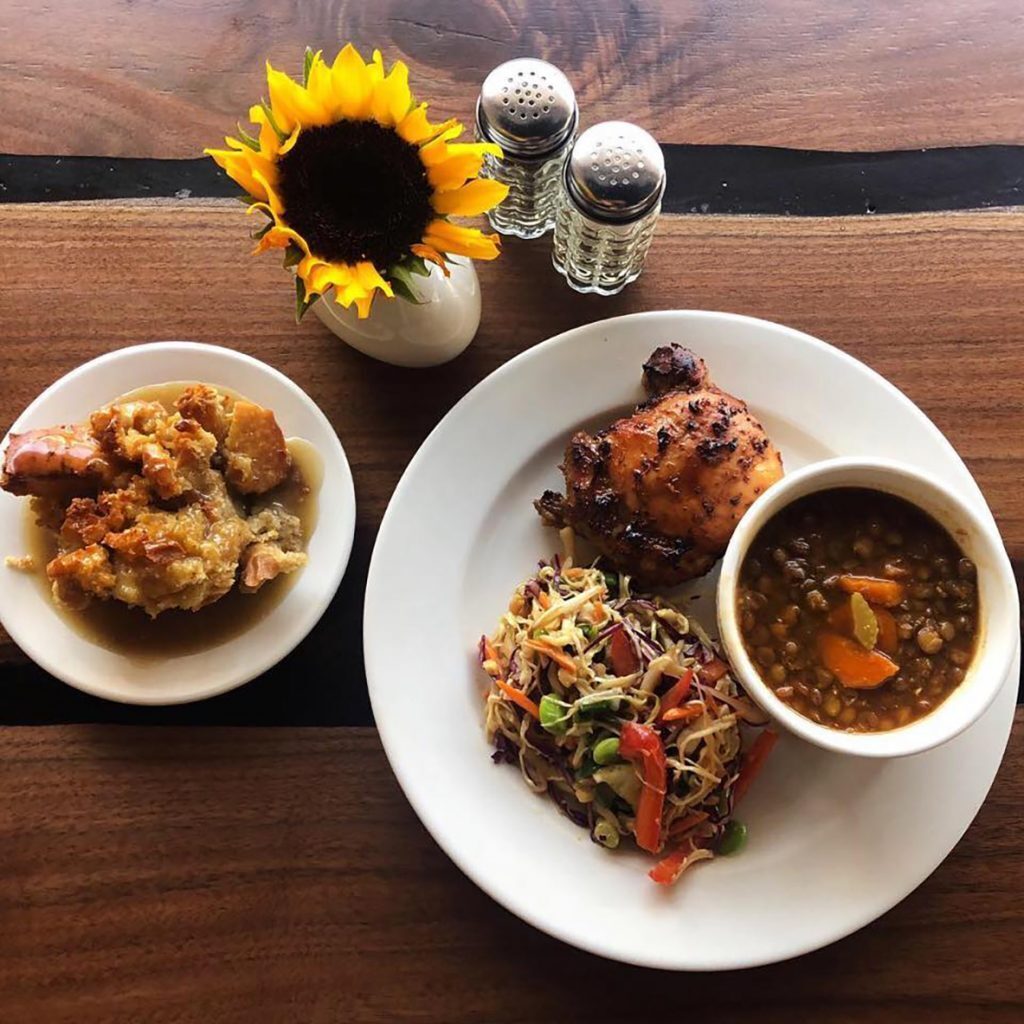
With its warm, modern decor Thelma’s Kitchen shape-shifts into the kind of fast-casual restaurant one might expect to discover in any trendy corner of the city. Customers eagerly form lines — at times extending beyond the restaurants front door — to enjoy an array of fresh, locally sourced food at whatever price they can pay. Diners can also pay for their meal by volunteering in the kitchen, if they so choose, Mathews said.
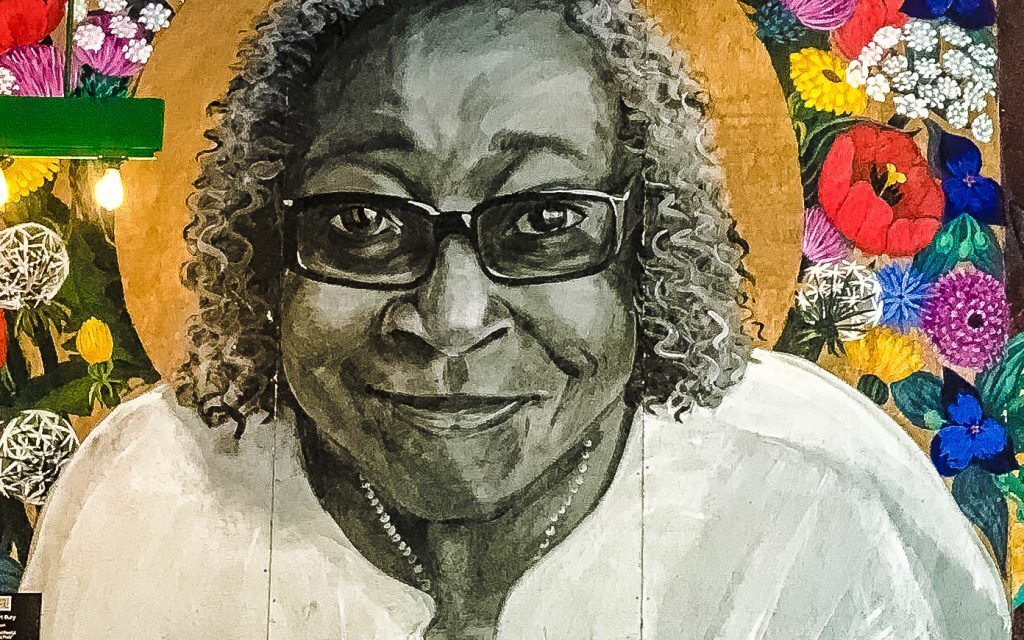
Thelma Gardner-Altschul
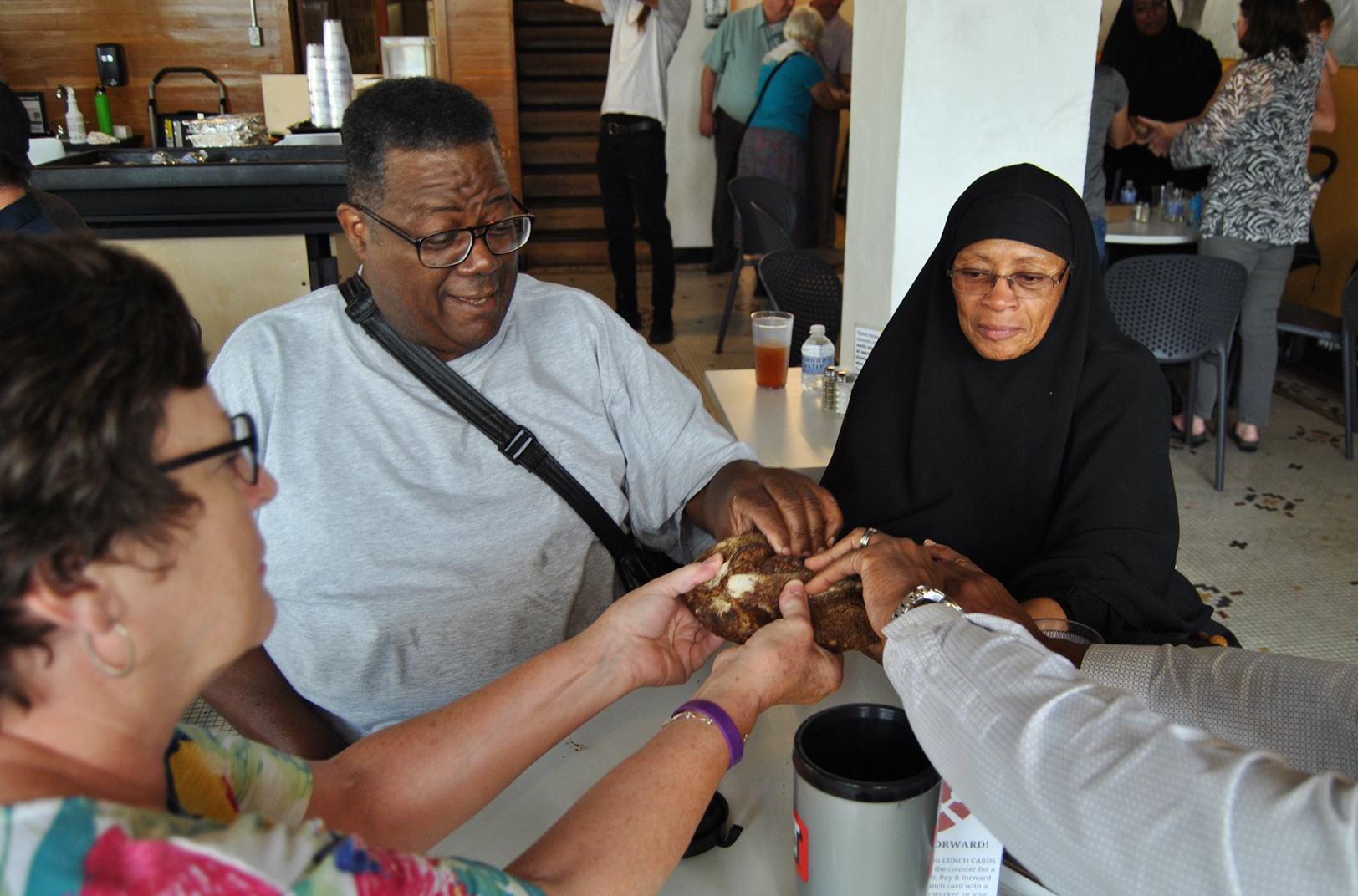
As bread is broken beneath the freshly painted mural of a vibrant and smiling Thelma on the back wall of the restaurant’s dining room, a genuine sense of community is built, said Mathews.
“We didn’t want it to be swanky — or janky — we really wanted it to be the best that we could offer without losing the character and the grit of our neighborhood,” said Mathews, calling Thelma’s Kitchen the new face of Reconciliation Services.
“To have the community cafe be the public front and Reconciliation Services be the secondary entrance — even though literally 5,000 people plus a year service from us — it’s the right move; it’s the right step for the long term,” Mathews said.
With the future of Troost in question and numerous redevelopment projects taking shape, Mathews hopes Thelma’s Kitchen will become an example of thoughtful redevelopment as opposed to outright gentrification, he said.
“[Developer] Peter Cassel, who I don’t know personally but have been in many meetings with, literally talks about MAC properties, transforming Troost and turning it into a gathering place. That’s literally our tagline for the last 30 years,” Mathews said with a mix of passion and frustration about the planned project at Troost and Armour Boulevard. “Redoing a building and bringing in middle-class folks from somewhere else — into the urban core is building community … but it’s building a new community.”
For the mission behind Thelma’s Kitchen to succeed, he said, equality must become a community-wide focus: It’s his plea to developers.
“We have to be, as citizens, really aware … what builds community, what kind of community are we building when we talk about building community, who’s benefiting and who’s suffering as a result,” Mathews said as he shared his vision for the future of Troost.
He hopes to see a community in crisis reconciled the way Gardner envisioned the first time she opened her kitchen to her neighbors — with outstretched arms.
To read more about the redevelopment of Troost click here.
Stay or go? Social entrepreneurism at an intersection
• Defiant anti-gentrification voice: Clock is ticking on east side neighborhoods, Movement KC
• Troostapalooza aims to shed the old skin of city’s racial dividing line, says Kemet Coleman
• Operation Breakthrough bridge over Troost symbolizes ‘real community’ at an intersection
• Reconciliation Services hopes to heal trauma in the heart of stigmatized Troost corridor

Featured Business

2018 Startups to Watch
stats here
Related Posts on Startland News

Innovation Festival returns Aug. 16 with focus on human connections in a surging biotech hub
While the third iteration of BioKansas’ Innovation Festival might initially seem scaled back, said Dr. Kevin Mills, the summer biosciences conference is amping up its emphasis on what makes Kansas City a great biotech hub. “The idea is really to get people with really diverse viewpoints and diverse jobs and careers together to hear from…
I’m with Hank: Meet the tribute-turned-brew child of these beer-drinking serial entrepreneurs
A limited-release craft lager at Jim’s Alley Bar and Alma Mader Brewing pays homage to classic American brewing traditions and a shared family name, said Nick Mader and Eric Flanagan. The duo joined forces this summer to release “Hank” — in honor of several family relatives with the middle name “Henry,” as well as Flanagan’s…
CPKC Stadium, Rabbit hOle named to TIME magazine’s list of ‘World’s Greatest Places’
Two recently opened Kansas City attractions were announced today among 100 extraordinary destinations to visit; named to TIME’s list of the World’s Greatest Places. TIME’s annual feature includes CPKC Stadium, home to the KC Current and the first stadium in the world purpose-built for a women’s professional team, and The Rabbit hOle, a North Kansas…
Kansas artist carves Kamala Harris’ portrait into a field — and left room for her VP pick
Editor’s note: The following story was published by KCUR, Kansas City’s NPR member station, and a fellow member of the KC Media Collective. Click here to read the original story or here to sign up for KCUR’s email newsletter. World-renowned crop artist Stan Herd is almost finished with the portrait of the presumptive Democratic presidential nominee outside Lawrence, Kansas, near…