

Self-driving cars deliver unexpected challenges, says Burns & McDonnell strategist
September 21, 2018 | Austin Barnes
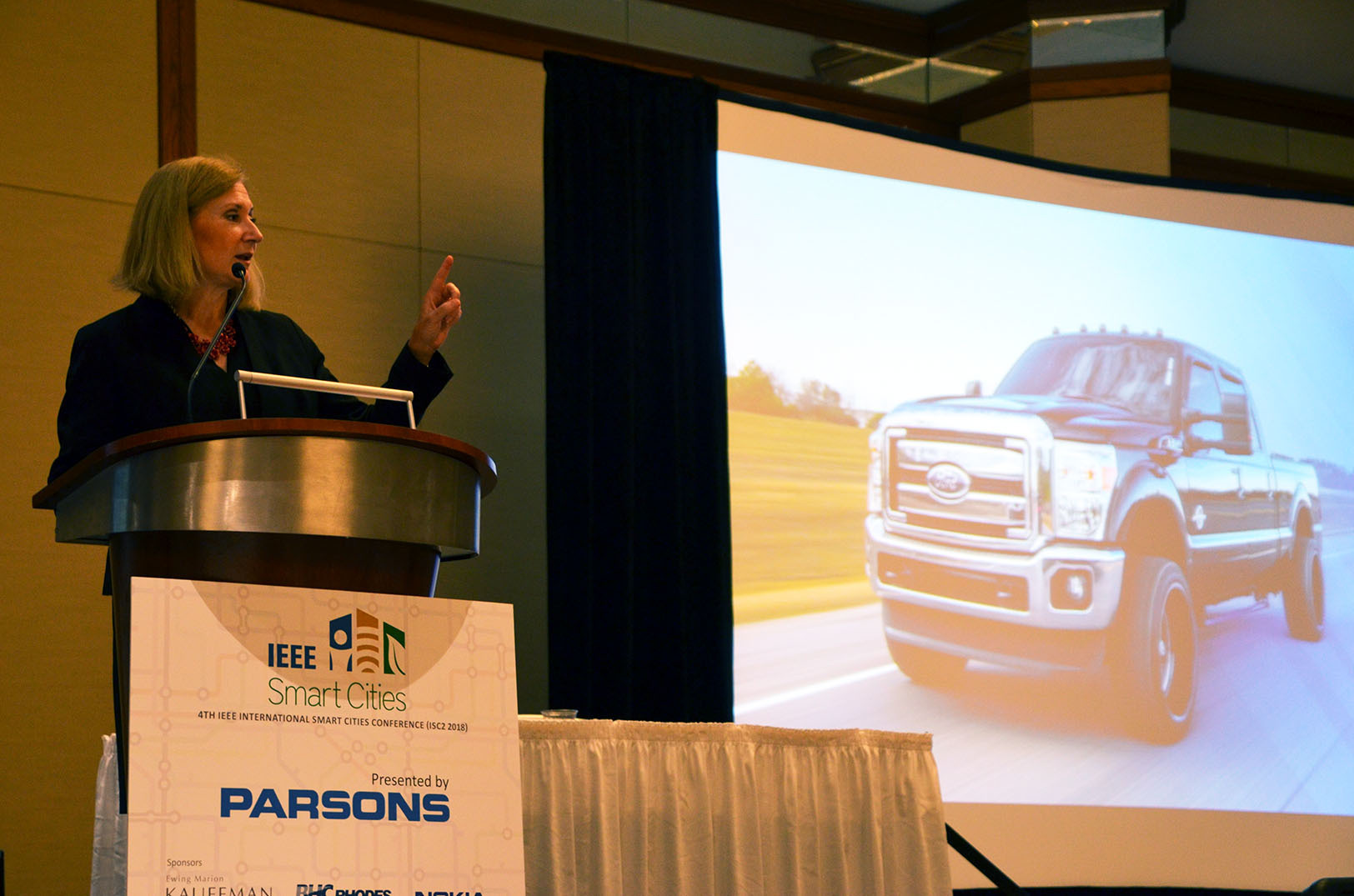
City streets filled with safer, automated or self-driving vehicles would come with an unexpected price tag: fewer organ donations because of reduced traffic fatalities, said Julie Lorenz, discussing the promise and paradox of evolving transportation technology.
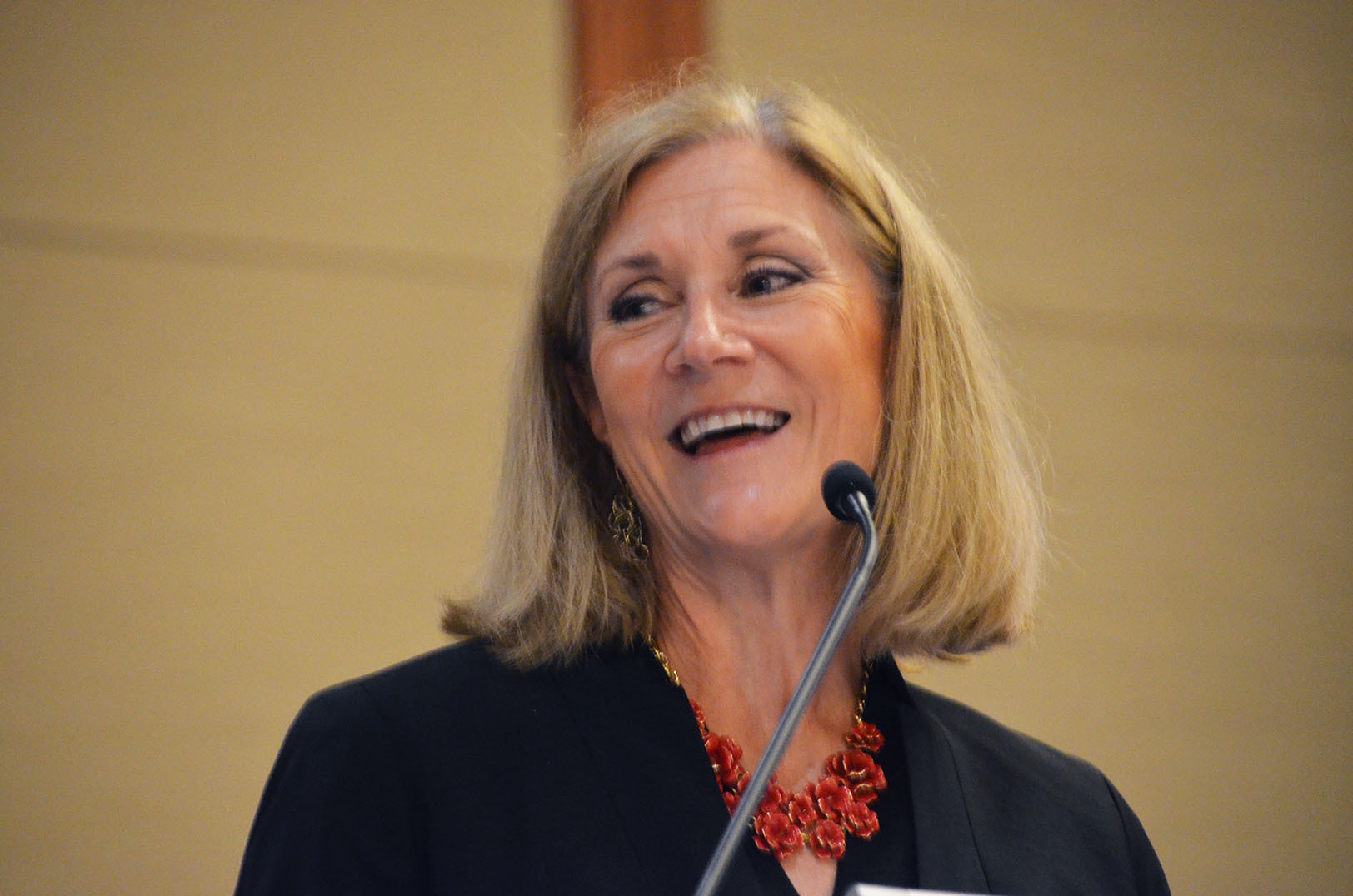
Julie Lorenz, Burns & McDonnell, IEEE International Smart Cities Conference
“If you look back in history, it can help you think about the future,” said Lorenz, strategic consultant for Kansas City-based engineering and architectural firm Burns & McDonnell.
Lorenz –– who also serves as co-chair of the Greater Kansas City Chamber of Commerce’s transportation Big 5 initiative –– presented her thoughts on autonomous vehicles this week to an audience at the IEEE International Smart Cities Conference in Kansas City.
“When elevators were introduced, folks were really afraid of them,” she said, drawing parallels to the changing face of transportation. “There were elevator operators because people didn’t understand how to just walk in and press a button, but also they liked the human element of somebody managing that.”
As self-driving cars roll into the market, consumers will be faced with a similar challenge: letting go of the human touch behind the wheel — whether that be themselves or a taxi or Uber driver.
“It’s emblematic of how we manage change in our lives — both at a professional level and on a personal level,” Lorenz said of the future. “There are many upsides to automated vehicles. There are some downsides too.”
Behind the scenes, tech jobs could develop to cushion the blow for taxi, bus and ride-sharing service drivers who find themselves put out of work by the developing technology.
The potentially negative implications of autonomous driving range from motion sickness to more congestion as self-driving vehicles more accurately pack into tight spaces on roadways, Lorenz cited.
As the landscape of transportation changes, autonomous driving will be adopted generationally, she said. Millennials are more likely to seamlessly adapt to autonomous driving than older generations, Lorenz added.
“The work that we do, it’s really about people. It’s about trying to make lives better,” she said, her note of encouragement to those who struggle to accept the idea of evolved transportation.
With an intricate infrastructure at play, there’s no definitive date on the horizon for when autonomous driving will park itself as a daily routine, Lorenz said.
Ever-accelerating, reliable driverless tech could cruise into reality as early as 2050, she hypothesized.

Featured Business

2018 Startups to Watch
stats here
Related Posts on Startland News
‘Invest with women we know’: This $1.4M wellness hub project is redeveloping one neighborhood from within
It’s an old real estate adage: “Buy the worst house in the best neighborhood.” Longtime Kansas City commercial broker Sheryl Vickers said it also applies to business properties, “one thousand percent.” Like twin mid-century office buildings just over the Missouri/Kansas state line in Prairie Village. “I drove by it, what a sad state,” said Vickers,…
Street art to stage: KC fashion designer styles iconic Jim Crow-era musical comedy without missing a beat
Designing for theater gives Whitney Manney the opportunity to be as big and loud as she wants, the street bespoke creator said. A new musical production of “Hairspray” puts Manney’s bold aesthetic through a new lens — and alongside a timely story of acceptance, diversity, and the power of music. “There is no such thing…
‘People pay for value’: How a young mom’s plan to hold passion tight drives her baby apparel side hustle
Coming from a family of business owners, Riley Rhoads knew she wanted to pursue entrepreneurship: starting her own business — but with a goal to help others, the founder of Hold Tight Baby said. “When I hear people talk about, ‘Oh, I want to be an entrepreneur; I want to start and own my own…
New in KC: Ops leader joins KCSourceLink to strengthen network’s collective impact for entrepreneurs
A newly created director of operations role at KCSourceLink is expected to boost efforts to connect entrepreneurs and small businesses with hundreds of resources for growing and scaling their ventures in Kansas City, as well as across the state through MOSourceLink. Dena Thomas Aouassou, a veteran of nonprofit entrepreneurship support and workforce training, recently relocated…