

Self-driving cars deliver unexpected challenges, says Burns & McDonnell strategist
September 21, 2018 | Austin Barnes
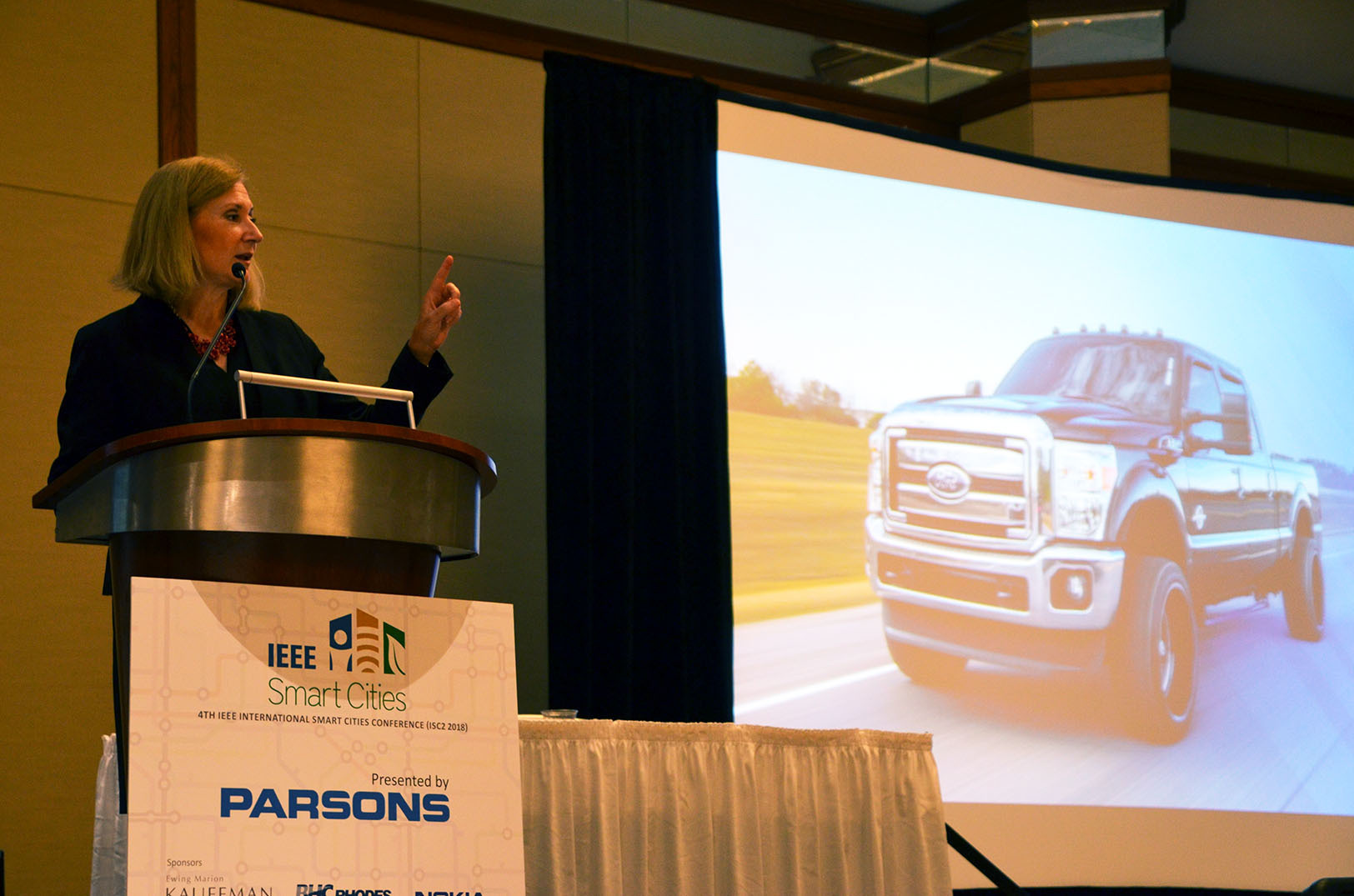
City streets filled with safer, automated or self-driving vehicles would come with an unexpected price tag: fewer organ donations because of reduced traffic fatalities, said Julie Lorenz, discussing the promise and paradox of evolving transportation technology.
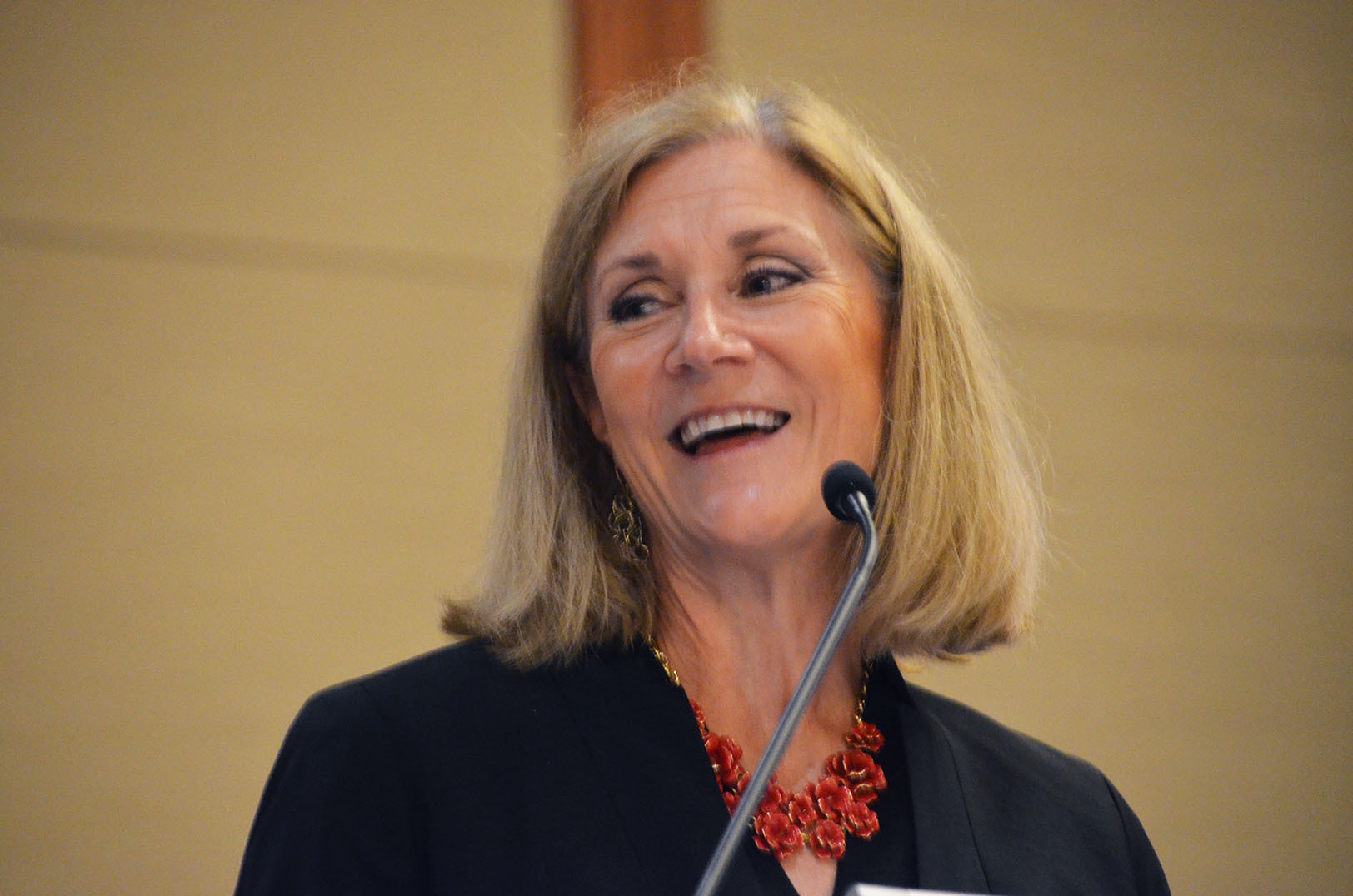
Julie Lorenz, Burns & McDonnell, IEEE International Smart Cities Conference
“If you look back in history, it can help you think about the future,” said Lorenz, strategic consultant for Kansas City-based engineering and architectural firm Burns & McDonnell.
Lorenz –– who also serves as co-chair of the Greater Kansas City Chamber of Commerce’s transportation Big 5 initiative –– presented her thoughts on autonomous vehicles this week to an audience at the IEEE International Smart Cities Conference in Kansas City.
“When elevators were introduced, folks were really afraid of them,” she said, drawing parallels to the changing face of transportation. “There were elevator operators because people didn’t understand how to just walk in and press a button, but also they liked the human element of somebody managing that.”
As self-driving cars roll into the market, consumers will be faced with a similar challenge: letting go of the human touch behind the wheel — whether that be themselves or a taxi or Uber driver.
“It’s emblematic of how we manage change in our lives — both at a professional level and on a personal level,” Lorenz said of the future. “There are many upsides to automated vehicles. There are some downsides too.”
Behind the scenes, tech jobs could develop to cushion the blow for taxi, bus and ride-sharing service drivers who find themselves put out of work by the developing technology.
The potentially negative implications of autonomous driving range from motion sickness to more congestion as self-driving vehicles more accurately pack into tight spaces on roadways, Lorenz cited.
As the landscape of transportation changes, autonomous driving will be adopted generationally, she said. Millennials are more likely to seamlessly adapt to autonomous driving than older generations, Lorenz added.
“The work that we do, it’s really about people. It’s about trying to make lives better,” she said, her note of encouragement to those who struggle to accept the idea of evolved transportation.
With an intricate infrastructure at play, there’s no definitive date on the horizon for when autonomous driving will park itself as a daily routine, Lorenz said.
Ever-accelerating, reliable driverless tech could cruise into reality as early as 2050, she hypothesized.

Featured Business

2018 Startups to Watch
stats here
Related Posts on Startland News
Meet the competition: 10 entrepreneurs vying for $60K at KC GIFT ‘Pitch Black’ business summit
The return of Kansas City G.I.F.T.’s spring pitch competition not only opens the door to prize money for emerging Black entrepreneurs, said Brandon Calloway, it also allows community members and supporters of his nonprofit to see the impact of its mission firsthand. GIFT’s highly anticipated Pitch Black Business Summit 2025 is set for 10 a.m.…
Support without limits: Doctor duo flexes scrub design that’s a dream for women, mothers-to-be
A pair of Kansas City doctors diagnosed a chronic need in maternity and versatility care for women — turning to entrepreneurship to prescribe “bump to pump” comfort and flexibility through a new line of scrubs. “Being physicians, we want to continue to help people,” said Dr. Christine Khong, who co-founded Vervee Scrubs alongside Dr. Melanie…
Lawmaker asks SBA to relocate offices from KC to Columbia, citing sanctuary-like policies for immigrants
A Kansas City-area congressman wants the U.S. Small Business Administration to move its offices from downtown Kansas City to central Missouri, amid President Trump’s nationwide crackdown on undocumented immigrants and a broad restructuring of how the federal government works. U.S. Rep. Mark Alford, R-Missouri, on Tuesday sent a letter to SBA Administrator Kelly Loeffler, asking…
Physician assistant, mom juggles healthy challenge: opening two Tropical Smoothie Cafe franchises
A new Tropical Smoothie Cafe franchisee is opening not one, but two locations this spring — all while keeping her day job and raising twin 4-year-olds. Nikki Vogel is taking over 2,200-square-feet in the former Calibration Brewery building at 119 Armour Road in North Kansas City for a scheduled April 16 opening. (It will be…