

Self-driving cars deliver unexpected challenges, says Burns & McDonnell strategist
September 21, 2018 | Austin Barnes
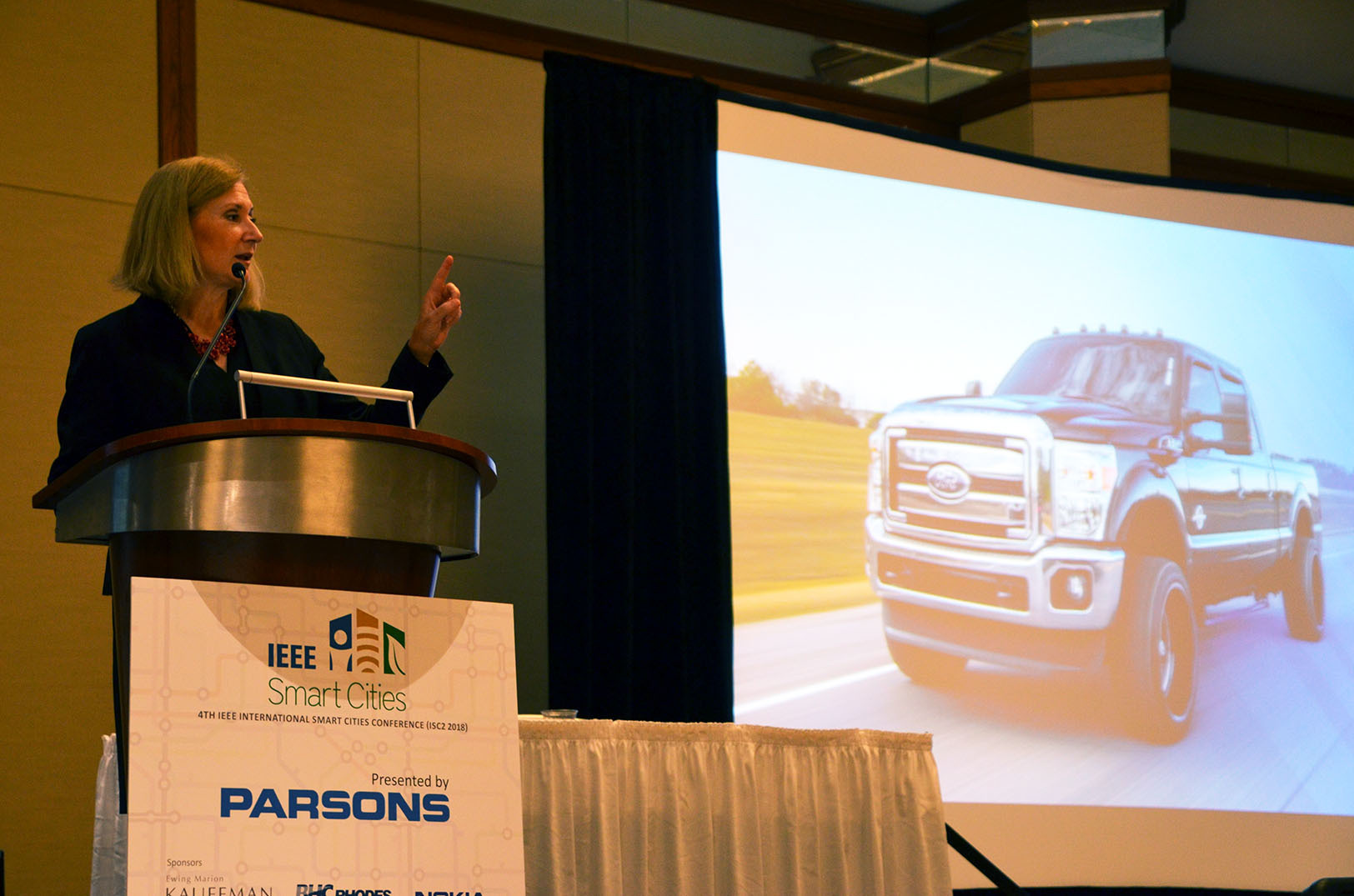
City streets filled with safer, automated or self-driving vehicles would come with an unexpected price tag: fewer organ donations because of reduced traffic fatalities, said Julie Lorenz, discussing the promise and paradox of evolving transportation technology.
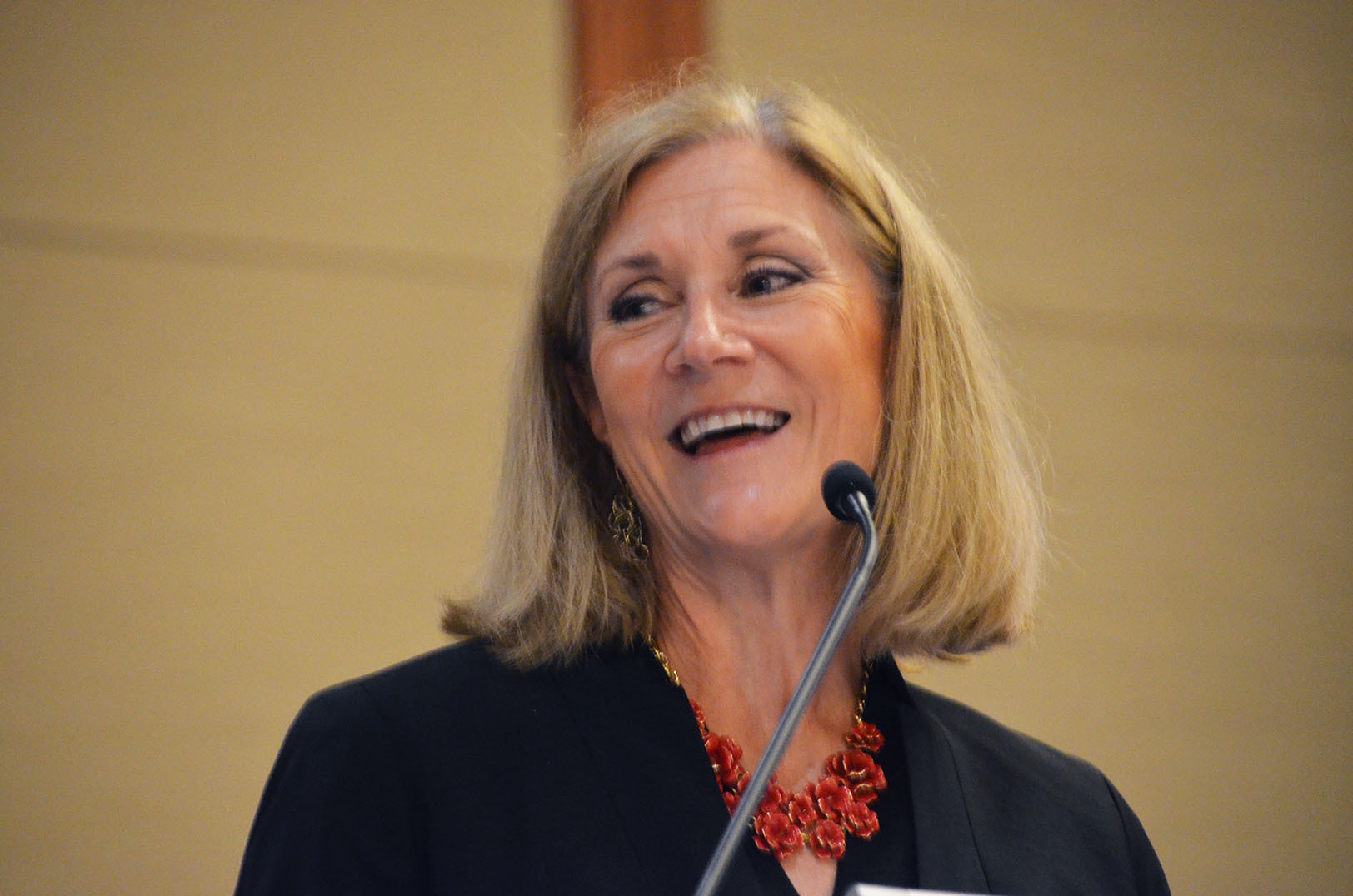
Julie Lorenz, Burns & McDonnell, IEEE International Smart Cities Conference
“If you look back in history, it can help you think about the future,” said Lorenz, strategic consultant for Kansas City-based engineering and architectural firm Burns & McDonnell.
Lorenz –– who also serves as co-chair of the Greater Kansas City Chamber of Commerce’s transportation Big 5 initiative –– presented her thoughts on autonomous vehicles this week to an audience at the IEEE International Smart Cities Conference in Kansas City.
“When elevators were introduced, folks were really afraid of them,” she said, drawing parallels to the changing face of transportation. “There were elevator operators because people didn’t understand how to just walk in and press a button, but also they liked the human element of somebody managing that.”
As self-driving cars roll into the market, consumers will be faced with a similar challenge: letting go of the human touch behind the wheel — whether that be themselves or a taxi or Uber driver.
“It’s emblematic of how we manage change in our lives — both at a professional level and on a personal level,” Lorenz said of the future. “There are many upsides to automated vehicles. There are some downsides too.”
Behind the scenes, tech jobs could develop to cushion the blow for taxi, bus and ride-sharing service drivers who find themselves put out of work by the developing technology.
The potentially negative implications of autonomous driving range from motion sickness to more congestion as self-driving vehicles more accurately pack into tight spaces on roadways, Lorenz cited.
As the landscape of transportation changes, autonomous driving will be adopted generationally, she said. Millennials are more likely to seamlessly adapt to autonomous driving than older generations, Lorenz added.
“The work that we do, it’s really about people. It’s about trying to make lives better,” she said, her note of encouragement to those who struggle to accept the idea of evolved transportation.
With an intricate infrastructure at play, there’s no definitive date on the horizon for when autonomous driving will park itself as a daily routine, Lorenz said.
Ever-accelerating, reliable driverless tech could cruise into reality as early as 2050, she hypothesized.

Featured Business

2018 Startups to Watch
stats here
Related Posts on Startland News
First came baby, then the boutique; 18 years later, this owner is the mother of retail survivors
Opening her storefront at the age of 23 with a newborn daughter, Meagan Doyle faced double duty as a first-time mother and budding entrepreneur. Eighteen years later, her baby is now grown — and Mom is coming into her own as a retail survivor and seasoned business owner. “It’s been a fun adventure,” said Doyle,…

Advocates want a startup-boosting Missouri angel investor tax credit (but they’ll have to beat legislature’s ticking clock)
With about a week left in Missouri’s legislative session, business advocates at NEXT Missouri are making a final push for lawmakers to pass a bill creating a state angel investor tax credit — legislation its backers say could catalyze early-stage business growth and keep entrepreneurial talent and essential startup capital rooted in the state. Jason…
PMI Rate Pro exits: KC fintech calls acquisition the ‘natural next step’ for its mortgage tech solution
MIAMI — A strategic acquisition between a software leader and a Kansas City fintech startup brings together two innovators in mortgage tech to deliver the industry’s most comprehensive platform, said Nomi Smith, co-founder of PMI Rate Pro. LoanPASS on Thursday announced its purchase of PMI Rate Pro, an Overland Park-based fintech specializing in API-driven private…
Merck plans $895M expansion for its De Soto biologics site; leaders tout strength of KC animal health corridor
DE SOTO, Kan. — A biopharmaceutical giant plans to invest $895 million to expand its biologics facility in Kansas, notching another win as leaders position Kansas City as a hub for digital and animal health innovation. The 200,000-square-foot expansion project includes an $860 million investment in Merck Animal Health’s existing manufacturing site west of the…