

Self-driving cars deliver unexpected challenges, says Burns & McDonnell strategist
September 21, 2018 | Austin Barnes
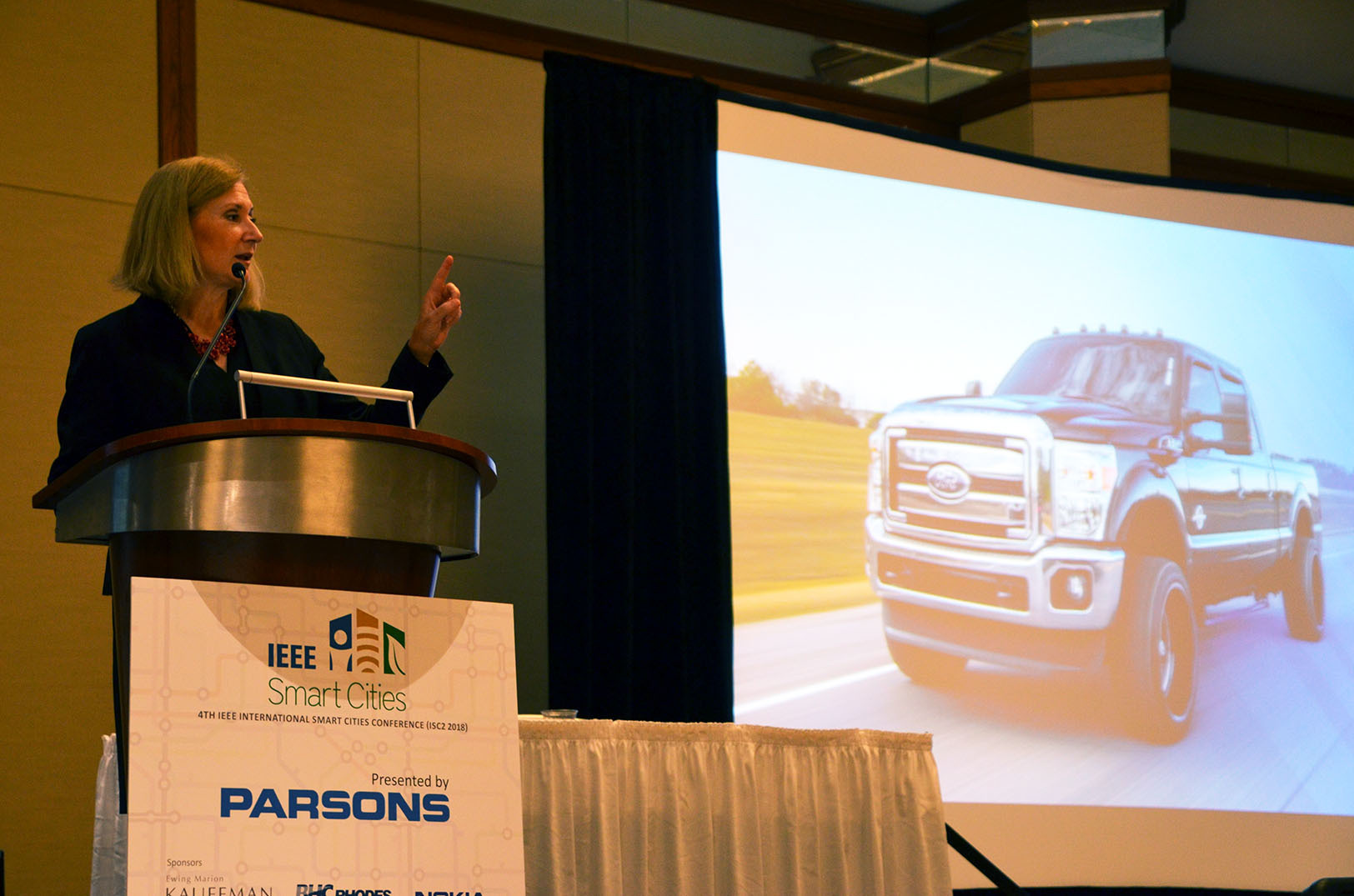
City streets filled with safer, automated or self-driving vehicles would come with an unexpected price tag: fewer organ donations because of reduced traffic fatalities, said Julie Lorenz, discussing the promise and paradox of evolving transportation technology.
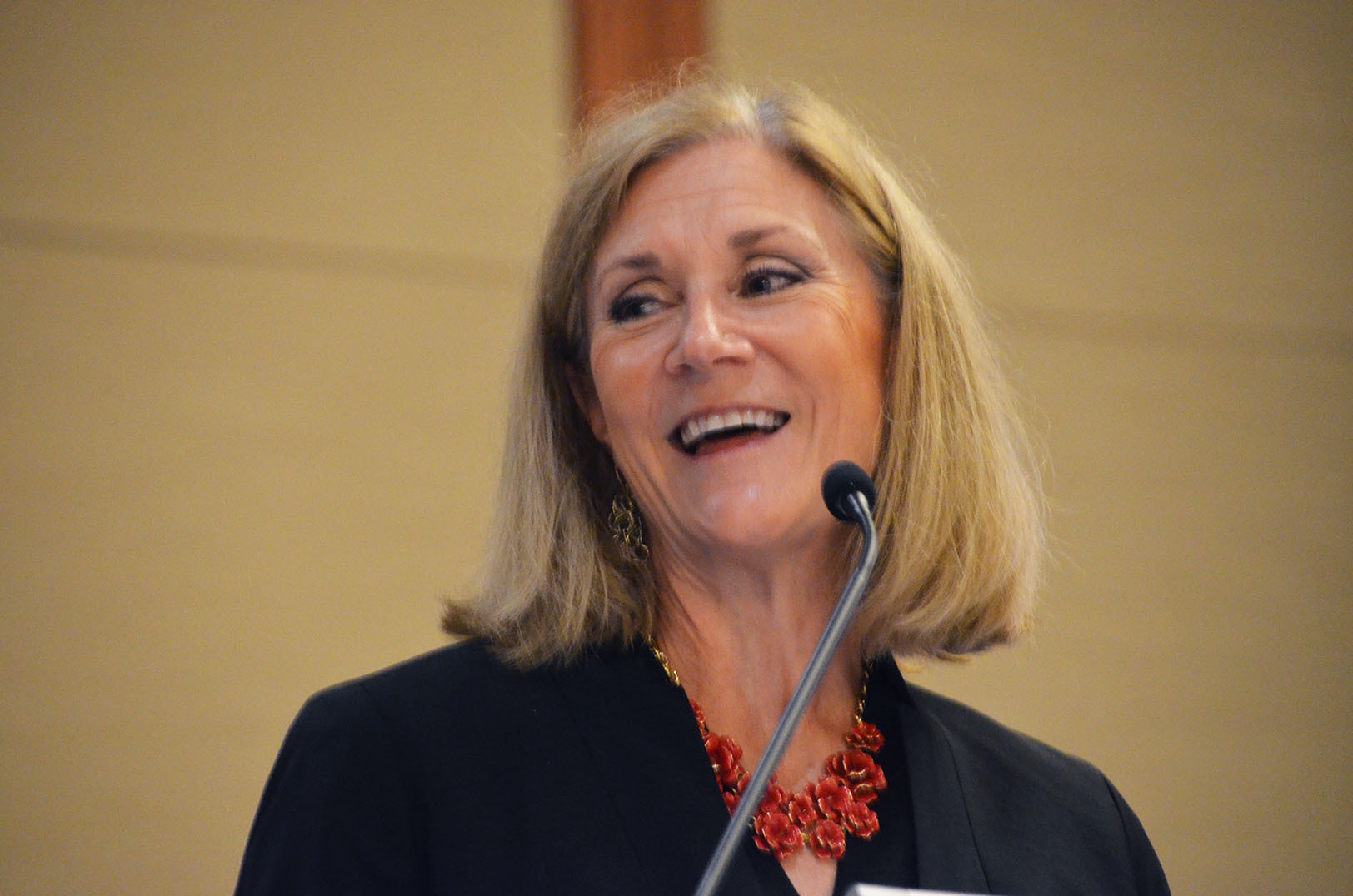
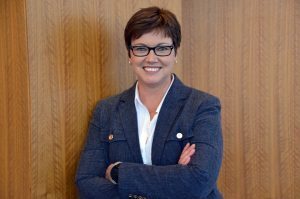
Julie Lorenz, Burns & McDonnell, IEEE International Smart Cities Conference
“If you look back in history, it can help you think about the future,” said Lorenz, strategic consultant for Kansas City-based engineering and architectural firm Burns & McDonnell.
Lorenz –– who also serves as co-chair of the Greater Kansas City Chamber of Commerce’s transportation Big 5 initiative –– presented her thoughts on autonomous vehicles this week to an audience at the IEEE International Smart Cities Conference in Kansas City.
“When elevators were introduced, folks were really afraid of them,” she said, drawing parallels to the changing face of transportation. “There were elevator operators because people didn’t understand how to just walk in and press a button, but also they liked the human element of somebody managing that.”
As self-driving cars roll into the market, consumers will be faced with a similar challenge: letting go of the human touch behind the wheel — whether that be themselves or a taxi or Uber driver.
“It’s emblematic of how we manage change in our lives — both at a professional level and on a personal level,” Lorenz said of the future. “There are many upsides to automated vehicles. There are some downsides too.”
Behind the scenes, tech jobs could develop to cushion the blow for taxi, bus and ride-sharing service drivers who find themselves put out of work by the developing technology.
The potentially negative implications of autonomous driving range from motion sickness to more congestion as self-driving vehicles more accurately pack into tight spaces on roadways, Lorenz cited.
As the landscape of transportation changes, autonomous driving will be adopted generationally, she said. Millennials are more likely to seamlessly adapt to autonomous driving than older generations, Lorenz added.
“The work that we do, it’s really about people. It’s about trying to make lives better,” she said, her note of encouragement to those who struggle to accept the idea of evolved transportation.
With an intricate infrastructure at play, there’s no definitive date on the horizon for when autonomous driving will park itself as a daily routine, Lorenz said.
Ever-accelerating, reliable driverless tech could cruise into reality as early as 2050, she hypothesized.

Featured Business

2018 Startups to Watch
stats here
Related Posts on Startland News
Startup leader exits Sickweather CEO role to lead East Coast tech incubator
Serial entrepreneur Graham Dodge is headed back to the East Coast to lead a tech incubator after exiting his position as CEO of Sickweather, one of the KC-based Sprint Accelerator’s early success stories. “I will be moving back to Maryland for MAGIC [the Mid-Atlantic Gigabit Innovation Collaboratory], but my goal is to stay connected with…

3 ways Kansas City’s corporate leaders can support local startups
Editor’s note: The opinions expressed in this commentary are the author’s alone. Martha Salinas is an executive with Overland Park-based MSTS. The world’s largest companies are often associated with high-rise offices and massive workforces. But behind most success stories are humble beginnings. Amazon, for example, was started in Jeff Bezos’ garage before becoming the most…
C2FO’s advice: Seek global capital, local startup partners (Top VC-Backed event photos)
Leawood-based fintech powerhouse C2FO didn’t raise nearly $300 million in capital by accident, nor without a strategy for selecting the right investors, Kerri Thurston told a crowd of founders, executives and investors gathered to celebrate the startups on Startland’s list of Kansas City’s Top Venture Capital-Backed Companies in 2019. “Focus on folks who can really…
KCultivator Q&A: Kathryn Golden risks it all to laugh at life (but roommates are no joke)
Editor’s note: KCultivators is a lighthearted profile series to highlight people who are meaningfully enriching Kansas City’s entrepreneurial ecosystem. The KCultivator Series is sponsored by Plexpod, a progressive coworking platform offering next generation workspace for entrepreneurs, startups, and growth-stage companies of all sizes. A spoonful of sugar couldn’t help Kathryn Golden stomach the oddities she…