

Self-driving cars deliver unexpected challenges, says Burns & McDonnell strategist
September 21, 2018 | Austin Barnes
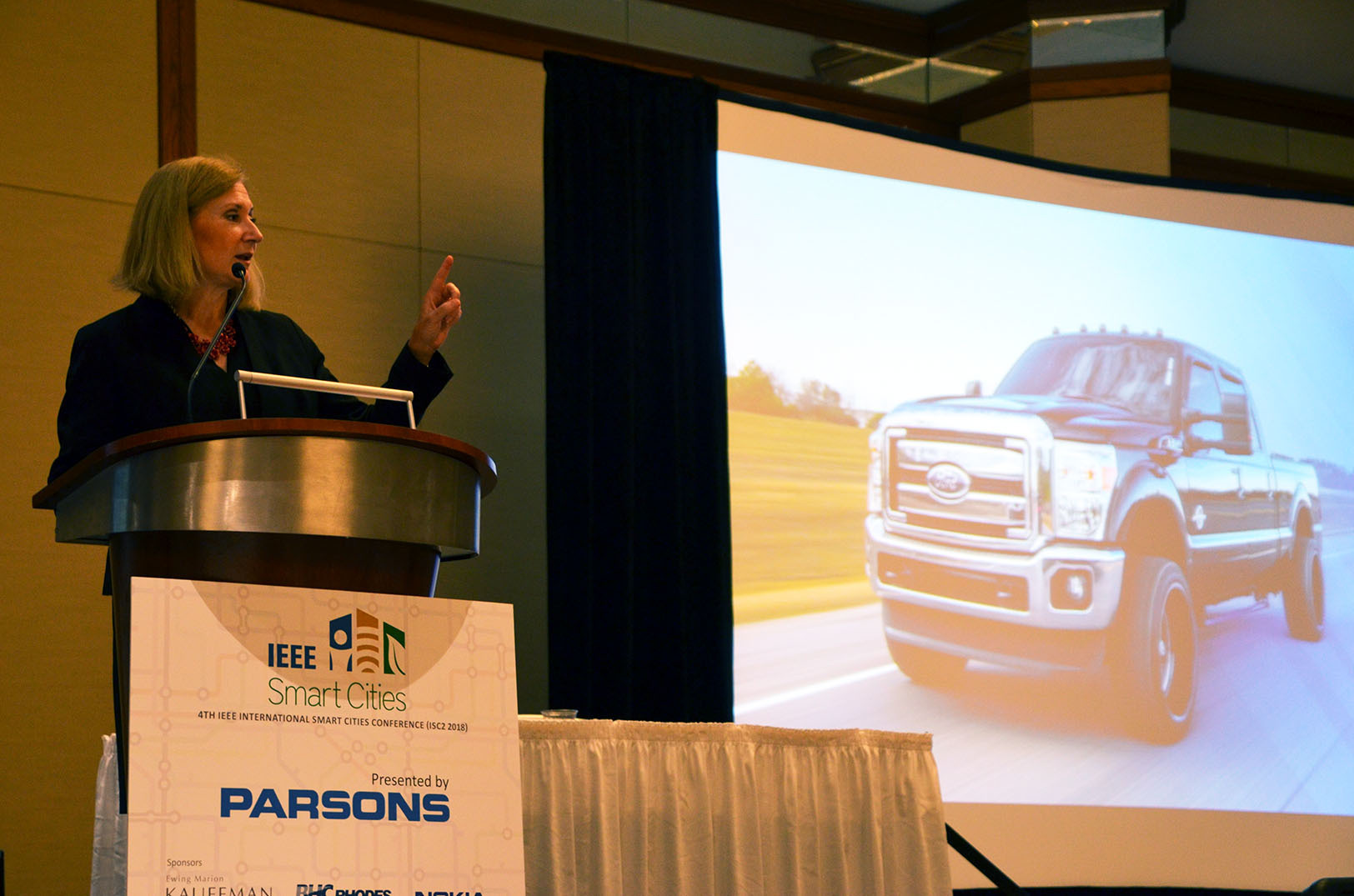
City streets filled with safer, automated or self-driving vehicles would come with an unexpected price tag: fewer organ donations because of reduced traffic fatalities, said Julie Lorenz, discussing the promise and paradox of evolving transportation technology.
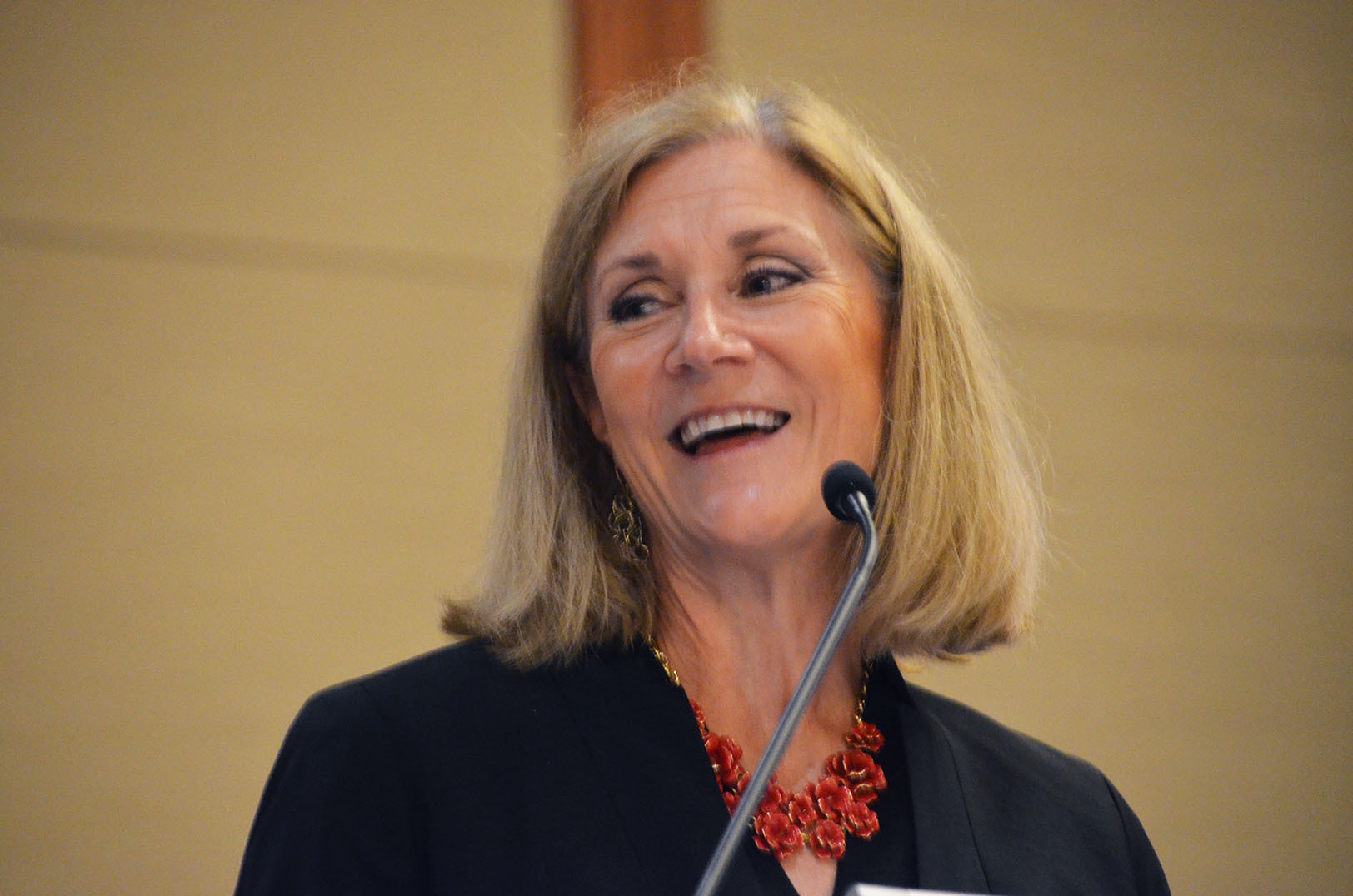
Julie Lorenz, Burns & McDonnell, IEEE International Smart Cities Conference
“If you look back in history, it can help you think about the future,” said Lorenz, strategic consultant for Kansas City-based engineering and architectural firm Burns & McDonnell.
Lorenz –– who also serves as co-chair of the Greater Kansas City Chamber of Commerce’s transportation Big 5 initiative –– presented her thoughts on autonomous vehicles this week to an audience at the IEEE International Smart Cities Conference in Kansas City.
“When elevators were introduced, folks were really afraid of them,” she said, drawing parallels to the changing face of transportation. “There were elevator operators because people didn’t understand how to just walk in and press a button, but also they liked the human element of somebody managing that.”
As self-driving cars roll into the market, consumers will be faced with a similar challenge: letting go of the human touch behind the wheel — whether that be themselves or a taxi or Uber driver.
“It’s emblematic of how we manage change in our lives — both at a professional level and on a personal level,” Lorenz said of the future. “There are many upsides to automated vehicles. There are some downsides too.”
Behind the scenes, tech jobs could develop to cushion the blow for taxi, bus and ride-sharing service drivers who find themselves put out of work by the developing technology.
The potentially negative implications of autonomous driving range from motion sickness to more congestion as self-driving vehicles more accurately pack into tight spaces on roadways, Lorenz cited.
As the landscape of transportation changes, autonomous driving will be adopted generationally, she said. Millennials are more likely to seamlessly adapt to autonomous driving than older generations, Lorenz added.
“The work that we do, it’s really about people. It’s about trying to make lives better,” she said, her note of encouragement to those who struggle to accept the idea of evolved transportation.
With an intricate infrastructure at play, there’s no definitive date on the horizon for when autonomous driving will park itself as a daily routine, Lorenz said.
Ever-accelerating, reliable driverless tech could cruise into reality as early as 2050, she hypothesized.

Featured Business

2018 Startups to Watch
stats here
Related Posts on Startland News
Better the next day: Halal street food thrives to-go with a simple recipe — optimism, good food and hungry neighbors
While countless local restaurants have struggled through pandemic-served challenges, business has been nothing short of amazing for Brookside Pakastani staple Chai Shai, said Aasma Tufail. “I cook simple food — and people love it so much. I am so blessed, business has been better than before,” said Tufail, who owns the restaurant alongside son, Kashif,…
A place to belong: Business model built to shatter intimidation lifted City Gym through COVID’s heaviest season yet
Ahead-of-the-curve thinking helped keep City Gym strong in the early days of COVID-19 when the weight of the pandemic dropped on people-focused industries. “We lost a fair amount of members — maybe they couldn’t financially afford it anymore, maybe they didn’t feel safe,” said Hailee Bland Walsh, founder and owner of City Gym in Waldo.…

New in KC: Why Jackie Nguyen hit the brakes on acting to open a mobile coffee cafe
Editor’s note: New in KC is an ongoing profile series that highlights newly relocated members of the Kansas City startup community, their reasons for a change of scenery, and what they’ve found so far in KC. Click here to read more New in KC profiles. Lifting the curtain on the region’s first Vietnamese coffee traveling cafe, Jackie Nguyen is…
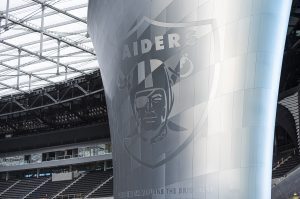
Dimensional Innovations’ 93-foot Raiders stadium torch could be world’s tallest 3D-printed structure
Kansas City burned brightly during “Monday Night Football” this week, sharing the spotlight as the Las Vegas Raiders notched an early season victory over the New Orleans Saints. Viewers watched Monday as the National Football League’s broadcast unveiled a closely-guarded secret: the completed Al Davis Memorial Torch — a 93-foot, 3D-printed structure built by Overland…