

Self-driving cars deliver unexpected challenges, says Burns & McDonnell strategist
September 21, 2018 | Austin Barnes
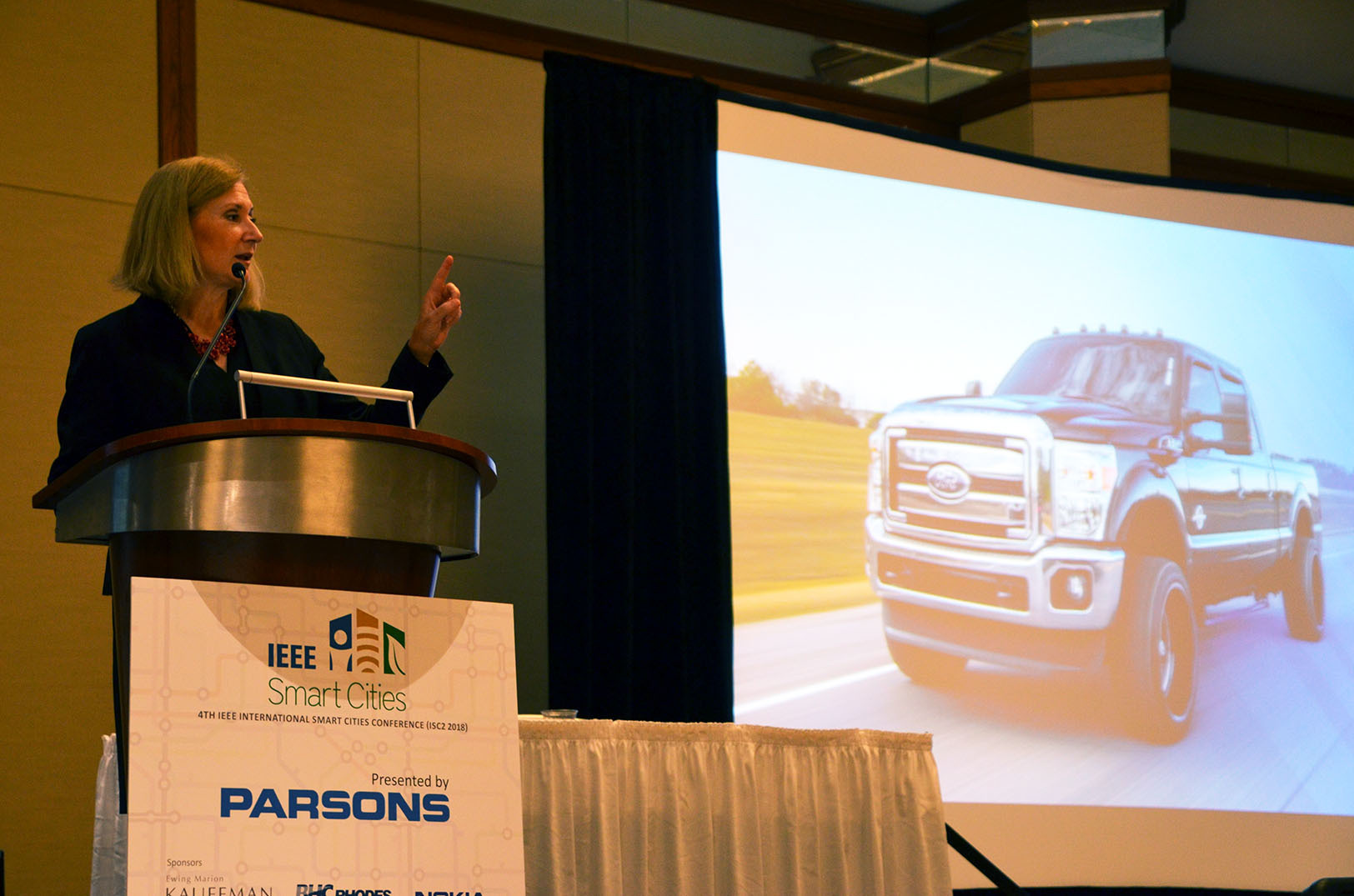
City streets filled with safer, automated or self-driving vehicles would come with an unexpected price tag: fewer organ donations because of reduced traffic fatalities, said Julie Lorenz, discussing the promise and paradox of evolving transportation technology.
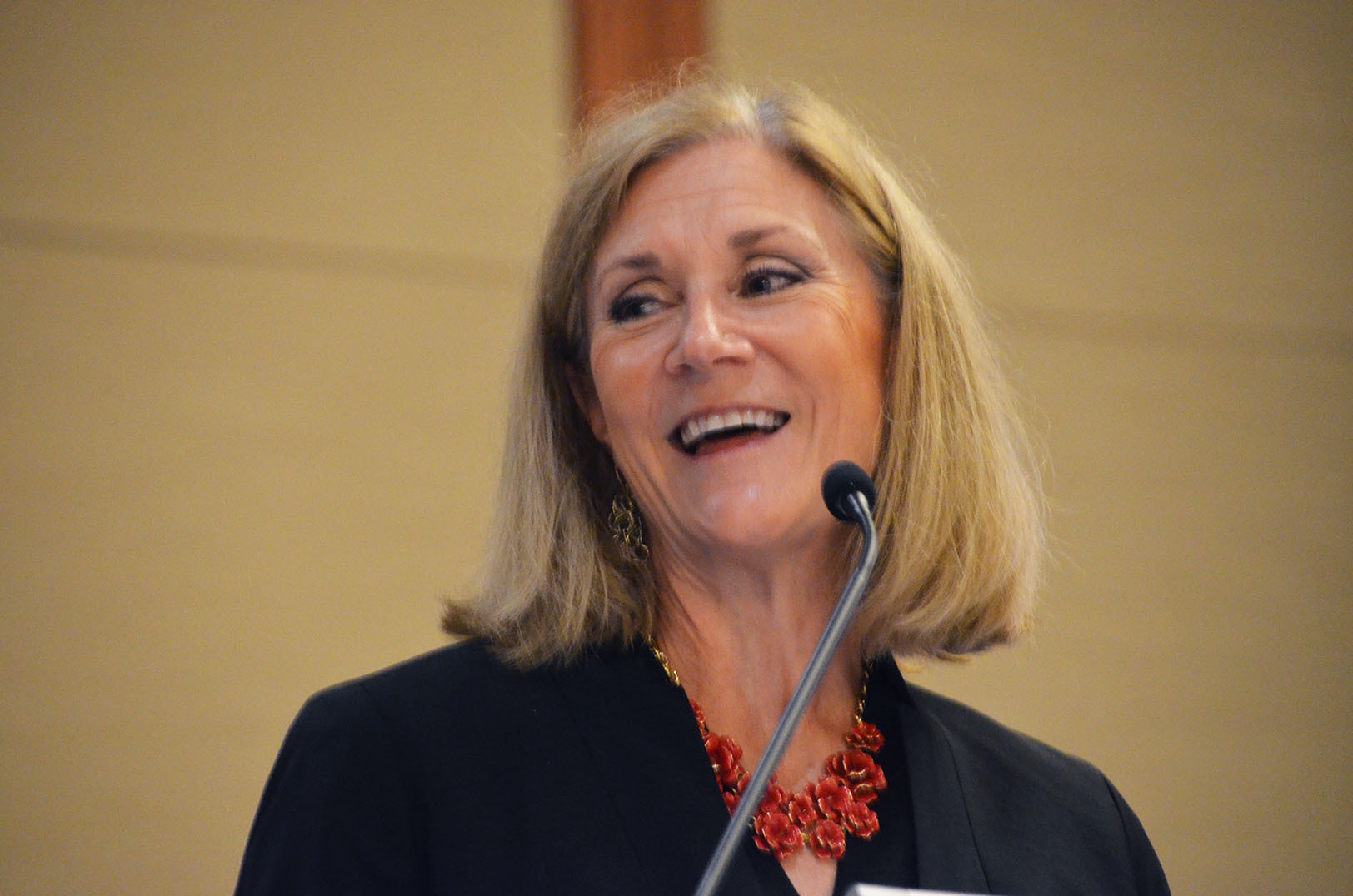
Julie Lorenz, Burns & McDonnell, IEEE International Smart Cities Conference
“If you look back in history, it can help you think about the future,” said Lorenz, strategic consultant for Kansas City-based engineering and architectural firm Burns & McDonnell.
Lorenz –– who also serves as co-chair of the Greater Kansas City Chamber of Commerce’s transportation Big 5 initiative –– presented her thoughts on autonomous vehicles this week to an audience at the IEEE International Smart Cities Conference in Kansas City.
“When elevators were introduced, folks were really afraid of them,” she said, drawing parallels to the changing face of transportation. “There were elevator operators because people didn’t understand how to just walk in and press a button, but also they liked the human element of somebody managing that.”
As self-driving cars roll into the market, consumers will be faced with a similar challenge: letting go of the human touch behind the wheel — whether that be themselves or a taxi or Uber driver.
“It’s emblematic of how we manage change in our lives — both at a professional level and on a personal level,” Lorenz said of the future. “There are many upsides to automated vehicles. There are some downsides too.”
Behind the scenes, tech jobs could develop to cushion the blow for taxi, bus and ride-sharing service drivers who find themselves put out of work by the developing technology.
The potentially negative implications of autonomous driving range from motion sickness to more congestion as self-driving vehicles more accurately pack into tight spaces on roadways, Lorenz cited.
As the landscape of transportation changes, autonomous driving will be adopted generationally, she said. Millennials are more likely to seamlessly adapt to autonomous driving than older generations, Lorenz added.
“The work that we do, it’s really about people. It’s about trying to make lives better,” she said, her note of encouragement to those who struggle to accept the idea of evolved transportation.
With an intricate infrastructure at play, there’s no definitive date on the horizon for when autonomous driving will park itself as a daily routine, Lorenz said.
Ever-accelerating, reliable driverless tech could cruise into reality as early as 2050, she hypothesized.

Featured Business

2018 Startups to Watch
stats here
Related Posts on Startland News
BLK + BRWN debuts KC’s first smart bookstore with a twist: ‘I wanted to be as Black as possible’
Kansas City’s newest Black woman-owned, brick-and-mortar bookstore in Midtown has opened its doors, but customers shouldn’t judge the operation by its cover, owner Cori Smith said, revealing an additional first for the metro that has heads and pages turning. “There’s a technological aspect paired with each book,” explained Smith, owner of BLK + BRWN — Kansas…
Why KCRise Fund chose a Lee’s Summit-built criminal justice smartphone app for its first lead investment
A Kansas City startup’s smartphone-enabled alternative to ankle monitors taps into a huge courts and corrections market — with the potential for tremendous cost savings and societal impact, said Darcy Howe. And that docket of benefits presents a unique opportunity for KCRise Fund, which this week announced its lead investment in Lee’s Summit-based eHawk, added…
Let’s Talk Black Business: You don’t need to be ‘the next Lebron’ — just succeed where others fell short
Editor’s note: The following story — spotlighting an Aug. 25 virtual event about challenges facing Black business owners — is sponsored by Let’s Talk Black Business and SCORE Community Strategic Alliance. Black entrepreneurship isn’t a one-size-fits-all experience, said Dom Green. “It is not cookie cutter, and it is so important to showcase the differences of the…
‘Sunshine Box’ inventor earns $25K prize in pitch competition for women-led social ventures
The woman behind a solar-paneled electric charging station built to overcome challenges found in developing nations earned the spotlight herself as Thursday’s big winner in the inaugural HI-HERImpact Kansas City pitch competition. Conner Hazelrigg, founder of 1773 Innovation Co. — the maker of the Sunshine Box — was awarded the contest’s $25,000 prize in the…