

Self-driving cars deliver unexpected challenges, says Burns & McDonnell strategist
September 21, 2018 | Austin Barnes
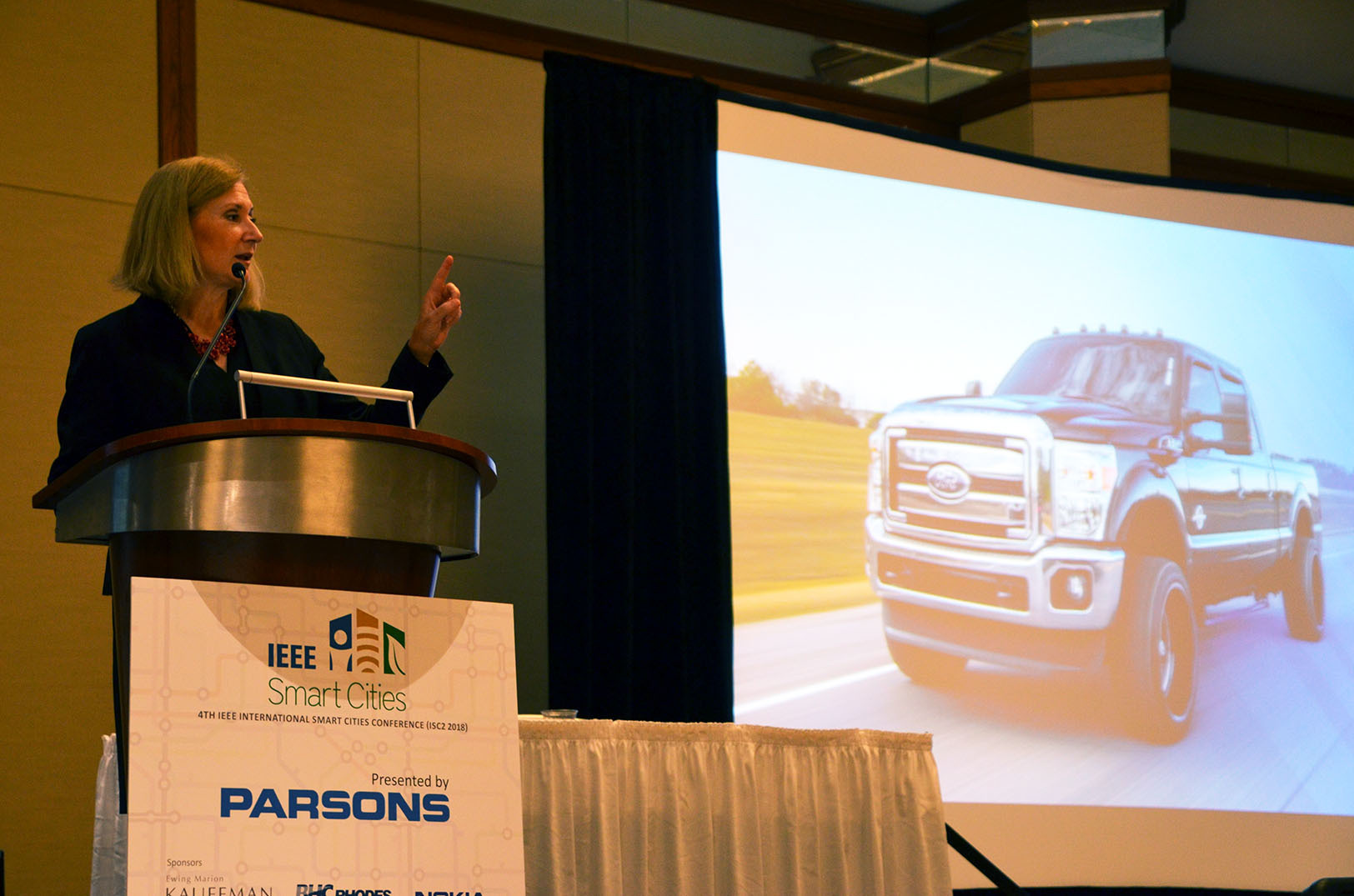
City streets filled with safer, automated or self-driving vehicles would come with an unexpected price tag: fewer organ donations because of reduced traffic fatalities, said Julie Lorenz, discussing the promise and paradox of evolving transportation technology.
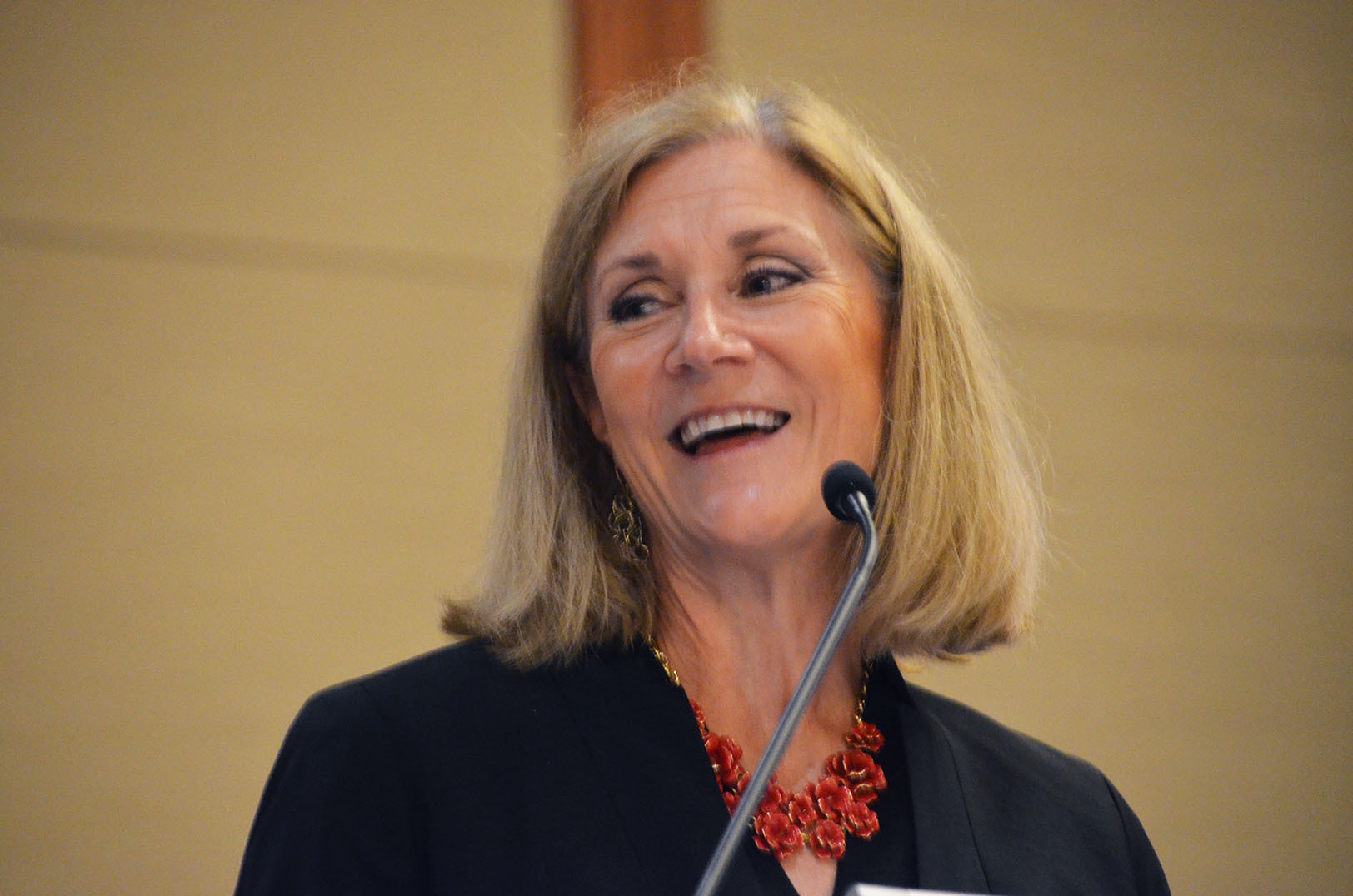
Julie Lorenz, Burns & McDonnell, IEEE International Smart Cities Conference
“If you look back in history, it can help you think about the future,” said Lorenz, strategic consultant for Kansas City-based engineering and architectural firm Burns & McDonnell.
Lorenz –– who also serves as co-chair of the Greater Kansas City Chamber of Commerce’s transportation Big 5 initiative –– presented her thoughts on autonomous vehicles this week to an audience at the IEEE International Smart Cities Conference in Kansas City.
“When elevators were introduced, folks were really afraid of them,” she said, drawing parallels to the changing face of transportation. “There were elevator operators because people didn’t understand how to just walk in and press a button, but also they liked the human element of somebody managing that.”
As self-driving cars roll into the market, consumers will be faced with a similar challenge: letting go of the human touch behind the wheel — whether that be themselves or a taxi or Uber driver.
“It’s emblematic of how we manage change in our lives — both at a professional level and on a personal level,” Lorenz said of the future. “There are many upsides to automated vehicles. There are some downsides too.”
Behind the scenes, tech jobs could develop to cushion the blow for taxi, bus and ride-sharing service drivers who find themselves put out of work by the developing technology.
The potentially negative implications of autonomous driving range from motion sickness to more congestion as self-driving vehicles more accurately pack into tight spaces on roadways, Lorenz cited.
As the landscape of transportation changes, autonomous driving will be adopted generationally, she said. Millennials are more likely to seamlessly adapt to autonomous driving than older generations, Lorenz added.
“The work that we do, it’s really about people. It’s about trying to make lives better,” she said, her note of encouragement to those who struggle to accept the idea of evolved transportation.
With an intricate infrastructure at play, there’s no definitive date on the horizon for when autonomous driving will park itself as a daily routine, Lorenz said.
Ever-accelerating, reliable driverless tech could cruise into reality as early as 2050, she hypothesized.

Featured Business

2018 Startups to Watch
stats here
Related Posts on Startland News

Blakk men are more than what you see on the 9 o’clock news, says members-only social club
Defining what it means to be a Black man is among the most important goals for a newly opened Midtown gentlemen’s club, Christina Williams explained, offering insight into what men of color are raised and called to be — but that society has often twisted into something unfair. “It has nothing to do with color. It’s…

Bodify joins Tulsa accelerator with $70K investment, ‘knocking down a lot of dominoes’
One of Kansas City’s most tenacious founders is in the midst of an intensive, six-month accelerator aimed at bringing her fashion tech startup to revenue without decreasing her ownership stake in the company. “Follow-on investment is nice, but you don’t have a company without revenue,” said Carlanda McKinney, founder and CEO of Bodify. “For me,…
Missouri angel tax credits? New grants? Show-Me State tech advocates researching next generation of incentives for entrepreneurs
The future of entrepreneurial support in Missouri could hinge on what those in the trenches say are the state’s biggest barriers to startup success, said Jack Scatizzi, announcing a new data-driven effort to reshape Missouri’s strategy for cultivating innovation. “The initiative will include quantitative and qualitative aspects that will be incorporated into a strategic plan…
Watch: Meet the band of local contractors behind the development of Troost Village
Editor’s note: The following story includes the second video in a four-part series taking a look under the hard hats at the Troost Village development, a $162 million project on Troost Avenue, the city’s longtime racial dividing line. Videos in this series are expected to debut on Startland News as the project unfolds. Click here…