

Self-driving cars deliver unexpected challenges, says Burns & McDonnell strategist
September 21, 2018 | Austin Barnes
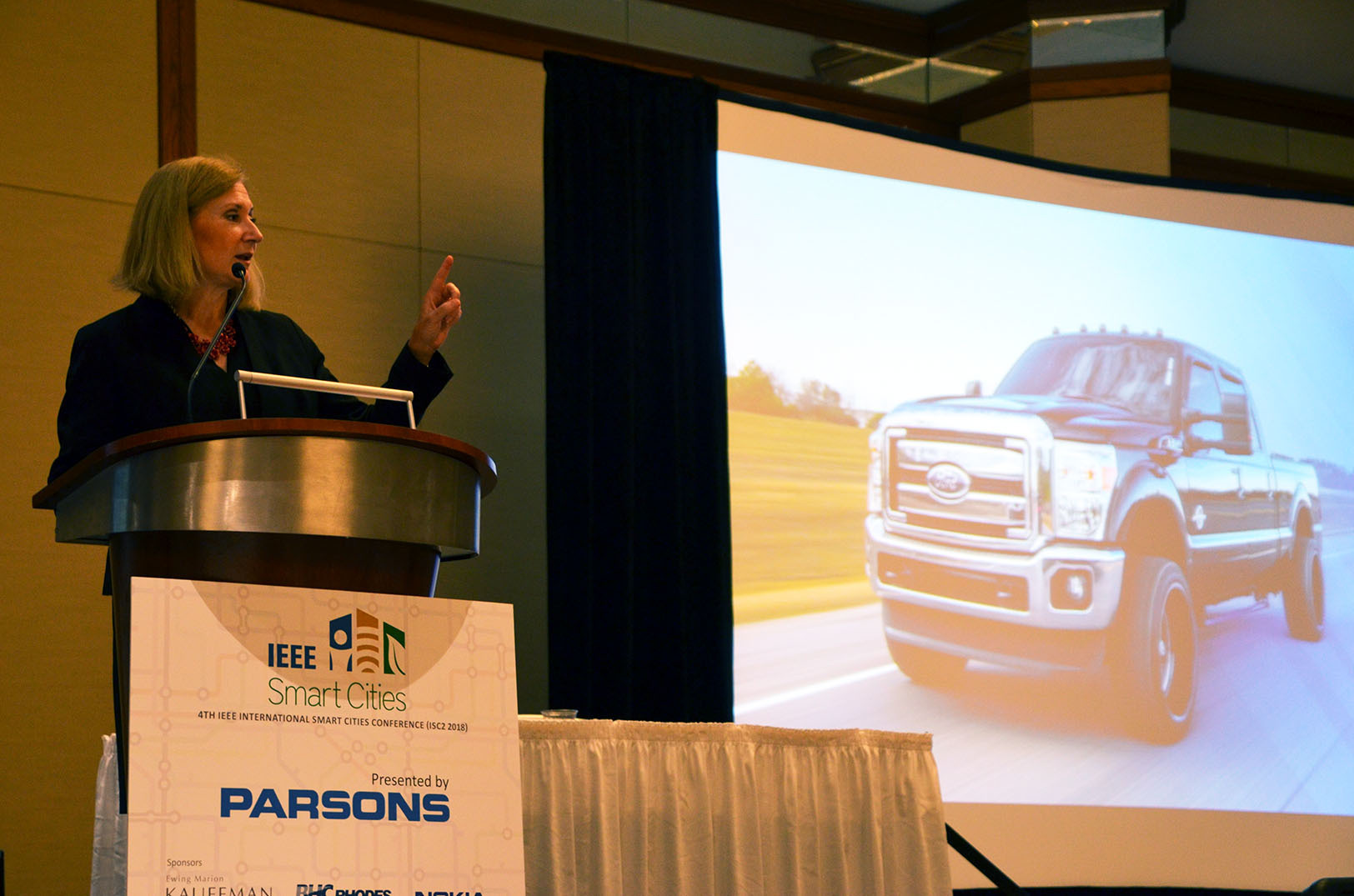
City streets filled with safer, automated or self-driving vehicles would come with an unexpected price tag: fewer organ donations because of reduced traffic fatalities, said Julie Lorenz, discussing the promise and paradox of evolving transportation technology.
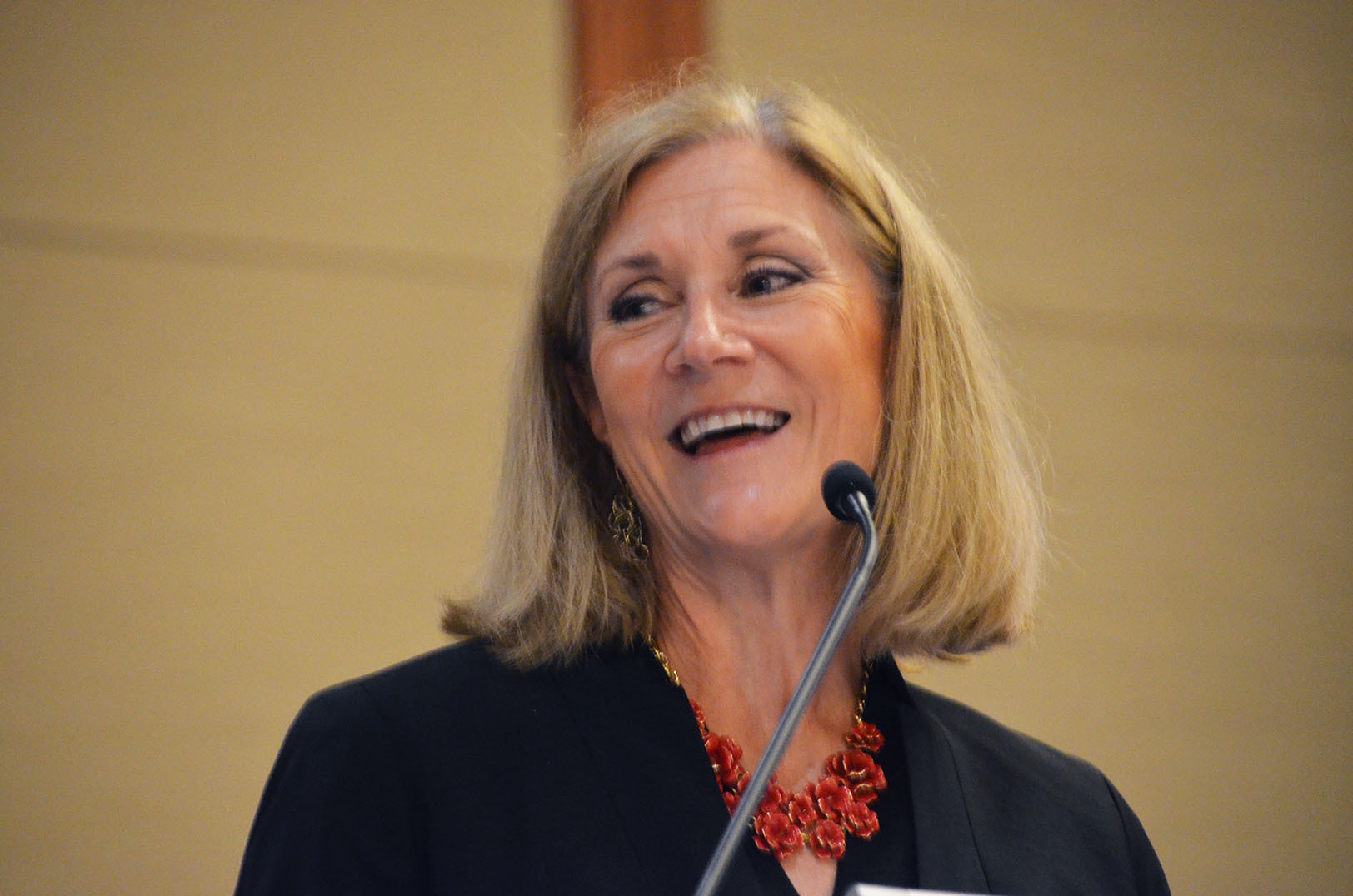
Julie Lorenz, Burns & McDonnell, IEEE International Smart Cities Conference
“If you look back in history, it can help you think about the future,” said Lorenz, strategic consultant for Kansas City-based engineering and architectural firm Burns & McDonnell.
Lorenz –– who also serves as co-chair of the Greater Kansas City Chamber of Commerce’s transportation Big 5 initiative –– presented her thoughts on autonomous vehicles this week to an audience at the IEEE International Smart Cities Conference in Kansas City.
“When elevators were introduced, folks were really afraid of them,” she said, drawing parallels to the changing face of transportation. “There were elevator operators because people didn’t understand how to just walk in and press a button, but also they liked the human element of somebody managing that.”
As self-driving cars roll into the market, consumers will be faced with a similar challenge: letting go of the human touch behind the wheel — whether that be themselves or a taxi or Uber driver.
“It’s emblematic of how we manage change in our lives — both at a professional level and on a personal level,” Lorenz said of the future. “There are many upsides to automated vehicles. There are some downsides too.”
Behind the scenes, tech jobs could develop to cushion the blow for taxi, bus and ride-sharing service drivers who find themselves put out of work by the developing technology.
The potentially negative implications of autonomous driving range from motion sickness to more congestion as self-driving vehicles more accurately pack into tight spaces on roadways, Lorenz cited.
As the landscape of transportation changes, autonomous driving will be adopted generationally, she said. Millennials are more likely to seamlessly adapt to autonomous driving than older generations, Lorenz added.
“The work that we do, it’s really about people. It’s about trying to make lives better,” she said, her note of encouragement to those who struggle to accept the idea of evolved transportation.
With an intricate infrastructure at play, there’s no definitive date on the horizon for when autonomous driving will park itself as a daily routine, Lorenz said.
Ever-accelerating, reliable driverless tech could cruise into reality as early as 2050, she hypothesized.

Featured Business

2018 Startups to Watch
stats here
Related Posts on Startland News

No soy tu chacha: How four Latinx moms (and 600+ of their closest friends) are cleaning up gender roles
Editor’s note: Veronica Alvidrez is a member of the education team at Startland, the parent organization of Startland News. This story, detailing Alvidrez’s business, paraMi, was produced independently by Startland News’ independent nonprofit newsroom. One year ago in the thick of the pandemic, Veronica Alvidrez felt like she was losing her voice. Not the literal one —…
Fund Me, KC: Maker of first girls wrestling shoe launches new feat — a pair for the champions
Startland News is continuing its “Fund Me, KC” series to highlight area entrepreneurs’ efforts to accelerate their businesses or lend a helping hand to others. This is an opportunity for business owners and innovators — like Kansas City’s Deb North and the newly launched Champion1 girls wrestling shoe — to share their crowdfunding stories and…
UMKC unveils innovation studio, inviting students, entrepreneurs to collaborate within $32M research center
In a hiring environment where college graduates are expected to possess honed skills for even entry-level positions, a state-of-the-art innovation studio in the heart of Kansas City allows students access to technology to actually build products within their chosen professions. “We have never had a facility like this — with the diversity of equipment and…
An absent-minded workplace gaffe, a nationwide Starbucks controversy; why the CEO ‘leadership jersey’ demands fearlessness on diversity, inclusion
Editor’s note: The following story is sponsored by Morgan Stanley, a New York-based multinational investment bank and financial services company, and is a follow-up to this summer’s “Nothing to Fear” virtual panel discussion on diversity and inclusion efforts. The conversation was led by Carla Harris, vice chairman and managing director at Morgan Stanley, with moderator Channa…