

Self-driving cars deliver unexpected challenges, says Burns & McDonnell strategist
September 21, 2018 | Austin Barnes
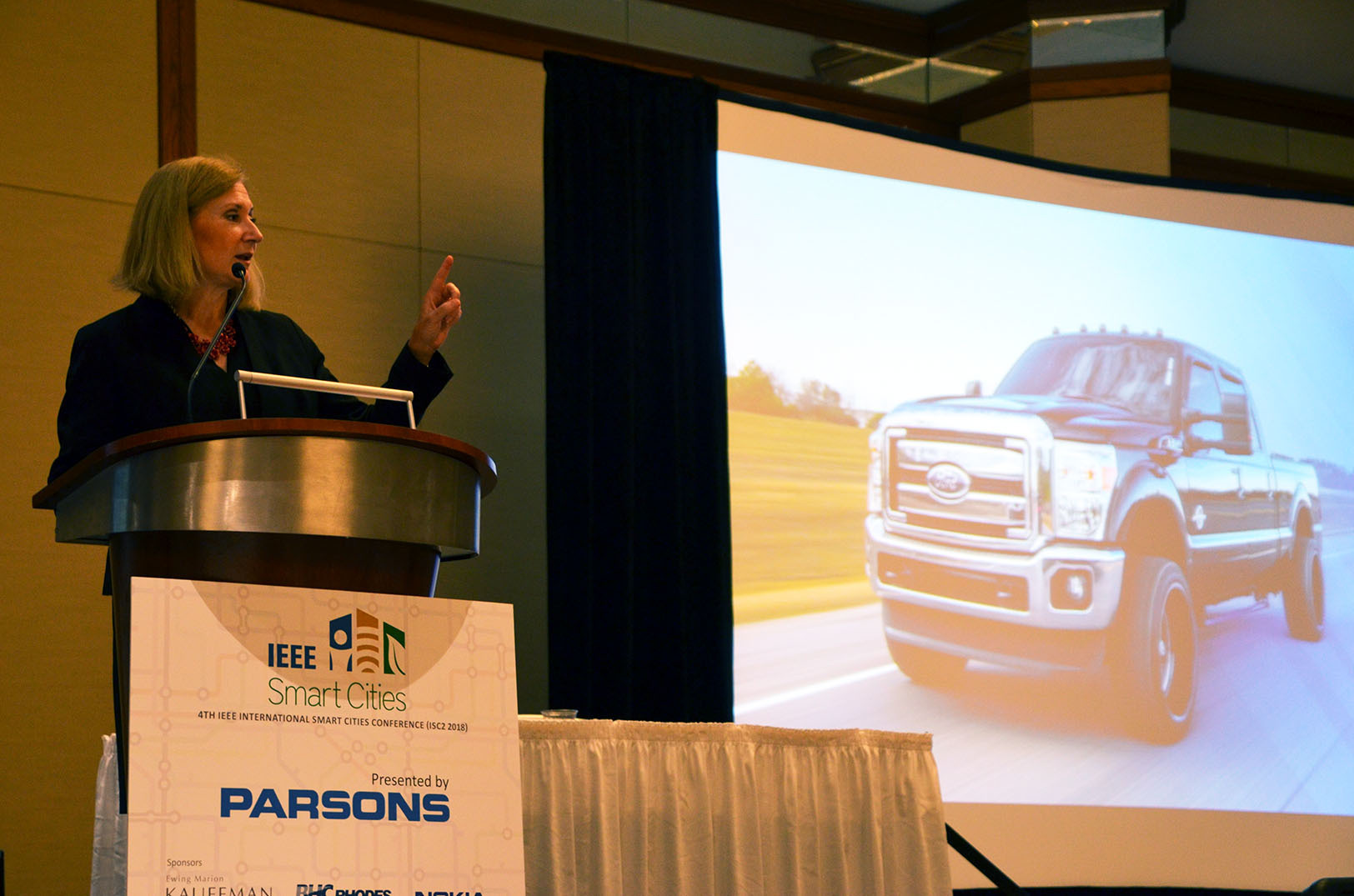
City streets filled with safer, automated or self-driving vehicles would come with an unexpected price tag: fewer organ donations because of reduced traffic fatalities, said Julie Lorenz, discussing the promise and paradox of evolving transportation technology.
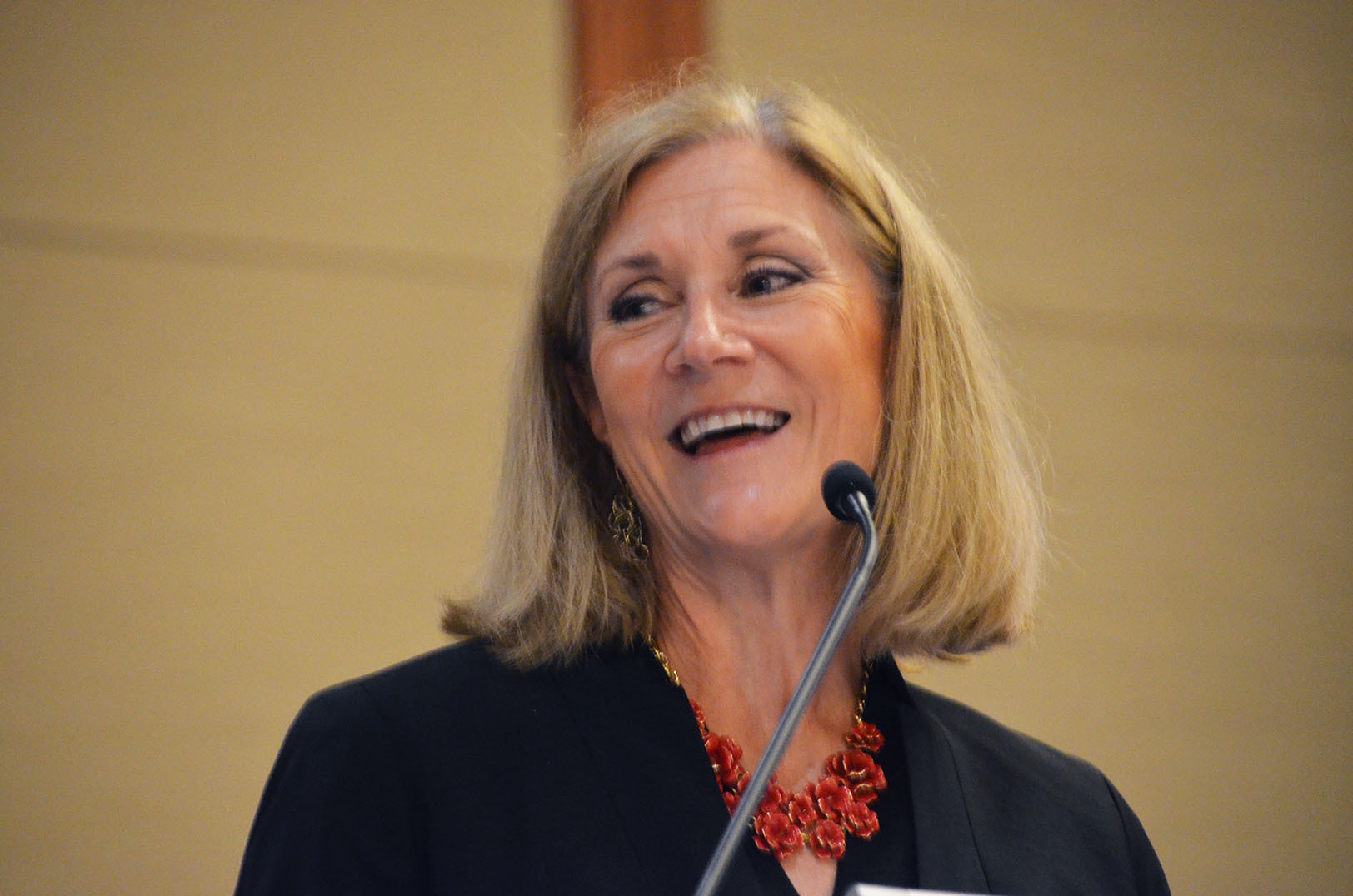
Julie Lorenz, Burns & McDonnell, IEEE International Smart Cities Conference
“If you look back in history, it can help you think about the future,” said Lorenz, strategic consultant for Kansas City-based engineering and architectural firm Burns & McDonnell.
Lorenz –– who also serves as co-chair of the Greater Kansas City Chamber of Commerce’s transportation Big 5 initiative –– presented her thoughts on autonomous vehicles this week to an audience at the IEEE International Smart Cities Conference in Kansas City.
“When elevators were introduced, folks were really afraid of them,” she said, drawing parallels to the changing face of transportation. “There were elevator operators because people didn’t understand how to just walk in and press a button, but also they liked the human element of somebody managing that.”
As self-driving cars roll into the market, consumers will be faced with a similar challenge: letting go of the human touch behind the wheel — whether that be themselves or a taxi or Uber driver.
“It’s emblematic of how we manage change in our lives — both at a professional level and on a personal level,” Lorenz said of the future. “There are many upsides to automated vehicles. There are some downsides too.”
Behind the scenes, tech jobs could develop to cushion the blow for taxi, bus and ride-sharing service drivers who find themselves put out of work by the developing technology.
The potentially negative implications of autonomous driving range from motion sickness to more congestion as self-driving vehicles more accurately pack into tight spaces on roadways, Lorenz cited.
As the landscape of transportation changes, autonomous driving will be adopted generationally, she said. Millennials are more likely to seamlessly adapt to autonomous driving than older generations, Lorenz added.
“The work that we do, it’s really about people. It’s about trying to make lives better,” she said, her note of encouragement to those who struggle to accept the idea of evolved transportation.
With an intricate infrastructure at play, there’s no definitive date on the horizon for when autonomous driving will park itself as a daily routine, Lorenz said.
Ever-accelerating, reliable driverless tech could cruise into reality as early as 2050, she hypothesized.

Featured Business

2018 Startups to Watch
stats here
Related Posts on Startland News
New nonprofit surprises first-ever $20K ‘changemaker’ grant winner; he already knows how he’ll invest it
Pastor Adrian Roberson was initially too stunned to speak Thursday when he was awarded a $20,000 grant for KC United — a youth sports initiative he co-founded in 2009 with his wife Vicky. But the duo already have plans for the money: spreading blessings. “I want to say, ‘Glory to God,’” Adrian Roberson shared moments after…
Survey: 97 percent of KC businesses expect same or better performance in 2022
Business executives in the Kansas City metro expressed optimism about what lies ahead in 2022 — despite lingering pandemic-related challenges, according to newly released local and regional survey results from First Business Bank. “There are always multiple dimensions of the story to consider, but 2021 was a big improvement over 2020, and with employment increasing across…
Teen STEM lab championed by Travis Kelce goes zero-carbon solar with boost from KC corporate leaders
A solar installation at Operation Breakthrough’s new Ignition Lab on Troost Avenue is expected to power the STEM space for students — made possible by a team of Kansas City corporate leaders committed to clean energy and support for the Travis Kelce-backed complex. Mounted atop a central canopy at the site, the project is set to…
For the good of the hive: KC pediatrician builds buzz with award-winning urban bee farm effort
No one is more surprised by pediatrician Marion Pierson’s newfound career success as a beekeeper and advocate for urban apiaries, the Prairie Village doctor said. “I didn’t know this would happen,” Pierson said. “In fact, I’m scared of bugs. My husband asked me how I was going to start a bee farm. When I’m in…