

Self-driving cars deliver unexpected challenges, says Burns & McDonnell strategist
September 21, 2018 | Austin Barnes
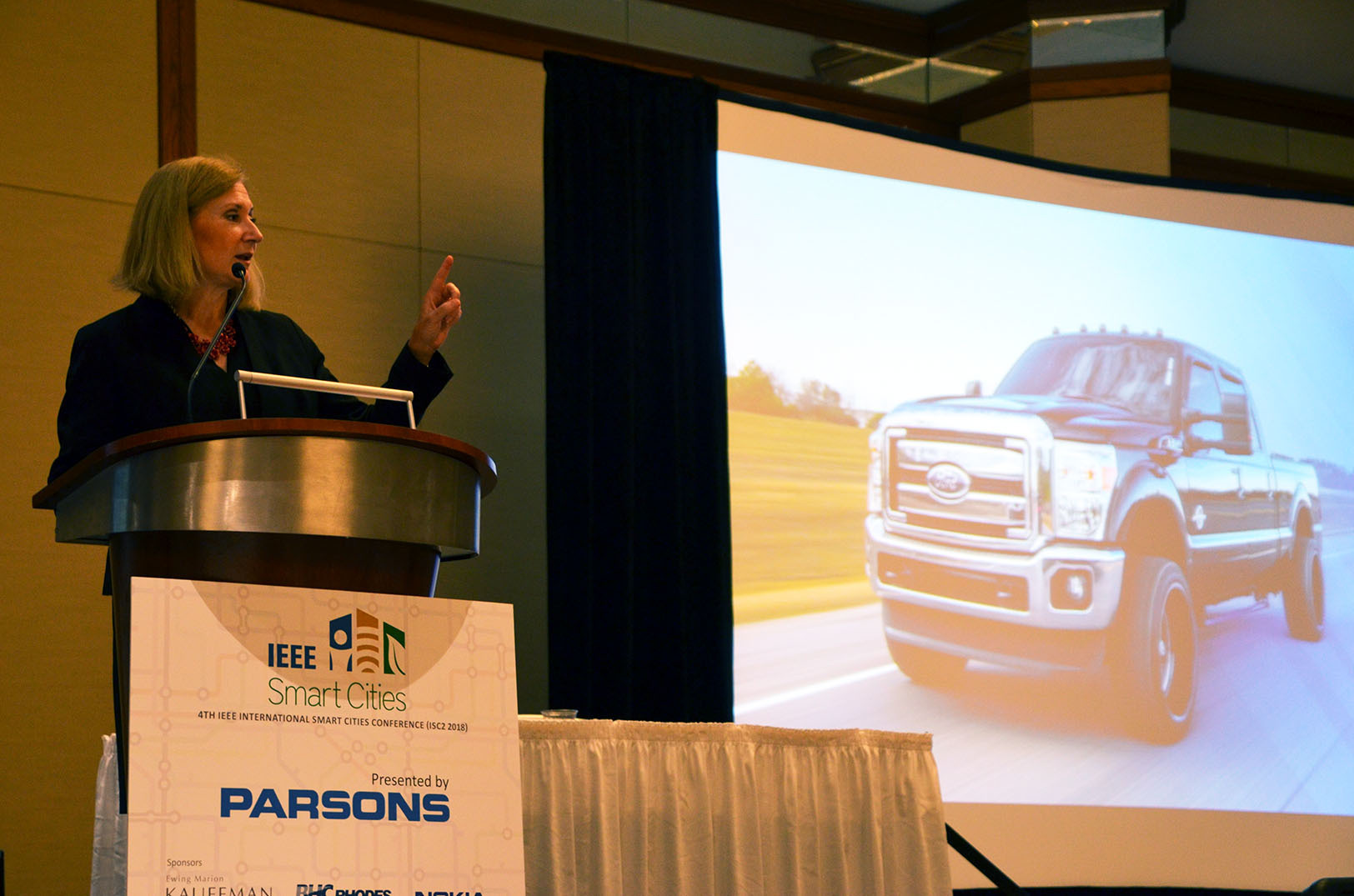
City streets filled with safer, automated or self-driving vehicles would come with an unexpected price tag: fewer organ donations because of reduced traffic fatalities, said Julie Lorenz, discussing the promise and paradox of evolving transportation technology.
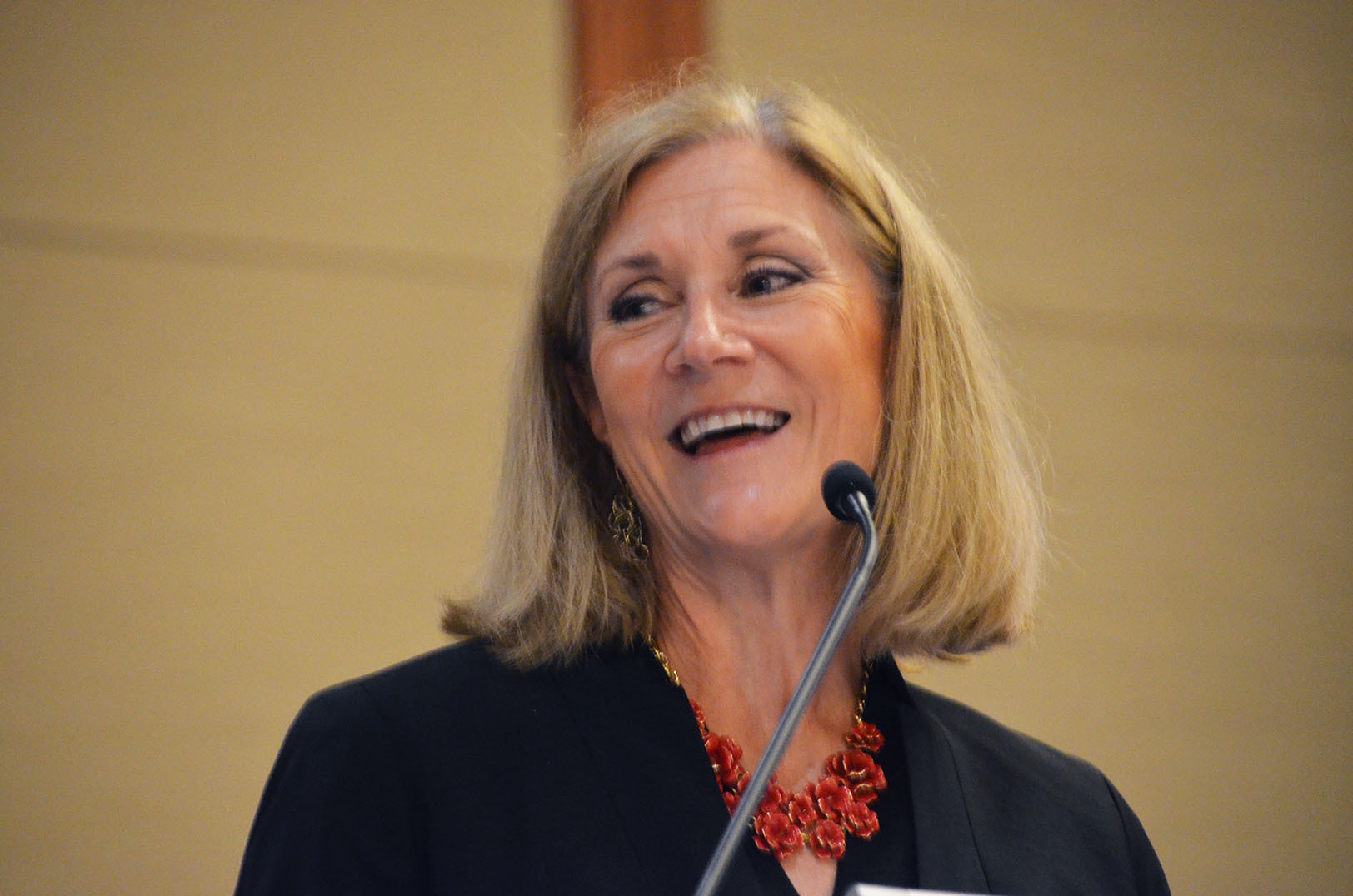
Julie Lorenz, Burns & McDonnell, IEEE International Smart Cities Conference
“If you look back in history, it can help you think about the future,” said Lorenz, strategic consultant for Kansas City-based engineering and architectural firm Burns & McDonnell.
Lorenz –– who also serves as co-chair of the Greater Kansas City Chamber of Commerce’s transportation Big 5 initiative –– presented her thoughts on autonomous vehicles this week to an audience at the IEEE International Smart Cities Conference in Kansas City.
“When elevators were introduced, folks were really afraid of them,” she said, drawing parallels to the changing face of transportation. “There were elevator operators because people didn’t understand how to just walk in and press a button, but also they liked the human element of somebody managing that.”
As self-driving cars roll into the market, consumers will be faced with a similar challenge: letting go of the human touch behind the wheel — whether that be themselves or a taxi or Uber driver.
“It’s emblematic of how we manage change in our lives — both at a professional level and on a personal level,” Lorenz said of the future. “There are many upsides to automated vehicles. There are some downsides too.”
Behind the scenes, tech jobs could develop to cushion the blow for taxi, bus and ride-sharing service drivers who find themselves put out of work by the developing technology.
The potentially negative implications of autonomous driving range from motion sickness to more congestion as self-driving vehicles more accurately pack into tight spaces on roadways, Lorenz cited.
As the landscape of transportation changes, autonomous driving will be adopted generationally, she said. Millennials are more likely to seamlessly adapt to autonomous driving than older generations, Lorenz added.
“The work that we do, it’s really about people. It’s about trying to make lives better,” she said, her note of encouragement to those who struggle to accept the idea of evolved transportation.
With an intricate infrastructure at play, there’s no definitive date on the horizon for when autonomous driving will park itself as a daily routine, Lorenz said.
Ever-accelerating, reliable driverless tech could cruise into reality as early as 2050, she hypothesized.

Featured Business

2018 Startups to Watch
stats here
Related Posts on Startland News

Faking it ’til you make it might be why you have imposter syndrome (Holistic Hustle)
Kharissa Forte is a writer, certified health coach, and columnist for Startland News. For more of her self-care tips on how to keep your cup full, visit graceandgrind.co. I’m not one to get caught up in the hoop-lah of celebrity crushes, but if there’s anyone who I #WCW it’s my Pisces twin Rihanna. (I mean,…

First bite of Tyler Shane: This spicy new pairing with Westport favorite Café Corazón has cacao lovers going nuts
‘I want people to sit down and really have a moment with their chocolate’ When Tyler Shane bites into a piece of chocolate, all of her senses come alive to fully indulge in the experience. “Food, for me, is almost like a religious experience,” she said. After spending seven years at Christopher Elbow Chocolates, the…
Wichita support org for startups lands nearly $1M in funding — including $300K in Kauffman backing
Startland News’ Startup Road Trip series explores innovative and uncommon ideas finding success in rural America and Midwestern startup hubs outside the Kansas City metro. This series is possible thanks to the Ewing Marion Kauffman Foundation, which leads a collaborative, nationwide effort to identify and remove large and small barriers to new business creation. New…

DC-based lobbying group for entrepreneurs names former Pipeline leader as new leader
A fresh face joining the helm of a leading lobbying organization for entrepreneurs is expected to bring Midwest perspective and representation to the fight to create more jobs through the innovation economy. Joni Cobb, the founding president and CEO of Pipeline Entrepreneurs — a Kansas City, Kansas-based network of startup founders now led by executive…