

Self-driving cars deliver unexpected challenges, says Burns & McDonnell strategist
September 21, 2018 | Austin Barnes
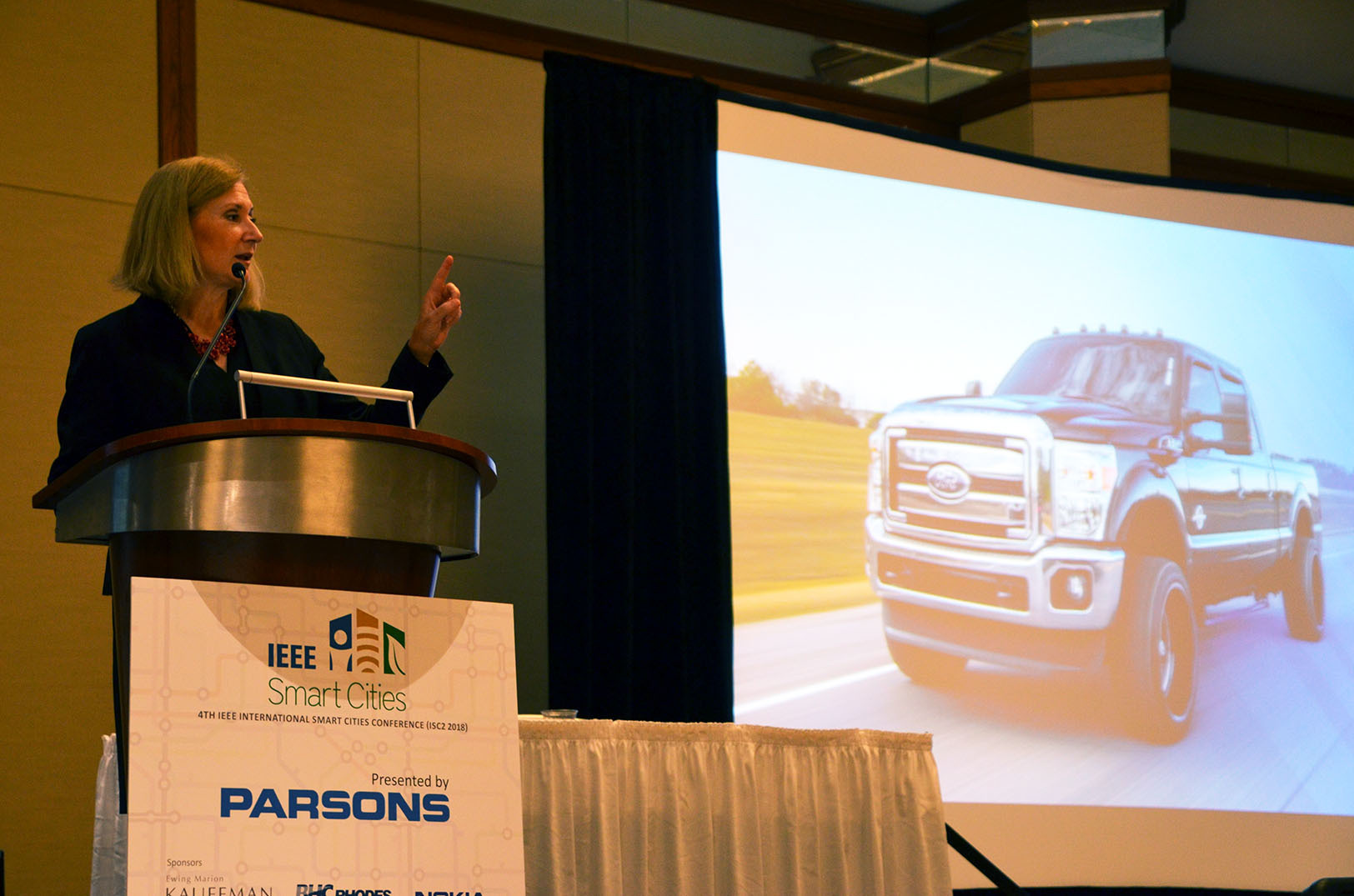
City streets filled with safer, automated or self-driving vehicles would come with an unexpected price tag: fewer organ donations because of reduced traffic fatalities, said Julie Lorenz, discussing the promise and paradox of evolving transportation technology.
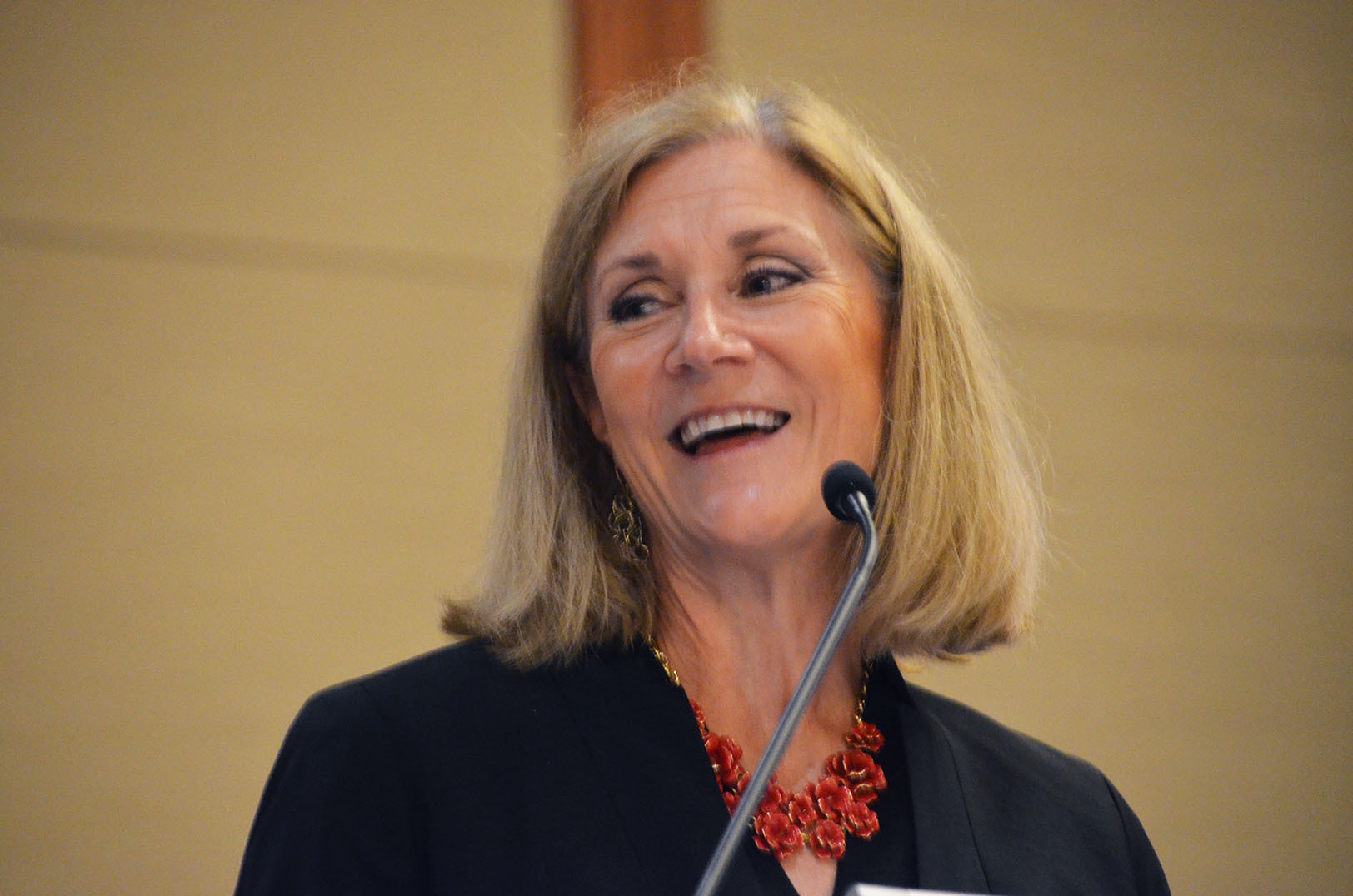
Julie Lorenz, Burns & McDonnell, IEEE International Smart Cities Conference
“If you look back in history, it can help you think about the future,” said Lorenz, strategic consultant for Kansas City-based engineering and architectural firm Burns & McDonnell.
Lorenz –– who also serves as co-chair of the Greater Kansas City Chamber of Commerce’s transportation Big 5 initiative –– presented her thoughts on autonomous vehicles this week to an audience at the IEEE International Smart Cities Conference in Kansas City.
“When elevators were introduced, folks were really afraid of them,” she said, drawing parallels to the changing face of transportation. “There were elevator operators because people didn’t understand how to just walk in and press a button, but also they liked the human element of somebody managing that.”
As self-driving cars roll into the market, consumers will be faced with a similar challenge: letting go of the human touch behind the wheel — whether that be themselves or a taxi or Uber driver.
“It’s emblematic of how we manage change in our lives — both at a professional level and on a personal level,” Lorenz said of the future. “There are many upsides to automated vehicles. There are some downsides too.”
Behind the scenes, tech jobs could develop to cushion the blow for taxi, bus and ride-sharing service drivers who find themselves put out of work by the developing technology.
The potentially negative implications of autonomous driving range from motion sickness to more congestion as self-driving vehicles more accurately pack into tight spaces on roadways, Lorenz cited.
As the landscape of transportation changes, autonomous driving will be adopted generationally, she said. Millennials are more likely to seamlessly adapt to autonomous driving than older generations, Lorenz added.
“The work that we do, it’s really about people. It’s about trying to make lives better,” she said, her note of encouragement to those who struggle to accept the idea of evolved transportation.
With an intricate infrastructure at play, there’s no definitive date on the horizon for when autonomous driving will park itself as a daily routine, Lorenz said.
Ever-accelerating, reliable driverless tech could cruise into reality as early as 2050, she hypothesized.

Featured Business

2018 Startups to Watch
stats here
Related Posts on Startland News

Fresh start: Selfie studio goes mobile, reimagining its FOMO factory as a custom experience
Fresh Factory KC is evolving, founder India Wells-Carter shared, embracing change as she re-evaluates where and how her camera-ready venture can help shine the brightest light on Kansas City. After a year and a half in its brick-and-mortar location at the Zona Rosa shopping center, Fresh Factory KC has uprooted and gone mobile, bringing the…
They’re not trying to die(t); how this mother-daughter influencer duo teaches spice of life after weight loss surgery
A support system after weight loss surgery is essential, shared Kiley Williams-Bowls and Linda Donaldson. After both underwent bariatric surgery, the Kansas City mother-daughter duo behind BariGirls have set out to help others who’ve experienced the procedure maintain healthy habits. “We discovered that there are hundreds of thousands of people that have had weight loss…
HERImpact awards $50K: Prize money expected to help pop-up scale into its own space
Editor’s note: 1863 Ventures is an advertiser with Startland News, though this report was produced independently by the nonprofit newsroom. Tirza Design allows consumers to support cause-based brands and survivors of human trafficking, exploitation, and other forms of abuse, detailed Nikkie Affholter, noting her venture also meets the need of bringing dignified employment to women who’ve escaped…
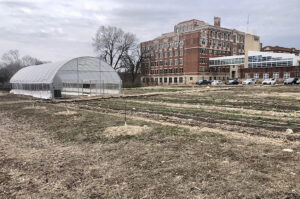
City OKs plan to replace urban farm near Plexpod in Midtown with 100-unit Park 39 apartment project
Editor’s note: The following story was originally published by CityScene KC, an online news source focused on Greater Downtown Kansas City. Click here to read the original story or here to sign up for the weekly CityScene KC email review. The City Plan Commission narrowly endorsed a planned apartment project that would replace the Cultivate KC urban farm in…