

Self-driving cars deliver unexpected challenges, says Burns & McDonnell strategist
September 21, 2018 | Austin Barnes
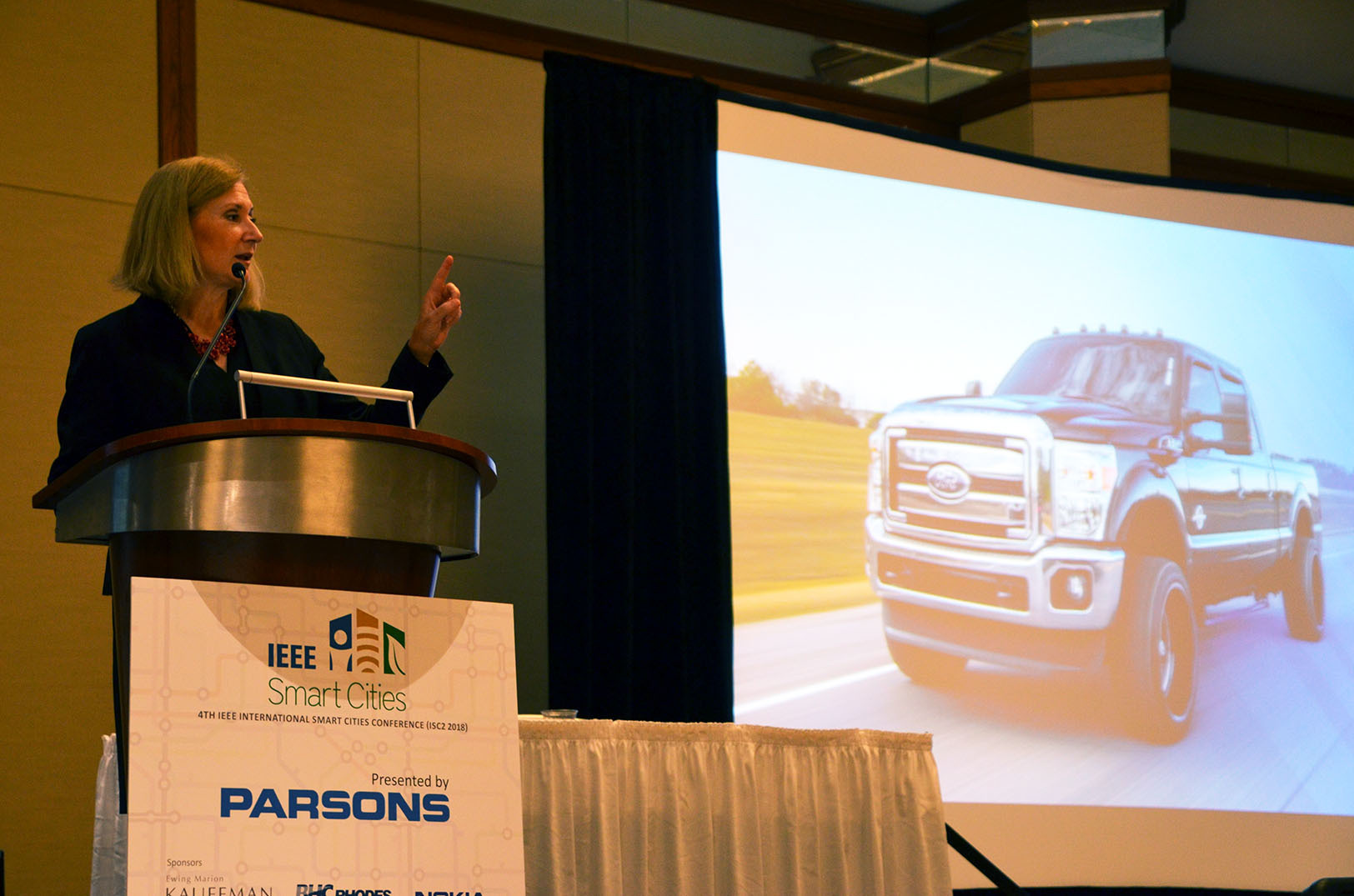
City streets filled with safer, automated or self-driving vehicles would come with an unexpected price tag: fewer organ donations because of reduced traffic fatalities, said Julie Lorenz, discussing the promise and paradox of evolving transportation technology.
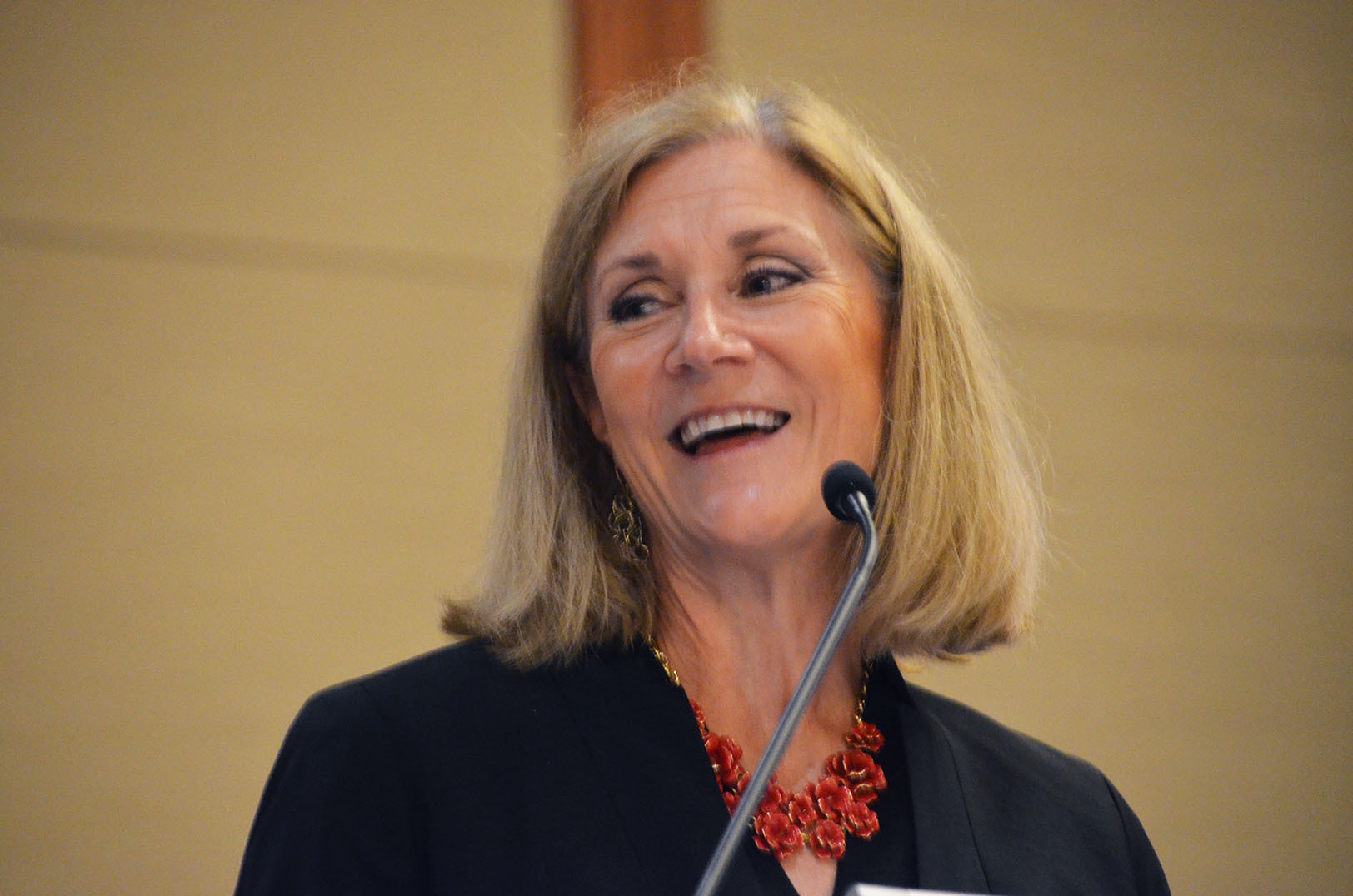
Julie Lorenz, Burns & McDonnell, IEEE International Smart Cities Conference
“If you look back in history, it can help you think about the future,” said Lorenz, strategic consultant for Kansas City-based engineering and architectural firm Burns & McDonnell.
Lorenz –– who also serves as co-chair of the Greater Kansas City Chamber of Commerce’s transportation Big 5 initiative –– presented her thoughts on autonomous vehicles this week to an audience at the IEEE International Smart Cities Conference in Kansas City.
“When elevators were introduced, folks were really afraid of them,” she said, drawing parallels to the changing face of transportation. “There were elevator operators because people didn’t understand how to just walk in and press a button, but also they liked the human element of somebody managing that.”
As self-driving cars roll into the market, consumers will be faced with a similar challenge: letting go of the human touch behind the wheel — whether that be themselves or a taxi or Uber driver.
“It’s emblematic of how we manage change in our lives — both at a professional level and on a personal level,” Lorenz said of the future. “There are many upsides to automated vehicles. There are some downsides too.”
Behind the scenes, tech jobs could develop to cushion the blow for taxi, bus and ride-sharing service drivers who find themselves put out of work by the developing technology.
The potentially negative implications of autonomous driving range from motion sickness to more congestion as self-driving vehicles more accurately pack into tight spaces on roadways, Lorenz cited.
As the landscape of transportation changes, autonomous driving will be adopted generationally, she said. Millennials are more likely to seamlessly adapt to autonomous driving than older generations, Lorenz added.
“The work that we do, it’s really about people. It’s about trying to make lives better,” she said, her note of encouragement to those who struggle to accept the idea of evolved transportation.
With an intricate infrastructure at play, there’s no definitive date on the horizon for when autonomous driving will park itself as a daily routine, Lorenz said.
Ever-accelerating, reliable driverless tech could cruise into reality as early as 2050, she hypothesized.

Featured Business

2018 Startups to Watch
stats here
Related Posts on Startland News

CPKC Stadium, Rabbit hOle named to TIME magazine’s list of ‘World’s Greatest Places’
Two recently opened Kansas City attractions were announced today among 100 extraordinary destinations to visit; named to TIME’s list of the World’s Greatest Places. TIME’s annual feature includes CPKC Stadium, home to the KC Current and the first stadium in the world purpose-built for a women’s professional team, and The Rabbit hOle, a North Kansas…
Inside ProX’s hands-on, how-to guide for students entering the workforce (and the business payoff)
When ProX is at its best, the collaborative internship program provides as much value to Kansas City employers as it does to the high school students who’ve invested prime summer vacation time into the real-world learning opportunity, business owners said. “The students did a really good job, it’s like getting a free consultation from a…
Royals give go-ahead to face-scan ballpark entry; here’s how to get in with one look
The Kansas City Royals are stepping up to the plate with a walk-off upgrade to the ballpark entry process: MLB’s Go-Ahead Entry system. The technology uses facial authentication to let fans breeze into Kauffman Stadium without having to scan their mobile tickets. MLB launched its pilot program with the Philadelphia Phillies in 2023; now the…
These leaders reinvest in other women’s success; a statewide nonprofit says they define the ‘Greater Missouri Woman’
This year’s Greater Missouri Leadership Foundation Women of the Year roster has a distinctly Kansas City flavor. Three of the four honorees at Wednesday’s luncheon event at CPKC Stadium are Kansas City women who lead within their industries and community. The list of awards and recipients includes: Civic Leader of the Year — Dr. DeAngela…