

Self-driving cars deliver unexpected challenges, says Burns & McDonnell strategist
September 21, 2018 | Austin Barnes
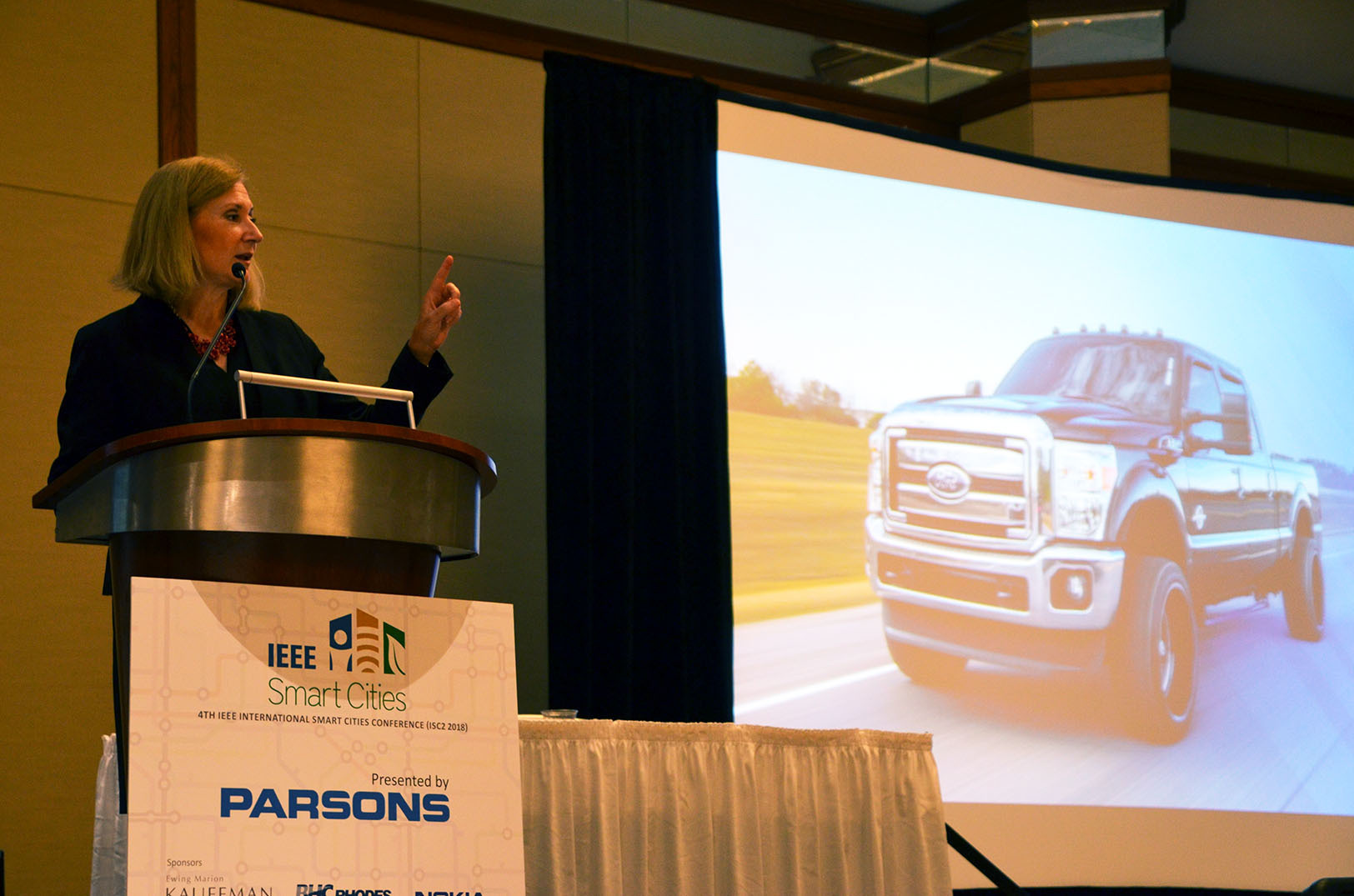
City streets filled with safer, automated or self-driving vehicles would come with an unexpected price tag: fewer organ donations because of reduced traffic fatalities, said Julie Lorenz, discussing the promise and paradox of evolving transportation technology.
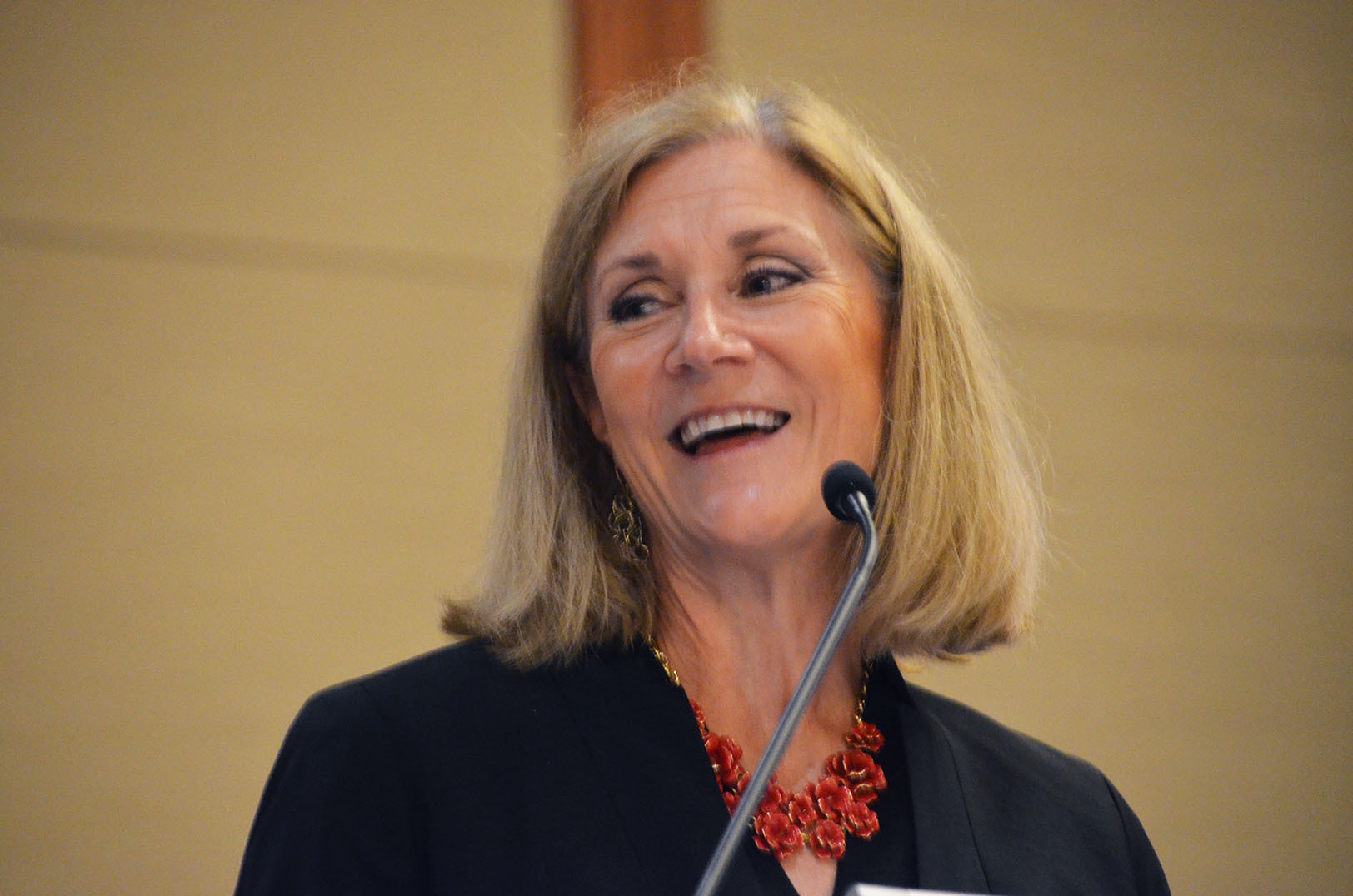
Julie Lorenz, Burns & McDonnell, IEEE International Smart Cities Conference
“If you look back in history, it can help you think about the future,” said Lorenz, strategic consultant for Kansas City-based engineering and architectural firm Burns & McDonnell.
Lorenz –– who also serves as co-chair of the Greater Kansas City Chamber of Commerce’s transportation Big 5 initiative –– presented her thoughts on autonomous vehicles this week to an audience at the IEEE International Smart Cities Conference in Kansas City.
“When elevators were introduced, folks were really afraid of them,” she said, drawing parallels to the changing face of transportation. “There were elevator operators because people didn’t understand how to just walk in and press a button, but also they liked the human element of somebody managing that.”
As self-driving cars roll into the market, consumers will be faced with a similar challenge: letting go of the human touch behind the wheel — whether that be themselves or a taxi or Uber driver.
“It’s emblematic of how we manage change in our lives — both at a professional level and on a personal level,” Lorenz said of the future. “There are many upsides to automated vehicles. There are some downsides too.”
Behind the scenes, tech jobs could develop to cushion the blow for taxi, bus and ride-sharing service drivers who find themselves put out of work by the developing technology.
The potentially negative implications of autonomous driving range from motion sickness to more congestion as self-driving vehicles more accurately pack into tight spaces on roadways, Lorenz cited.
As the landscape of transportation changes, autonomous driving will be adopted generationally, she said. Millennials are more likely to seamlessly adapt to autonomous driving than older generations, Lorenz added.
“The work that we do, it’s really about people. It’s about trying to make lives better,” she said, her note of encouragement to those who struggle to accept the idea of evolved transportation.
With an intricate infrastructure at play, there’s no definitive date on the horizon for when autonomous driving will park itself as a daily routine, Lorenz said.
Ever-accelerating, reliable driverless tech could cruise into reality as early as 2050, she hypothesized.

Featured Business

2018 Startups to Watch
stats here
Related Posts on Startland News

Let’s eat out: KCMO wants more outdoor dining; new grants program pays for restaurant upgrades
Outdoor dining’s economic impact outlasted the pandemic, said Mayor Quinton Lucas. A new push to boost KCMO businesses — with the backing of city tourism dollars — is expected to help local restaurants, coffee shops, and bars embrace the opportunity, he said. His goal: Make outdoor dining spaces even more attractive to visitors and hometown…

Resilience pays off as retail incubator opens doors; Meet the first featured founders at PHKC
Launching a retail incubator in Midtown Kansas City — a physical space targeted for overlooked and under-resourced entrepreneurs — The Porter House KC faced many of the same challenges as emerging small businesses, said Miranda Schultz, but ultimately the effort made it to opening day. “It’s been nice to go through our own trial and…
Pitch prize puts founders closer to building their utopia; How KCMO is backing entrepreneurs who do the right thing
Hearing the personal reasons behind judges’ support for her business at the “Do The Right Thing” social impact pitch competition provides much-needed validation for Utopia Point, said Shereese Hameed-Muhammad. The business — launched by Patricia McCreary and Hameed-Muhammad to redesign the geriatric and disabled care community in Kansas City and beyond — was the overwhelming favorite…
Lawmakers announce $500K federal grant for KC BioHub, tout region’s job creation, innovation
Kansas City’s “top-notch” research capabilities and talented workforce prove the region is ready to lead the country in innovation, said Sharice Davids, revealing news that the local Tech Hubs initiative would receive another $500,000 in federal funding. The award for the Kansas City Inclusive Biologics and Biomanufacturing Tech Hub (KC BioHub) comes less than a…