

Second Edison Spaces flexible office site designed for uncertainty of startup life
September 19, 2018 | Tommy Felts
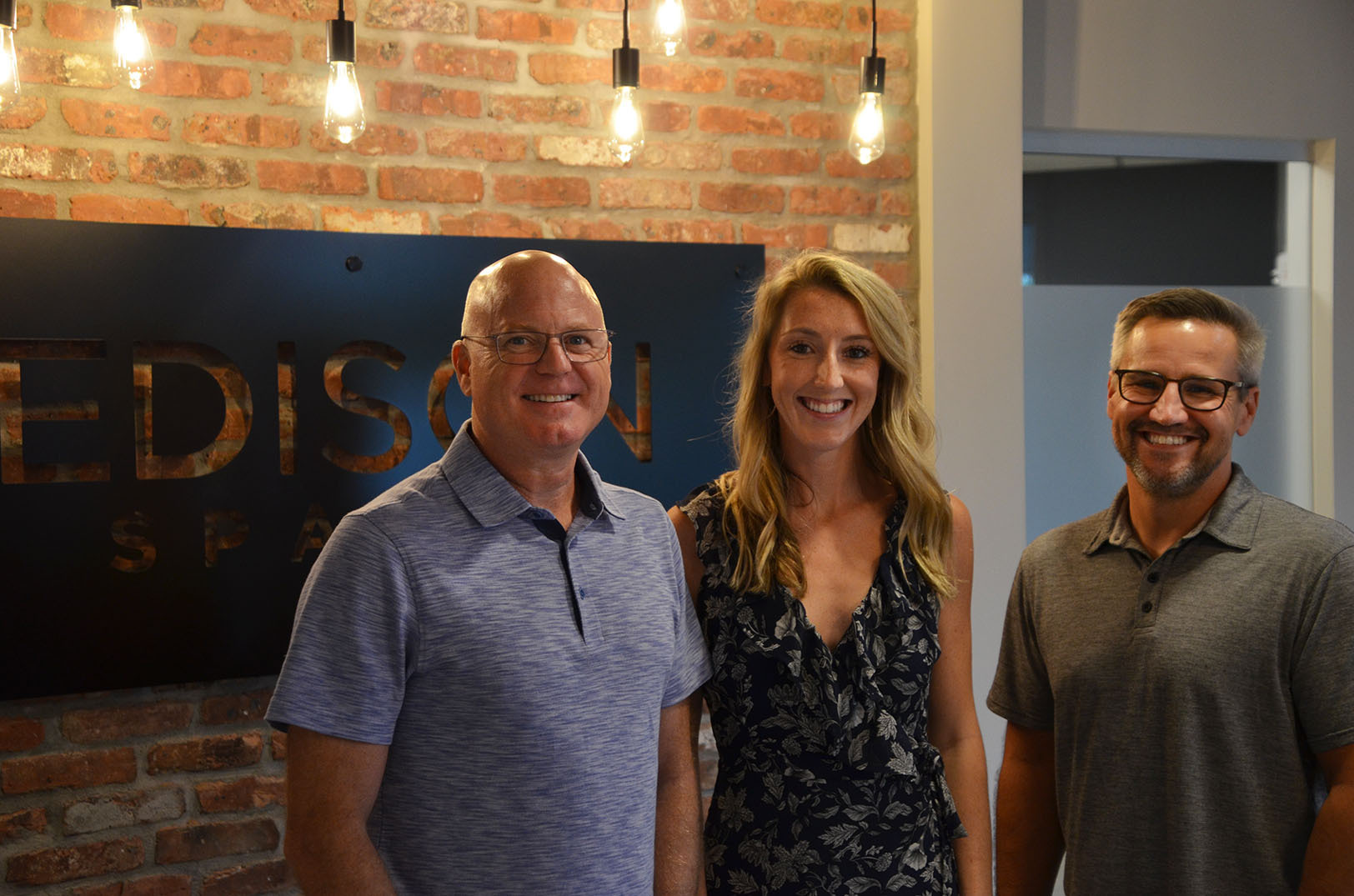
Growing a startup is risky enough, said Matt Druten, co-founder of Edison Spaces — entrepreneurs shouldn’t have to worry about finding and maintaining an office.
“Changes are unexpected. Nobody really knows where their company is going to be in six months,” he said. “Is my startup going to double in size? Is it going to die? You just don’t know.”
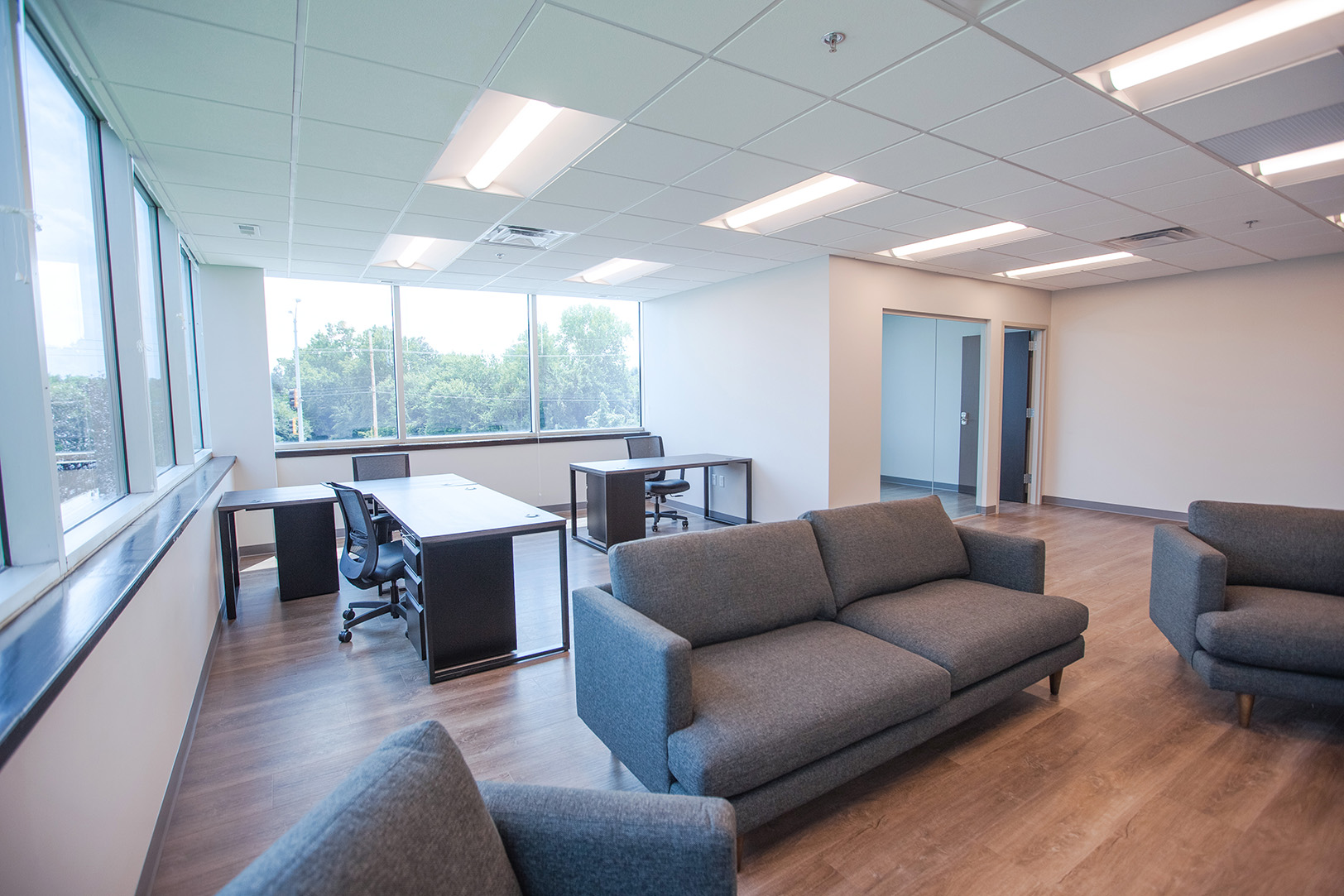
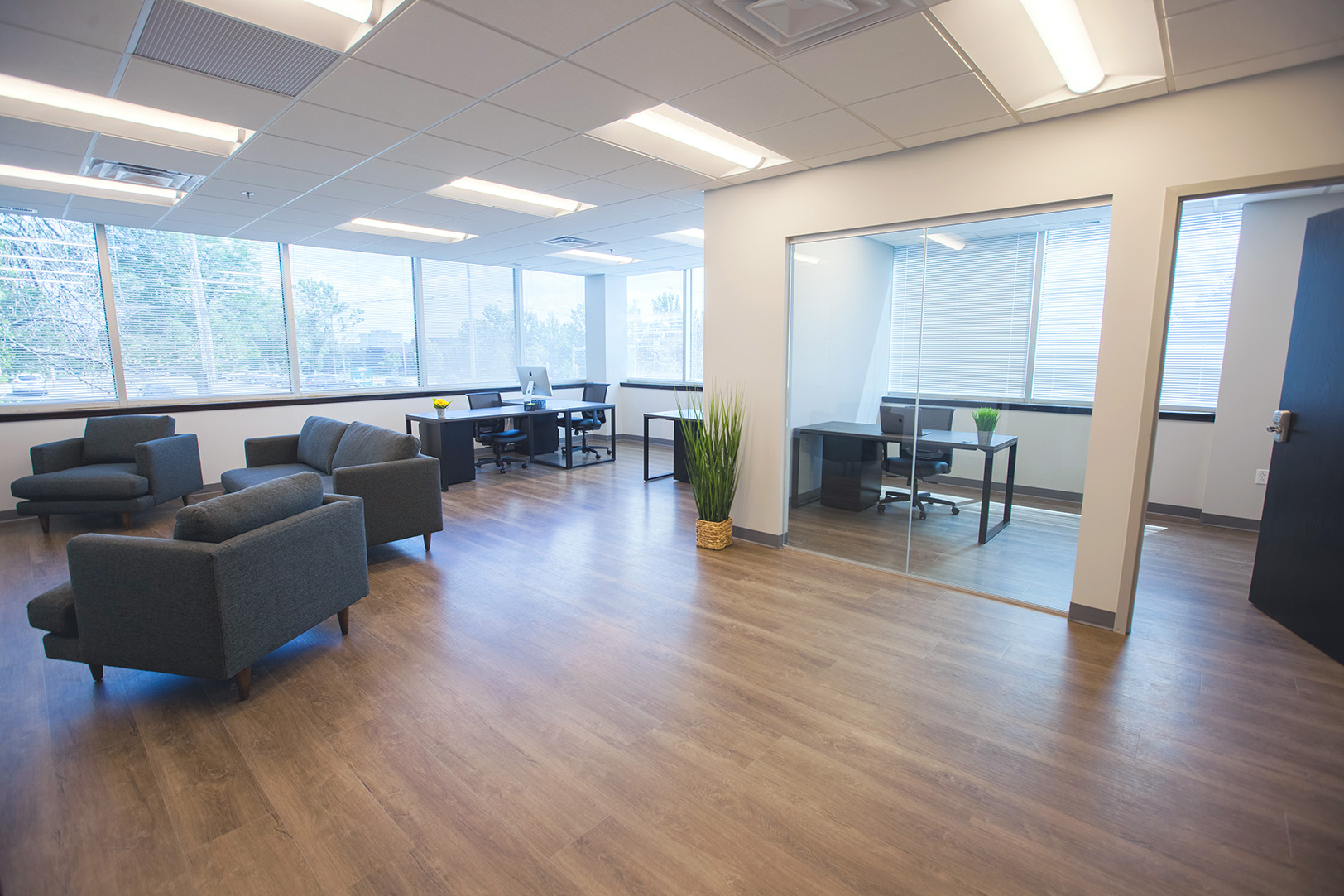
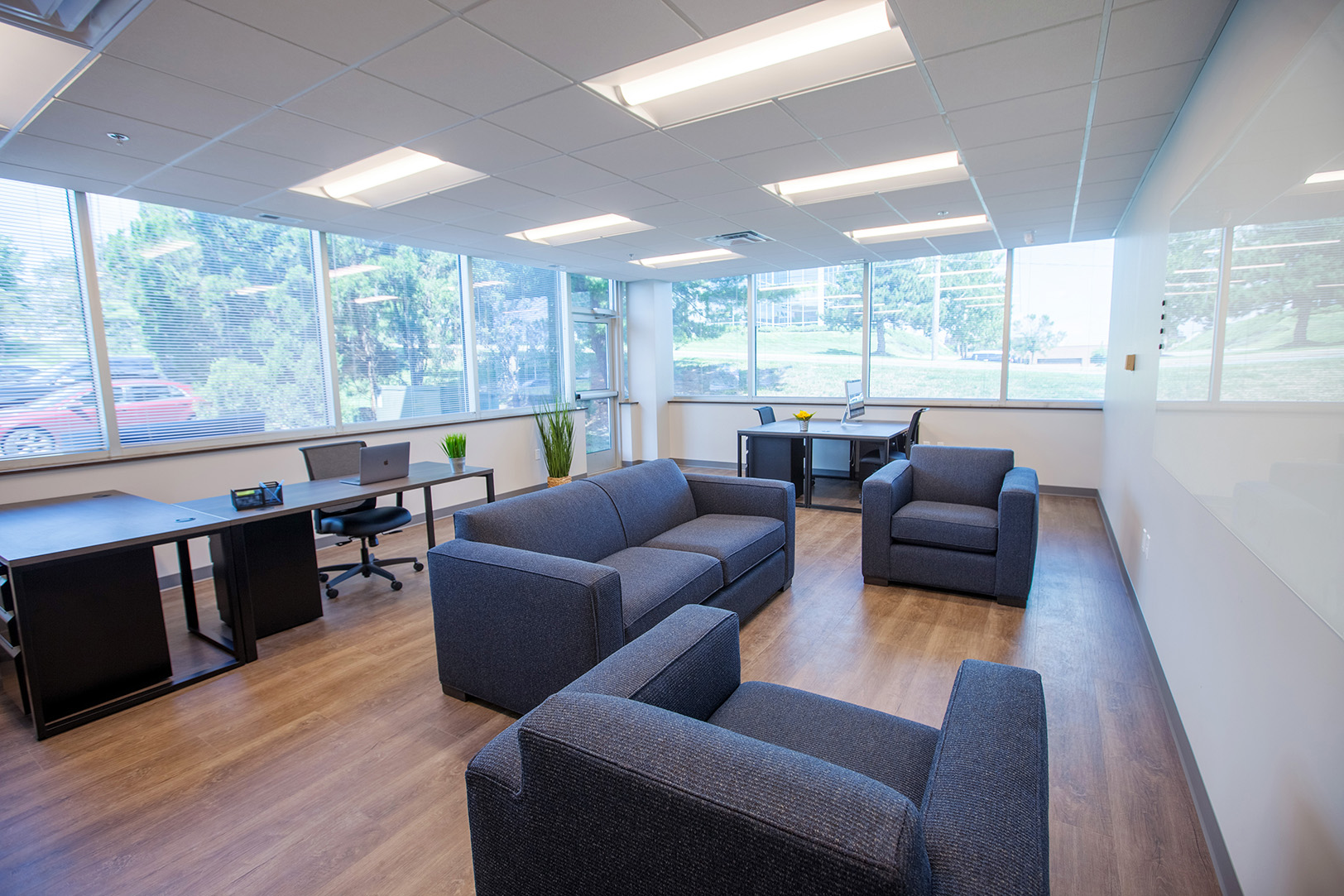
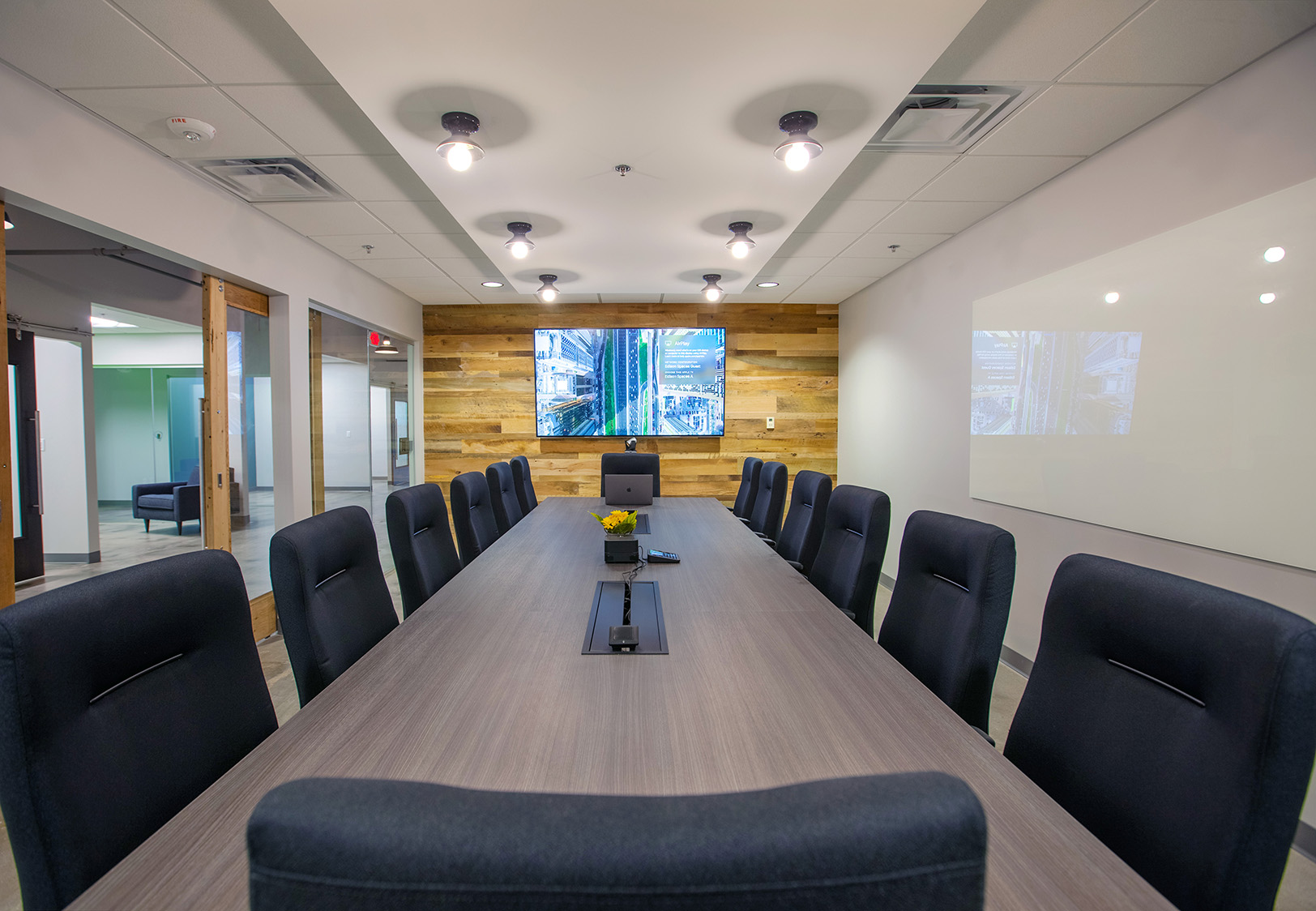
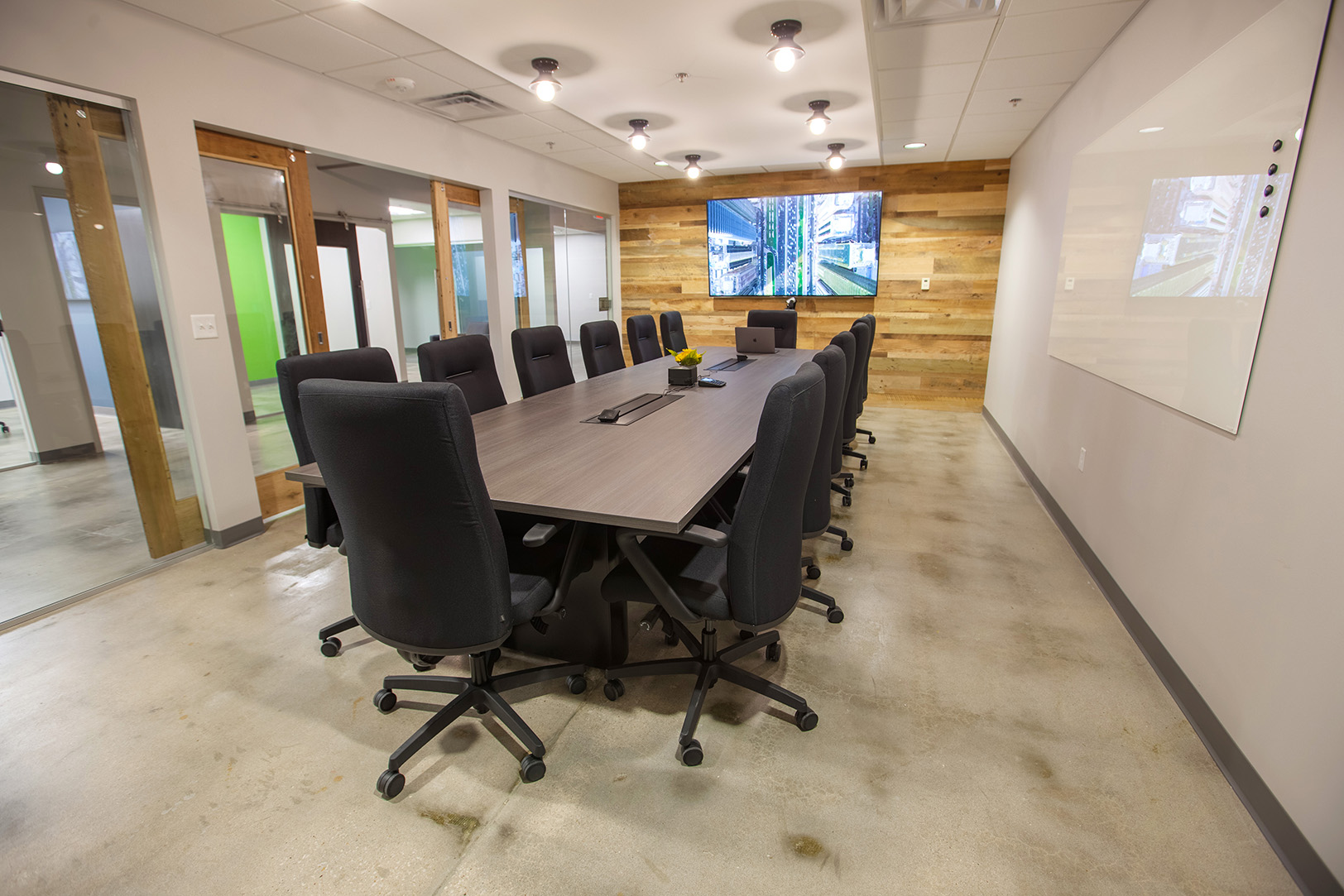
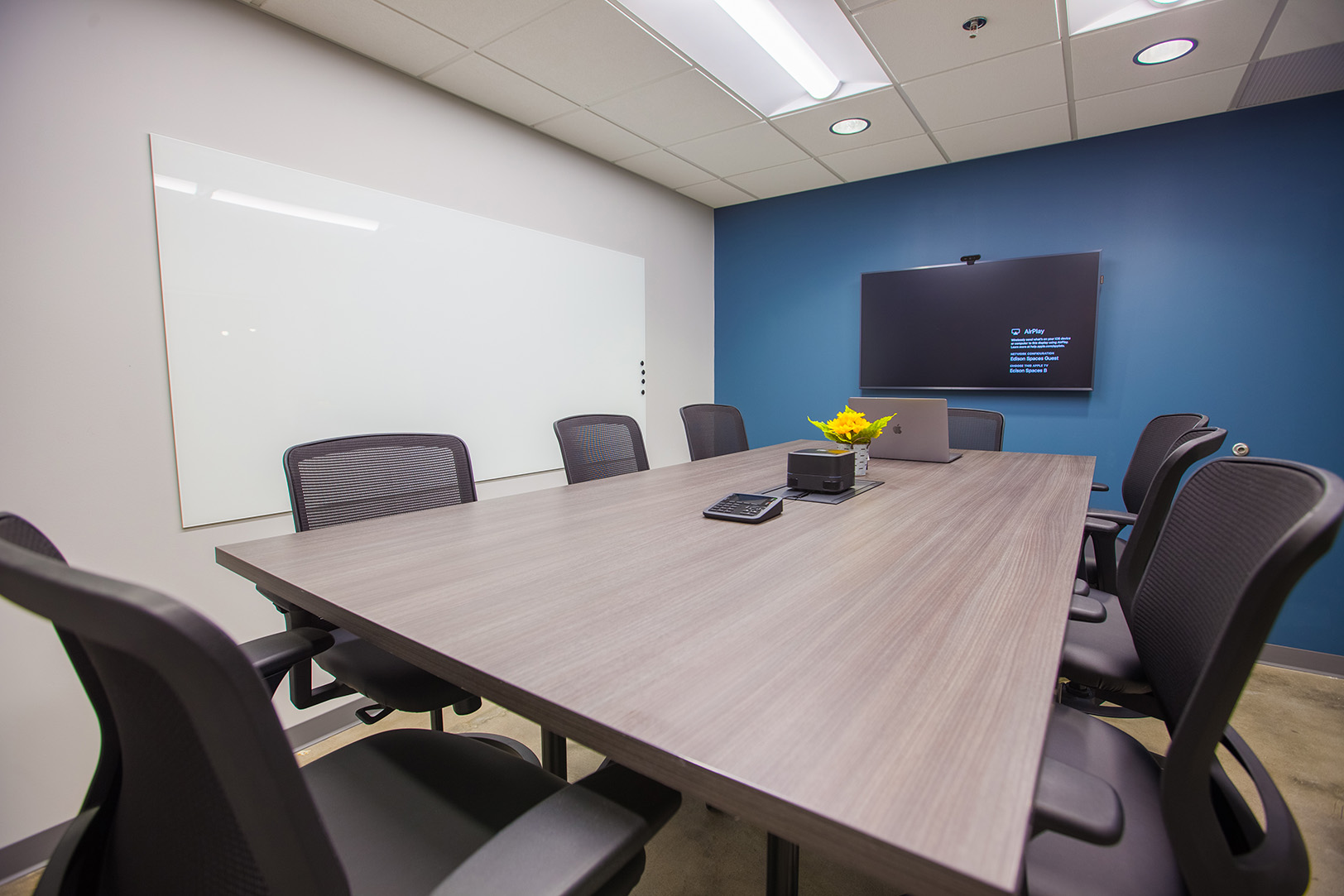
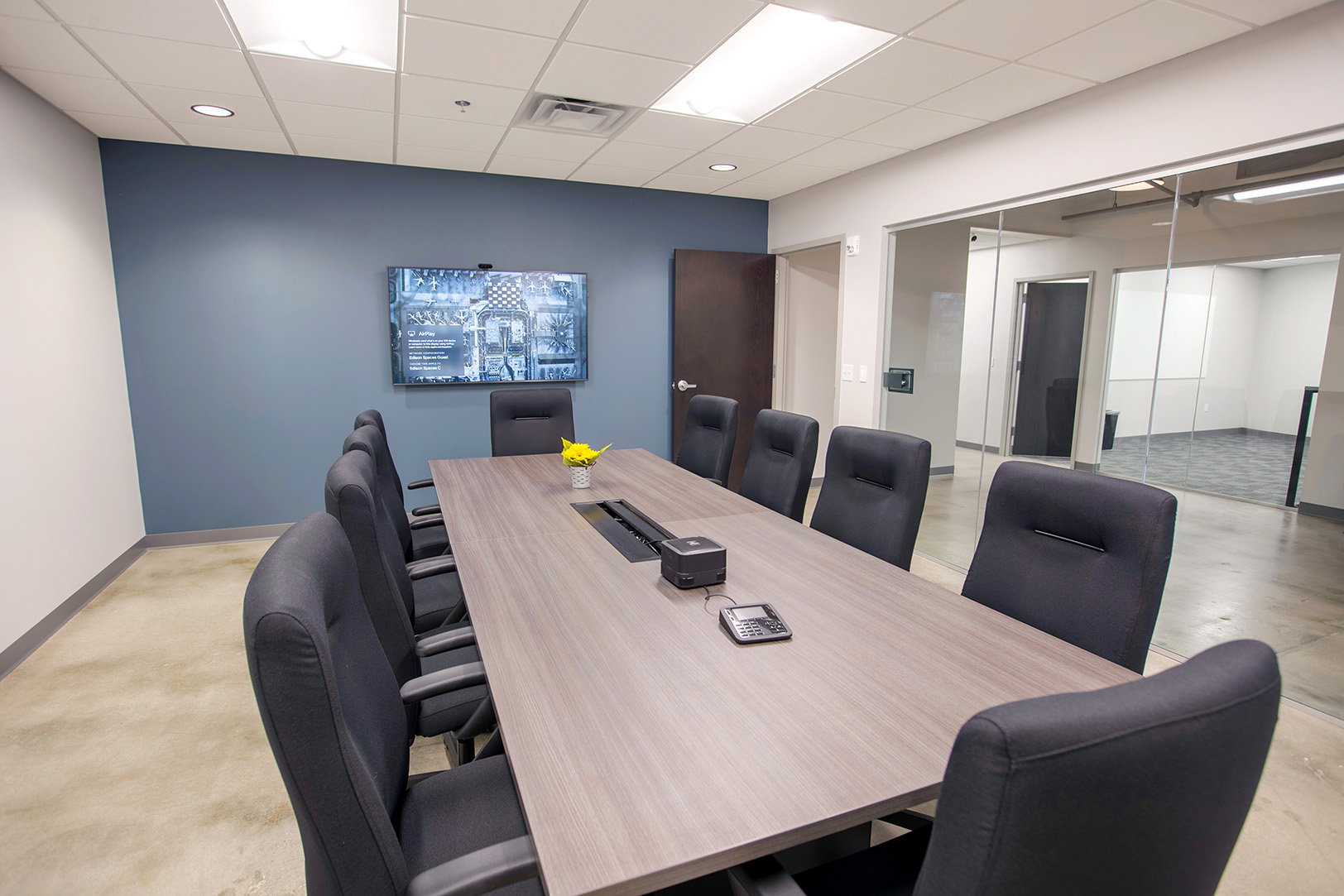
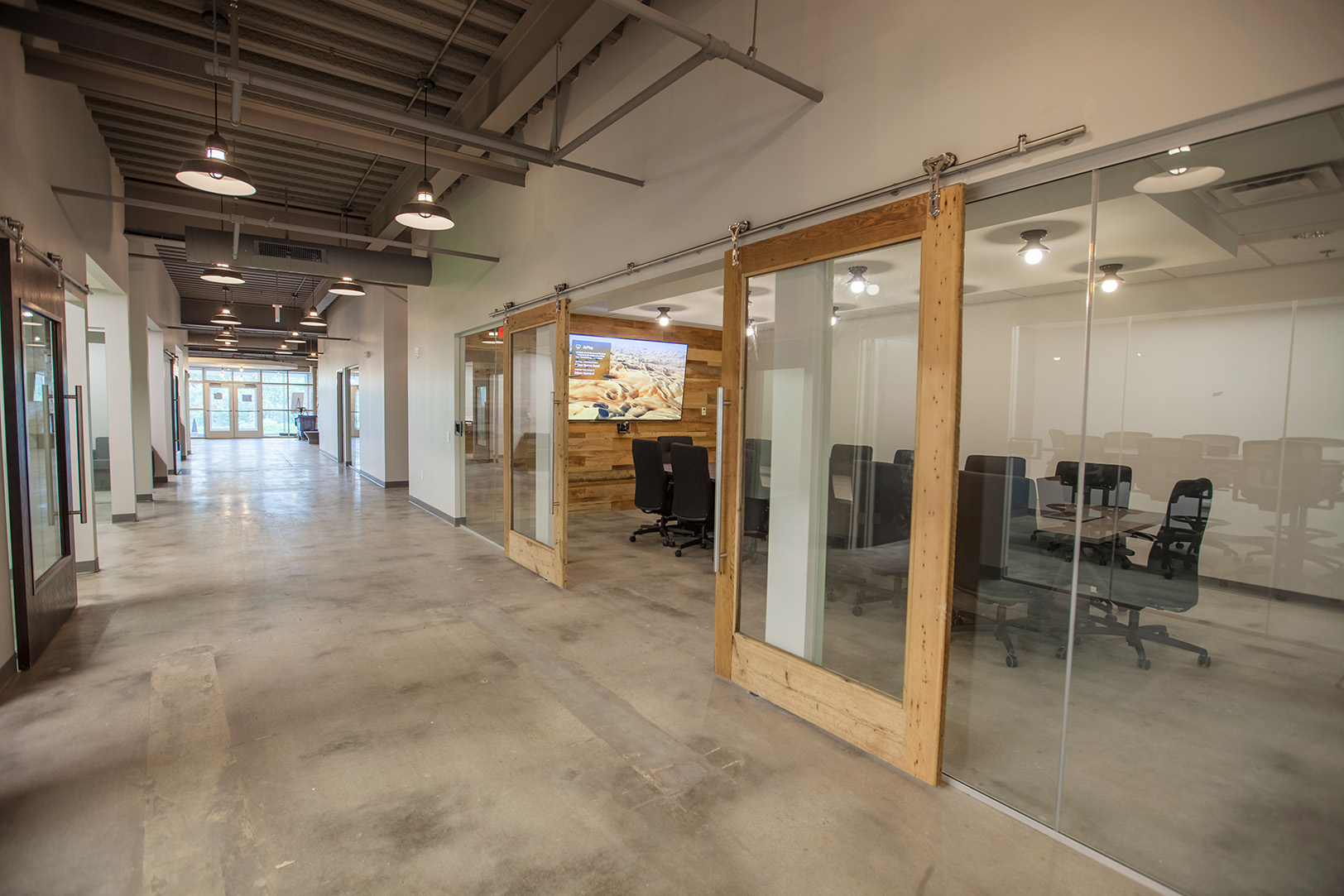
Edison Spaces opened its second Overland Park location in mid-August at 7900 College Blvd. The 44-office setup provides companies with a “a cool, hip vibe for Overland Park and the suburbs” in spacious, private settings for teams of two to eight people — some of whom were on hand Tuesday for a grand opening celebration.
Founded by former Freightquote executives Druten and Tim Barton, Edison Spaces aims to be an office concept built by entrepreneurs for entrepreneurs, Druten said. That means anticipating the need to scale — up or down.
“If you’re in an office at Edison Spaces, you might start with a three-person team. Then you grow and jump up to a six-person office,” he said. “Feels good. You grow to two offices. But then you lose that big client, and there’s only two of you left. Here, you’re not tethered to a lease on however many offices. You just simply slide back into a two-person office, and we prorate the rent and you’re not on the hook for more.”
Edison Spaces offers companies a flat rate with a three-month minimum, followed by month-to-month renewal, Druten said. A standard office features, for example, four full-sized desks, a couch, chairs, a whiteboard for team interaction, a coffee maker and a refrigerator, he added.
“Emphasizing the size of the desks is a little nuanced, but it’s important to us,” Druten said. “People need more room than a desk with just enough space for a laptop and a stack of papers.”
Keep reading below the photo gallery.




After Freightquote’s reported $365 million sale in 2015, Barton, the company’s founder and now-former chairman/CEO, knew he wasn’t done starting businesses, Druten said.
He assembled a team and they attempted to move into a 700-square-foot space in downtown Overland Park.
“Everybody thought, ‘Yeah! We have an office, let’s get to work!’ But by the time we got the furniture in, the refrigerator delivered, cable and wifi installed, set up cleaning services, it was probably four months,” Druten said. “From an entrepreneur’s perspective, that was four months of wasted time, wasted value proposition, wasted money.”
The team realized new companies need a place to walk in, plug in a computer, and work in five minutes or less, he said.
“When you’re a small company trying to get a space, you’re out-negotiated from the start. You don’t want a five- to seven-year lease. You want a personal guarantee,” Druten said. “Many entrepreneurs don’t understand a personal guarantee. They don’t understand tenant improvements. They’re not clear on whether a space is going to come with cleaning services, for example. They hire a friend who’s a lawyer, pay him a couple thousand dollars, sign something and then later typically realize, ‘Oh, here’s where I’m screwed.’”
Expenses like security and maintenance aren’t always obvious, he noted.
“The costs add up and you end up — Boom! Boom! Boom! — trying to cram people in to a smaller space to get that money back,” Druten said.
Parking is another reality that often blindsides entrepreneurs just starting their companies, he said. It’s a challenge Edison Spaces faced early — and helped push the business out of Kansas City’s urban core.
“When we were developing the concept, we initially were going to build it in the Crossroads. It’s got a great vibe, right in the middle of the startup community,” Druten said. “But at probably our third meeting, we realized everybody in the room as we discussed it was living in Overland Park, Lee’s Summit or Leawood. Then the questions comes up: Would we all prefer not to commute? There are some amazing spaces in the Crossroads, but they don’t come with parking. We didn’t want people to get all the way to work and then have to worry about where to park.”
The suburbs — like the entrepreneurs themselves who don’t fit a corporate mold — are an underserved market, Druten said. Expansion plans for Edison Spaces include looking at Tier 2 markets similar to Kansas City — like Oklahoma City, St. Louis and Denver — that have similar needs, he added.
“In order to be truly disruptive, you’ve got to start at the bottom,” Druten said, describing their target teams in such markets. “We’re looking at small companies in the suburban rings who none of the big office buildings really want as tenants.”
The hot desk concept typically associated with coworking spaces is fading as a workable option for many of those entrepreneurs, he said.
“Coworking never worked for us, and our teams, because it just felt too distracting. So now you’re looking at coworking environments and they’re all shifting to a private office model — that doesn’t surprise us,” Druten said, emphasizing Edison Spaces’ flexible alternative. “This is what we use for our own office. This is how we operate. We have our desks, we have our meeting room, we have our whiteboard. It’s what we’ve tweaked over the past few years to say, ‘This is what works.’ If it was more cramped, there’s no way would settle for the space. And startups teams shouldn’t either.”


2018 Startups to Watch
stats here
Related Posts on Startland News

KCultivator Q&A: Lesa Mitchell talks eating eyeballs, remembering names, growing startups
Editor’s note: KCultivators is a lighthearted profile series to highlight people who are meaningfully enriching Kansas City’s entrepreneurial ecosystem. The KCultivator Series is sponsored by WeWork Corrigan Station, a modern twist on Kansas City office space. Growth is a daily driver, Lesa Mitchell said, but it can be limited by the environment around entrepreneurs. “If…
STEM education bill backed by KC Tech Council passes MO Senate, heads back to governor
Despite initial pushback, a bill that would broaden access to computer education in Missouri high schools, could be gaining momentum, said Ryan Weber. If passed, the legislation would increase STEM awareness in public schools and require districts to count computer science courses as math and science credits, the KC Tech Council president and an advocate…
Beyond language barriers: DivvyHQ partners with translation tech firm for greater global reach
A newly announced partnership provides DivvyHQ an expanded toolset to open the doors to a global market — translating and delivering any type of marketing-related content across any device, channel or language, said Brock Stechman. “We’ve been working so hard over the past few years to really build this company from the ground up,” said…

Techweek dedicating Oct. 10 afternoon programming to diversity in KC business culture
A first-time programming track dedicated to diversity and inclusion issues is an intentional effort by Techweek Kansas City organizers to open a needed conversation about true representation in the city’s business culture, said Drew Solomon. The mid-point of the Oct. 8-12 Techweek KC event series is expected to feature an afternoon of panel discussions and…