

Defiant anti-gentrification voice: Clock is ticking on east side neighborhoods, Movement KC
September 6, 2018 | Austin Barnes
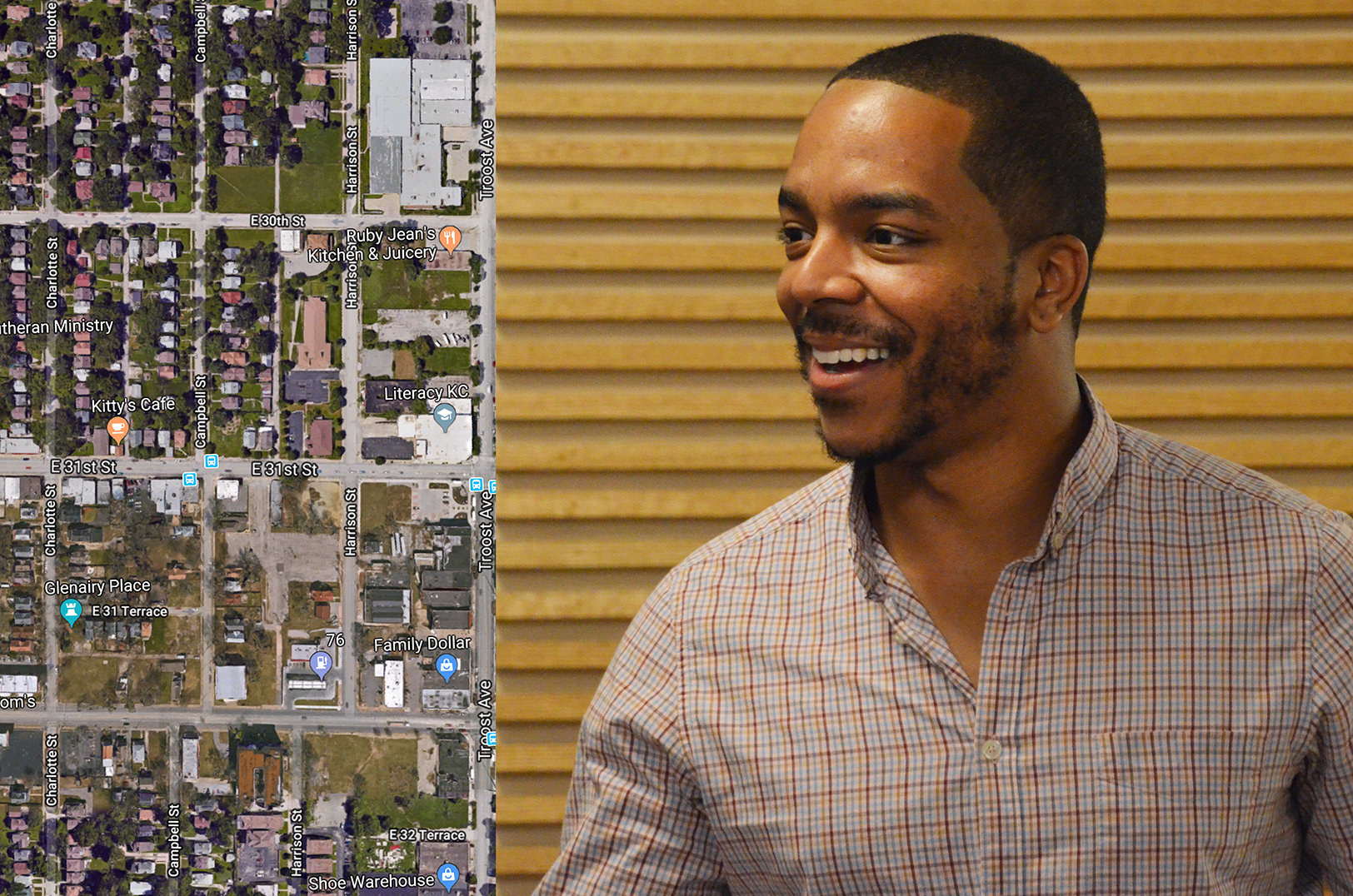
Daniel Edwards isn’t shy about his frustrations with the perception of Kansas City’s east side.
“I remember my first corporate lunch after graduating college: the joke was, ‘Nobody wants to go near 35th and Prospect at night time,’” said Edwards, a Kansas City area developer and the founder of Movement KC. “I was like, ‘Yo, it’s like three blocks away from my house.’”
Stay or go? Social entrepreneurism at an intersection
• Troostapalooza aims to shed the old skin of city’s racial dividing line, says Kemet Coleman
• Operation Breakthrough bridge over Troost symbolizes ‘real community’ at an intersection
• Thelma’s Kitchen cooks up pay-what-you-can cafe concept to preserve community
• Reconciliation Services hopes to heal trauma in the heart of stigmatized Troost corridor
Ignited by ignorance, Edwards said, he made a commitment to rebuild blighted areas of east Kansas City — preserving historic neighborhoods, he said.
“I got pissed!”
Through Movement KC, Edwards works to raise funds and awareness that could help revitalize long-forgotten properties surrounding the city’s racial dividing line — Troost Avenue.
“My interest is trying to make sure that somebody is caring about the built environment as much as they care about the built environment west of Troost,” he explained.
Interest quickly turned to vision for Edwards, who now reimagines near-condemned lots as freshly painted, remodeled single and multi-family homes at prices east-side families can comfortably afford, he said.
An advocate against gentrification, Edwards said the type of redevelopment Troost neighborhoods need can only be achieved by genuinely compassionate builders.
“I’m interested in people who are looking to help rebuild neighborhoods and make money in the process — versus people who want to make money and rebuilding neighborhoods comes after,” he said of his hope to find investors to back Movement KC.
Edwards and his wife, Ebony, currently finance their projects solo — it’s a commitment that’s become a financial strain, he said.
“We’ve taken it to the farthest point we can,” Edwards said of the ongoing Movement KC effort. “We know it works, it cash flows, it makes money.”
But the clock is ticking, Edwards said with concern: Gentrification could take hold on the east side before his work has an opportunity to flourish.
“You see more coffee shops, more restaurants, more amenities — you know something is happening,” he said. “When young, mid-20s white girls [feel safe] running at night time in your neighborhood … you know something is happening.”
With the urban core prime for overhaul, Edwards said, he won’t sit back and watch his neighborhood — a part of him — deteriorate or be taken from residents who’ve called the east side home for decades.
“People in the neighborhood are desperate for rebuilding,” he said. “People outside of the neighborhood are projecting their perspectives, but they won’t ever take the risk in order to really be a part of the change.”
The ultimate goal is for east side residents to voice their concerns and drive positive, economic growth in the area, Edwards said — with hope they won’t be pushed out of their homes and neighborhoods by callous, corporate redevelopment tactics.
Click here to read more from Startland’s original reporting on the redevelopment of Troost.
Stay or go? Social entrepreneurism at an intersection
• Troostapalooza aims to shed the old skin of city’s racial dividing line, says Kemet Coleman
• Operation Breakthrough bridge over Troost symbolizes ‘real community’ at an intersection
• Thelma’s Kitchen cooks up pay-what-you-can cafe concept to preserve community
• Reconciliation Services hopes to heal trauma in the heart of stigmatized Troost corridor


2018 Startups to Watch
stats here
Related Posts on Startland News
Don’t just play the game: MECA Challenge urges students to innovate ‘school of the future’
Challenging Kansas City students to envision “the school of the future” will usher in a paradigm shift wherein teens can see themselves as customers of school, said Katie Kimbrell optimistically. “[Students] don’t even think, ‘Oh, I could rethink this whole thing that I’m experiencing,’ and choose — or even demand — something different,” said Kimbrell,…

KCultivator Q&A: Kyle J Smith talks serious work, socks with sandals, pickled pig brains
Editor’s note: KCultivators is a lighthearted profile series to highlight people who are meaningfully enriching Kansas City’s entrepreneurial ecosystem. The KCultivator Series is sponsored by WeWork Corrigan Station, a modern twist on Kansas City office space. A place to live, work, and play — three ingredients for a new life, said Kyle J. Smith, founder…

New five-year government grant, matching funds will help KCSourceLink fill gaps, build inclusivity
The payoff from a new five-year grant to KCSourceLink will most immediately be seen in a refreshed website with a more streamlined user experience for doers, makers, creators and entrepreneurs searching for help in taking the next — or first — step in building a business. “Our goal is to strengthen the fundamental building blocks of a…

Toby Rush on emerging blockchain: Layers of trust slowly building behind the scenes
Much like companies’ web pages in the mid-1990s, blockchain isn’t yet consumer-ready, said Toby Rush. “But [development is] going to move at an accelerated pace,” said Rush, CEO of Zoloz and senior director of international technology investments at Ant Financial. “We’re over 20 years later from ’96, and I think you’ll see [blockchain] move and…