

Frank Keck: Benefits of developing a strong workplace culture
August 13, 2018 | Frank Keck

Editor’s note: The opinions expressed in this commentary about workplace culture are the author’s alone. Check out a previous column by Frank Keck here.
“We know that engaged managers and employees are much more likely to remain in an organization, leading to fewer hires from outside the organization. This results in:
- Lower wage costs for talent
- Lower recruiting, hiring, and training costs
- Higher productivity (fewer lost sales and higher sales per employee).
Higher employee continuity leads to better customer relationships that contribute to greater customer loyalty, lower marketing costs, and enhanced sales.”
— James L. Heskett, professor emeritus, Harvard Business School
Connect the dots, as Professor Heskett does above, and you can see why so many organizations are recognizing the value of strengthening their workplace culture. As culture is assessed and analyzed as a business asset, research has shown that implementing an intentional culture in an organization leads to real, measurable and repeatable benefits. Here are some of the results of building a culture that deliberately reflects the core values, character and personality of your organization.
Improved operational performance — How would you like to boost your overall productivity by 30 percent or more? If everybody in your workforce did their job to the best of their abilities, you’d have an amazing organization with an incredibly high level of productivity. That’s what an engaged workplace does, giving people the chance to thrive, not just survive, by addressing ways to get the most from your environment, processes and people.
Effective teamwork — As we noted in our previous article, a “safe” culture, where people feel as though they belong and where their ideas are valued, establishes trust and encourages people to rely on each other. In other words, strong culture encourages people to work together, which leads to better communication, fewer errors and greater overall job satisfaction. Why? Because people are social creatures, and positive social interaction is the hallmark of success.
Leadership development and transition — A common goal for many organizations is the desire to promote from within, to keep good people and help them grow. As a corollary to James Heskett’s comment about employee continuity, leadership continuity has the same kind of effect on customer relationships — including the sales that result from these relationships. We all know by now that people buy from people, not from institutions.
Increased initiative and innovative thinking — Want to grow? Interested in expanding your customer base, competing nationally or even opening an international office? To achieve big goals, unlock the power of innovative thinking in your workplace, to see further, dream bigger and exceed your current capabilities.
Reduced turnover — Is your latest hire a person who’s a good fit for your organization, or simply someone whose resume matches their job description? If it’s the latter, you may be all to familiar with turnover. To see why that’s not a good thing, refer back to the quote above. To see how to fix it, consider how screening people against your core values, style of communication and teambuilding vision might be a better strategy to improve your hiring outcomes.
Elimination of misconduct — This is the subject that seems to generate the most news about workplace culture. Consider that, if you want to avoid issues with discrimination, racial profiling, ageism, sexual harassment, bullying and other inappropriate behaviors, the place to start is with an intentional workplace culture that helps people learn how to accept each other and work together.
Millennial magnetism — A bonus benefit that can be overlooked is one that comes from the generational transition that’s occurring in workplaces across the country and around the world. Did you know that the secret to understanding Millennials — and appealing to them in ways that other organizations might not — is to create an intentional workplace culture that respects and values all employees? Given the projected rate of retirement of the current workforce, strengthening your workplace culture is also a long-term survival strategy for your organization.
These are just some of the benefits that accrue to organizations with an intentional workplace culture. The main takeaway is that starting the process of creating a unique culture to match your unique workplace is something that will pay dividends forever.
Interested in continuing the conversation? Check out more on calculating the ROI of customer engagement here.
Frank Keck is founder and CEO of the Shawnee-based workplace culture development firm CoreBuild.


2018 Startups to Watch
stats here
Related Posts on Startland News
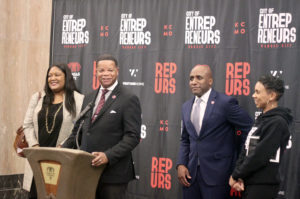
Initiative backed by Shopify funding expected to boost 500 Black-owned businesses in KC
Editor’s note: KC BizCare is a financial supporter of Startland News. This story was produced independently by Startland News. KC BizCare announced a series of inclusive entrepreneurship initiatives Thursday, including a partnership with Operation HOPE that will provide 500 Black-owned businesses in Kansas City with resources to grow their businesses. That partnership is part…

Saile closes $1.35M round; set to double team in 2023 as mass production of ‘robots for salespeople’ under way
A Kansas City startup building an army of “Sailebots” — an artificial intelligence solution to a classic industry problem — impressed its new lead investor with its customized approach that avoids a “one size fits all” strategy. “I’ve been in sales and marketing automation for 20 years,” said Lisa Calhoun, founder and managing partner at…

Bored by your holiday spread? You butter believe these artisanal flavors will make taste buds give thanks
Imagine a world with only vanilla ice cream or plain yogurt, Chris Buono challenged. “Of course, it’s inconceivable now because we have hundreds of different flavors of each of those,” said Buono, founder and CEO of Overland Park-based Buon-Riche Foods. “But I feel like that’s kind of where we are with butter and I just…

Shop Small: 5 gifts for someone who needs a little self-care — even if that’s you (KC Gift Guide)
Editor’s note: This feature is the second in Startland News’ five-part holiday gift guide showcasing Kansas City makers and their products. Check out the featured maker below, then keep reading for five gift ideas to get started. Christmas Eve was always a childhood favorite for Matt Bramlette. The Bear Soap Company and Mid Coast Modern…