

Emerging from failure: Doughnut Lounge founder gets raw among startup peers (IXKC photos)
August 2, 2018 | Tommy Felts and Austin Barnes
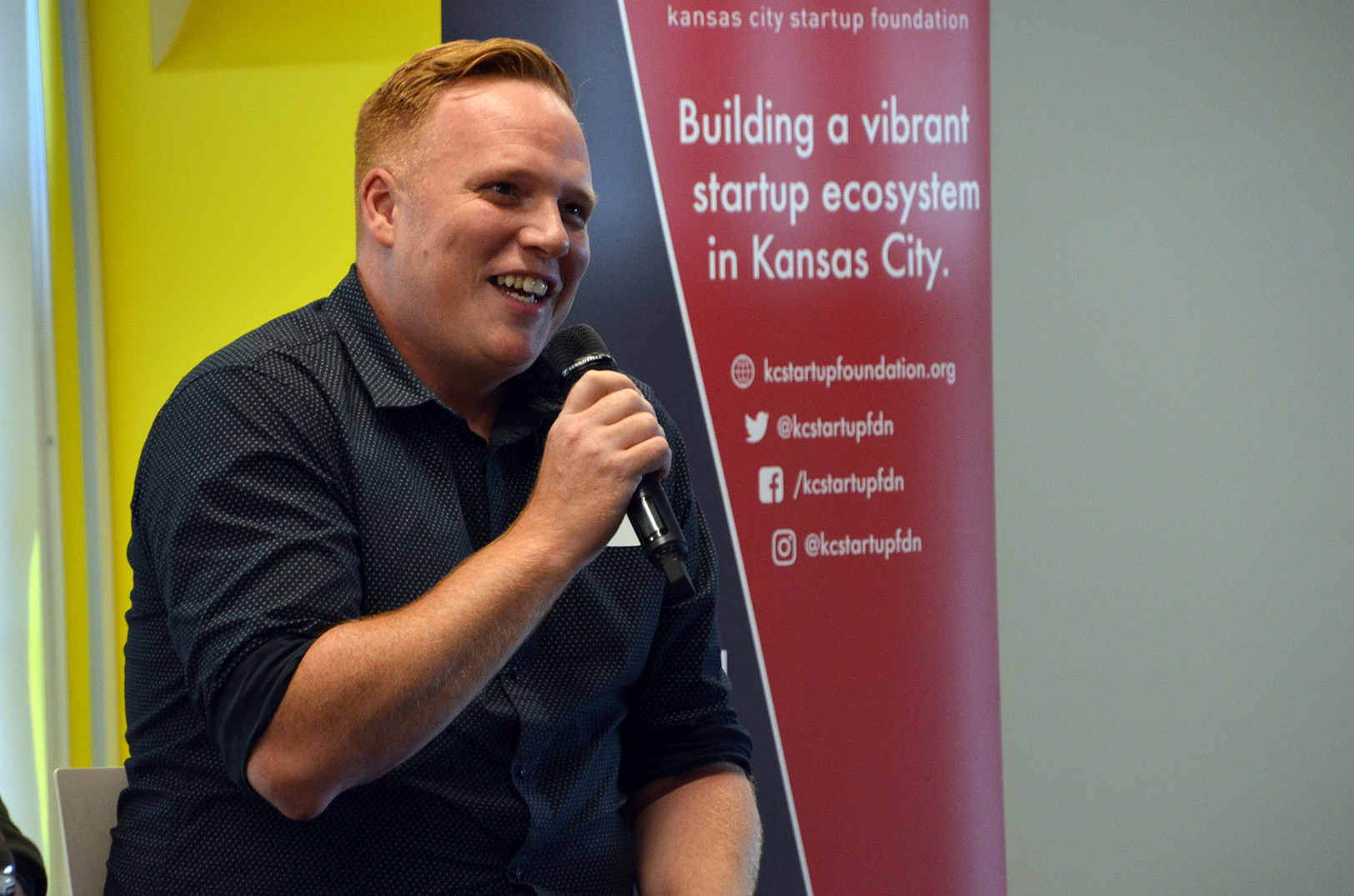
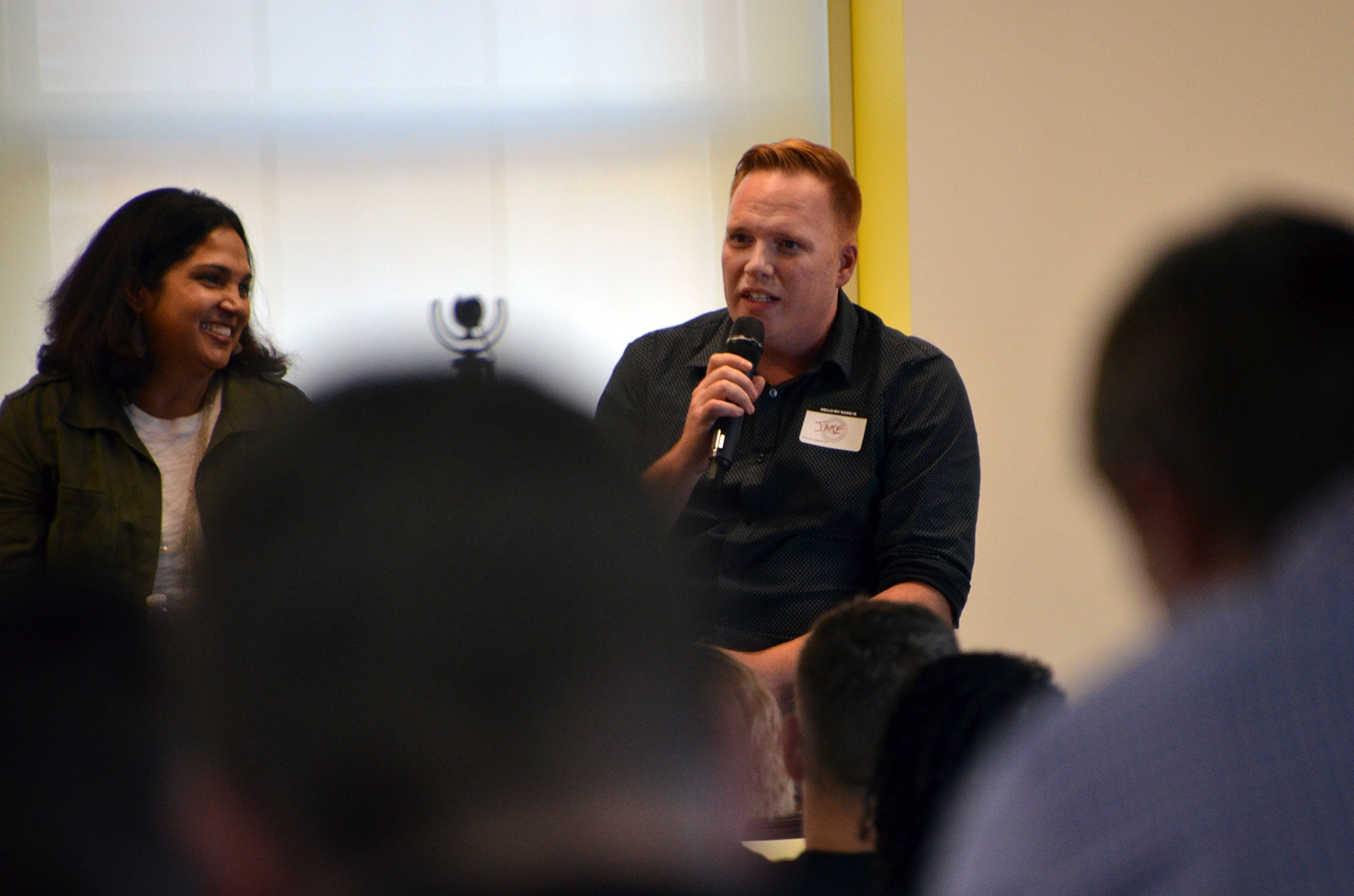
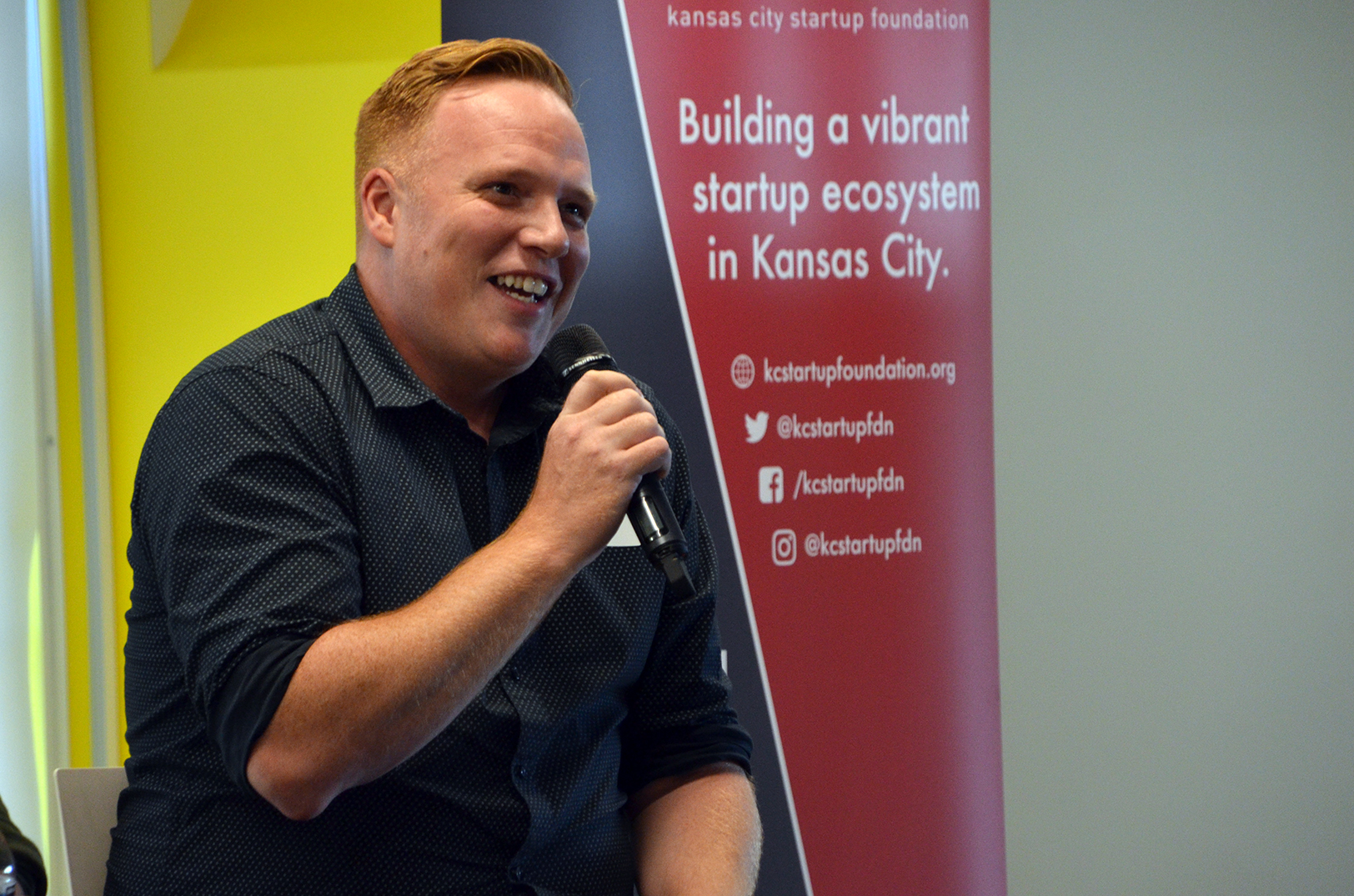
Jake Randall’s “crazy dream” — a collision of craft, creativity and conversation contained in Westport’s Doughnut Lounge — was gone in a matter of 24 hours, he said.
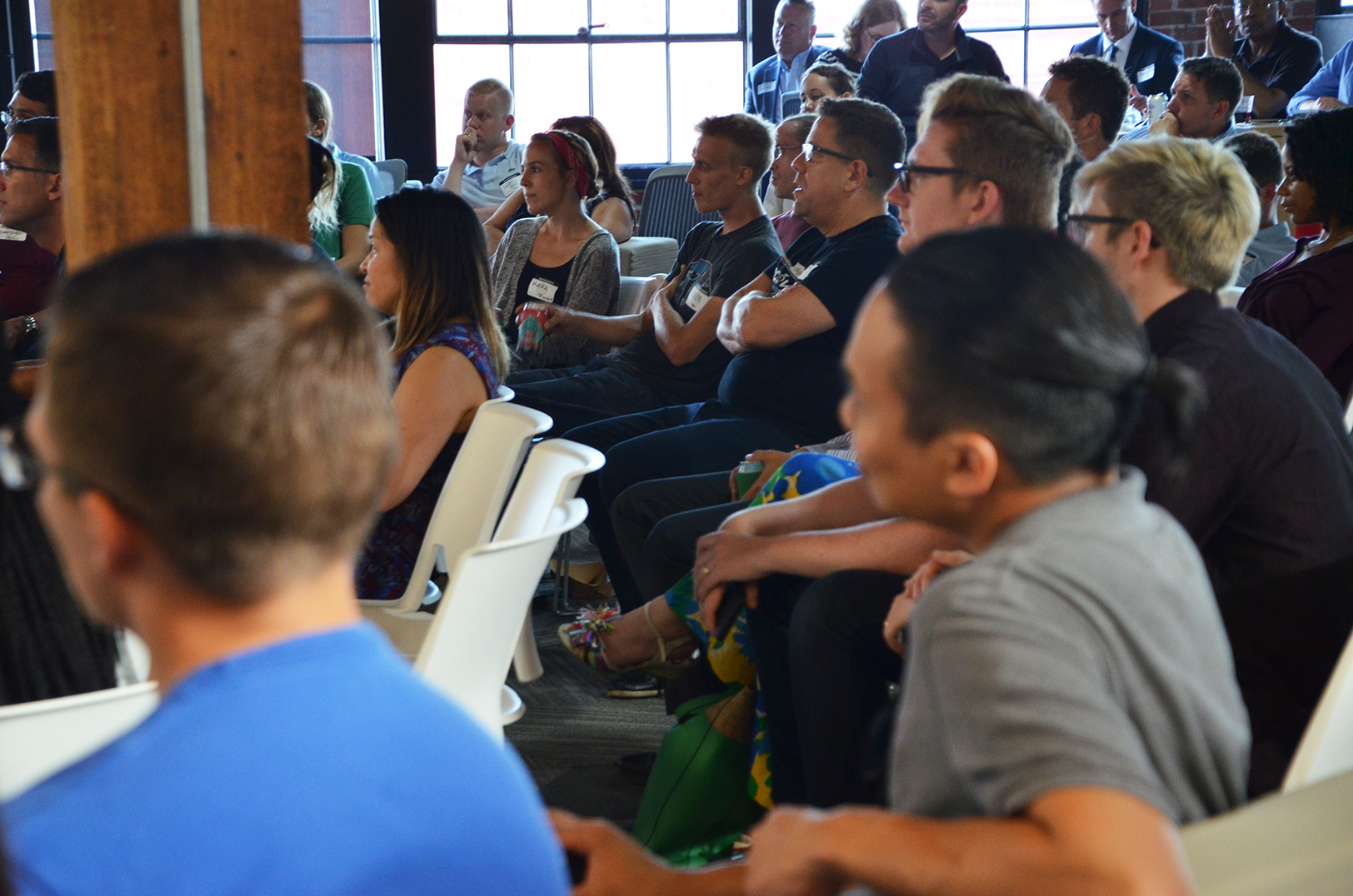
“I found out on Monday. And we closed on Tuesday,” Randall told a crowd of startup community peers this week at Startland’s Innovation Exchange. “I was embarrassed. We hurt a lot of people.”
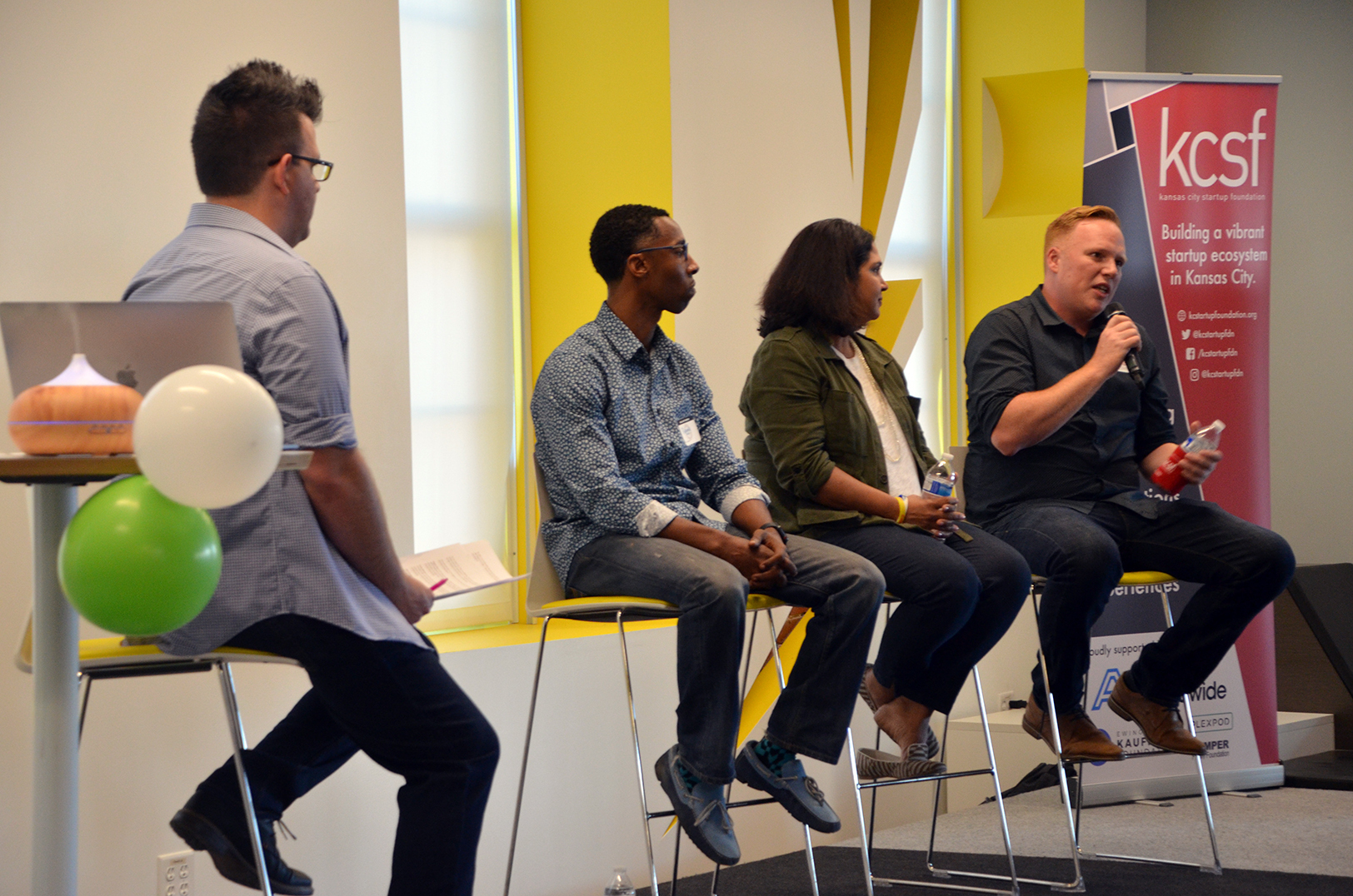
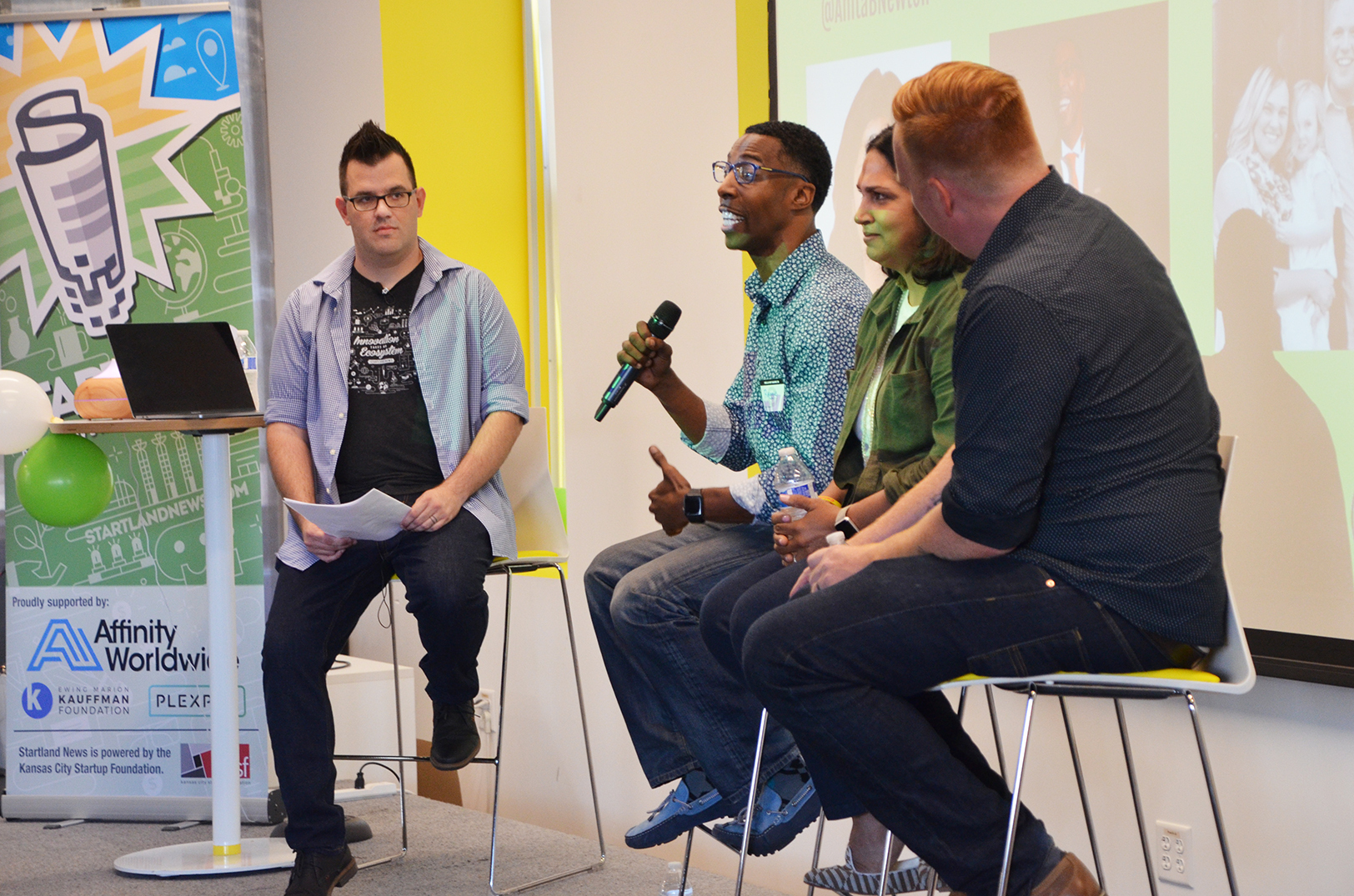
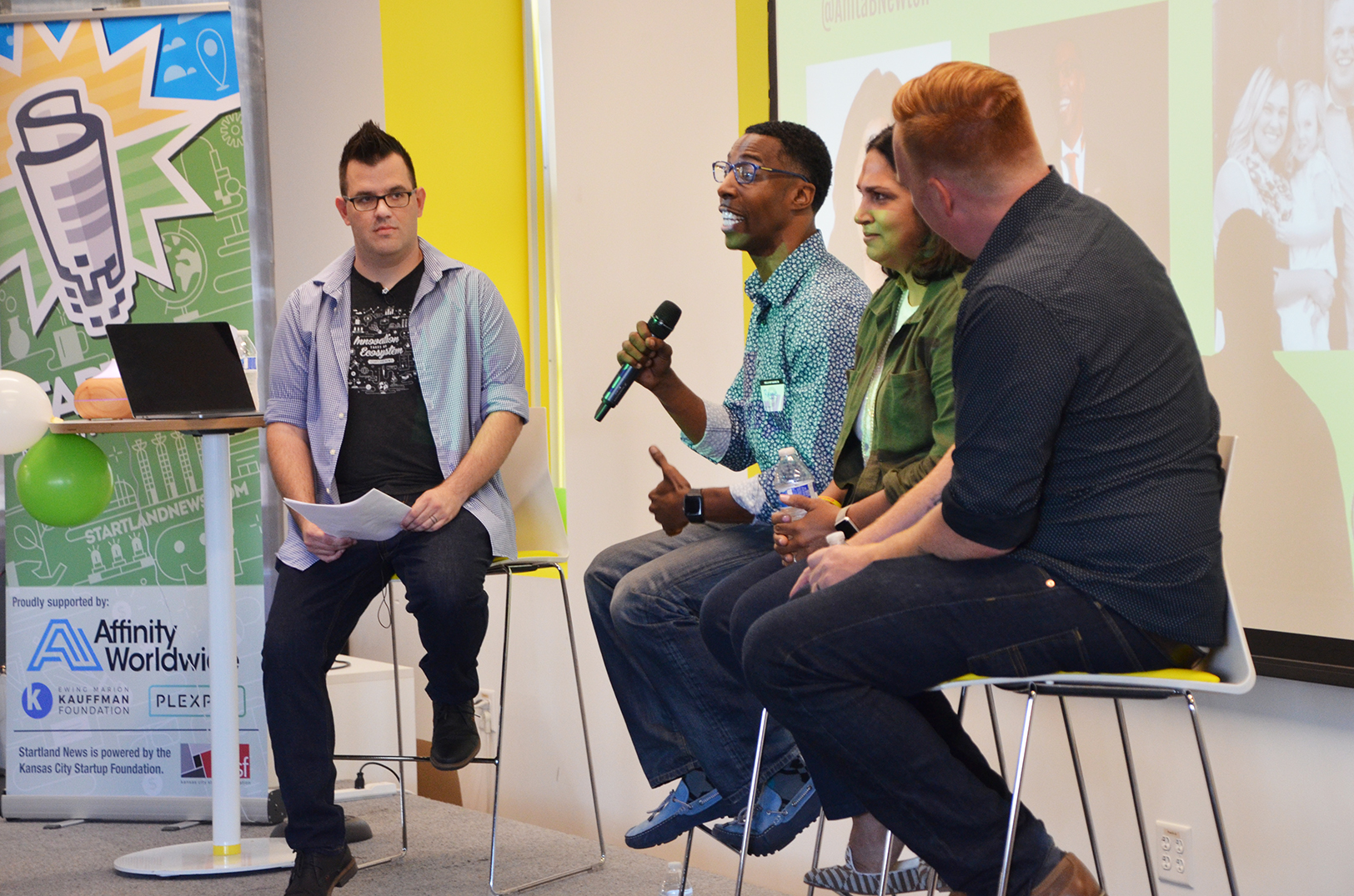
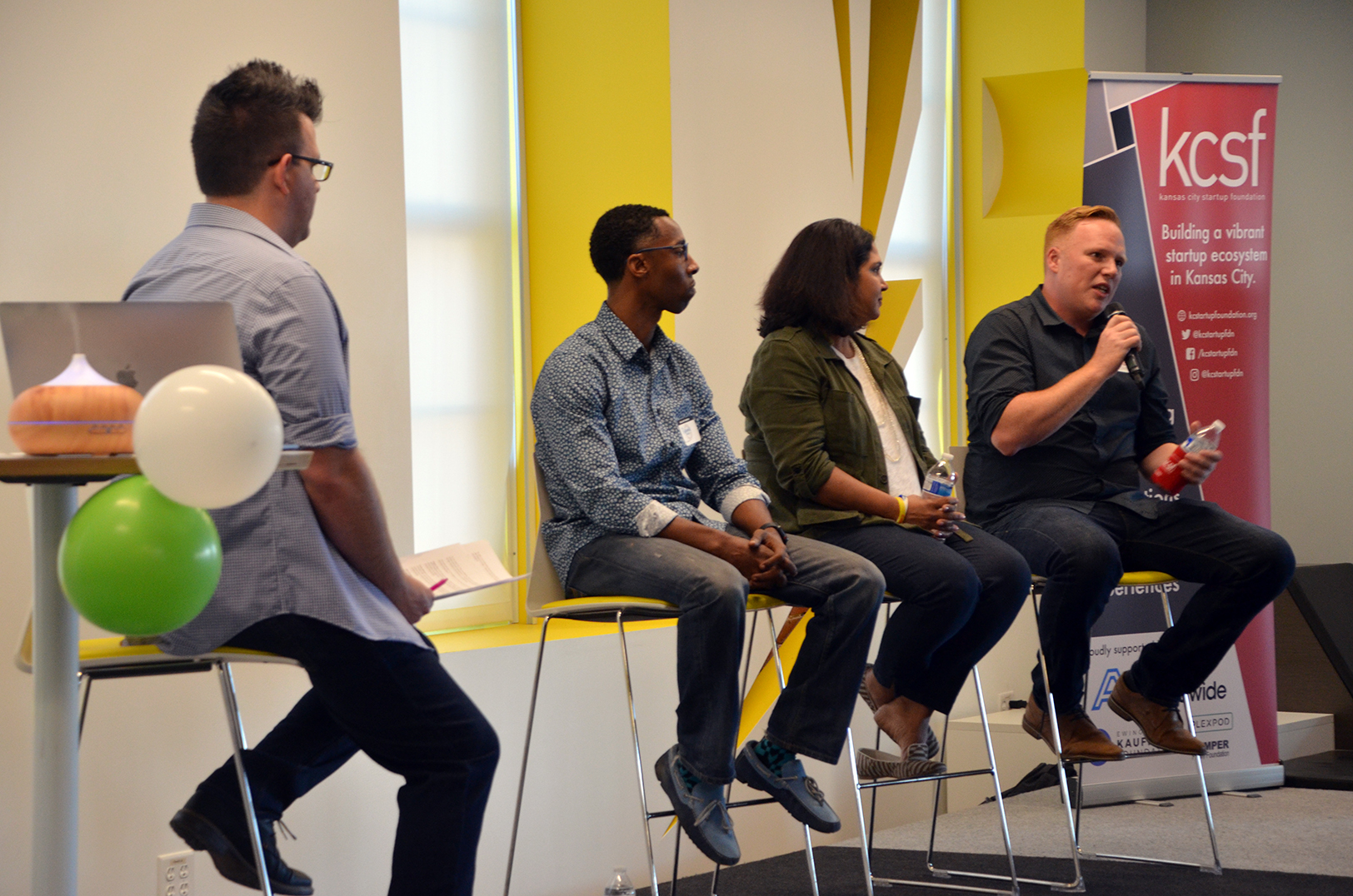
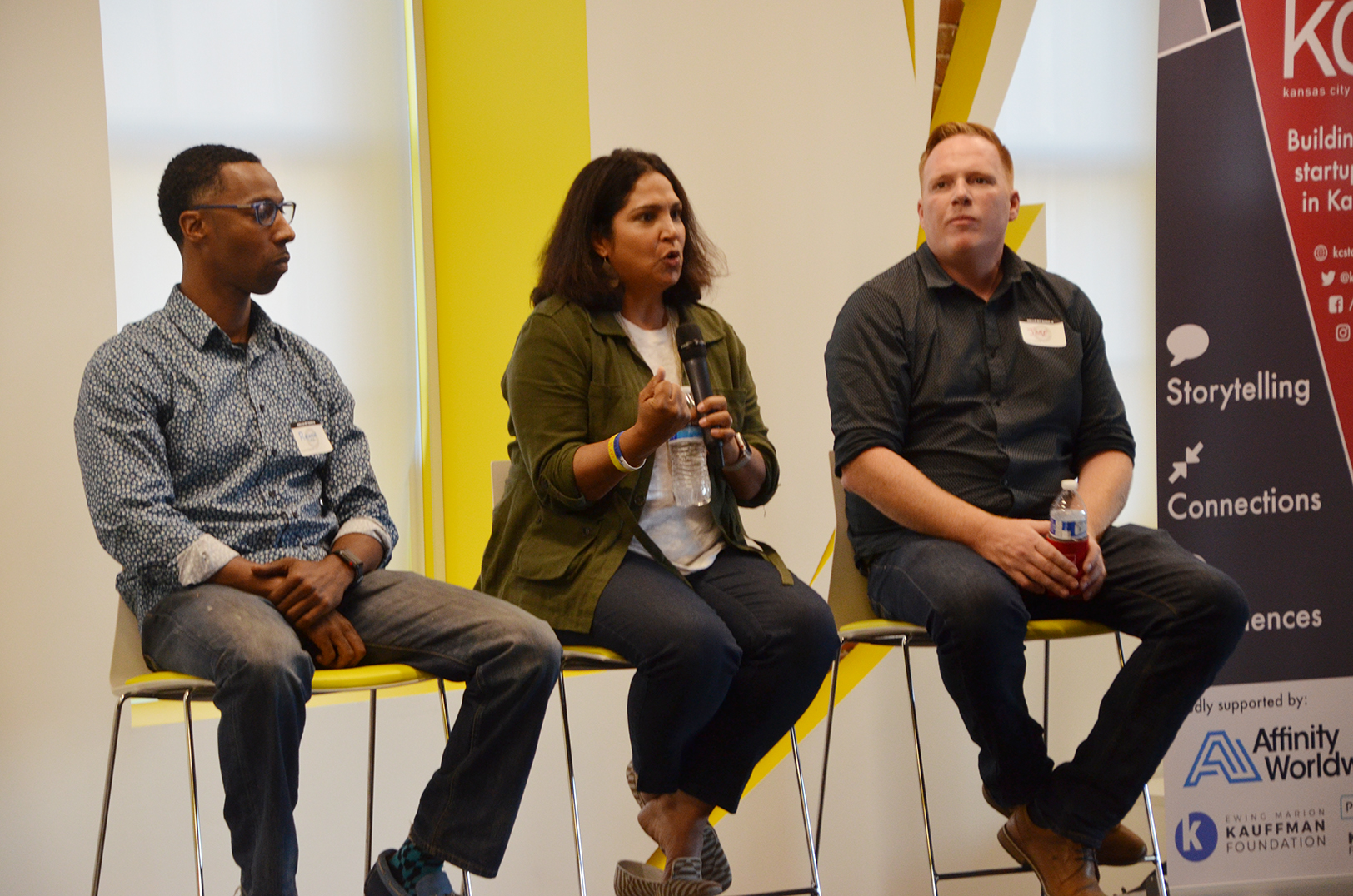
Tommy Felts, Startland News, Reggie Gray, Black Privilege, Anita Newton, Mighty Good Solutions, and Jake Randall, Doughnut Lounge
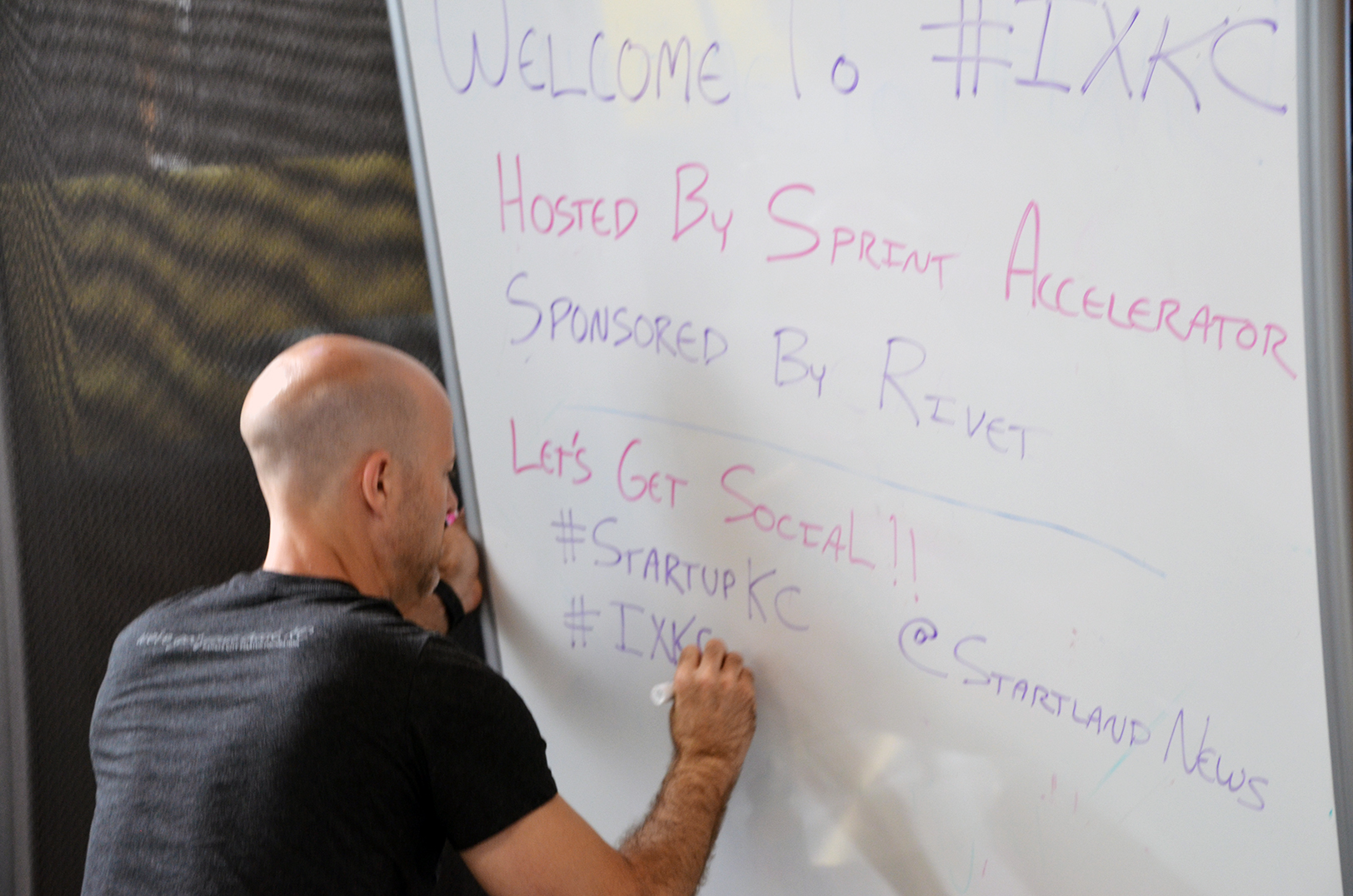
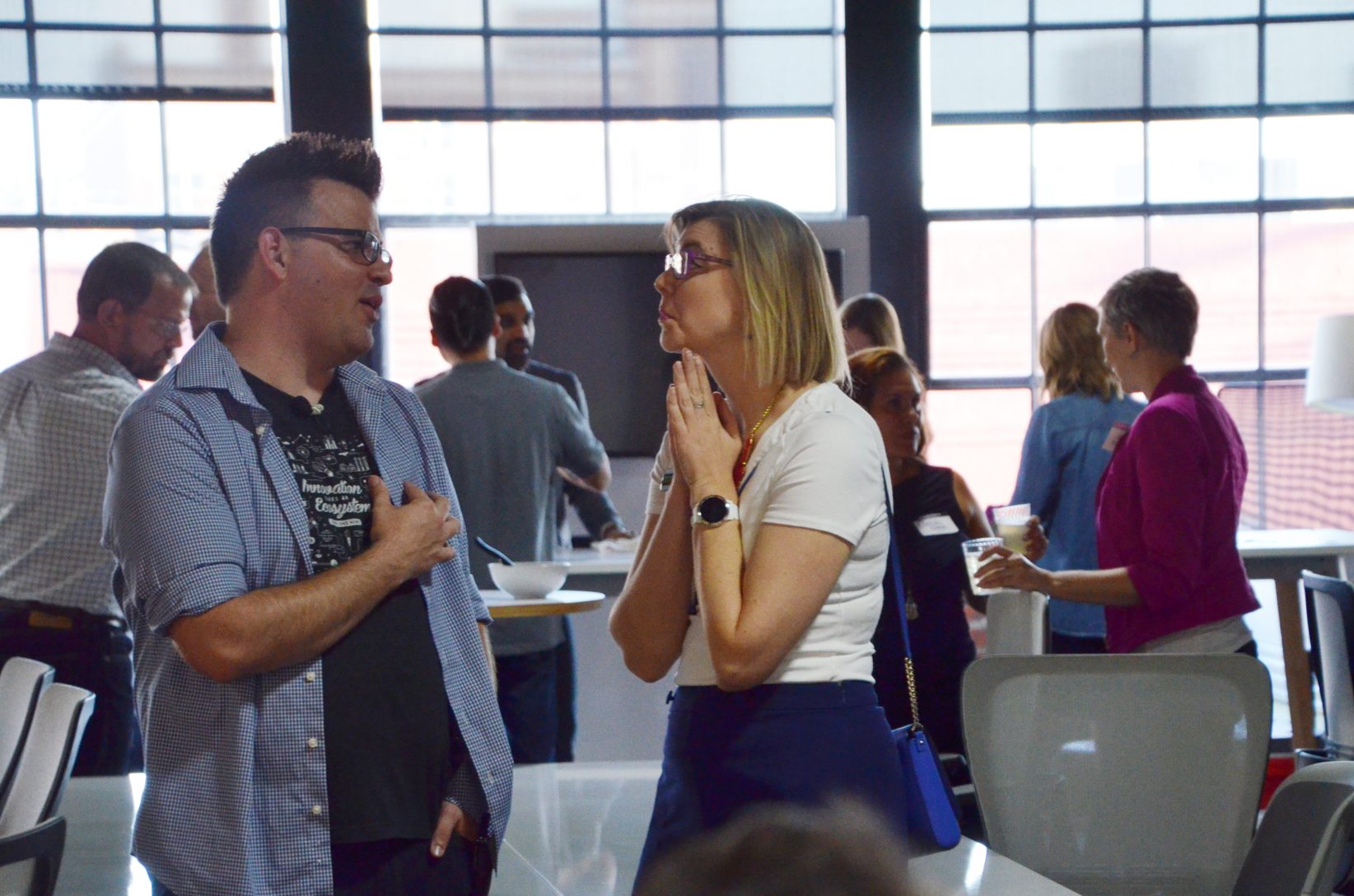
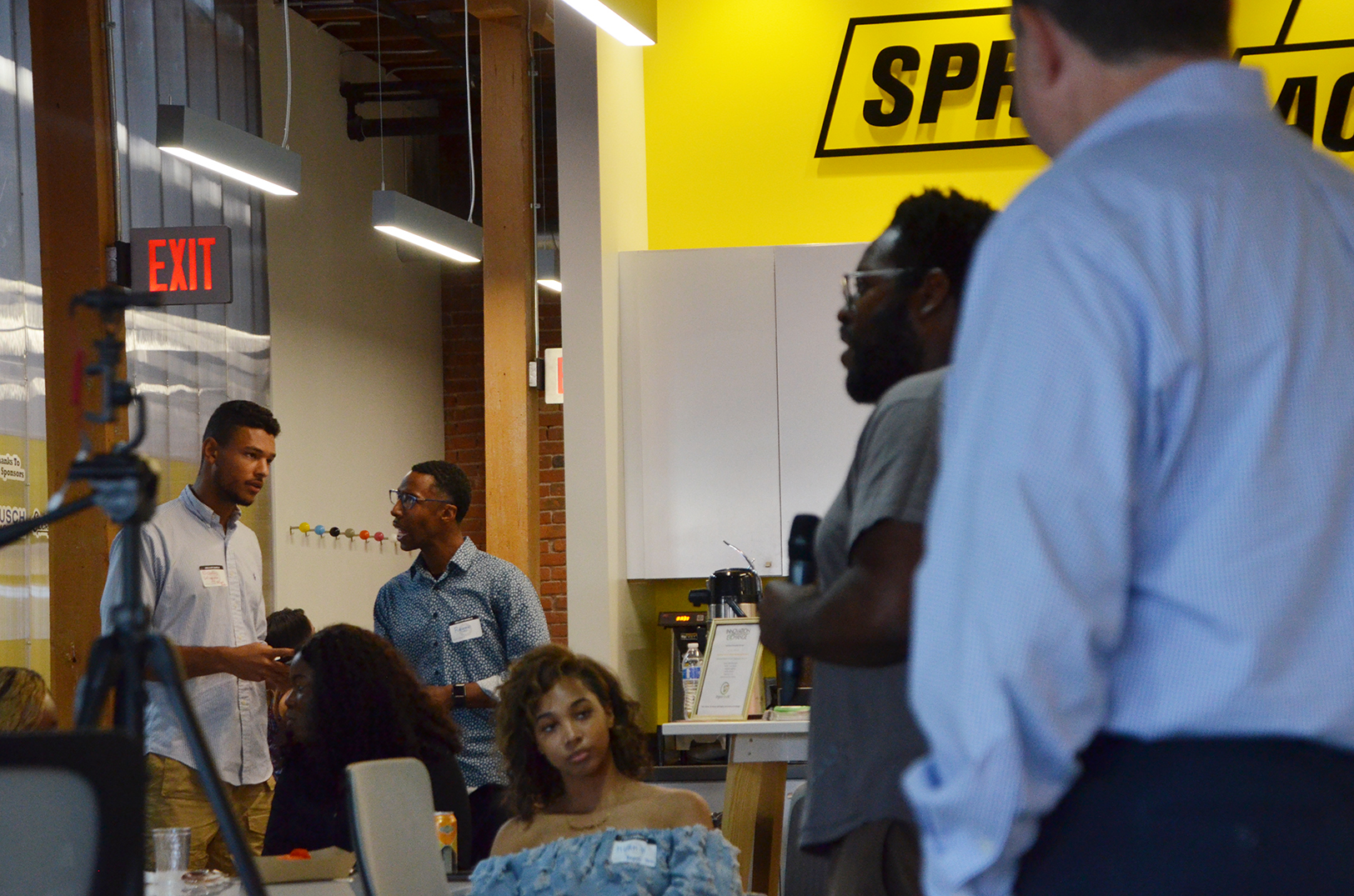
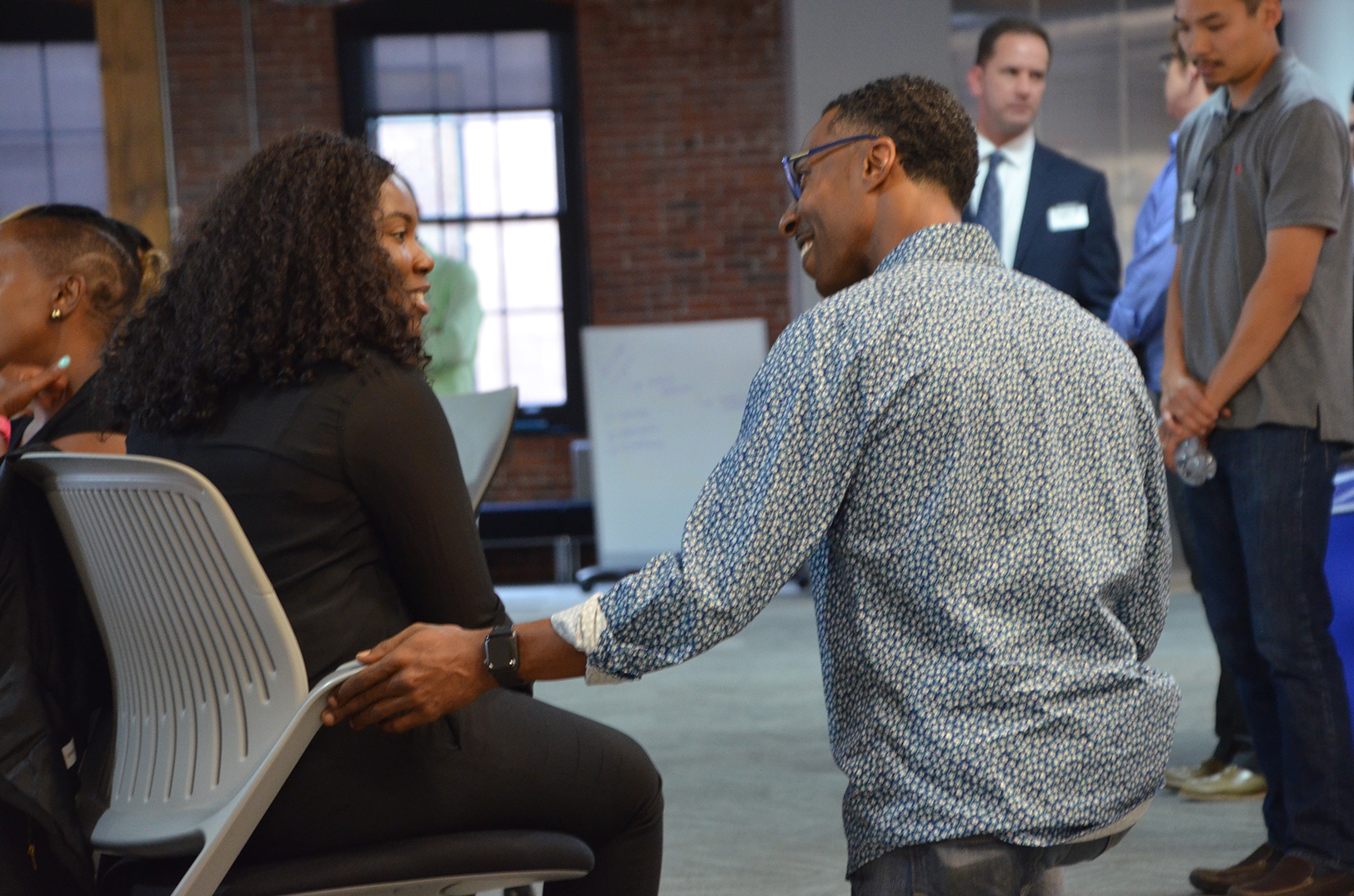
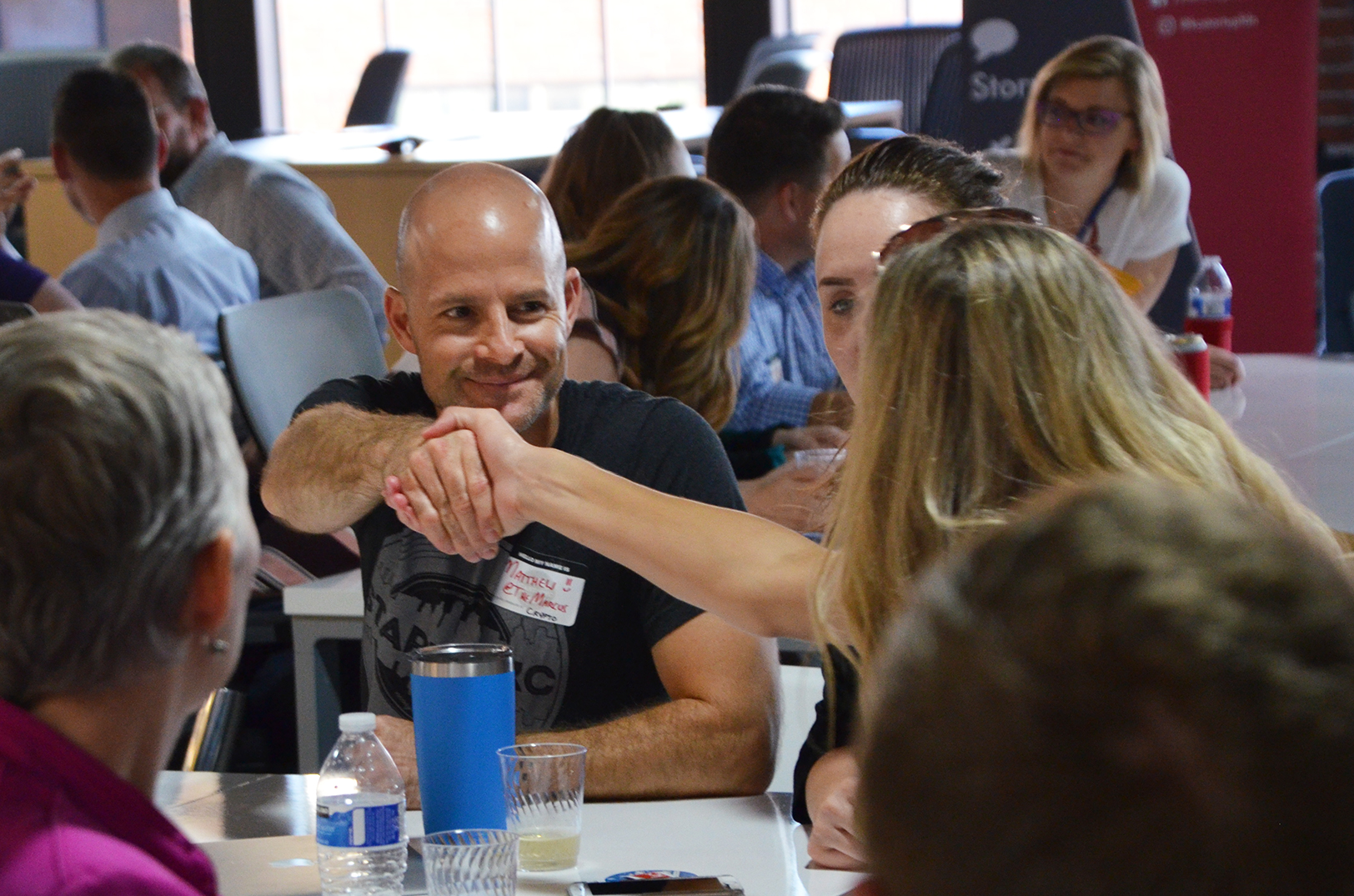
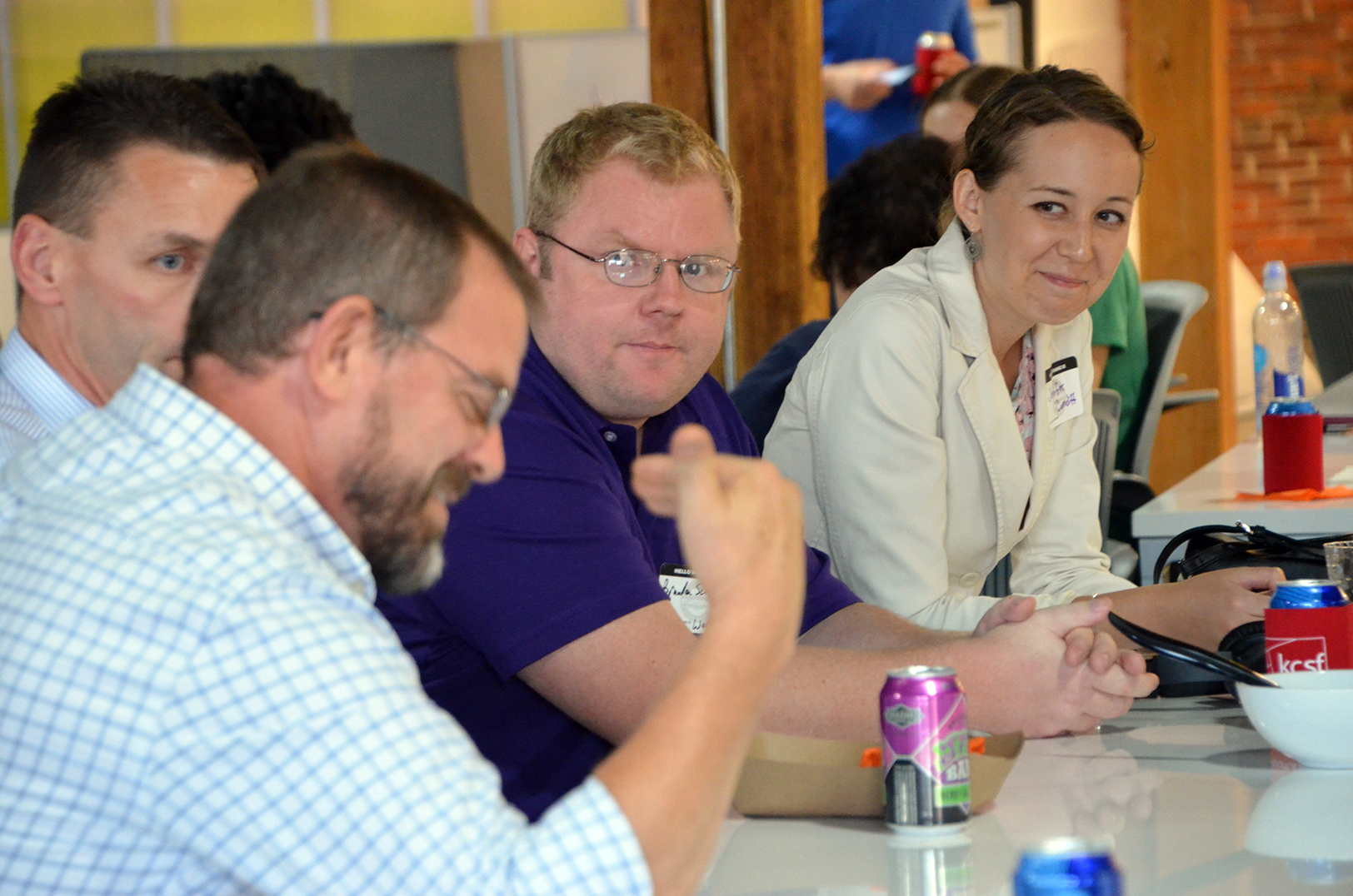
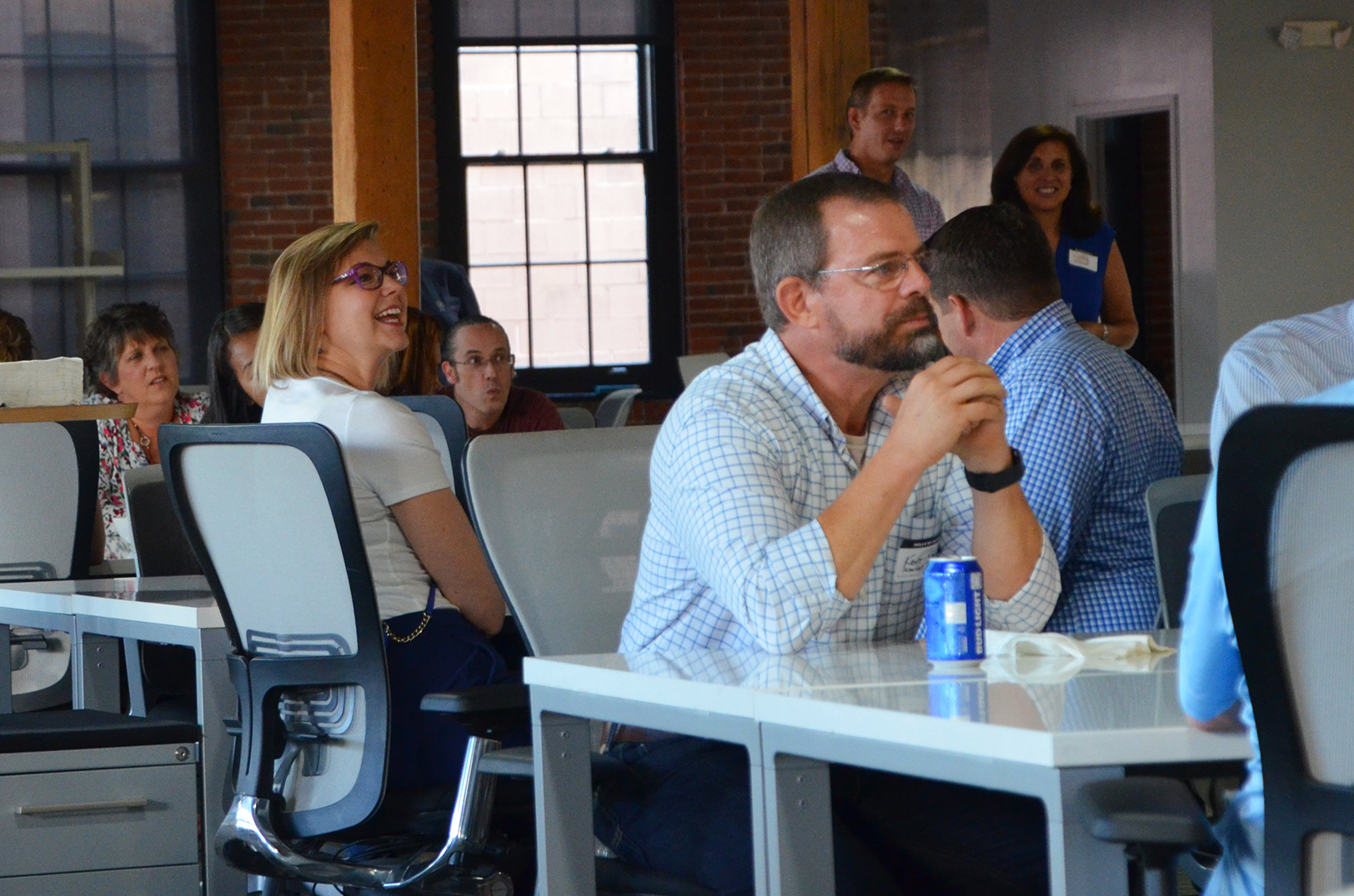
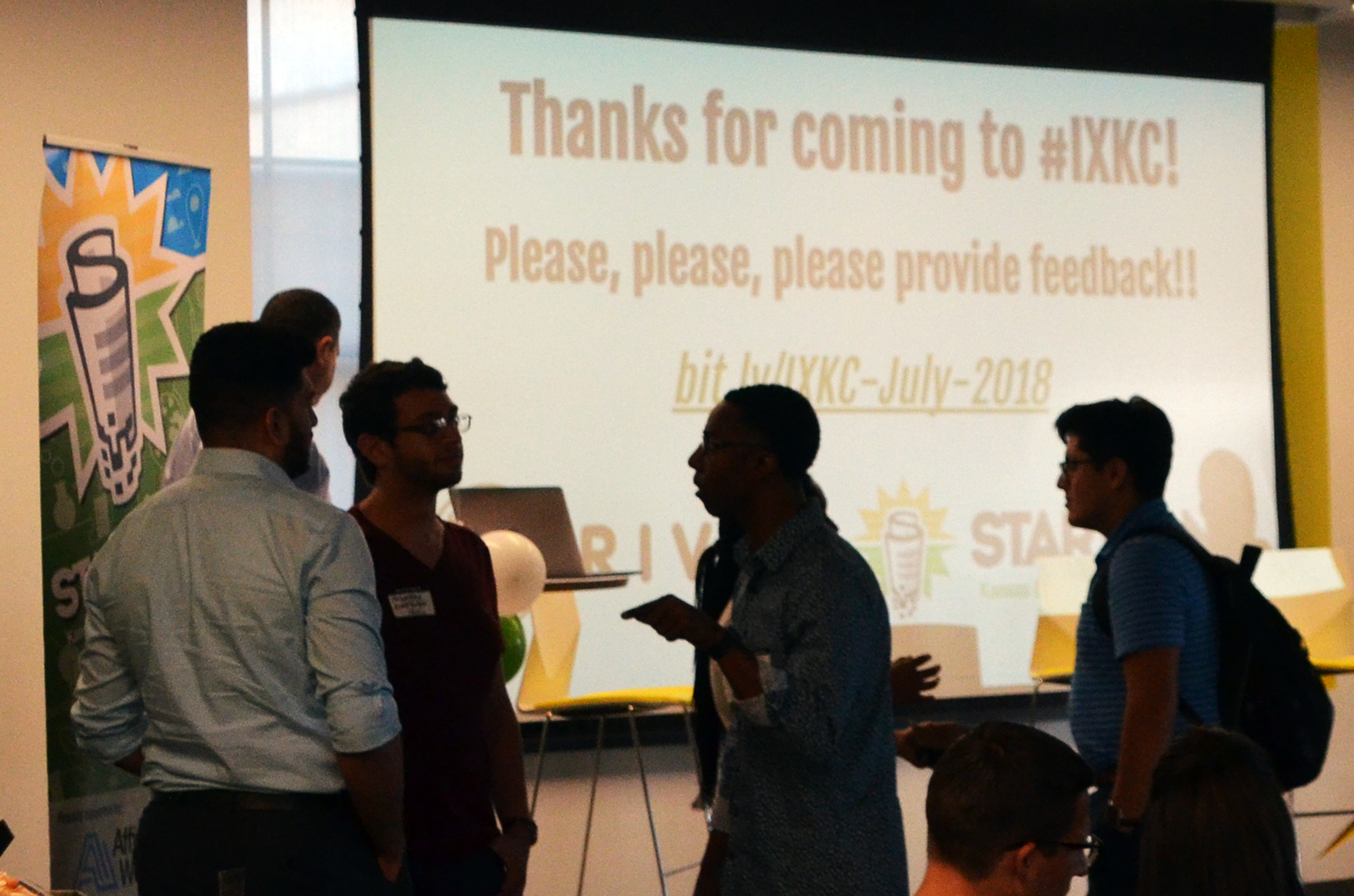
The event, sponsored by Kansas City marketing studio Rivet, brought together a panel of entrepreneurs to discuss the ever-present specter of failure and how they emerged from it. Randall, who now serves as director of business development at ZIV in Overland Park, described spending months in a “fog of fear,” watching his popular craft doughnut business spiral out of control while he desperately tried to hold together a false reality.
“Fear: It will destroy you,” he said. “I went through a month or two where I would wake up every morning at 3 a.m. and puke. Every day.”
He was trying to prove he could make payroll; trying to prove to employees he knew what he was talking about; trying to prove to his in-laws that his idea was going to work; trying to prove to his wife that they weren’t going to lose everything, Randall said.
Doughnut Lounge made the front page of USA Today, landed on Food Network, appeared in celebrity chef Rachel Ray’s magazine, and tripled its first year’s revenue, he said.
“At one moment you’re like, ‘Wow! We did it. I told you! You can all go shove it!’ And you live in this false reality because it’s not true,” he said. “And then you have to face the reality that it didn’t work, that it didn’t go your way.”
After opening new locations in Overland Park and North Kansas City earlier this year, the business abruptly shuttered all its stores in May.
“Coming out of this, everyone asks, ‘Well, why did you close?’ They say, ‘You expanded too fast.’ We did this. We did that,” Randall said. “No one knows [the truth]. Everyone wants to come up with conspiracy theories. I read on Reddit that I took all the money and I left the country.”
“We had to close the doors due to no capital. It wasn’t about expansion,” he added. “I had sold a majority share of the business, and it just didn’t work. The concept was starting to fail. Westport was changing. We were trying to break out into new markets. At the end of the day, the dream just fizzled.”
Feeding the lizard brain
Doughnut Lounge was a concept bigger than crazy, weird food, Randall said.
“I wanted a place in Kansas City. It was more than doughnuts. It was always more than doughnuts,” he said, pausing to collect his thoughts and apologize to the Innovation Exchange crowd who he already had warned: “I’m pushing on a bruise that is still very raw.”
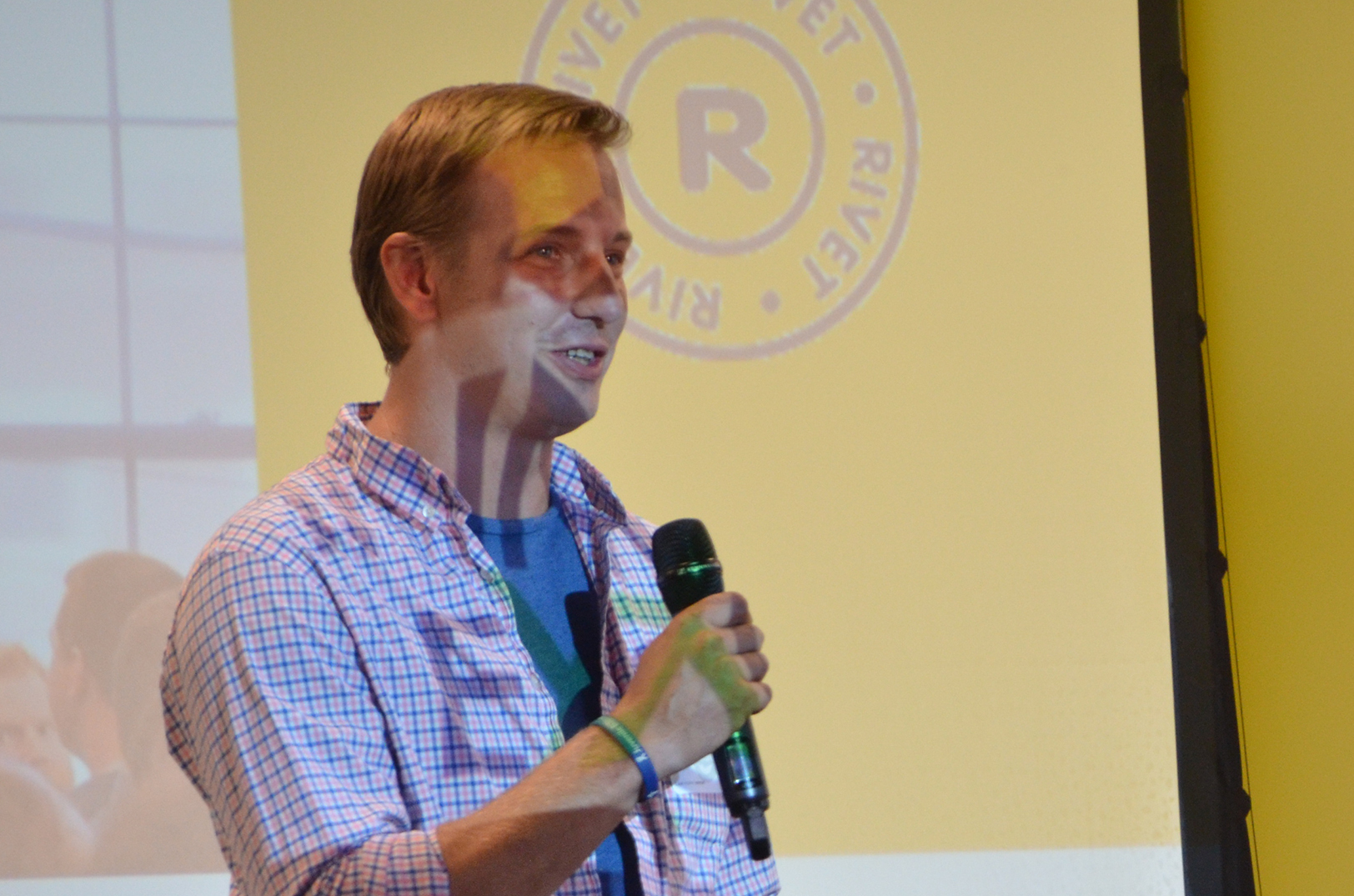
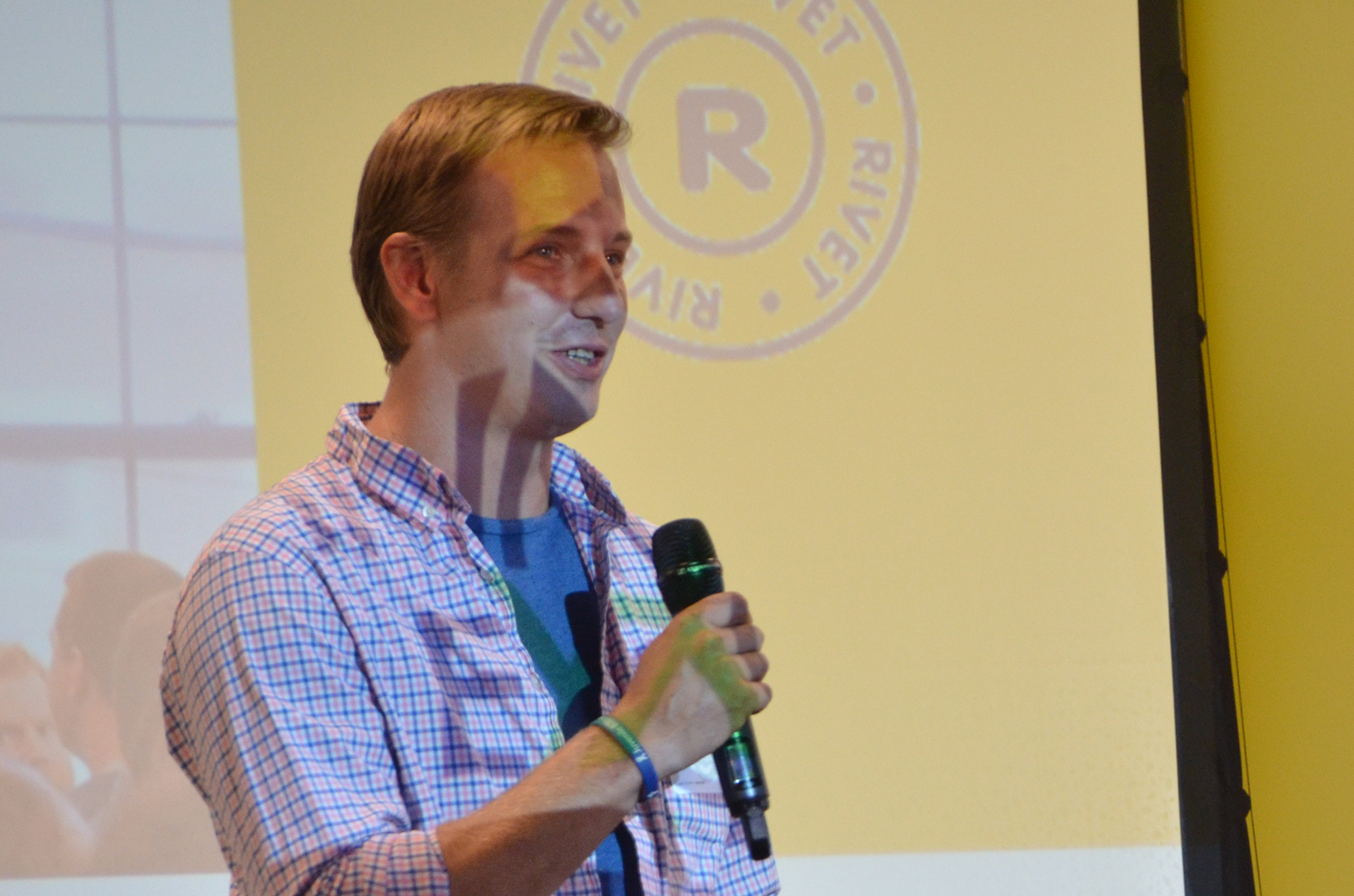
Tyler VanWinkle, Rivet
The best startups begin with that kind of passion, said Tyler VanWinkle, founding partner at Rivet.
“Nobody starts a company expecting to fail. Nobody says, ‘I’ve got this great idea, and if I fail, this is what I’m going to do,’” he said. “If I’d ever walked into a company that I was helping to build with that mindset, it would’ve been dead from the start.”
But the roadblocks to success always show themselves sooner or later, VanWinkle said. As founders jump in ditches chasing their dreams, the little failures begin to pile up, he said. Most startups hear a lot of “No” and experience even more doubt along the way, he added.
“Eventually someone says ‘Yes.’ Then the game changes,” VanWinkle said. “Now failure is even scarier because it’s not my money anymore. It’s someone else’s. Someone’s made a bet on me.”
Entrepreneurs are often cursed with a voice inside their heads — a little monster, Anita Newton described, that sows seeds of anxiety that grow into physical and mental distress.
“When you’re in failure mode — it’s biological — cortisol, the stress hormone, floods your brain, hijacks and kidnaps your executive functions in your brain,” said Newton, chief innovation officer for CommunityAmerica Credit Union. “Your lizard brain takes over and you have a skewed view of the world.”
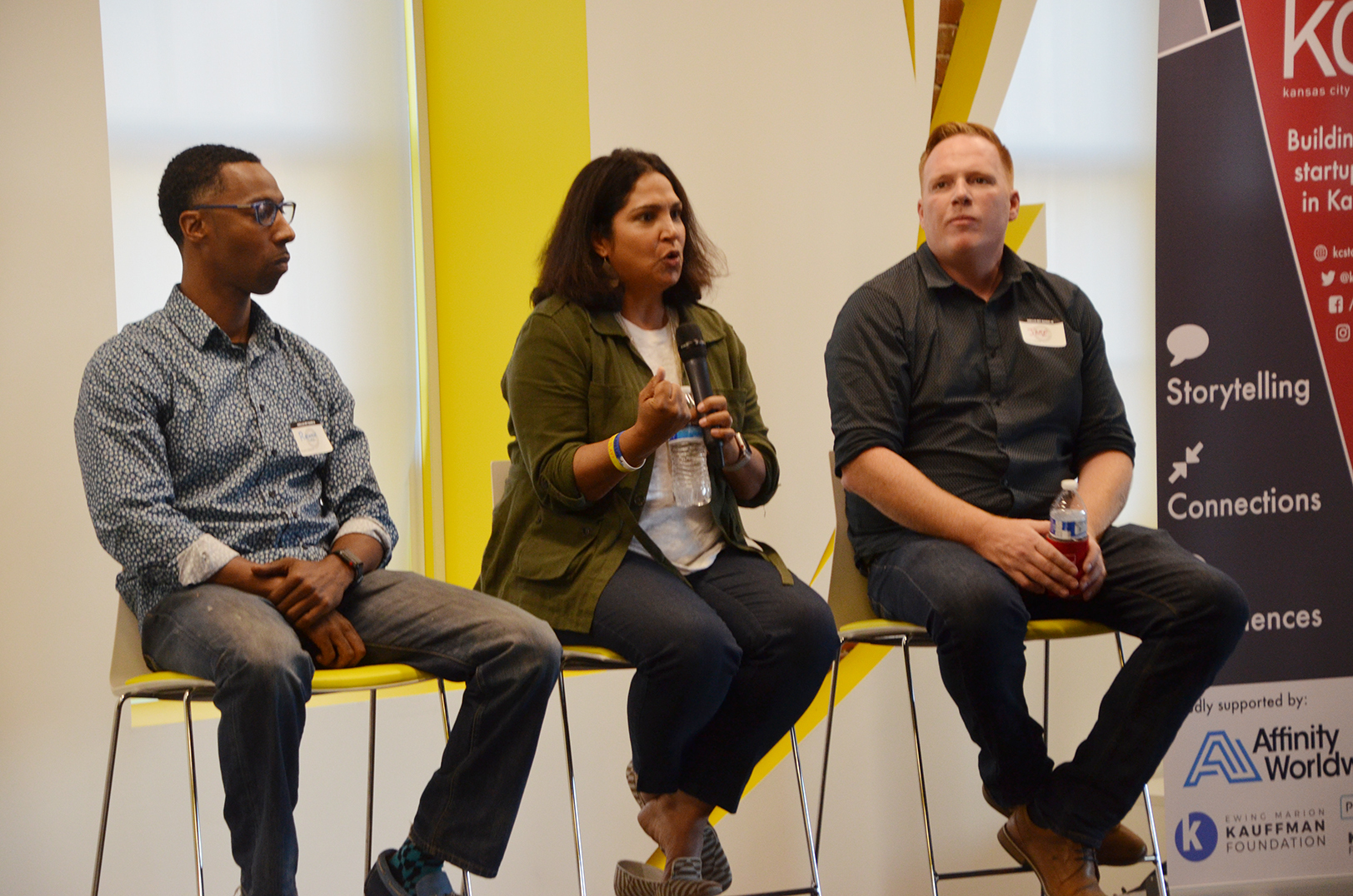
Reggie Gray, Black Privilege, Anita Newton, Mighty Good Solutions, and Jake Randall, Doughnut Lounge
As co-founder of Mighty Good Solutions, Newton has helped bring a handful of consumer products to market through a partnership with Walmart — but between the company’s first and second successes, they saw 13 rejections, she said.
“Five years going, my husband still calls it my nonprofit,” Newton joked.
But such setbacks take a toll — and hearing that they’re life lessons can sting even worse, she said.
“Everything you read is completely unhelpful,” Newton said. “I want to be grateful, but I want to punch that person [who tells me to be thankful for failure] in the face.”
VanWinkle’s firm, Rivet, emerged from a series of previous endeavors, now boasting a 35-person team and more than three years of growth, he said. But the founder was also quick to challenge over-simplified platitudes about silver linings.
“I personally have been part of five startups over the past 18 years — out of those, one is still running, and I am not a wealthy man. The process we go through when we fail is important, but it’s not easy,” VanWinkle said. “It’s easy to talk about celebrating failure, and it’s easy to sit back and say we all learned from failure, but when you’re going through that failure, you question your very meaning.”
Chasing the money
Reggie Gray wore a mask for five years after the housing market collapse of 2008, he said.
“On the outside, I would smile, but on the inside, I was still going through it,” said Gray, the executive director of Black Privilege and co-founder of H3 Enterprises, a startup he departed earlier this year.
Having come to Kansas City from Baltimore in 2003 to manage properties for an investor, he developed his own taste for real estate. Over three years, Gray began spending a $1 million a year, and owned about 150 apartment units — at one time the entire block at 31st and Brooklyn, he said.
“I do not blame the market for my failure. I blame my own blind ambition,” Gray said. “I had multi-millionaires asking me for more than a year: ‘Why do you keep buying?’ They were telling me the market was going to crash. If L.A. goes, the rest of the world goes. The problem: I was young and dumb and thought I knew everything. So I kept buying. And when the market crashed, I didn’t understand what that meant.”
For Gray, it ultimately meant frozen assets and an inability to get new loans, he said. With $300,000 tied up in two properties that he couldn’t touch, he lost everything within a year, he said.
“Ten years later, I can say I have no regrets,” he said. “I was the type of entrepreneur who needed to be humbled.”
“I had to learn not to chase the money,” Gray said later, “but to chase the journey, the experience.”
‘We got you’
As he prepared to open the Doughnut Lounge in 2015, Randall’s dream was coming down to the wire, he recalled.
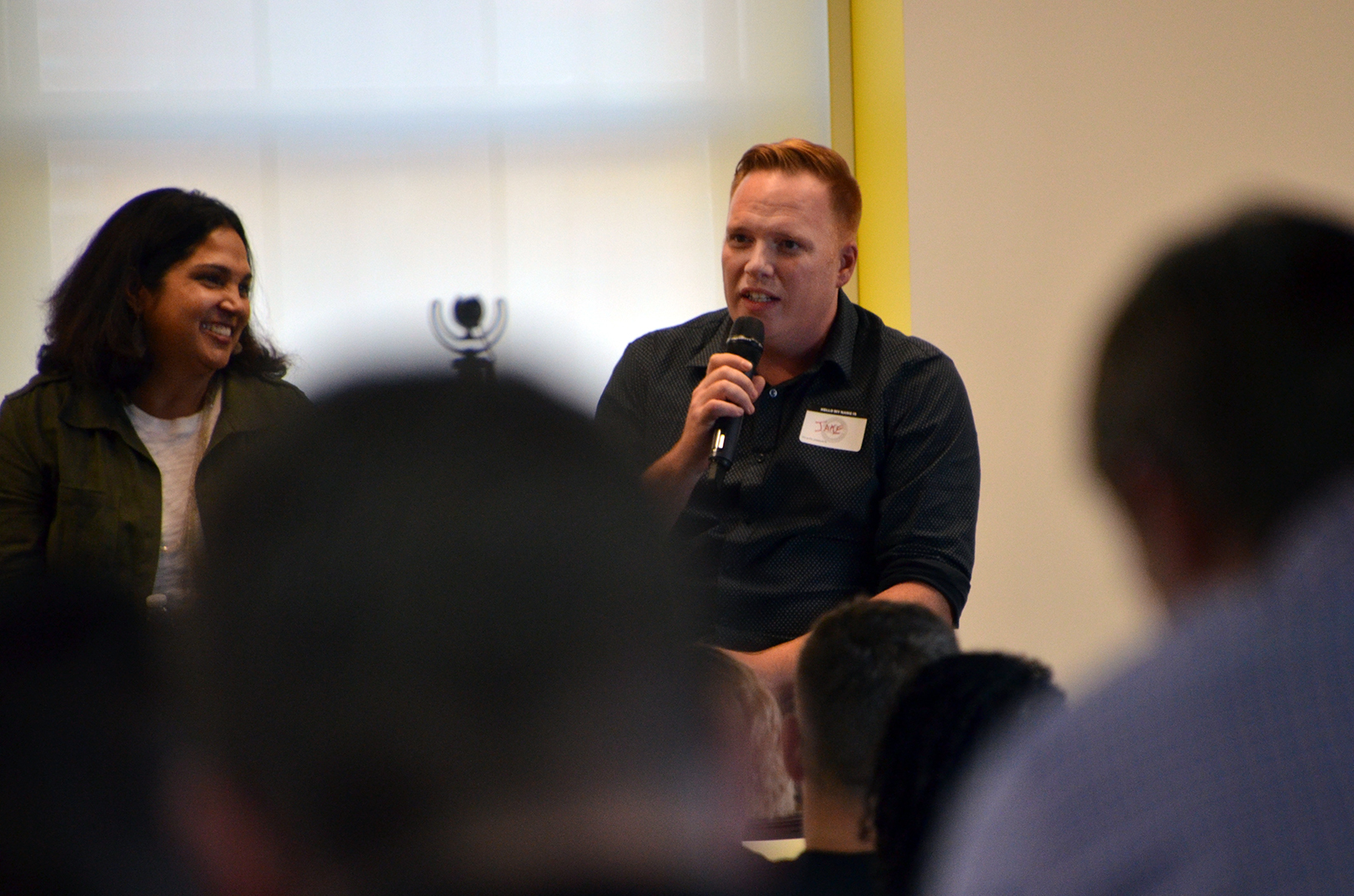
Jake Randall, Doughnut Lounge
“I was thinking, ‘I have two little girls at home. I can barely pay my mortgage. I have no money in the bank. I just left a job where I was getting paid more money than I knew what to do with,’ but in the middle of all that anxiety and fear I was also thinking ‘Look. I got to create something beautiful,” he said. “I took a dream and a concept and — hell or high water — we were going to do it.”
“When we opened the doors, the lines would not stop,” Randall added, still amazed by what he was able to accomplish.
The brand proved wildly popular — with celebrity fans and collaborations with the likes of Boulevard Brewing and Restless Spirits. Randall became the face of that success, and later the failure of Doughnut Lounge , he said.
“I really thought I was going to be sucking my thumb in a fetal position in my bed for months [after the May closures]. Don’t get me wrong: There were definitely some very dark days,” Randall said, reiterating the shame he felt for letting people down and losing control.
But as he began to dive deeper into the fog, people in Kansas City rallied around him, he said. They told him he wasn’t alone.
“Something — friends, family, the community — grabbed me, and said, ‘We got you. … You’re going to get through this,’” Randall said.

Featured Business

2018 Startups to Watch
stats here
Related Posts on Startland News
Alexa, show me the winners: Storytailor leads Pure Pitch Rally prize tally ahead of tech launch
Storytailor’s marquee Pure Pitch Rally win comes at the perfect time for the Kansas City startup, its founders said. They’re preparing to roll out a new immersive storytelling platform through a partnership with Amazon’s Alexa+ next year — a move expected to bring their tech to more than 200 million Prime users. “It’s the most…

LISTEN: How the Midwest opened this German agtech company’s eyes to opportunity in the US
On this episode of our 12-part Plug and Play Topeka podcast series, we connect with Débora Moretti, co-CEO of NutriSen — a Berlin-based agtech startup building real-time molecular sensors to measure nutrient concentrations in plants directly on the field. Moretti shares how her team, alongside co-founder Tobias Vöpel, is merging biosensor technology, data-driven insights and…
Crossing lanes: KC Streetcar collaborators back aboard for expansion, dropping new merch, anthem
Opening the extended KC Streetcar line Friday completes a loop for creatives whose collaborations with the popular public transit system first emerged nearly a decade ago along Main Street — a time when Kansas City’s surging vibrancy helped curb streetcar doubters. “For us, it’s always been about representing Kansas City — the people, the culture,…
André’s planted its flag in KC 70 years ago; chocolatier says that’s just a taste of what’s to come
Nearly 5,000 miles from Switzerland, a small group toured the inner sanctum of an iconic 70-year-old Kansas City company — a family-run brand that helped redefine accessible luxury in the Midwest, one Swiss chocolate-covered almond at a time. “What people get excited about André’s is the legacy, that we take a lot of pride in…