

KC-based Contract Canvas earns finalist slot for WeWork Creator Awards in Nashville
August 15, 2018 | Tommy Felts
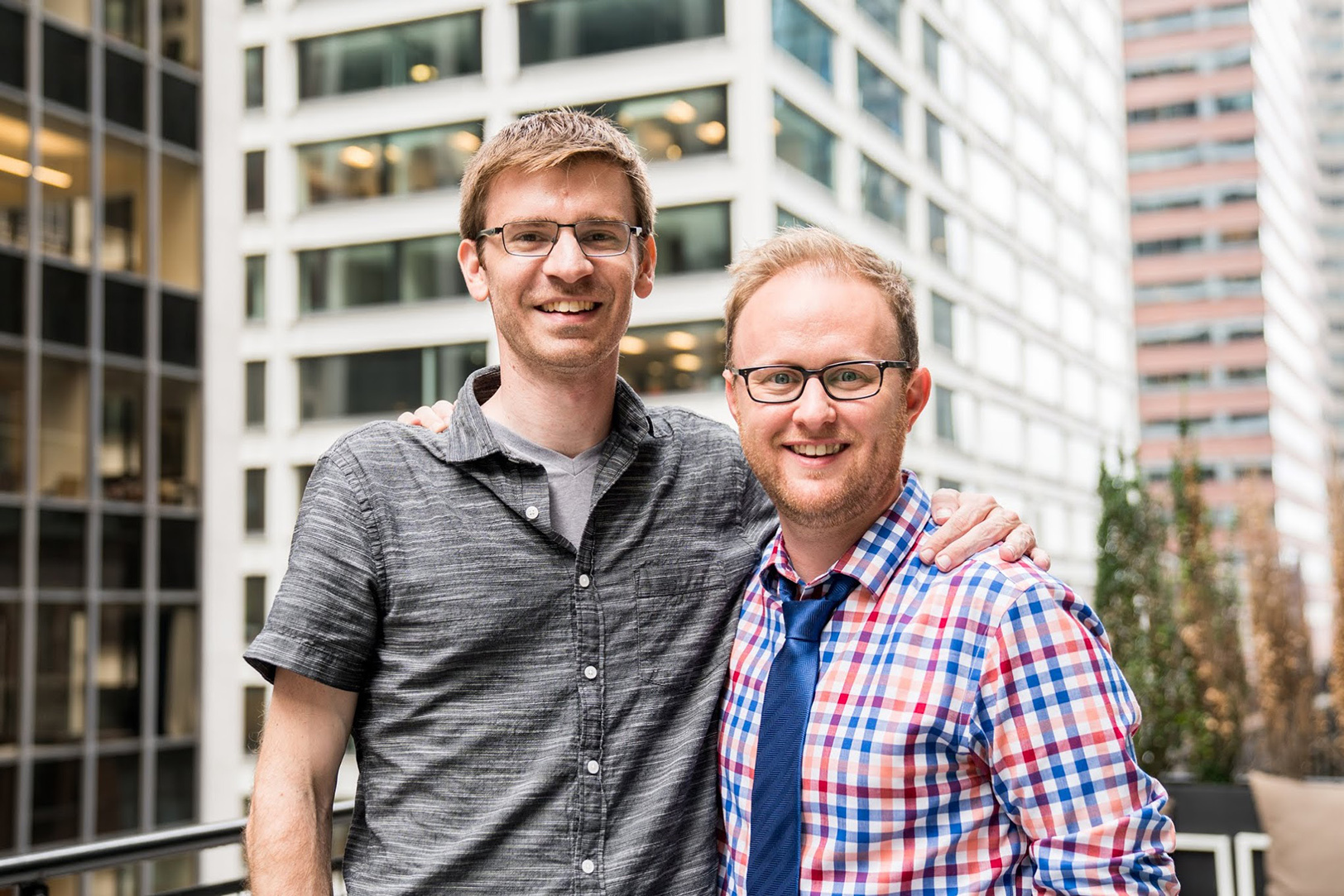
Returning to WeWork’s Creator Awards to pitch Contract Canvas was a defining moment for Chris Brown, as well as the year-old legal startup, he said.
“I worked harder on this pitch than perhaps any pitch I’ve ever given,” said Brown, hours after a flight back from meeting with Creator Awards judges in New York City with tech co-founder Chad Elliott. “And when I walked out of the pitch, I told Chad that it was the best pitch I’ve ever given and if we don’t move on, it’s not that we lost, it’s just that the other teams are so great.”
Brown’s performance instincts were correct.
Contract Canvas’ development since last summer — when it won an $18,000 Incubate Creator Award (the smallest category, for brand new companies), Brown said — placed it this week among six finalists out of a pool of more than 1,700 applicants from across the Eastern U.S., Puerto Rico, and Ontario.
The Kansas City company, a WeWork Corrigan Station member, advances to the Sept. 13 Creator Awards Regional Semi-Final event at Marathon Music Works in Nashville.
There, founders will continue vying for more than $700,000 in 2018 Creator Awards funding, with prizes ranging from $18,000 to $360,000. Judges include Ashton Kutcher, actor and investor; his partner at Sound Investments partner, Guy Oseary; Dia Simms, president of Sean Combs Enterprises; and Tyler Hubbard and Brian Kelley, the country music duo behind Florida Georgia Line.
Competition categories include the Business Venture Award for entrepreneurs and companies with fresh ideas ($130,000 to $360,000); Nonprofit Award for charitable organizations big and small ($72,000 to $130,000); and Performing Arts Award for entertainers and groups with a unique point of view ($18,000 to $72,000).
“There will likely be a couple winners in our category,” Brown said. “We would love to be one of those, but even if we are not chosen, we won’t be too upset. The other companies are doing amazing work and, to be honest, they all deserve funding.”
When Brown, who also is the founder of Venture Legal, first pitched his winning idea for Contract Canvas to the judges at WeWork’s 2017 Creator Awards in Austin, he didn’t yet have a business or a bank account in place, he said.
“The $18,000 grant last summer gave us just enough funding to get the back end system of our platform built out by freelance developers here in Kansas City,” he said. The company is planning to launch its beta program soon.
Its value hinges on the reality that technology is uprooting the legal industry, Brown said.
“Good lawyers are learning how to use technology to help their clients and that’s what we hope to do with Contract Canvas,” he said. “I’m a solo lawyer that represents freelancers and entrepreneurs every day and our developers have first-hand experience dealing with contracts through their freelance projects. We set out to solve these problems by creating Contract Canvas, where it’s easy for freelancers to create, negotiate, sign, and manage their client agreements.”

Contract Canvas
Here’s how it works: The freelancer answers basic questions about their project, and Contract Canvas uses that information to create a legally binding client agreement. Since legal terms are often hard to read, they also create a “Human Summary” that explains the deal using plain English and graphical icons to represent the key points. The freelancer and their client can review the contract online, negotiate it in the platform, and e-sign it right in their browser. From there, Contract Canvas can implement smart contract technology to put the contract to use by automating invoice creation, sending email reminders to the parties, and even managing intellectual property assignments in the blockchain.
Brown credited the encouragement and input of fellow WeWork entrepreneurs at Corrigan Station for helping Contract Canvas accelerate the development of its platform.
“The people at WeWork (both coworking members and people that work for WeWork) give us constant feedback about our ideas, processes, and overall platform,” he said. “That feedback has proven invaluable to us. It helps us decide where to focus our resources.”
While the 2017 Incubate award provided validation for the idea, earning accolades on the next tier of the WeWork Creator Awards would be a significant boost for the startup, Brown said.
“The judges (who are all seasoned entrepreneurs) see the value Contract Canvas provides to the growing freelance workforce and that absolutely gives us encouragement,” he said, referencing the New York City pitch. “Even if we don’t come home with funding next month, their recognition of our platform is something I appreciate greatly.”
Since March 2017, WeWork has played host to more than 27,000 attendees and given away millions of dollars across 11 Creator Awards Regional Semi-Final events around the globe, plus one Global Finals event in New York City in January.
WeWork plays host to more than 268,000 members and employs over 6,000 employees across its global network of coworking spaces and communities, according to the company.

Featured Business

2018 Startups to Watch
stats here
Related Posts on Startland News

Kauffman Foundation rolls out $1.2M microlending program to help underserved entrepreneurs
Amid a swarm of 160 events as part of Global Entrepreneurship Week, the Ewing Marion Kauffman Foundation announced a new microlending program to spur investment in underserved entrepreneurs. In partnership with four microfinance lenders, the foundation issued a series of grants totaling $1.2 million that a will change the way the nonprofit microlenders capitalize their…
Scared away from networking events? Anti-social introverts can turn to tech
Networking strength comes in numbers — even for anti-social introverts, Jeremy A. Smith told a crowd Tuesday at Global Entrepreneurship Week. “Anti-social people, myself included, hate events,” he said. But like all other entrepreneurs, such introverts still must build and maintain actionable professional networks from which they can request and receive value, Smith said. In-person networking…

Longfellow Farm coworking the soil amid KC’s urban food desert
In a city ripe with coworking office spaces, there’s a hunger for similar environments outdoors, Ami Freeberg said. As with maintaining individual workplaces, traditional urban farming also can be isolating and expensive, the Longfellow Farm manager said. By working together, however, the collaborative process allows for shared resources, greater human expertise and, of course, more…
Procrastinating? Eat the frog, don’t chase the squirrels
On the metal wall in front of my desk, I’ve magnetically fastened a famous recommendation from Mark Twain. “Eat a live frog first thing in the morning and nothing worse will happen to you the rest of the day,” the humorist from Missouri wrote. Though it can become an aspiration rather than a rule,…